


Facebook Chatbot Marketing Automation for Education That Converts
Updated at Oct 9, 2026
8 min to read
A Facebook chatbot for education helps institutions respond to student questions, collect applicant details, identify enrollment intent, and connect qualified prospects with admissions teams. It keeps Messenger conversations moving after hours while minimizing recurrent work for counselors throughout the student recruitment journey.
Education shouldn’t be limited to classrooms. It should be available wherever students look for answers.
Today, that often means social media, where prospective students ask about courses, fees, admissions, and deadlines before they ever visit a college website.
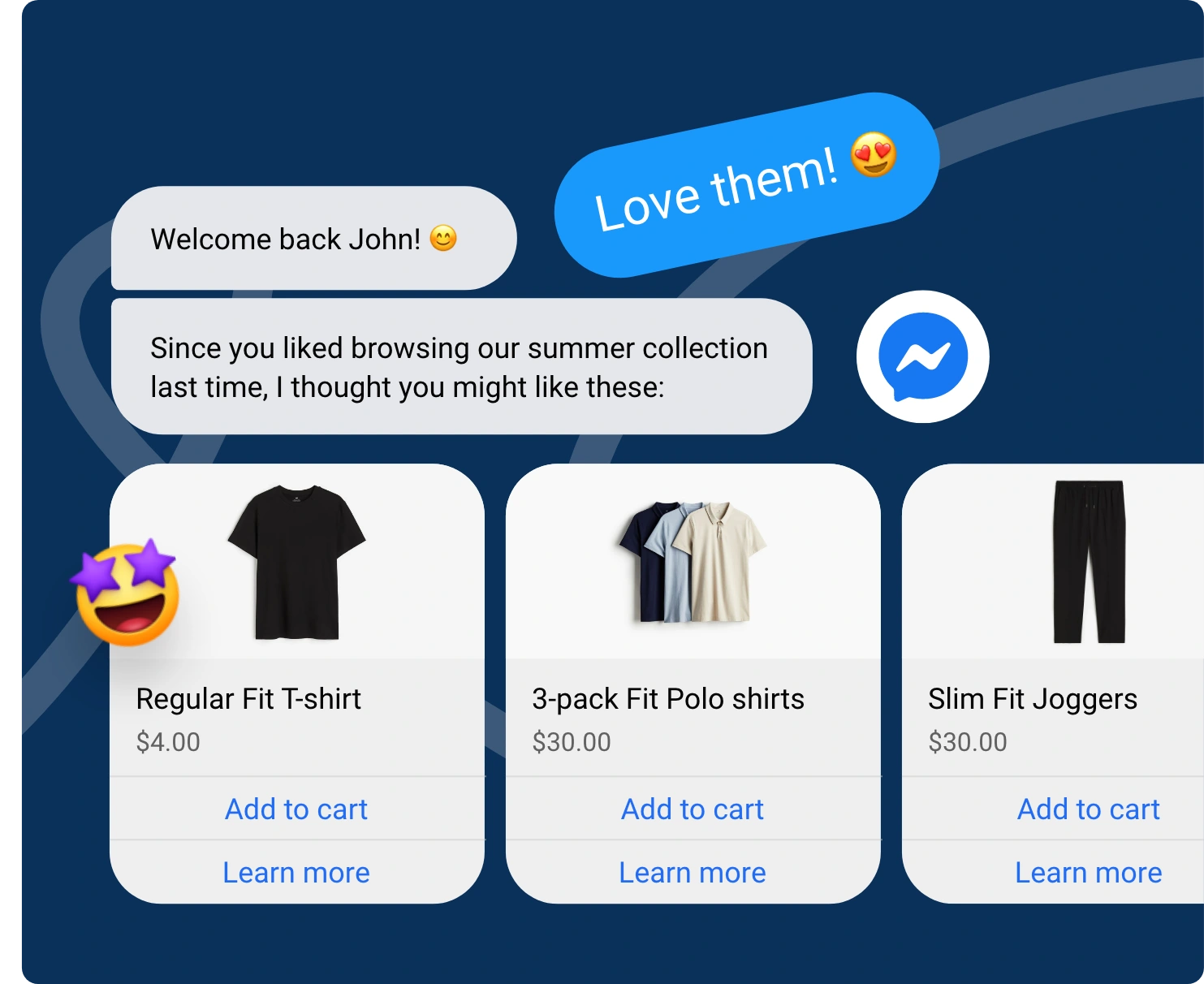
A Facebook chatbot for education keeps institutions present in these conversations. It answers common queries, captures student details, shares relevant information, and guides prospects toward the next step.
This guide covers why education institutions use Facebook chatbots, which qualifying questions matter most, and how Facebook lead automation helps route prospective students to the right admissions team.
If you are new to the concept, start with what a Facebook chatbot is and how it supports automated Messenger conversations.
A Facebook chatbot for education admissions is an automated interactive system within Messenger that instantly answers prospective student queries, captures key applicant data, and qualifies leads around the clock before routing high-intent prospects to counselors.
Nearly 30% of students felt their university's post-enrolment communication was less valuable than what they received during recruitment, according to Salesforce.
This is what makes consistent, automated communication valuable across the entire admissions journey, not just before enrollment.
Here’s why Facebook chatbots for education prove to be so effective for lead generation & admissions:
These capabilities help institutions respond faster, qualify prospects earlier, and move serious applicants toward the right admissions path.
The same qualification mechanics also apply more broadly to a Facebook chatbot for lead generation across other business use cases.
Platforms like BotPenguin help education teams build Facebook chatbots with admission flows, lead capture, CRM integrations, and automated follow-ups, making it easier to turn Messenger conversations into qualified admission leads.
Traditional web forms and manual inquiry handling often create friction right when prospective students and their parents are ready to take action.
Deploying an automated Messenger strategy changes this dynamic across four critical operational bottlenecks:
In many households, admission choices are not made by the student alone. Parents research fees, safety, and placement records, often through the same Facebook page the student first messaged.
A chatbot that answers consistently gives both parties the same information, avoiding conflicting answers from different counselors.
Not every prospective student begins with a direct search. Many discover institutions through shared posts, recommendations, community groups, or education-focused content on Facebook.
A Messenger chatbot helps institutions engage these prospects immediately and guide early interest toward relevant programs, admissions information, or next steps.
Click-to-Messenger ads only pay off if the conversation that follows feels immediate.
Without a chatbot, ad budgets fund clicks that land in an inbox no one checks after hours, so cost per inquiry rises while intent cools.
The chatbot closes that gap between ad click and actual conversation.
Peak admission season brings a spike no counselor team is staffed for, regardless of how efficient the team is.
A chatbot absorbs the first wave of repetitive queries, so counselor time goes toward applicants who need judgment calls, not toward answering the same fee question fifty times a day.
While these advantages help institutions respond faster without overloading admissions teams, the next step is making sure the chatbot asks the right questions to identify which prospects are genuinely ready to move forward.
For a broader look beyond Facebook, explore our education chatbot solutions for student engagement, support, and admissions workflows.
A Facebook chatbot for education moves prospects through a short sequence of questions that reveal program fit, timing, background, and funding needs, before any human steps in.
Here’s what the qualification process typically looks like from first inquiry to counselor-ready lead:
Each of these steps has been detailed below.
The chatbot opens by asking which course or program interests the student.
This gives admissions teams immediate context and lets the bot share program-specific details instead of generic replies.
Next, the chatbot asks when the student plans to begin.
Someone targeting the upcoming intake needs faster follow-up, while a student exploring next year's options can stay in a longer nurture flow.
The bot asks about current education level or relevant academic history.
This narrows down which programs actually fit the student's profile and gives counselors context before the first personal conversation.
76% of students report that the financial aid amount they received, along with the overall process, directly influenced their final college choice, per Ellucian.
The chatbot checks whether the student needs scholarship, financing, or fee-related information.
This surfaces decision barriers early, so complex financial questions land with the right counselor instead of stalling the conversation.
Once intent is established, the chatbot asks for a phone number or email to continue the conversation outside Messenger if needed.
This step turns an anonymous chat into a followable profile, and is often where the inquiry becomes an actual admissions record.
Together, these steps turn a basic Messenger inquiry into a structured student profile, so admissions teams know exactly which prospects need immediate personal attention.
A Facebook chatbot for education routes qualified prospects based on intent, question complexity, and counselor expertise, ensuring higher-value inquiries receive timely human attention.
Here’s how the handoff process typically works after qualification:
The chatbot first evaluates the answers collected during qualification.
Students targeting an upcoming intake, asking application-specific questions, or requesting counselor support can be prioritized over early-stage prospects.
Some questions should not be handled through automated responses alone.
Eligibility exceptions, credit transfers, documentation concerns, and unusual admission requirements can trigger an immediate counselor handoff.
Detailed scholarship, financial aid, or financing questions may require specialist guidance.
The chatbot can direct these inquiries to the relevant admissions or finance team rather than leaving students with generic information.
A useful handoff should not force students to repeat everything.
Program interest, intended intake, education background, funding needs, and contact details can move with the inquiry so counselors already understand the situation.
Once routed, the counselor can focus on guidance requiring judgment, reassurance, or institution-specific decisions.
The chatbot can continue handling routine information while human teams focus on conversations more likely to influence enrollment.
This balance keeps automation focused on speed and consistency while reserving counselor time for prospects who need personalized admissions support.
Deploying a Facebook chatbot is only the first step. To turn initial Messenger conversations into actual student enrollments, optimize your automated flows using these operational strategies:
Limit initial qualification to three or four vital questions, such as preferred program, phone number, and target intake. Lengthy interrogations increase friction and cause drop-offs before contact details are saved.
Set up conditional logic to detect high-intent keywords like “scholarship application” or “campus tour”. Immediately route these active chats to an available counselor while the prospect's interest is at its peak.
Deploy timed re-engagement sequences to remind prospective students about approaching application cutoffs, upcoming open-day webinars, or pending document submissions.
Set these reminders according to Meta’s messaging permissions and user opt-in requirements.
Enable dynamic language switching so regional and international applicants, as well as decision-making parents, can review program details in their primary language.
Ensure Click-to-Messenger ads launch flows specific to the exact course advertised, rather than dumping users into a generic welcome menu.
If you're looking to put these best practices into action, BotPenguin can help automate lead capture, qualification, follow-ups, counselor routing, and CRM workflows across Facebook Messenger.
BotPenguin provides a no-code conversational platform designed to support student acquisition.
By combining no-code simplicity with Facebook Messenger integrations, it helps educational institutions capture, qualify, and convert prospective student inquiries around the clock.
Here’s why it proves to be a smart choice for teams looking for Facebook lead automation:
For education teams, the real value is control over the admissions journey. Routine queries stay automated, while qualified prospects move quickly to the right counselor or system.
For a student, choosing where to study can start with one simple question on Facebook. What happens next can shape whether that student stays interested or moves on. A Facebook chatbot for education helps institutions make that moment count.
It can answer common questions, share course details, collect student information, and guide prospects toward an application or counselor. This gives students a smoother way to get the information they need while helping admission teams focus on serious prospects.
The goal is not to make admissions feel automated. It is to make the first step easier, more helpful, and worth continuing.
A Facebook chatbot for education answers student questions, collects applicant details, and helps identify interested students. It can also guide students to the right admissions step. This helps colleges and schools handle Facebook Messenger inquiries with less work.
Yes. It can answer common questions about courses, fees, deadlines, eligibility, and application steps. It can also collect student details and send complex questions to an admissions counselor for further help.
A Facebook chatbot can ask questions about the student’s preferred program, start date, education, and budget. Their answers help admissions teams understand their interest and decide which students need follow-up from a counselor.
Yes. Schools, colleges, universities, and ed-tech companies can use Facebook chatbots for admissions, course enrollment, lead capture, and student questions. The chatbot flow can be changed to match each institution’s courses and admission process.
No. A chatbot can handle common questions, collect basic details, and send follow-up messages. Admissions counselors are still needed for complex questions, financial aid, enrollment decisions, and cases that need personal attention.
Yes. A chatbot can send reminders about application deadlines, missing documents, enrollment dates, and upcoming steps. These reminders help students stay informed and keep their applications moving.
Yes. A chatbot can answer common questions, collect student details, and identify interested students outside office hours. This means students can still get basic information during evenings or weekends.
Capture More Admissions Leads With Facebook Chatbots
Answer student questions, capture lead details, qualify prospects, and guide them toward the next admissions step through Facebook Messenger.
Get Started NowCheckout our related blogs you will love.
Updated at Oct 9, 2026
8 min to read
Updated at Oct 7, 2026
12 min to read
Updated at Oct 6, 2026
23 min to read
Updated at Oct 1, 2026
7 min to read

Updated at Sep 30, 2026
9 min to read
Updated at Sep 26, 2026
11 min to read
Table of Contents