

Facebook Ads Automation in 2026: Rules, Advantage+ and What Happens After the Click
Updated at Oct 10, 2026
23 min to read
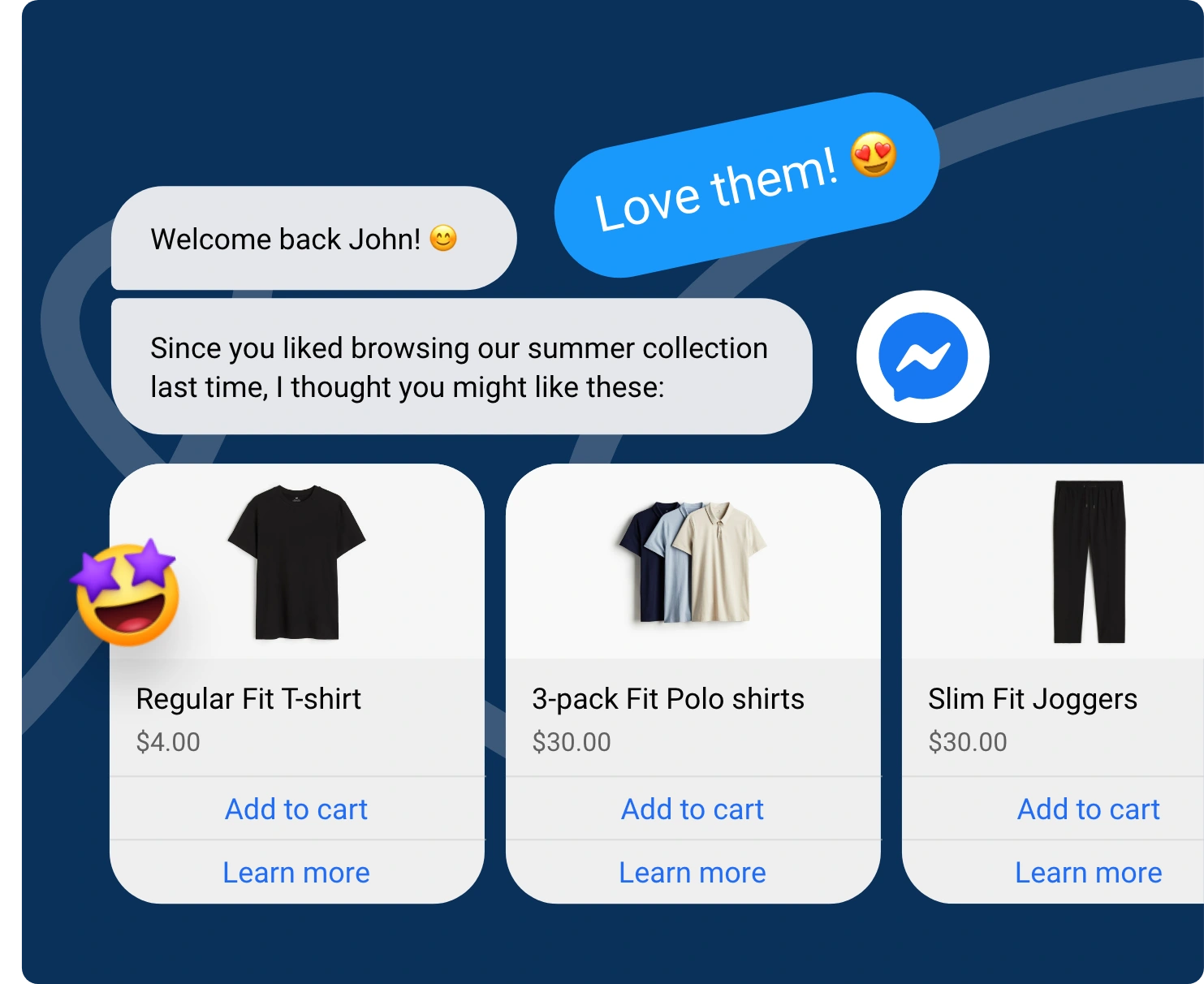
Facebook chatbot appointment booking for insurance lets agencies schedule prospect consultations and policyholder reviews inside Messenger. The chatbot identifies the appointment type, collects basic booking information, presents available times, and confirms the meeting while leaving coverage, eligibility, pricing, and policy decisions to licensed advisors.
When searching, shortlisting, and booking happen in one place, customers are more likely to stay with a brand. The fewer steps they take, the easier it is to move from interest to action.
This matters even more in insurance, where prospects often compare options, ask questions, and want to speak with an advisor before committing to anything. Facebook brings all these steps closer together, right where prospects already spend their time.
With a Facebook chatbot for insurance, agencies can guide prospects, answer basic questions, and get appointments booked without a single phone call or missed follow-up.
In this guide, you'll learn how Facebook chatbot appointment booking for insurance works, what goes into setting one up, and how to make sure it actually converts.
An automated Facebook Messenger scheduling system allows insurance agencies to book consultations directly inside the chat. It screens potential policyholders, shares real-time calendar openings, gathers preliminary details, and confirms meetings around the clock without manual effort.
For broader automation across claims, renewals, policyholder support, and insurance workflows, explore BotPenguin's insurance chatbot platform.
One carrier's round-the-clock chatbot rollout for after-hours support lifted policy purchases among prospective customers by 11 percent, per McKinsey.
Here’s why the Facebook chatbot booking approach works for insurance agencies:
Automated Lead Pre-Qualification: The system asks targeted questions about coverage requirements and timelines prior to scheduling, making sure agents focus solely on high-value, fully vetted leads. For lead-focused automation, see how a Facebook chatbot for insurance leads handles qualification.
For insurance agencies still relying on business-hours-only follow-ups, that gap represents real, recoverable revenue, and a Facebook chatbot is one of the simplest ways to close it.
Platforms such as BotPenguin make this easier by letting agencies build Facebook chatbots, connect booking workflows, and create automated lead qualification journeys without building everything from scratch.
Behind a simple "Book a call" button in Messenger sits a fairly precise sequence of triggers, decision trees, and API calls.
Here’s what actually happens between a prospect clicking through and an appointment landing on your advisor's calendar:
For broader mechanics, see howFacebook chatbot appointment booking works across industries.
A user starts the conversation by clicking a Click-to-Messenger ad or Facebook page button.
A webhook event through Meta’s Graph API can then trigger the chatbot booking flow.
Using structured quick replies, the bot routes the user through custom decision trees.
It identifies whether the user needs a new-policy consultation or an existing-policy review.
The system prompts for key details like contact information, policy interest, preferred timing, or policy expiration dates when relevant.
Inputs can be temporarily stored before syncing with your lead database.
Through connected calendar APIs, the chatbot checks availability in real time.
It dynamically displays available, non-conflicting time windows directly in the chat.
Upon selection, an API or OAuth 2.0 connection can sync the event with your CRM, calendar, or Agency Management System.
The bot then sends an automated confirmation and relevant appointment details.
Each of these steps runs in seconds, but together an insurance chatbot replaces what used to take a phone tag, a form, and a follow-up email.
That's the real shift: booking stops being a task the prospect has to complete later, and becomes something that just happens while they're still engaged.
A first-time visitor exploring coverage options needs a very different conversation than an existing policyholder checking in before renewal.
Routing both through the same set of questions slows the bot down and frustrates people who already have a relationship with your agency.
Here's how the two flows differ at each stage of the booking process:
Once the bot knows which lane a prospect belongs in, the actual conversation plays out in just a handful of messages.
These examples show how the chatbot can adapt the booking flow for each customer type.
Prospect: I’d like to discuss auto insurance.
Chatbot: Sure. When are you planning to review your options?
Prospect: Within two weeks.
Chatbot: Here are the available consultation slots.
Prospect: Thursday at 3:00 PM.
Chatbot: Your consultation is booked for Thursday at 3:00 PM.
Policyholder: I want to review my current policy.
Chatbot: Please share your policy reference or registered email.
Policyholder: I’d like to discuss my upcoming renewal.
Chatbot: Here are the available review slots.
Policyholder: Friday at 11:30 AM.
Chatbot: Your policy review is scheduled for Friday at 11:30 AM.
By segmenting new leads from existing clients right at the first message, your chatbot delivers a tailored experience that drastically shortens friction to booking while ensuring your agency's CRM stays completely clean.
A first notice of loss should not be treated like a new-policy consultation.
When an existing policyholder reports an incident, the chatbot should recognize the claims intent and route them toward the agency's approved FNOL process.
The flow can collect basic routing information and, where appropriate, help schedule a claims callback or adjuster conversation. Sensitive claim details and decisions should remain within the agency's approved claims and secure data-handling processes.
Implementing a chatbot for appointment scheduling requires striking a fine balance between automated efficiency and personalized trust.
Following these core guidelines ensures your agency maximizes qualified bookings while maintaining a smooth user experience.
Ask a single high-impact qualifying question upfront to split new leads from existing policyholders, ensuring users don't suffer through irrelevant questions.
Use structured quick-reply buttons and native Messenger features instead of forcing users to manually type out dates, times, or lengthy policy details.
Implement strict two-way API synchronization with your agency management software (AMS) or calendar to prevent double-booking and present accurately updated open slots.
Set up trigger-based follow-up messages on Messenger and SMS at 24-hour and 1-hour intervals prior to the consultation to minimize no-shows.
Set reminder timing according to Meta’s messaging permissions and applicable user consent requirements.
Always include a clearly visible “Talk to an Agent” option at every stage so complex or sensitive inquiries can be smoothly transferred to a live team member.
A SurveyMonkey survey found that 79% of Americans still favor human interaction over AI agents when it comes to customer service.
Executing these best practices transforms your Messenger channel from a passive inbox into an active, 24/7 revenue driver that respects your prospect's time and your agents' workload.
Insurance booking automation should simplify scheduling without crossing into coverage, pricing, or policy decisions.
Clear boundaries keep the chatbot focused on appointments while sensitive questions and determinations stay with qualified human advisors.
A booking confirmation isn't a coverage decision. Avoid language like “you're approved” or “coverage starts now”.
Confirmation messages should cover only the appointment: time, advisor, and next steps.
Keep pricing separate from the booking flow, and route premium or rate questions to a qualified advisor.
Actual premiums depend on underwriting, and unqualified numbers set expectations advisors later have to correct.
Decision trees handle scheduling logic, not policy interpretation.
Questions like “will this cover X" or "am I eligible for Y" should route directly to a human advisor instead of a scripted reply.
Collect only what's needed to book and route the appointment: name, contact details, general coverage interest.
Route sensitive information, such as medical or identity data, to the agency’s approved secure process instead of collecting it in Messenger.
Where required, show a brief data-use notice before collecting contact details, and log that interaction.
This matters most for agencies operating across states with different disclosure rules.
Insurance chatbot booking flows should follow the regulations that apply to each agency and customer location.
This may include IRDAI requirements in India, GDPR in the EU, or CCPA in California, alongside applicable consent, disclosure, and data-protection requirements.
Review BotPenguin's security and data practices before configuring sensitive booking workflows.
Clear compliance boundaries keep Facebook chatbot appointment booking for insurance focused on scheduling while leaving policy decisions to qualified human advisors.
BotPenguin helps insurance agencies manage consultation and policy review bookings through structured Facebook Messenger flows.
Agencies can automate scheduling while keeping coverage decisions outside the chatbot conversation.
You can explore BotPenguin's full feature set for additional automation capabilities.
With BotPenguin, your agency gains a turnkey, compliance-conscious scheduling engine that turns social traffic into booked consultations while your team focuses on closing policies. See what customers say about BotPenguin before choosing your booking setup.
Facebook chatbot appointment booking for insurance can make the path from interest to consultation much simpler for insurance agencies.
Prospects can ask questions, share basic details, check available slots, and book a meeting without leaving Messenger. Agencies can also qualify leads, send reminders, and keep appointment details connected with their calendars or CRM.
The key is to build the chatbot around clear questions, approved information, and a simple booking flow. When these pieces work together, fewer prospects drop off between inquiry and appointment.
For insurance agencies looking to turn Facebook engagement into scheduled consultations, a well-designed chatbot can make every step easier.
Yes. A Facebook chatbot can identify whether someone needs a new policy consultation or an existing policy review, collect basic scheduling details, show available slots, and confirm the appointment without making coverage decisions.
Facebook chatbot appointment booking for insurance works by identifying the booking type, collecting essential contact and scheduling information, checking connected calendar availability, presenting suitable times, and confirming the selected consultation or policy review.
No. Booking only confirms a conversation with an insurance advisor. It should never suggest eligibility, policy approval, guaranteed pricing, coverage terms, or underwriting outcomes, which must be handled separately by qualified insurance professionals.
Yes. The chatbot can recognize an existing policyholder, collect a policy reference or review reason, display suitable appointment times, and schedule the review while directing specific coverage questions to a qualified advisor.
It should collect only information needed to schedule and route the appointment, such as name, contact details, consultation type, preferred time, and general policy interest, while avoiding unnecessary sensitive or underwriting information.
A chatbot can use separate booking paths for prospects and existing customers. New consultations may require more context before scheduling, while policy reviews can move faster because the agency already has customer information.
General Facebook chatbot appointment booking covers scheduling mechanics across industries. Insurance booking adds specific flow logic for new consultations, existing policy reviews, sensitive data handling, and compliance boundaries around coverage, eligibility, pricing, and policy outcomes.
Simplify Insurance Appointment Booking With Facebook Chatbots
Qualify prospects, answer common questions, schedule consultations, and send reminders through Facebook Messenger. Turn more Facebook interactions into booked appointments with a smoother booking journey.
Get Started NowCheckout our related blogs you will love.
Updated at Oct 10, 2026
23 min to read
Updated at Oct 10, 2026
12 min to read
Updated at Oct 10, 2026
19 min to read
Updated at Oct 9, 2026
8 min to read
Updated at Oct 7, 2026
12 min to read
Updated at Oct 1, 2026
7 min to read
Table of Contents