


AI Customer Support Agents: Guide, Benefits, and Use-cases
Updated at May 29, 2026
16 min to read
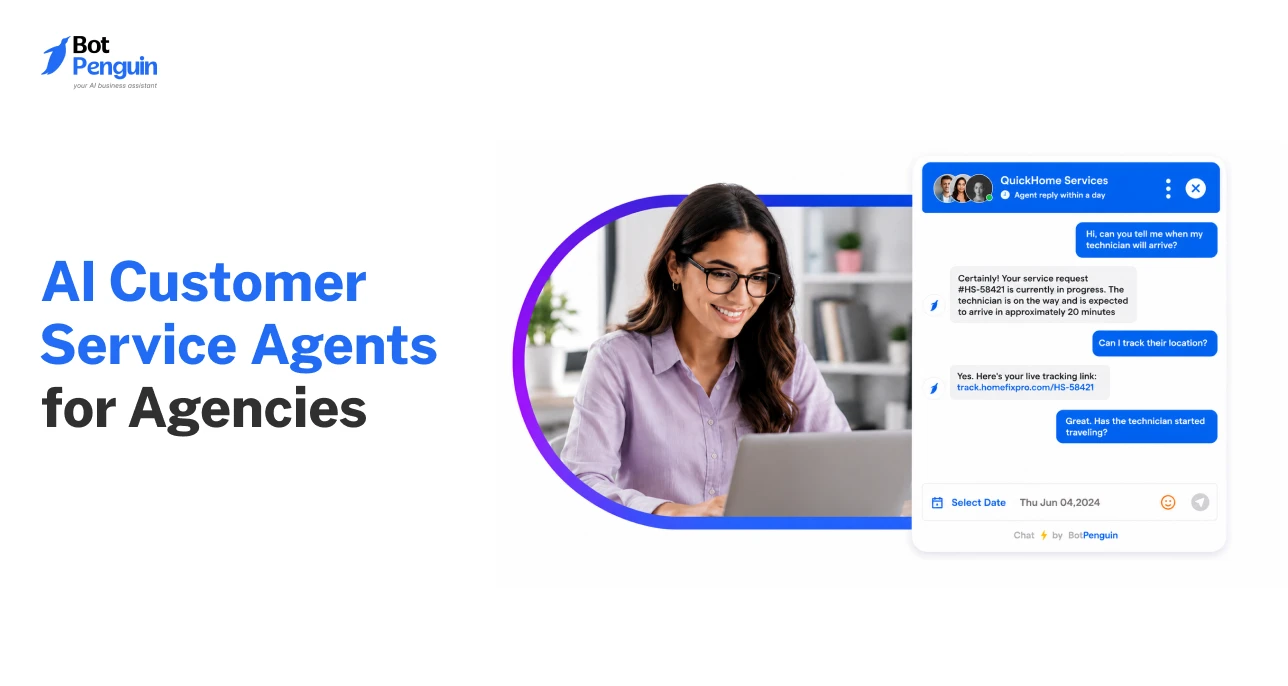
AI customer service agents for agencies help agencies deploy, manage, and sell customer support automation across client accounts. With a white-label setup, agencies can deliver AI support under their own brand while controlling client relationships, pricing, and ongoing management.
This guide is specifically for agencies and managed service providers. It explains what makes an AI customer service agent agency-ready, which support workflows clients need, how white-label deployment works, and what to evaluate before choosing a platform.
Deploying AI customer support for your own in-house team? See our guide AI Customer Support Agents: Guide, Benefits, and Use-cases.
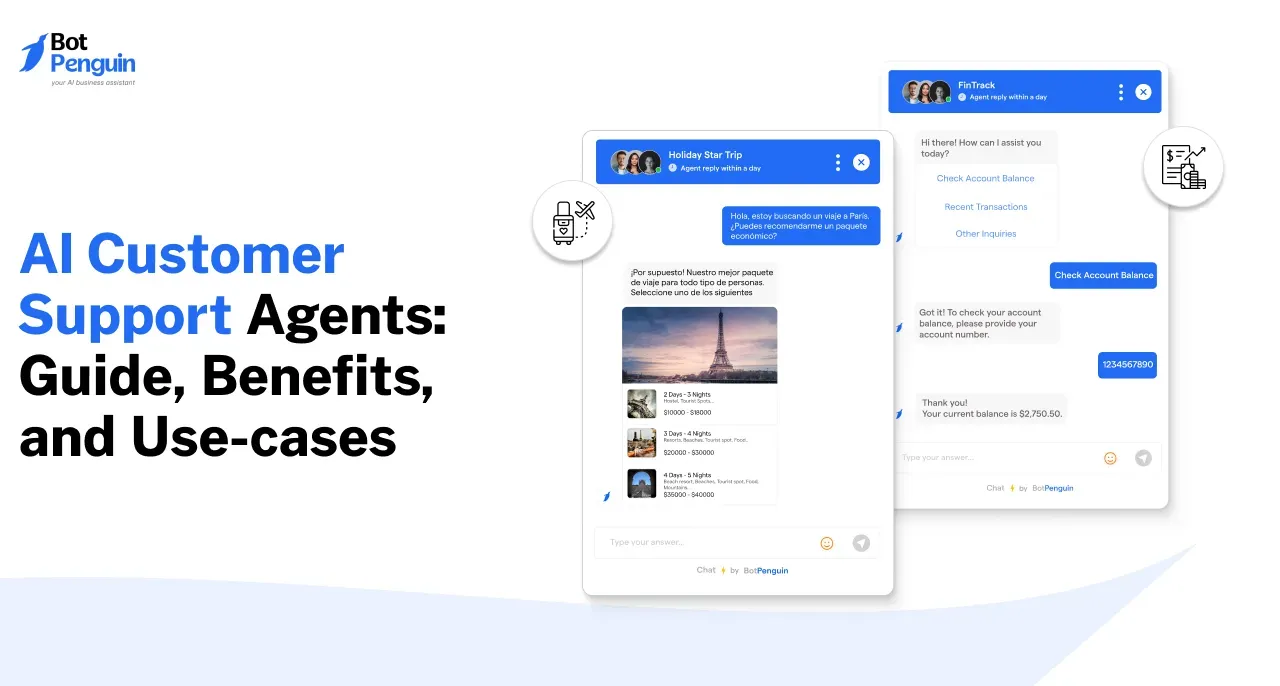
AI customer service agents for agencies are AI-powered support systems that agencies deploy and manage for clients. They handle customer questions, complete support tasks, access connected business data, and escalate conversations to human teams when required.
Unlike rule-based chatbots with fixed scripts, they understand context, access real-time business data across CRM and order management systems, execute multi-step workflows — processing refunds, booking appointments, updating account details — and escalate to human agents when conversations require it.
The key distinction from chatbots is autonomy.
A chatbot primarily answers questions. An AI customer service agent can also complete support tasks, use connected business data, trigger workflows, and escalate cases across supported customer channels.
The strongest deployments focus first on repetitive, structured support workflows where automation can be measured against resolution, escalation, and ticket-deflection metrics.
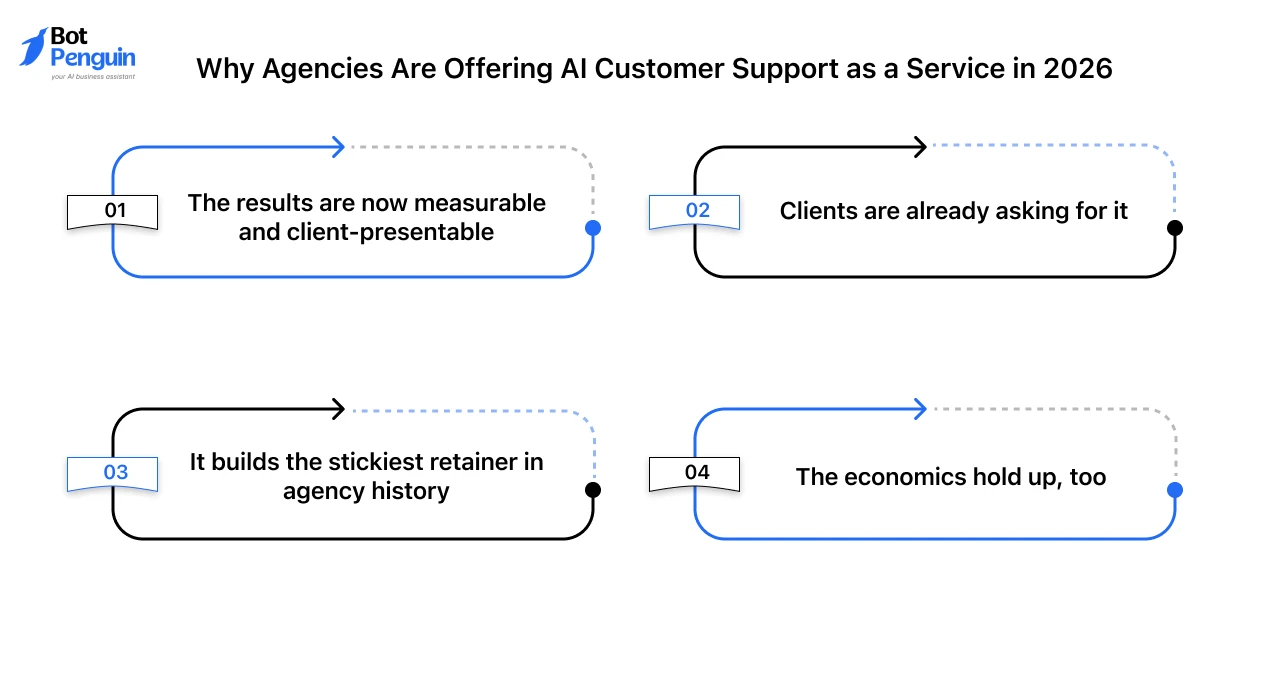
Agencies that moved early on AI customer support are now closing clients with case studies. Here is what is driving the shift.
Four market conditions are making AI customer support increasingly practical for agency service stacks in 2026.
Support volume reduction gives agencies a measurable result they can report through resolution, escalation, and ticket-deflection metrics.
Agencies that deployed AI customer service agents for clients 12 months ago have real performance data to show. That changes the sales conversation entirely. You are no longer selling a concept. You are selling a proven outcome.
BotPenguin's Puerto Rico white-label partner case study shows this model in practice. The partner scaled to 84 clients and used automated support workflows connected with Zendesk to capture, track, and follow up on customer support requests.
Customer service AI has crossed into mainstream business media. Your clients have read about it in Forbes, seen it in competitor announcements, and are wondering why their agency has not brought it up. If you do not offer it, the agency down the road will. This is no longer a differentiator. It is a baseline expectation.
An AI customer support agent integrated with a client's website, messaging channels, knowledge base, and CRM can make the service more deeply embedded in daily operations.
That operational integration can increase switching costs and strengthen the agency's position as an ongoing technology and service partner.
Agencies can package AI customer support through setup fees, recurring management retainers, usage-based pricing, or bundled service plans. Pricing and management effort depend on conversation volume, channels, integrations, reporting, and ongoing optimization.
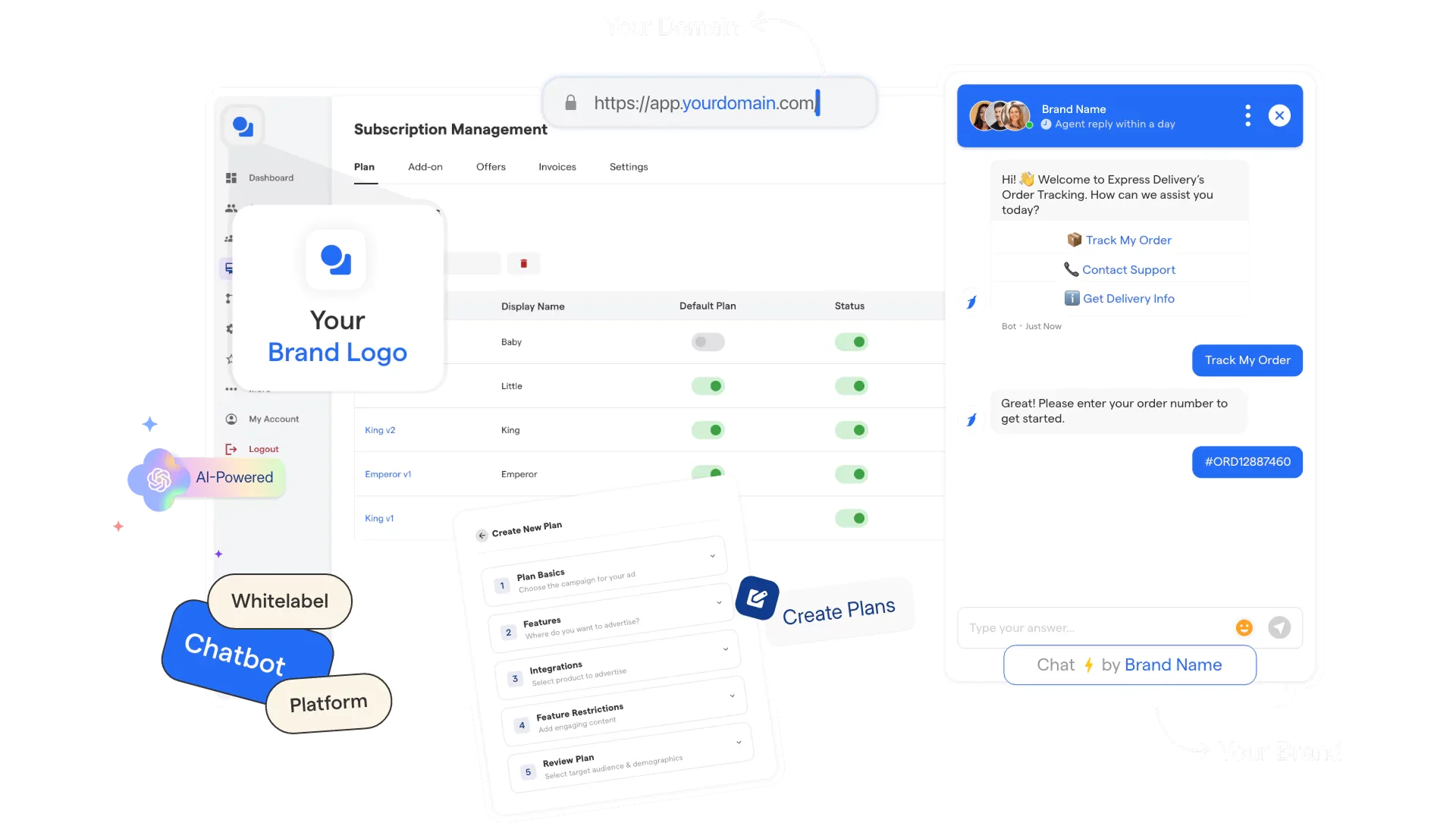
White label deployment means your agency brand owns every client touchpoint. The platform vendor stays invisible.
Agencies can use a white label AI agents platform to deploy branded customer support across WhatsApp, websites, and social channels while retaining control over client pricing and billing.
That is recurring revenue at a high margin with low ongoing effort.
Knowing why the market is moving is one part of the picture. Knowing what to look for in a platform before you commit to deploying it for clients is the next step.
Ready to add AI customer support to your service offering? See how BotPenguin's white-label AI agent platform works for agencies
Picking the wrong platform costs you a client. Here is what actually matters when evaluating an AI support agent platform for agencies.
Agencies need more than strong AI performance. The platform must also support client branding, multi-client management, relevant channels, integrations, human escalation, reporting, and commercial control.
A platform that only covers website chat is a partial solution. Your clients' customers reach out across multiple channels simultaneously, and gaps show up fast.
The highest value deployments in 2026 handle the same customer across WhatsApp, website chat, and Instagram DMs with full conversation history intact across every channel. No repetition. No context lost.
WhatsApp requires specific attention before you commit to any platform:
Confirm this status before shortlisting any platform.
The brand your client interacts with every day should be yours, not the platform vendor's. Full white label ai agent platform for customer support means your domain, your logo, and your agency name on every touchpoint the client sees.
Agencies can use a white-label chatbot platform to deliver branded customer support across website, WhatsApp, and social channels while controlling their pricing and client relationships.
This goes beyond aesthetics. Clients build loyalty to the brand on the screen. If that brand is the vendor's, the vendor owns the relationship.
Beyond branding, check these specifics before signing anything:
Most platforms skip the billing layer entirely. It is one of the primary reasons agencies building a customer support automation agency practice choose BotPenguin over the alternatives.
AI handles volume. Humans handle exceptions. A platform without configurable escalation is a direct liability for any client operating in a sensitive or high-stakes industry.
AI agents can meaningfully reduce cost per interaction, but only when human handoff is designed correctly. A broken escalation flow undoes the efficiency gains entirely.
What to verify before deployment:
That last point matters more than most agencies account for. It is one of the most cited pain points in customer support interactions and is completely avoidable with the right setup.
These three criteria narrow the shortlist considerably. The next section covers the seven platforms that clear the bar and how each one performs specifically for agency deployments.
Comparing platforms for your agency? Review the best white-label AI agent platforms before you commit. If you're new to the model, first read what white label AI agents are before you commit to a platform. Explore our full range of white-label programs in the Partner Hub.
Most platforms in this space are built for internal support teams. These seven are evaluated specifically on what agencies need: white label capability, multi-client deployment, and billing control. Each platform is assessed on the criteria that matter to an agency, not an enterprise IT department.
BotPenguin is the only AI support agent platform for agencies that combines full white label rebranding, omnichannel deployment, and partner subscription management in one offering. No other platform on this list does all three simultaneously.
For agencies, that matters because branding, channel coverage, and client billing are usually solved with three different tools and three different vendors. BotPenguin handles all of them in one place, which directly reduces the overhead of managing and deploying for multiple clients.
BotPenguin is purpose-built for agencies managing SMB and mid-market clients. That is precisely the segment where deployment speed, white-label control, and billing flexibility matter most. Agencies in this space get a platform that is ready to go in 12 hours per client rather than weeks of enterprise onboarding. If most of your roster is SMB-sized, see our roundup of the best AI agents for small business clients.
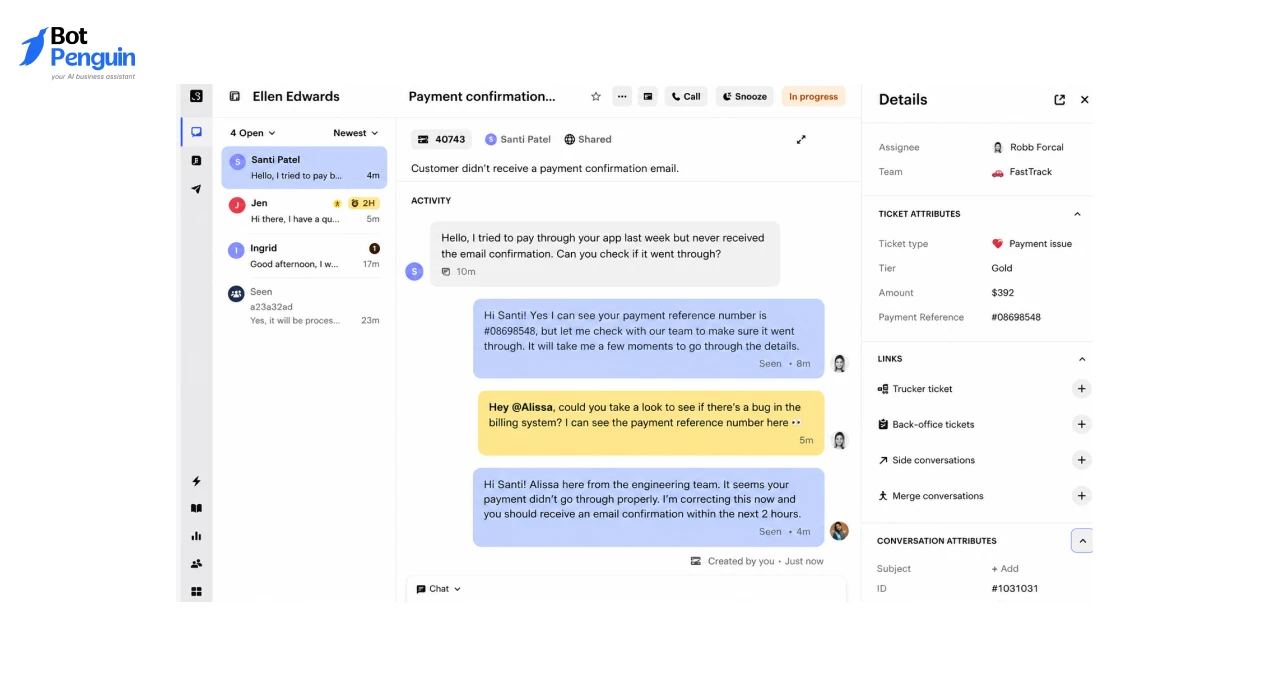
Intercom is a strong product, but it is built for a very specific buyer. Here is what agencies need to know before recommending it to a client.
Intercom's Fin AI agent handles complex support queries with high accuracy. It trains automatically on the client's existing help documentation, which means setup time is low for clients with well-maintained knowledge bases.
Deep native integrations with HubSpot, Salesforce, Stripe, and Zendesk make it a strong fit for SaaS clients who already operate inside the Intercom ecosystem.
For agencies building a white-label customer support automation practice, Intercom is not the right infrastructure. It works well as a point solution for a single well-funded SaaS client. It does not scale as an agency offering.
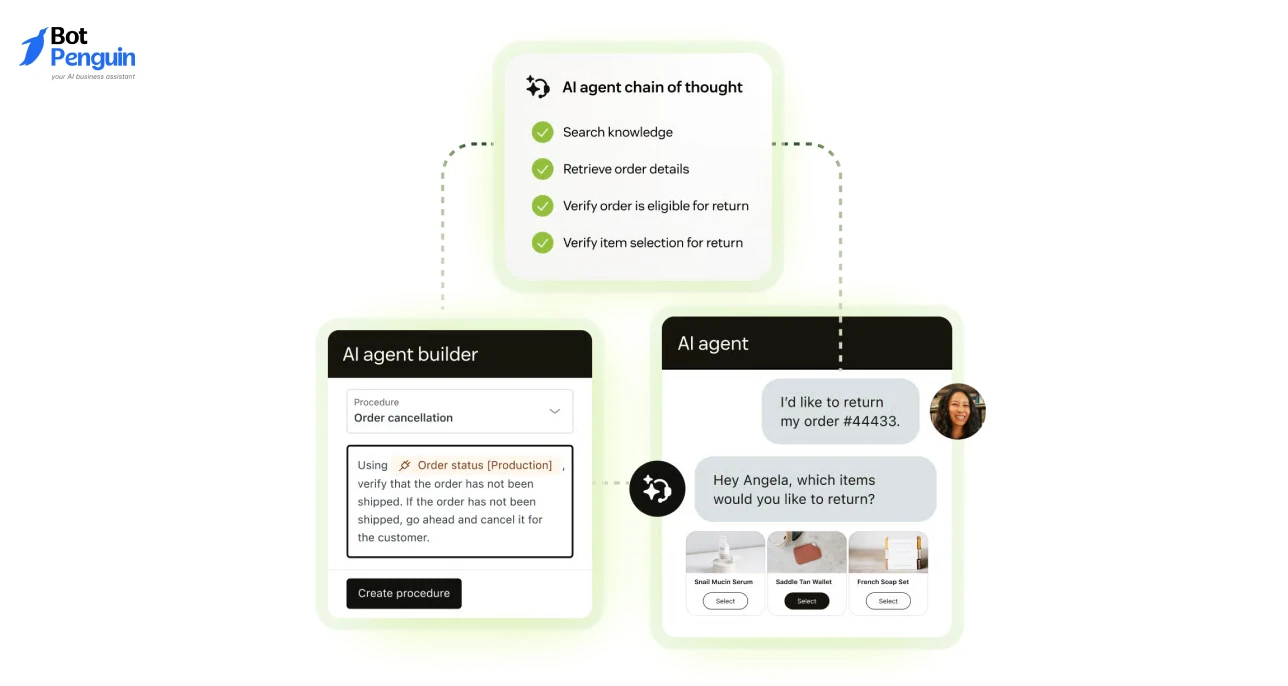
Zendesk is one of the most recognized names in customer support. Its AI layer adds intelligent triage, suggested replies, and automated resolution directly into the Zendesk ticketing suite.
For clients already running Zendesk at scale, the AI layer integrates without friction. There is no new interface to learn and no migration required.
If your agency manages mid-to-large enterprise clients already locked into Zendesk, it is worth knowing the AI capabilities. For agencies building a scalable AI customer support automation offering across multiple SMB clients, Zendesk does not fit the model.
Platforms 2 and 3 highlight a pattern that runs through most of this list. The strongest products in the market are built for enterprise buyers or single-brand deployments. Neither model works for agencies managing multiple clients under their own brand.
Freshdesk is a widely adopted SMB support tool. Its Freddy AI layer adds automation on top of an already familiar interface, which lowers the adoption barrier for clients already using Freshdesk.
Freddy AI handles ticket automation, intelligent routing, and customer self-service entirely within the Freshdesk ecosystem. For agencies whose clients already run Freshdesk as their primary support platform, it reduces the implementation effort considerably since there is no new system to migrate to.
Freshdesk Freddy AI is a useful add-on for a specific type of client. It is not infrastructure for an agency building a scalable customer support automation practice across diverse client accounts.
Tidio is one of the more accessible entry points into AI-powered customer support, particularly for eCommerce clients. Its Lyro AI agent resolves support queries automatically and requires no technical expertise to configure, which reduces deployment time significantly.
Strong Shopify and WooCommerce integrations make it a practical fit for agencies managing eCommerce clients who need basic support, automation up and running quickly.
Tidio works well as a point solution for a single eCommerce client. The account structure and white-label limitations make it difficult to build a repeatable AI customer support automation for agencies model on top of it.
The pattern across platforms 2 through 5 is consistent. Strong products, built for the wrong buyer. Each one is designed for a business deploying support for itself, not for an agency deploying support across a portfolio of clients under its own brand.
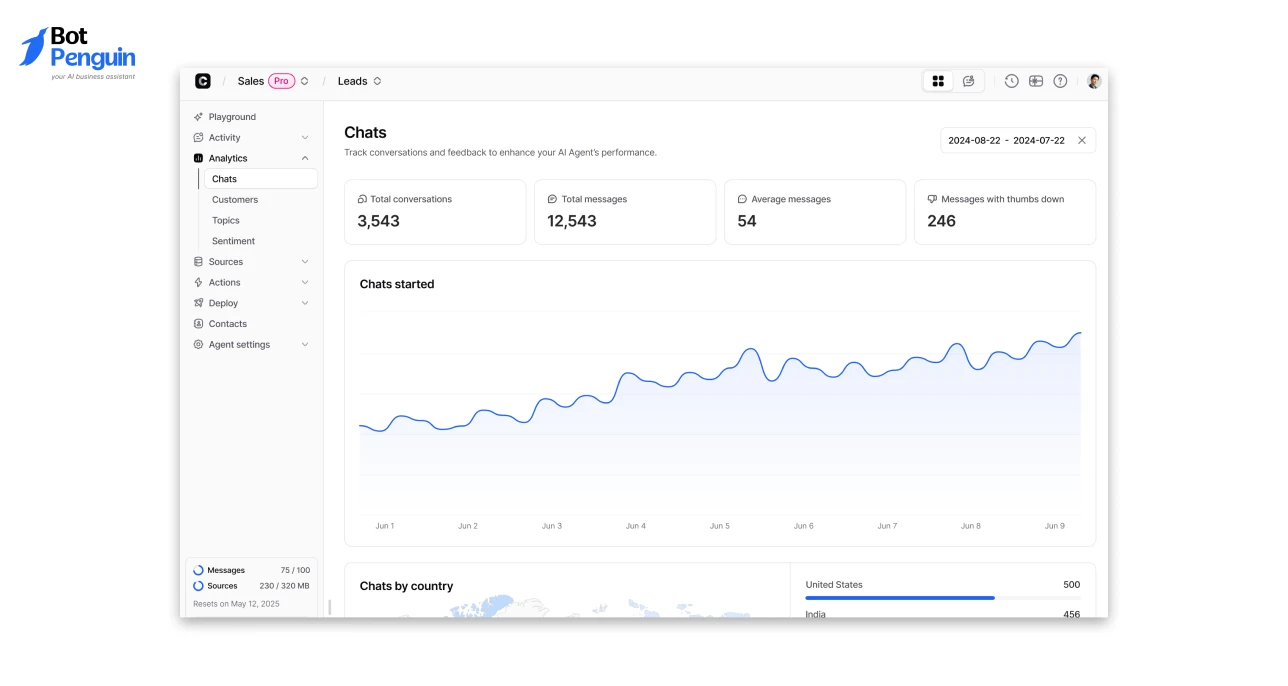
ChatBase is one of the fastest ways to get an AI support agent live on a client's website. No technical expertise required, and training on client documentation takes under 30 minutes. For agencies managing professional service clients with large volumes of structured FAQ content, it is a genuinely fast deployment option.
It connects via API with most CRMs, which keeps client data flowing without manual work after setup.
ChatBase solves a narrow problem well. If a client only needs website FAQ automation and has no social channel requirements, it delivers. Outside that scope, it is not the right tool for agencies building a broader customer support automation agency offering.
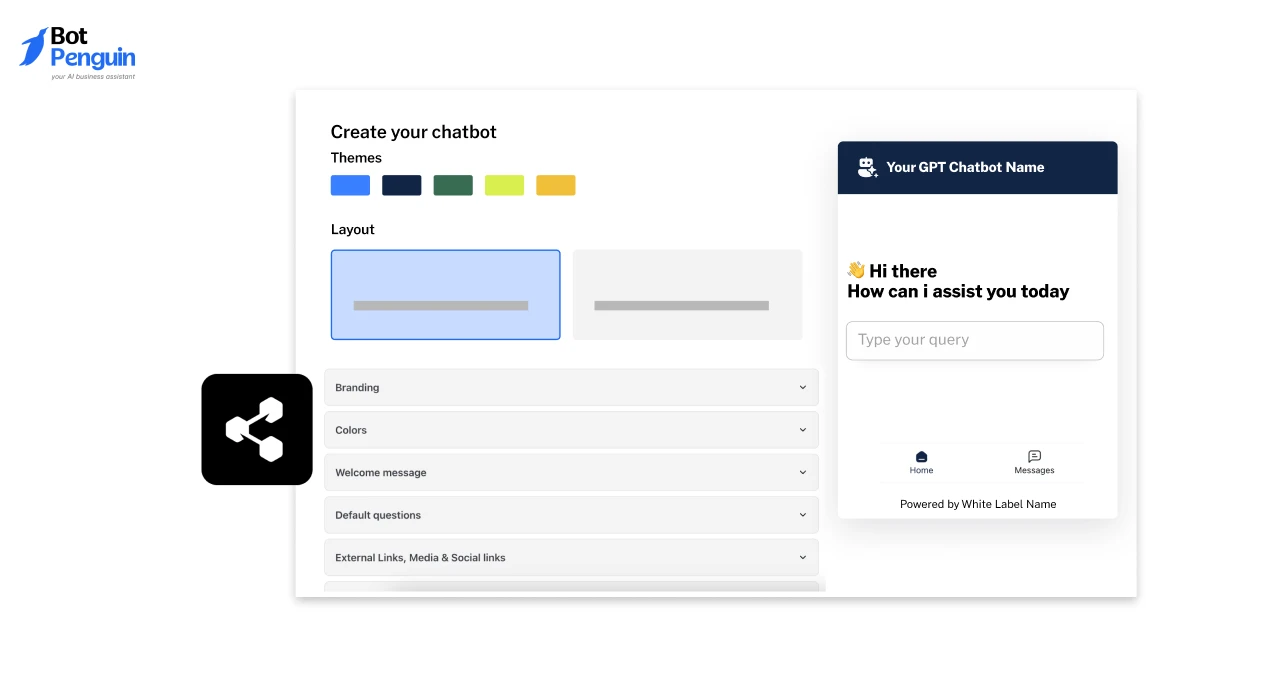
Botpress is the most flexible option on this list from a technical standpoint. It is open source, actively maintained, and gives developer-capable agencies the ability to build highly customized support flows from the ground up.
For agencies with in-house developers who need to build something non-standard, Botpress offers the deepest level of control of any platform in this comparison.
Botpress is a strong choice for a specific type of agency. If you have developers, need full control, and are building something genuinely custom, it delivers. For agencies focused on scaling repeatable white-label AI agents for customer support offerings across multiple clients, the development overhead makes it impractical.
Across all seven platforms, the evaluation points to the same conclusion. Most options in this market are built for a single internal team, a single brand, and a single deployment. Agencies need a platform that works across multiple clients, carries their own brand, and handles billing independently. That narrows the shortlist to one.
BotPenguin is the only platform in this comparison with full white-label capability, omnichannel deployment, and built-in partner subscription management.
Deploy AI customer support under your own brand — live in 12 hours.
White-label AI customer support deployment follows a repeatable process. The exact setup time depends on the client's channels, knowledge base, integrations, escalation requirements, and testing needs.
Reusable templates can reduce setup work across similar client deployments, but every implementation should still be tested against the client's knowledge, workflows, channels, and escalation rules. BotPenguin's partner support team is available 24/7 to assist with every step of the setup, so you are never working through this alone.
Deployment gets you live. The next section covers which specific use cases agencies bill for once the agent is running.
Ready to run your first white label deployment? Start Your Agency Plan.
Agencies can package AI customer support around specific client workflows instead of selling vague “AI automation.” The clearest services solve repetitive support problems, improve availability, or connect customer conversations with existing business systems.
This is the entry point for most agency deployments and the easiest one to show ROI on in the first 30 days.
Train the AI agent on the client's top 30 to 50 FAQ queries covering orders, returns, opening hours, pricing, and account issues. The agent handles all of these automatically, 24 hours a day, 7 days a week, without any human involvement.
First contact resolution rates typically improve when AI handles structured FAQ volume, freeing staff to focus on complex queries that need human judgment. The client's support staff shift their time to the complex queries that genuinely require human judgment.
This use case solves a problem every client with a lean support team has but rarely names directly: the gap between when customers need help and when support staff is available.
The AI agent covers off-hours and peak volume periods, with handoff to live agents during business hours. For smaller clients, this eliminates the missed conversation problem that quietly costs them inbound leads. For larger clients with bigger teams, it reduces queue times and lifts CSAT scores during volume spikes.
AI customer service agents can handle structured requests such as order status, account information, appointment changes, return policies, and common service questions. Where integrations allow it, the agent can retrieve relevant information or trigger the next workflow instead of only providing a static answer.
This is the highest value use case in the list, and the one most agencies underutilize in their client proposals.
Beyond responding to inbound queries, AI agents for customer support can proactively reach out to customers on behalf of the client. Agencies pairing support automation with AI agents for lead generation see the strongest combined revenue impact per client.
Order delivery updates via WhatsApp, abandoned cart follow-ups, renewal reminders, and post-resolution satisfaction surveys sent 24 hours after a ticket closes are all billable workflows an agency can own and manage.
The performance data on proactive engagement is significant. For clients that already use WhatsApp as a customer communication channel, proactive messaging can support workflows such as approved order updates, reminders, follow-ups, and post-resolution surveys. That is a metric clients respond to immediately because it connects directly to revenue, not just support efficiency.
These use cases cover the full range of what a customer support automation agency can offer, from cost reduction at the entry level to revenue generation at the top end.
Clients can start with FAQ deflection, then expand into live chat augmentation, service workflows, and proactive engagement as their automation requirements grow.
AI customer service agents give agencies a practical way to add managed customer support automation without building the underlying technology themselves.
The strongest agency offering starts with a defined client workflow, connects the right knowledge and business systems, includes reliable human escalation, and measures performance after deployment.
For agencies choosing infrastructure, white-label control matters alongside AI capability. The platform should support multiple client deployments while giving the agency control over branding, pricing, management, and ongoing service delivery.
Agencies ready to build that offering can explore BotPenguin's white-label AI agent platform.
AI customer service agents for agencies are AI-powered support systems that agencies configure and manage for clients. They can answer customer questions, use connected business information, execute supported workflows, and transfer complex cases to human teams while operating under the client's or agency's chosen service model.
Yes. BotPenguin's white-label platform lets agencies deploy AI customer service agents for clients under their own brand — custom domain, logo, pricing, and no vendor branding visible. Agencies set their own prices, keep 100% of client revenue, and manage all client deployments from one partner dashboard.
The reduction varies by support volume, query complexity, knowledge quality, and the workflows being automated. Repetitive requests such as order status, returns, opening hours, and common account questions are generally the clearest starting points for reducing human-handled support volume.
The best platforms deploy AI customer service agents across website chat, WhatsApp, Instagram DMs, Facebook Messenger, and Telegram from one system. BotPenguin is an official Meta Tech Provider supporting WhatsApp Business Platform deployments — critical for agencies serving clients in MENA, India, and LATAM, where WhatsApp is the primary support channel.
Agencies commonly use a setup fee, monthly managed retainer, usage-based pricing, or a combination of these models. Pricing should account for conversation volume, channels, integrations, knowledge-base complexity, reporting, human escalation, and ongoing optimization. Agencies should price the managed service separately from any underlying platform or usage costs.
BotPenguin is designed for agencies that want to offer AI customer service agents under their own brand. Its white-label platform combines branded client experiences, multi-client management, omnichannel deployment, integrations, partner subscription controls, and AI agents available on King and Emperor tiers.
With BotPenguin Whitelabel Get
✔Your brand ✔Your pricing ✔Your Logo ✔Your Profits
Apply for White Label ProgramCheckout our related blogs you will love.
Updated at May 29, 2026
16 min to read
Updated at Sep 30, 2026
18 min to read
Updated at Sep 26, 2026
13 min to read
Updated at Sep 25, 2026
15 min to read
Updated at Sep 25, 2026
13 min to read

Table of Contents