


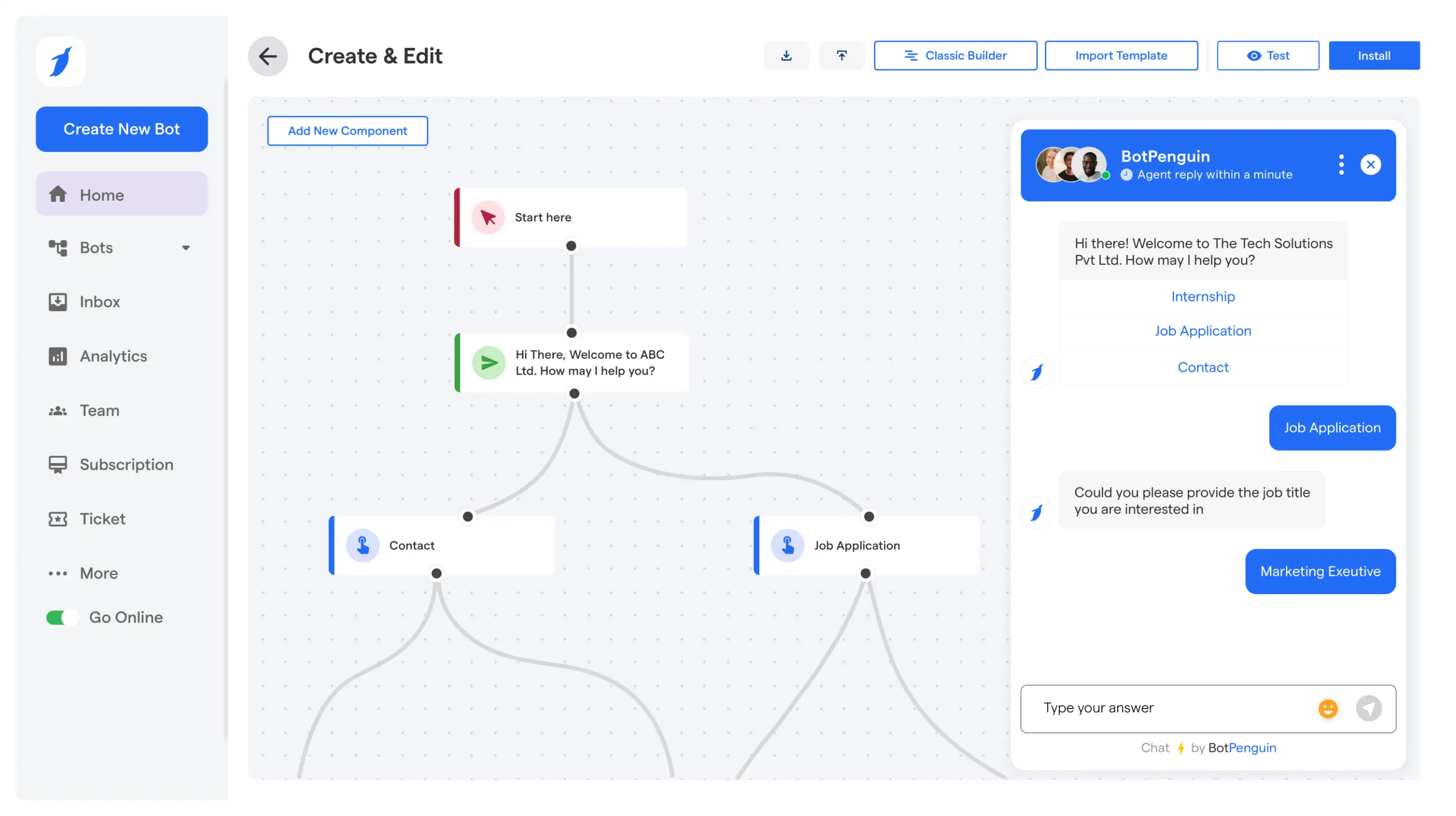

How to Build an Insurance Chatbot: 8-Step No-Code Tutorial
Updated at Sep 23, 2026
16 min to read

Insurance lead generation is the process of attracting potential insurance buyers and turning them into qualified prospects. It includes channels like SEO, paid ads, referrals, social media, partnerships, and purchased leads. AI and chatbots can also automatically capture, qualify, route, and follow up on insurance leads.
Finding people who need insurance is only the first challenge.
Reaching them before competitors, earning trust, and moving them toward a decision is just as important.
That is why insurance lead generation now goes beyond collecting names and phone numbers. Insurance businesses need strategies that attract the right prospects and improve what happens after interest begins.
In this guide, you will learn proven ways to generate insurance leads, from SEO and referrals to paid campaigns, AI, chatbots, and automation. You will also see how to qualify, route, and follow up with prospects more efficiently.
Insurance lead generation is the process of attracting people who may need insurance and turning their interest into sales opportunities.
These prospects can come from search engines, referrals, ads, social media, partnerships, or chatbot conversations. However, not every lead has the same level of intent or readiness.
Understanding the difference helps insurance businesses prioritize follow-up more effectively.
Cold insurance leads have shown little or no direct interest in your offering.
They may come from purchased databases, outbound prospecting, or broad marketing campaigns. These prospects usually need more education before they consider taking action.
Warm insurance leads have already interacted with your business or content.
They may have visited a pricing page, requested information, opened a conversation, or responded to an advertisement. Their existing interest makes timely follow-up especially important.
Qualified insurance leads meet the criteria your sales team considers valuable.
They may match your target location, coverage type, budget, or buying timeline. Qualification helps teams focus their time on prospects with stronger potential.
The next challenge is improving how teams capture and handle these leads, which is where AI is changing the process.
AI has changed insurance lead generation by improving how businesses handle prospects after they show interest. It can analyze responses, support qualification, and trigger the right next step.
Chatbots are one way businesses can use these AI capabilities in customer conversations.
Together, they can support:
Instant response: Chatbots can reply to common questions without delays.
Lead qualification: AI can help assess responses against predefined criteria.
Data capture: Chatbots can collect contact details and coverage requirements.
Lead routing: AI can help direct prospects to the appropriate team.
Appointment booking: Chatbots can guide qualified prospects toward available slots.
Follow-up: Automated workflows can continue engagement after the initial conversation.
This makes AI insurance lead generation more efficient across the lead journey. It improves response, qualification, and follow-up without replacing the channels that attract prospects.
The best insurance lead generation strategies combine acquisition with effective follow-up. Some bring new prospects into the funnel. Others turn existing interest into qualified opportunities.
Here are 12 practical ways to strengthen both sides.
Your website should make it easy for interested visitors to act.
Create dedicated pages for different insurance products and customer needs. Give each page a clear next step, such as requesting a quote.
What to focus on: Keep forms short and ask only essential questions. Add clear business details, credentials, service areas, and trust signals.
The goal is not simply more website traffic. It is turning relevant visitors into measurable opportunities.
SEO helps you reach prospects already researching insurance options.
Focus on searches tied to specific needs. These can include policy types, local providers, coverage questions, and comparison queries.
Where to prioritize: Build useful pages around high-intent topics rather than broad traffic terms. Local agencies should also optimize location pages and business listings.
This puts your business in front of prospects closer to taking action.
Many visitors leave before completing a traditional contact form.
AI-powered chatbots provide another way to start that conversation. They can answer common questions while collecting useful prospect information.
What to capture: Coverage interest, location, contact details, and preferred next steps.
AI can then support qualification using predefined business criteria. Qualified prospects can move toward an agent, appointment, or another workflow.
For a deeper look at this approach, see how insurance AI chatbots support conversations across the customer journey.
WhatsApp gives prospects a familiar channel for starting insurance conversations.
People may arrive through Click-to-WhatsApp ads, website buttons, QR codes, or existing campaigns. From there, the conversation can move directly into qualification.
How it works: Chatbots can handle repetitive questions and collect information. AI can support qualification and routing when it needs more context.
Qualified prospects can then move toward consultations or appointments. See how a WhatsApp chatbot for insurance can support these conversations.
Facebook can create opportunities through ads, Messenger, and Page interactions.
The key is creating a clear path from engagement to qualification. Prospects should not reach a dead end after clicking an ad.
Best use: Chatbots can collect initial details through Messenger. AI can support intent analysis and routing based on those responses.
Businesses can also use Facebook chatbot marketing automation for insurance to connect campaign interactions with ongoing conversations.
Referrals can produce valuable insurance leads because trust already exists.
Ask satisfied customers for introductions after positive interactions. Renewal milestones and successful service experiences are natural opportunities.
Make it easy: Give customers a simple referral path. Avoid making them explain your entire offering to someone else.
Track referred prospects separately. This helps compare their quality with other lead sources.
Insurance needs often appear alongside major purchases and life events.
Relevant partners may include real estate professionals, dealerships, accountants, mortgage businesses, and property managers.
What makes this work: Build a genuine referral process around customer needs. Do not treat partnerships as contact-list exchanges.
Any arrangement should also follow applicable insurance and privacy requirements.
Paid campaigns can generate demand faster than many organic channels.
Search ads work well when prospects already know what they need. Social campaigns can reach people earlier in the decision process.
Improve conversion: Send each campaign to a relevant landing page or conversational entry point. Avoid directing every prospect to the homepage.
This also makes it easier to identify which campaigns generate insurance leads that become qualified opportunities.
Insurance decisions often require explanation before a prospect feels ready.
Use guides, videos, checklists, comparisons, and webinars to answer common questions. Each format can move prospects closer to an informed conversation.
Best approach: Match content to questions buyers ask before contacting an agent. Keep it educational rather than heavily promotional.
Webinars are especially useful for topics that require deeper explanations and live questions.
Not every prospect converts during the first interaction.
Some delay decisions, miss appointments, or stop responding. These contacts can still represent potential opportunities.
Prioritize re-engagement for: incomplete quote requests, missed appointments, previous inquiries, renewals, and prospects awaiting information.
Follow-up should reflect the previous interaction rather than restart the conversation. Broader insurance automation can help businesses manage these repetitive workflows consistently.
Purchased leads can increase volume while organic channels are developing.
However, price alone says little about quality. Always understand how a provider sources and distributes its leads.
Evaluate before buying: Check freshness, exclusivity, geography, insurance type, consent, and replacement policies.
Measure purchased insurance leads for agents against actual sales outcomes. A cheap lead provides little value if it rarely converts.
Generating interest matters only when someone responds.
Automation can acknowledge new inquiries, assign prospects, and trigger qualification workflows quickly. This reduces manual steps between initial interest and follow-up.
Where AI fits: AI can support decisions within those workflows. Chatbots can manage customer-facing conversations where appropriate.
Together, these strategies create several paths to attract and move prospects forward. They also lay the groundwork for a broader AI insurance lead generation process.
The cost of buying insurance leads varies widely. No universal price exists because providers price leads based on type, quality, targeting, and distribution.
Several factors can affect what an insurance business pays:
Insurance type: Lead costs can differ across auto, life, health, home, and other insurance categories.
Geography: Pricing can vary by state, city, or target market based on demand and competition.
Exclusivity: Exclusive leads generally command different pricing because they are sold to fewer buyers.
Freshness: Newly generated leads may be priced differently from older or aged leads.
Lead source: Search, social, comparison sites, and other acquisition channels can produce leads with different costs and intent.
Targeting: Narrow criteria around location, demographics, or coverage needs can affect pricing.
Shared vs. exclusive: Shared leads may reach multiple agents, while exclusive leads limit distribution.
Instead of comparing providers on price alone, evaluate cost against qualification, conversion, and eventual customer value.
This makes lead quality just as important as lead price when deciding where to buy.
No single provider offers the best insurance leads for every agency.
The right source depends on your market, insurance line, budget, and sales process. Agencies should compare providers using consistent quality criteria.
Key factors include:
Intent: How strongly has the prospect shown interest in buying coverage?
Exclusivity: Is the lead sold to one agency or several?
Freshness: How recently did the prospect submit their information?
Consent: Did the prospect clearly agree to be contacted?
Targeting: Does the lead match your location, product, and customer criteria?
Accuracy: Are contact details and submitted information reliable?
Refund policy: Does the provider replace invalid or unusable leads?
The best provider consistently delivers leads your team can convert profitably. Price per lead matters less than lead quality and final acquisition cost.
AI can automate insurance lead generation by connecting acquisition, qualification, routing, and follow-up into one workflow.
The goal is not to replace every channel. It is to reduce delays and manual work after a prospect shows interest.
The process starts with a source that brings prospects in.
This may include SEO, paid ads, social media, referrals, WhatsApp, or website traffic. AI does not replace these acquisition channels.
Instead, it improves what happens after someone enters the funnel.
Once a prospect engages, a chatbot can start the conversation immediately.
It can answer common questions and guide the prospect toward the right next step. This helps reduce delays between interest and response.
AI can support these conversations by interpreting intent and context.
The next step is collecting useful prospect information.
A chatbot can gather details such as:
Contact information
Coverage interest
Location
Preferred communication channel
Appointment preferences
This creates a structured lead record for the next stage.
AI can help evaluate responses against predefined qualification criteria.
For example, it can identify whether the prospect matches the right location, insurance type, or buying intent. This helps separate higher-intent prospects from early-stage inquiries.
Businesses can support this workflow with an AI lead generation agent.
Once qualified, the prospect should move forward without unnecessary delays.
AI can help determine the appropriate destination based on predefined rules. A chatbot can then guide the prospect toward an available appointment or human agent.
This keeps the journey connected from qualification to handoff.
Not every prospect responds or books immediately.
Automation can trigger follow-ups based on previous activity. Messages can remind prospects about incomplete steps, missed appointments, or pending conversations.
AI can also help determine which follow-up path best matches the prospect's earlier responses.
The final step is tracking what happens across the workflow.
Insurance businesses should monitor metrics such as lead source, qualification rate, appointments, handoffs, and conversions.
This helps identify which channels and workflows produce the strongest outcomes.
A broader AI insurance lead generation system connects these steps into one measurable process. It helps insurance teams move prospects from first interaction to qualified opportunity with fewer manual gaps.
BotPenguin supports insurance lead generation by connecting prospect conversations with qualification, booking, handoff, and CRM workflows.
Insurance businesses can use an insurance chatbot across their website, WhatsApp, Facebook Messenger, and Instagram. This gives prospects multiple ways to start a conversation.
When the workflow needs to go beyond answering questions and collecting details, AI agents for insurance can support more advanced qualification, decisioning, routing, and follow-up across connected systems.
Key capabilities include:
Lead capture: Collect contact details and insurance requirements during conversations.
Lead qualification: Ask predefined questions to understand needs and identify stronger prospects.
Appointment booking: Let qualified prospects schedule follow-up conversations directly within chat.
Human handoff: Transfer complex conversations to a team member while preserving context.
CRM-connected workflows: Send captured lead data into connected CRM and business systems.
This creates a clearer path from initial conversation to sales follow-up.
Businesses can also explore BotPenguin’s broader lead generation capabilities for managing prospect capture, qualification, and progression across channels.
Insurance lead generation is the process of attracting potential buyers and turning their interest into qualified sales opportunities. It can involve SEO, paid ads, referrals, social media, partnerships, purchased leads, chatbots, and AI-supported workflows that capture and progress prospects.
Insurance agents generate insurance leads through referrals, SEO, paid search, social campaigns, partnerships, webinars, purchased leads, website forms, and conversational channels. They can also use AI and automation to capture details, qualify prospects, book appointments, and support timely follow-up.
The cost of buying insurance leads varies by insurance type, geography, lead source, freshness, exclusivity, and targeting. Shared leads may cost differently from exclusive leads. Agencies should compare providers using conversion quality and customer acquisition cost, not price alone.
No single provider offers the best insurance leads for every agency. The right source depends on intent, freshness, exclusivity, consent, targeting, accuracy, refund policies, and cost per acquisition. Agencies should judge providers using actual conversion performance.
AI can support insurance lead generation by improving how prospects are captured, qualified, routed, and followed up. It works best alongside acquisition channels like SEO, ads, social media, and referrals, helping teams respond faster and move stronger opportunities forward.
Yes. Chatbots can ask predefined questions and collect details such as coverage interest, location, contact information, and appointment preferences. AI can then support qualification using those responses, routing stronger insurance leads to the right agent, team, or next step.
Effective insurance lead generation still depends on strong acquisition channels.
SEO, referrals, paid campaigns, partnerships, and social media create demand. The next challenge is managing that interest efficiently.
AI can improve qualification, routing, follow-up, and appointment handling. It helps teams respond faster and reduce manual gaps.
The goal is not to replace proven lead sources. It is to make the entire process more consistent.
Ready to improve how you capture and qualify insurance leads? Start with BotPenguin and build a faster, more connected lead generation workflow.
Capture More Insurance Leads
Capture, qualify, and route insurance prospects faster across chat, WhatsApp, and other conversational channels with BotPenguin.
Explore Insurance AICheckout our related blogs you will love.
Updated at Sep 23, 2026
16 min to read
Updated at Oct 13, 2026
11 min to read
Updated at Oct 10, 2026
24 min to read
Updated at Oct 10, 2026
26 min to read
Updated at Oct 7, 2026
4 min to read
Updated at Oct 7, 2026
10 min to read
Table of Contents

