


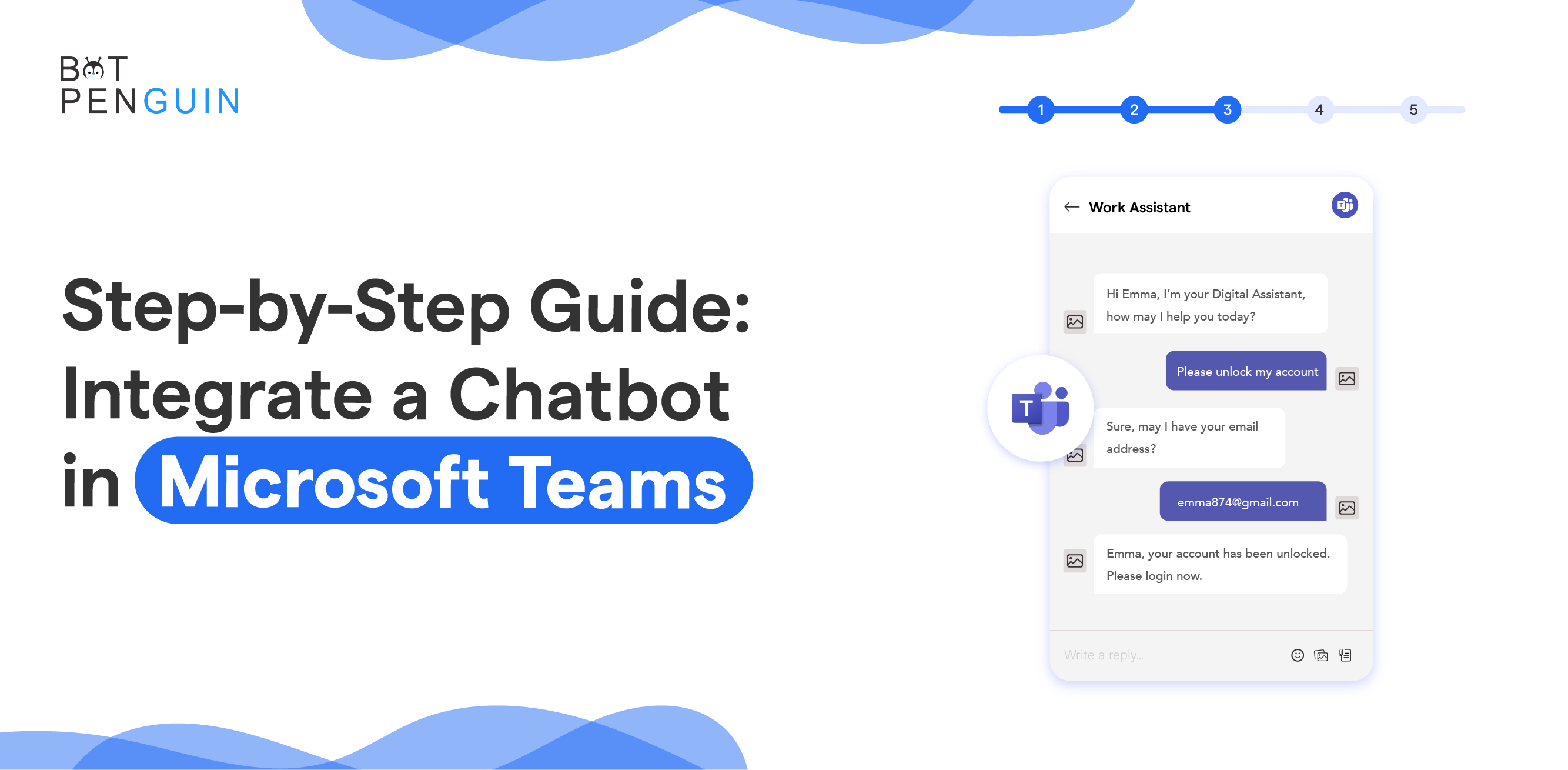
Integrate a Chatbot in Microsoft Teams: Step-by-Step Guide
Updated at Oct 10, 2026
8 min to read
Power Virtual Agents has been rebranded as Microsoft Copilot Studio. If you are evaluating Power Virtual Agents for Teams, this comparison focuses on Microsoft’s current product and BotPenguin. It compares both options across setup, Microsoft ecosystem fit, chatbot deployment, and broader channel support.
Choosing the right chatbot for Microsoft Teams depends on more than native integration. IT teams must also consider setup effort, workflow needs, pricing, and channel reach.
If you are researching Power Virtual Agents for Teams, the key challenge is comparing Microsoft’s current Copilot Studio with third-party options.
Understanding what a Microsoft Teams chatbot is also helps define those requirements.
This comparison examines where Copilot Studio performs well and where it has limitations. It also explains how BotPenguin differs across deployment, usability, pricing considerations, and broader communication needs.
Microsoft renamed Power Virtual Agents to Microsoft Copilot Studio in November 2023. The change brought the existing chatbot product into Microsoft’s broader Copilot offering.
For anyone researching Microsoft’s older chatbot product, three points matter:
Power Virtual Agents is the former product name. Microsoft Copilot Studio is the current name used across Microsoft documentation and product pages.
Existing Power Virtual Agents bots continued within Copilot Studio. The transition did not require customers to rebuild their existing bots.
Copilot Studio expanded beyond the earlier chatbot focus. It added broader capabilities for generative AI, workflows, data connections, and Copilot customization.
The rebrand therefore involved more than a naming update. Microsoft retained the core bot-building capabilities while expanding the product’s scope.
That distinction matters when comparing chatbot options today. Older articles may still refer to Power Virtual Agents, while newer Microsoft documentation uses Copilot Studio.
For Teams chatbot evaluation, Microsoft Copilot Studio for Teams is the relevant current product context. Any comparison with BotPenguin should therefore use Copilot Studio as the Microsoft option.
Copilot Studio offers clear advantages for organizations built around Microsoft 365. Its strongest value comes from ecosystem fit, connected workflows, and familiar administration.
Five strengths explain why it works well in Microsoft-focused environments.
Copilot Studio connects naturally with Teams and Microsoft 365 services.
Organizations can place agents where employees already communicate and work. Agents can also work with approved Microsoft data and connected services.
This reduces the need to create separate internal systems.
Microsoft-focused organizations gain a familiar operating environment.
Copilot Studio works with Microsoft services, connectors, and business data. IT teams can manage agents alongside existing Microsoft processes.
This makes adoption easier for organizations already using Microsoft extensively.
Access depends on the organization’s existing Microsoft licensing arrangement. Certain Microsoft 365 plans can include relevant Copilot Studio capabilities.
Standalone licensing can support broader agent requirements. Current licensing should be verified before publishing any cost comparison.
Copilot Studio uses a graphical, low-code authoring environment.
Teams can build agents without having to develop every workflow from scratch. Topics, actions, and conversational logic can be configured visually.
Technical teams can also support more advanced customization where required.
Copilot Studio works well when workflows depend on Microsoft business data. Agents can connect with supported services and automated processes.
This is especially useful for internal workflows tied to Microsoft 365. Teams can keep automation closely aligned with their existing technology stack.
These strengths make Microsoft Copilot Studio for Teams a credible Microsoft-centered choice. The next question is where that ecosystem-focused approach can create practical limitations.
Copilot Studio can handle sophisticated Teams use cases. However, its fit changes when costs, configuration, and communication requirements expand.
Four practical limitations matter before considering another chatbot option.
For clarity, the Teams plan refers to Copilot Studio access included with select Microsoft 365 subscriptions. Standalone Copilot Studio is separately licensed and supports broader capabilities.
Microsoft-centered administration
Copilot Studio supports several channels beyond Teams. However, administration still relies heavily on Microsoft and Power Platform environments. Custom applications may also require configuration of the Direct Line API.
Usage-based cost planning
Standalone Copilot Studio can consume Copilot Credits based on agent activity. Microsoft offers prepaid capacity and pay-as-you-go options. Administrators must therefore estimate usage as conversations and agent actions increase.
Premium connector requirements
The Teams plan does not provide the same connector capabilities as standalone Copilot Studio. Premium connectors require the standalone offering for supported scenarios. This can affect licensing when agents need external business data.
More layers for advanced workflows
Basic agents can remain manageable. Advanced requirements can introduce actions, permissions, flows, connectors, and capacity management. Each component adds configuration that IT teams must understand and govern.
A Power Virtual Agents alternative becomes relevant when Teams is the only communication channel.
Copilot Studio itself supports multiple channels, so this is not a channel availability issue.
The difference is operational fit. Businesses may prefer one dedicated chatbot system for Teams and customer-facing channels. That matters when website, WhatsApp, or other conversations need consistent management.
For task-oriented workflows, a Microsoft Teams AI agent can handle configured actions through connected systems.
Those requirements make BotPenguin’s role in this comparison more relevant.
BotPenguin is for teams that want focused chatbot deployment across multiple channels. Its value differs from Copilot Studio’s deeper approach within Microsoft's ecosystem.
The main differences appear in setup, chatbot workflows, deployment, and channel coverage.
BotPenguin reduces the amount of chatbot development teams must handle themselves. Microsoft Teams configuration and organizational approval are still required.
The setup centers on a defined deployment process:
Create the bot through the Microsoft Teams Developer Portal.
Generate the required Bot ID and secret key.
Submit the Teams app for organizational approval.
Connect those credentials inside BotPenguin.
Configure the chatbot flow and AI settings.
This approach suits teams wanting a no-code chatbot builder. They can focus more on conversations than custom application development.
BotPenguin focuses on defined conversational workflows inside Microsoft Teams. The landing page highlights several functions for everyday team operations.
Key capabilities include:
Automated message handling for routine conversations.
Group meeting scheduling and invitations.
Permission-based actions for controlled workflows.
Common question handling for faster internal support.
Adaptive Cards for interactive Teams conversations.
These features suit focused use cases such as HR and IT support. They also support onboarding and internal information requests.
BotPenguin also supports generative AI inside Teams chatbot workflows. Businesses can connect ChatGPT and train responses using their own resources.
Important AI capabilities include:
Training with FAQs, datasets, websites, and interaction data.
Context-aware responses based on the ongoing conversation.
Automated language translation for multilingual communication.
Task execution for queries, surveys, appointments, and notifications.
Configurable conversational tone for specific business requirements.
This keeps AI focused on practical chatbot tasks inside Teams.
BotPenguin becomes more relevant when Teams is only one channel. The product also supports customer-facing conversations outside Microsoft Teams.
From one system, businesses can create automation for:
Websites
Facebook Messenger
Telegram
SMS
Microsoft Teams
This matters when employees use Teams while customers use other channels. Businesses can avoid treating each communication environment as a separate chatbot project.
If you are considering more options, you can compare AI chatbot platforms for Microsoft Teams.
BotPenguin does not need to replace everything Copilot Studio offers. Copilot Studio remains valuable for Microsoft-centered agent development.
BotPenguin serves a different operational requirement. It suits teams prioritizing dedicated chatbot workflows and broader channel coverage.
The decision therefore depends on how deeply workflows rely on Microsoft. Teams that need broader conversational automation can evaluate BotPenguin’s chatbot for Microsoft Teams.
Licensing, coexistence, and setup questions still influence that final choice.
Yes. Microsoft rebranded Power Virtual Agents as Microsoft Copilot Studio. Existing bot capabilities moved into the newer product alongside broader agent features. If you research Power Virtual Agents for Teams, Copilot Studio is the Microsoft product you are evaluating today.
Not always through the same license. Copilot Studio for Teams is included with select Microsoft 365 subscriptions, while broader capabilities can require standalone licensing. Premium connectors and wider channel deployment may also depend on plans and usage-based billing arrangements.
BotPenguin suits teams that prioritize faster no-code chatbot setup and broader channel coverage. It supports Microsoft Teams, as well as websites, WhatsApp, Instagram, Facebook Messenger, Telegram, and SMS. This helps when Teams is one communication channel rather than the entire chatbot environment.
Yes. Organizations can use Copilot Studio for workflows closely tied to Microsoft 365, while using BotPenguin for broader customer-facing conversations. This approach works when internal Teams automation and external website, WhatsApp, or social channel automation require different chatbot workflows.
Not necessarily. Basic Copilot Studio agents are accessible through its graphical low-code interface. Complexity increases when advanced flows require permissions, premium connectors, actions, or capacity management. BotPenguin can reduce those configuration layers for teams focused on dedicated chatbot deployment.
Copilot Studio is a strong choice when chatbot requirements stay closely tied to Microsoft 365. Its native integrations and low-code environment suit teams already working inside Microsoft’s ecosystem.
For businesses comparing Power Virtual Agents for Teams, the right option depends on operational priorities. BotPenguin fits teams that value faster chatbot setup, focused workflows, and broader channel coverage.
It can support Microsoft Teams alongside websites, WhatsApp, and other customer communication channels. This matters when Teams represents only one part of the overall chatbot strategy.
If broader deployment is a priority, consider BotPenguin’s chatbot for Microsoft Teams when making your final decision.
Choose Better MS Teams Chatbot
Understand where BotPenguin fits when Copilot Studio feels too Microsoft-focused for broader chatbot deployment across customer communication channels.
Build Teams ChatbotCheckout our related blogs you will love.
Updated at Oct 10, 2026
8 min to read
Updated at Sep 11, 2026
6 min to read
Updated at Sep 10, 2026
9 min to read
Updated at Sep 10, 2026
8 min to read
Updated at Sep 10, 2026
12 min to read
Updated at Sep 10, 2026
10 min to read
Table of Contents
