


How to Implement Healthcare Marketing Automation?
Updated at Sep 29, 2026
8 min to read
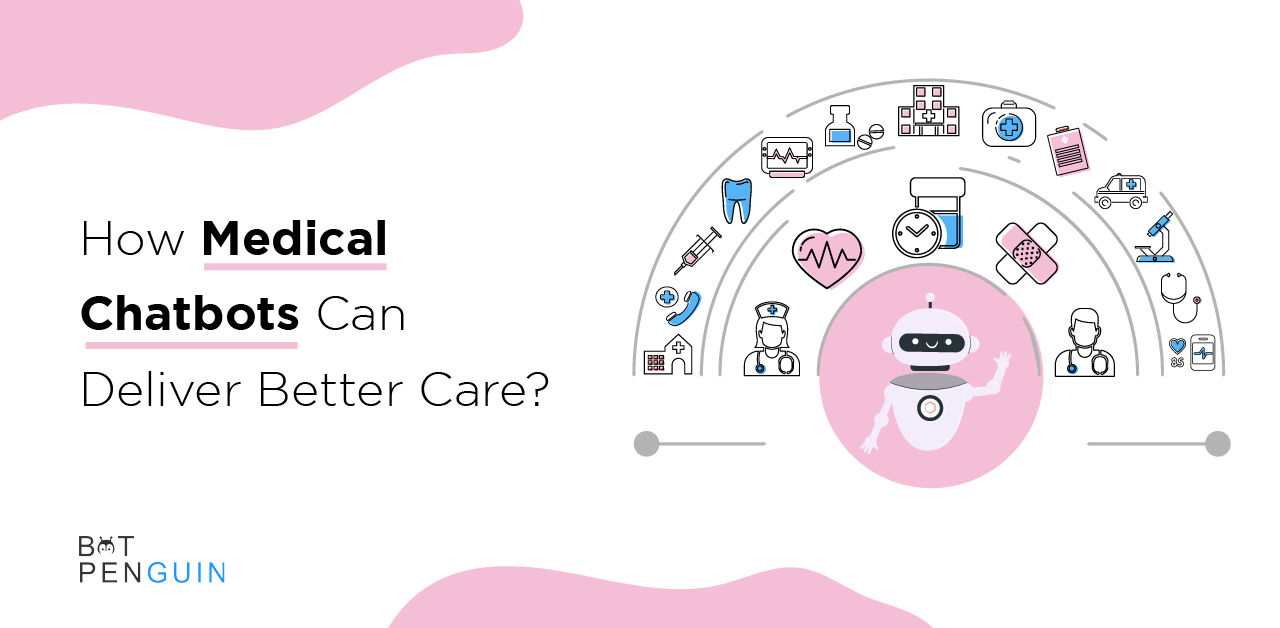
A medical chatbot is an AI-powered assistant that handles patient-facing tasks such as booking appointments, answering common questions, collecting intake details, sending reminders, and routing urgent requests to staff across websites, WhatsApp, and voice. It works 24/7 within a defined non-diagnostic scope and escalates clinical questions to qualified staff.
See how a medical chatbot automates patient scheduling, FAQs, intake, and follow-ups securely around the clock, and how to launch one without writing code.
Start free for routine patient conversations or book a demo to map BotPenguin to your healthcare workflows.
Medical practices spend significant time on repetitive patient communication, from appointment booking and rescheduling to insurance questions, pre-visit instructions, and follow-ups. When those requests pile up, front-desk teams have less time for patients who need direct attention.
A medical chatbot can take on structured patient-service workflows across digital channels while keeping clinical judgment with qualified staff. This administrative use of AI is becoming increasingly relevant. In the American Medical Association's 2026 survey of 1,692 physicians, 81% reported using AI professionally, while 70% saw AI as a tool for automating tasks that contribute to work-related burnout.
A medical chatbot can answer routine questions, support appointment workflows, collect approved information, and route clinical or sensitive requests to people. This guide explains what a medical chatbot is, how it works, which use cases matter most, what HIPAA compliance requires, and how clinics can build one without code.
A medical chatbot is a conversational AI application that automates communication between a healthcare provider and its patients. It identifies what a patient needs, such as booking an appointment, rescheduling, asking a routine question, or requesting information, then follows the appropriate configured workflow.
A well-designed medical AI chatbot supports patient communication and administrative workflows. It does not replace clinicians or independently make medical decisions.
The terms overlap, but a medical chatbot usually refers to patient-facing workflows within a clinic, medical practice, or hospital. “Healthcare chatbot” is the broader category covering providers, pharmacies, insurers, health consultants, and other healthcare organizations.
For the wider category, see the healthcare chatbots guide.
A medical chatbot should not independently diagnose conditions, prescribe treatment, interpret symptoms as medical advice, or replace clinical judgment. Questions requiring clinical knowledge should move to qualified healthcare staff according to defined escalation rules.
A medical chatbot starts by receiving a patient's message through a supported channel. It identifies the intent, checks approved information or workflow rules, and determines the next action.
Routine requests can continue automatically. If the conversation requires clinical judgment, sensitive information, or a staff decision, the chatbot routes it to the appropriate person.
Medical chatbots can support patient conversations across channels such as websites and WhatsApp. Voice workflows can also extend similar automation to phone conversations where Voice AI is configured.
Integrations determine what the chatbot can complete beyond answering questions. Supported calendar, CRM, scheduling, API, and backend connections can allow workflows to create appointments, update approved records, or pass information into existing systems.
EHR or EMR connectivity should be described only where the specific system and integration method have been confirmed.
The strongest medical chatbot use cases are repetitive workflows where staff currently spend time answering the same questions, collecting the same details, or manually coordinating routine requests.
Patients can request appointments, confirm availability, reschedule, or cancel through the conversation when the chatbot is connected to supported scheduling tools. Automated confirmations and reminders can also reduce manual follow-up.
See how AI patient appointment scheduling can automate this workflow.
A chatbot can answer approved questions about opening hours, locations, services, accepted insurance, appointment preparation, and other routine information. Medical instructions should come from approved provider content rather than being generated as independent clinical advice.
A medical chatbot can collect configured patient information before an appointment and pass it into the appropriate workflow, reducing repeated manual data entry for front-desk teams.
Chatbots can send configured appointment, medication, and follow-up reminders through supported channels. These workflows are particularly useful when consistent patient communication matters between visits.
Clinics can automate approved follow-up messages, satisfaction surveys, recall reminders, and next-step instructions while escalating replies that require clinical review.
See how BotPenguin supports bookings, routine questions, reminders, intake, and human handoffs across healthcare workflows.
Explore Healthcare Chatbot
A medical chatbot can be used within a HIPAA-compliant workflow, but compliance depends on the platform, configuration, integrations, contracts, access controls, and how protected health information is handled.
The HIPAA Security Rule requires regulated entities to use appropriate administrative, physical, and technical safeguards for electronic protected health information. Where a business associate creates, receives, maintains, or transmits ePHI on behalf of a covered entity, appropriate business associate agreements and safeguards are also required.
BotPenguin is GDPR, HIPAA, and CCPA compliant, ISO certified, SOC 2 attested, and VAPT-assessed by a CERT-In empanelled auditor.
Compliance also depends on scope. A chatbot can manage approved operational workflows, but diagnosis, treatment decisions, and other requests requiring clinical judgment should be escalated to qualified healthcare staff.
For a deeper look at healthcare AI security, see HIPAA compliant AI agents.
You do not need to build every workflow from scratch to launch a medical chatbot for your clinic.
Start with a defined task such as appointment booking, FAQs, reminders, or patient intake rather than trying to automate every patient conversation at once.
Provide the chatbot with your clinic's services, locations, providers, opening hours, FAQs, appointment information, and other content it is allowed to use.
Connect the calendar, CRM, scheduling tool, or other supported system needed for the workflow. BotPenguin currently provides 80+ integrations, with additional workflows available through supported APIs and automation tools.
Specify exactly when the chatbot should transfer a conversation to staff, particularly for clinical questions, urgent situations, sensitive information, or anything outside its approved scope.
Test common patient requests, unclear questions, escalation scenarios, permissions, and connected actions before putting the workflow in front of patients.
An AI chatbot for medical practices should automate only the workflows that have clear information, clear actions, and clear human handoff points.
Explore BotPenguin's healthcare chatbot software to see the wider healthcare automation stack.
80,000+ Businesses · 193 Countries · 80+ Integrations
One of BotPenguin's medical chatbot examples comes from Cipla's Patient Support Program. Using BotPenguin's WhatsApp-integrated chatbot, Cipla ran 10,000+ drip campaigns and reduced missed doses by 40% through automated patient reminders.
This example shows how structured chatbot workflows can support medication-adherence communication at scale without requiring staff to send each reminder manually.
A medical chatbot is an AI-powered assistant used by clinics, hospitals, and other healthcare providers to automate structured patient communication. It can answer approved FAQs, support appointment booking and rescheduling, collect intake information, send reminders, and assist with follow-up workflows across supported digital channels.
A medical chatbot should operate within a clearly defined scope. It supports administrative and patient-service tasks but should not independently diagnose conditions, prescribe treatment, or replace clinical judgment. Questions requiring medical expertise should be escalated to qualified healthcare staff.
Medical chatbots can operate within HIPAA-compliant workflows when the platform, integrations, contracts, permissions, and data-handling practices meet applicable requirements. Healthcare organizations should review how protected health information is collected, stored, transmitted, accessed, retained, and logged.
Where a vendor acts as a business associate, the appropriate contractual and security requirements also apply. Compliance does not depend only on the chatbot software. The healthcare organization must configure workflows appropriately, control access, and define which conversations can be automated. Clinical or sensitive questions should move to qualified staff when human judgment is required.
A responsible medical chatbot should not independently diagnose patients, prescribe medication, recommend treatment, or substitute for a licensed healthcare professional. It can collect information, ask configured intake questions, provide approved educational content, and route a patient to the appropriate team or workflow.
For example, a chatbot may collect the reason for an appointment request or identify that a conversation requires urgent staff attention. The clinical interpretation of symptoms and treatment decisions should remain with qualified professionals. Keeping this boundary clear helps protect patients and prevents an operational chatbot from being presented as a clinician.
Common medical chatbot use cases include appointment booking and rescheduling, patient FAQs, pre-visit instructions, intake and data collection, automated reminders, medication-adherence communication, and post-visit follow-up. These workflows are useful because they involve repeatable requests that healthcare staff often manage manually.
A chatbot can complete supported administrative steps immediately and route conversations requiring judgment to staff. The best starting point is usually one high-volume workflow with clear rules. Once the organization confirms that the process works reliably, additional patient-service workflows can be added without expanding into clinical decision-making.
The terms overlap, but they differ mainly in scope. A medical chatbot usually refers to patient-facing automation used by clinics, hospitals, medical practices, or similar care providers. A healthcare chatbot is the broader category and can also cover pharmacies, health insurers, pharmaceutical companies, consultants, wellness providers, and other healthcare organizations.
Both may support tasks such as FAQs, appointment workflows, reminders, or patient communication. The terminology does not determine whether a chatbot is compliant or clinically appropriate. That depends on its actual use case, data handling, platform controls, integrations, and escalation rules.
Start by selecting one patient-service workflow, such as appointment booking, routine FAQs, reminders, or intake. Add approved information about your clinic, services, providers, hours, and processes. Next, connect the supported calendar, CRM, scheduling tool, or backend system required for that workflow.
Define clear escalation rules for clinical questions, urgent requests, sensitive information, and situations the chatbot cannot confidently handle. Then test normal conversations and edge cases before launch. A no-code platform such as BotPenguin provides visual workflow tools and integrations so teams can configure these processes without building the chatbot infrastructure from scratch.
A medical chatbot helps clinics reduce the repetitive communication that pulls staff away from patients. It can support appointment workflows, answer routine questions, collect approved information, and automate follow-ups while keeping clinical judgment with qualified healthcare professionals.
Start with one high-volume workflow, define exactly what the chatbot can handle, and create clear escalation rules for everything outside that scope. Once the workflow performs reliably, expand into additional patient-service tasks.
BotPenguin provides a no-code way to build medical chatbot workflows across supported channels and integrations. Start free with a chatbot, or explore BotPenguin's healthcare chatbot software for a broader patient-communication setup.
Explore BotPenguin's healthcare chatbot software for appointments, FAQs, reminders, patient intake, and secure human escalation across supported digital channels.
Explore Healthcare Chatbot
Subscribe to Our Newsletter
Get the latest business insights straight into your inbox.
Checkout our related blogs you will love.
Updated at Sep 29, 2026
8 min to read
Updated at Sep 28, 2026
14 min to read
Updated at Sep 25, 2026
10 min to read

Updated at Sep 24, 2026
26 min to read
Updated at Sep 24, 2026
10 min to read
Updated at May 28, 2026
13 min to read
Table of Contents

