How Automotive Chatbots Work: Use Cases & Examples
Updated at Sep 24, 2026
11 min to read
The best automotive chatbot is the platform that fits a dealership’s lead sources, booking workflow, CRM stack, and customer channels. Compare providers on lead capture, test-drive scheduling, AI capabilities, integrations, human handoff, and support for website, WhatsApp, and social messaging. The right choice depends on dealership size and sales process.
Leads slip through when vehicle dealers respond late or miss inquiries entirely.
Across websites, WhatsApp, and social channels, many potential buyers never get a reply, directly impacting revenue.
An AI chatbot for automotive fixes this by capturing, qualifying, and responding to leads instantly.
But choosing the right one can be difficult when every platform promises better automation, faster responses, and higher conversions.
In this guide, we help you choose by comparing the best automotive chatbot platforms and explaining the key factors to consider when selecting the right solution for your dealership.
Not every platform fits the same dealership. Channel coverage, lead workflows, booking options, integrations, and AI capabilities vary between providers.
Common capabilities dealerships should compare include:
These differences matter because the right platform depends on how each dealership captures, routes, and converts customer inquiries.
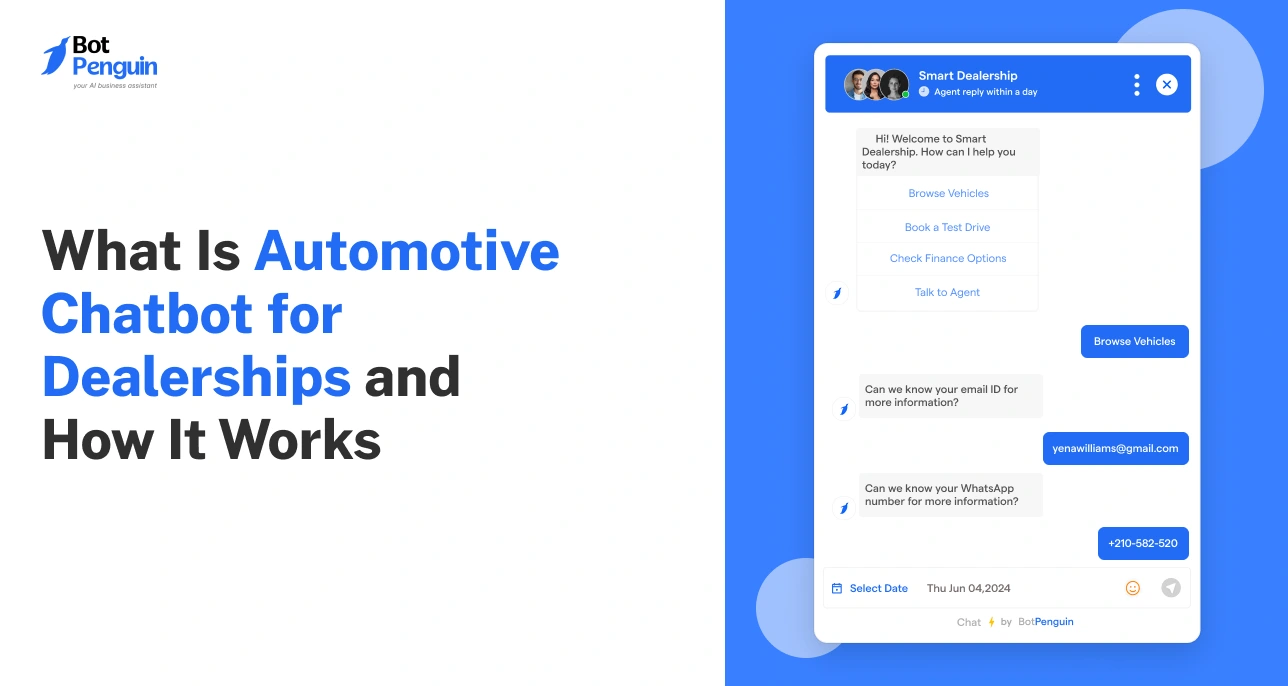
Need the fundamentals first? Learn how automotive chatbots work before comparing platforms.
Choosing between the best automotive chatbots can get confusing when features look similar.
We’ve shortlisted the top-performing automotive chatbot platforms that you can compare for your dealership’s needs, channels, and automation goals:
Disclaimer: Platform features, channel availability, integrations, and product capabilities were reviewed against official provider information available in September 2026. These details may change over time, so verify specifications directly with each provider before deciding.
In the next section, let’s explore each of these platforms in detail.
Choosing the right tool can directly impact how many leads you capture and convert.
Below are the best automotive chatbot platforms for handling dealership inquiries, bookings, and customer conversations efficiently.
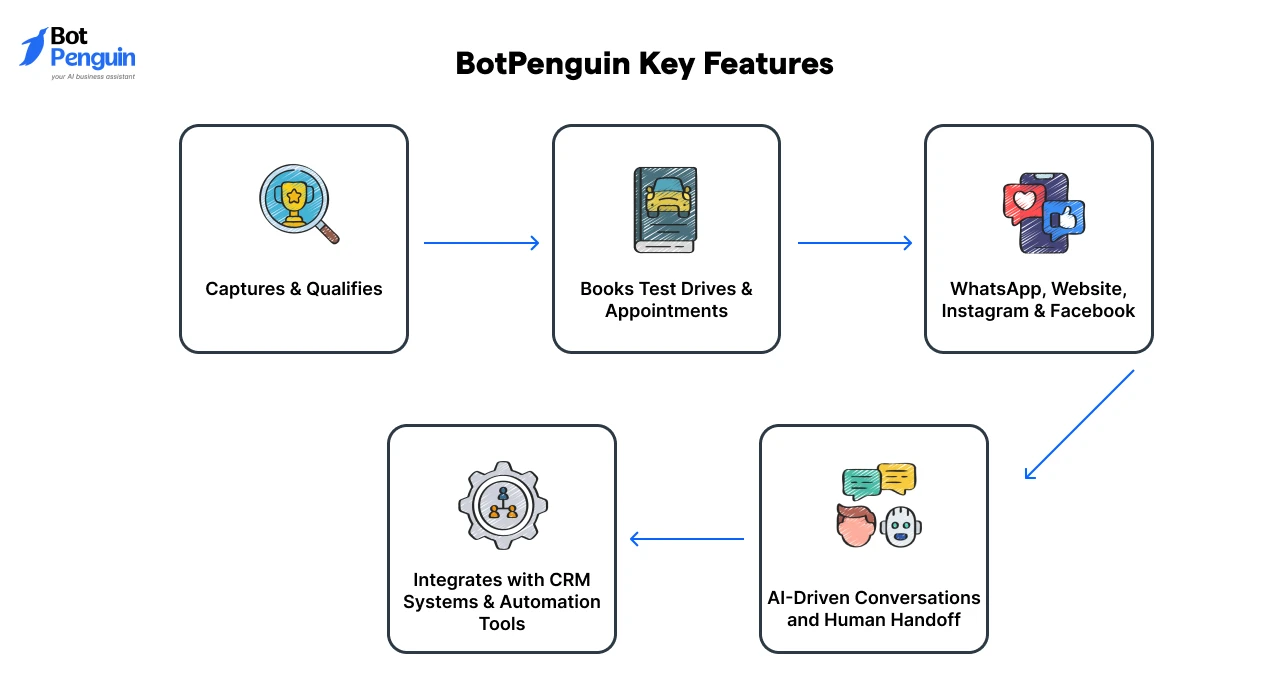
BotPenguin is a no-code automotive chatbot builder meant for dealerships that need lead capture, booking automation, and multichannel conversations across WhatsApp, website, and social platforms.
Key Features
Best For: Dealerships needing complete automation across channels
Limitation: Advanced workflows require initial setup
Verdict: A strong all-in-one solution focused on lead conversion and dealership automation
ManyChat is an AI chatbot platform for automotive marketing that helps dealerships capture and engage leads through Instagram, Facebook, and WhatsApp conversations.
Key Features
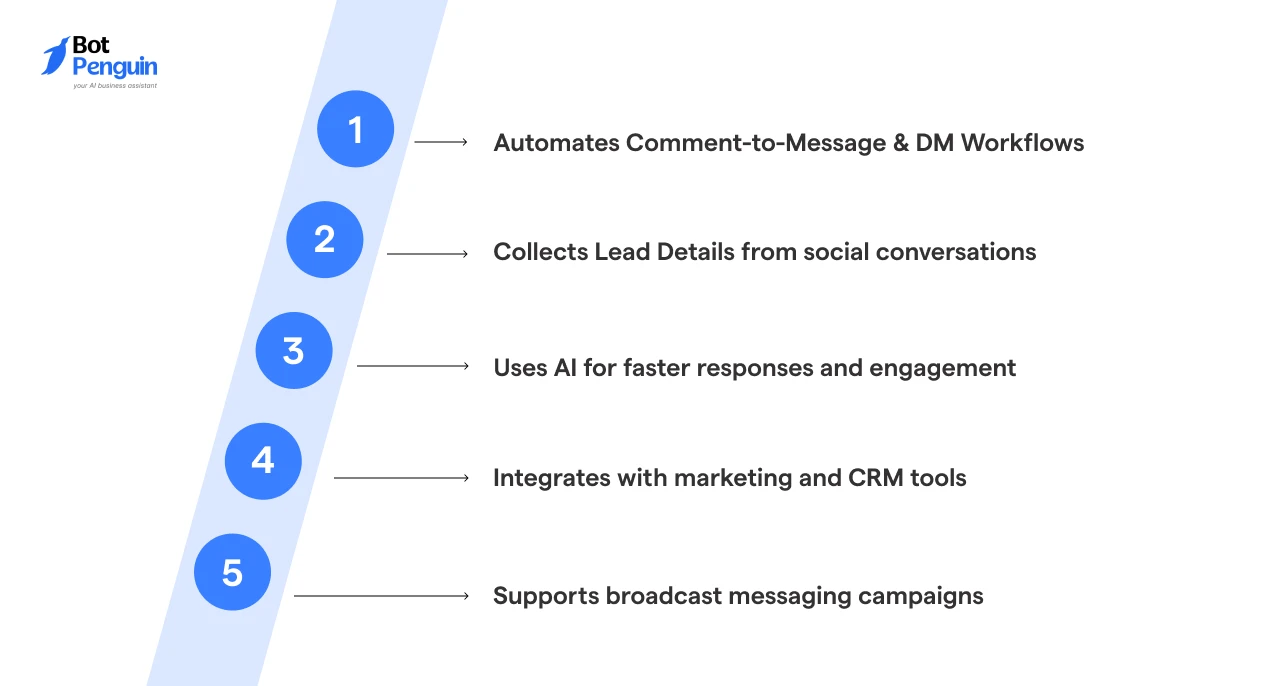
Best For: Dealerships focused on social media lead generation
Limitation: Limited depth for website-based workflows
Verdict: Strong for social engagement, but not a full dealership automation solution
Tidio is an automotive chatbot platform designed for dealership websites, combining live chat and AI responses to handle visitor queries quickly.
Key Features
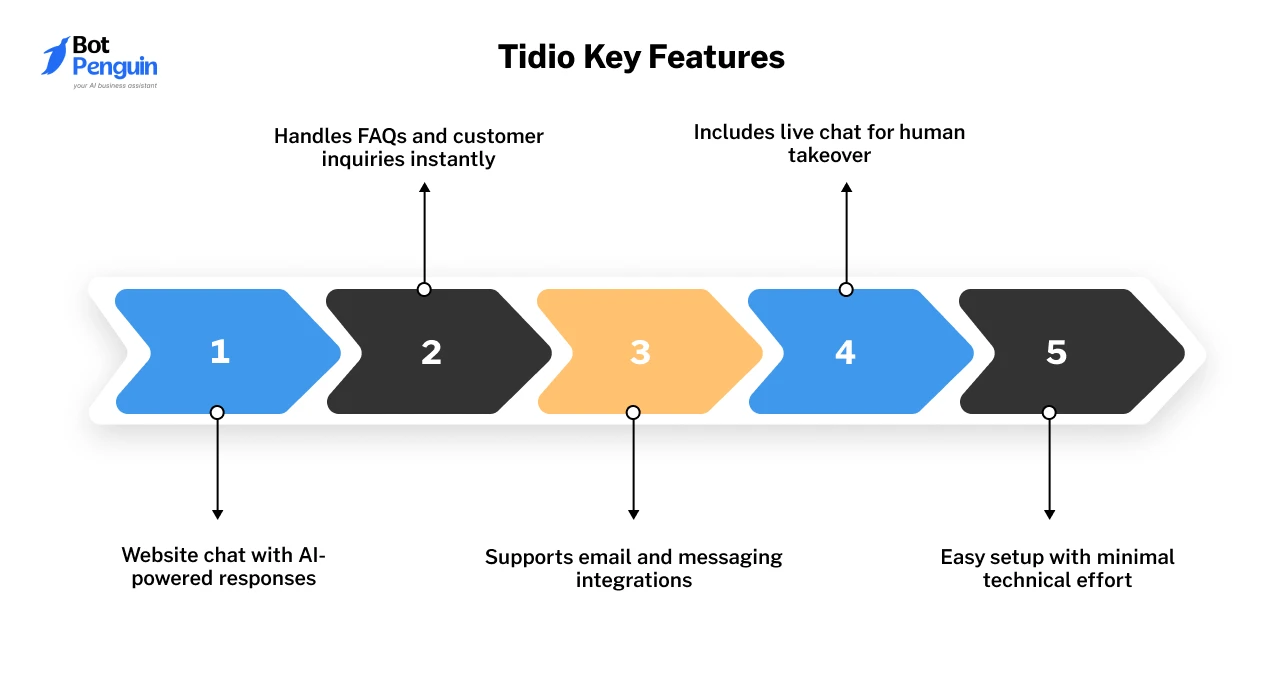
Best For: Dealerships prioritizing website conversations
Limitation: Limited advanced sales automation capabilities
Verdict: A reliable option for fast website engagement and support
Intercom is a customer service platform that includes Fin AI Agent for automated support across web, mobile, email, WhatsApp, SMS, and social channels.
Key Features
Best For: Large dealership groups with high inquiry volume
Limitation: High cost for smaller teams
Verdict: Powerful but best suited for enterprise-level operations
Drift by Salesloft is an automotive chatbot platform that identifies high-intent buyers, qualifies them by analyzing customer intent and engagement behavior, and routes them directly to sales teams for faster conversions.
Key Features
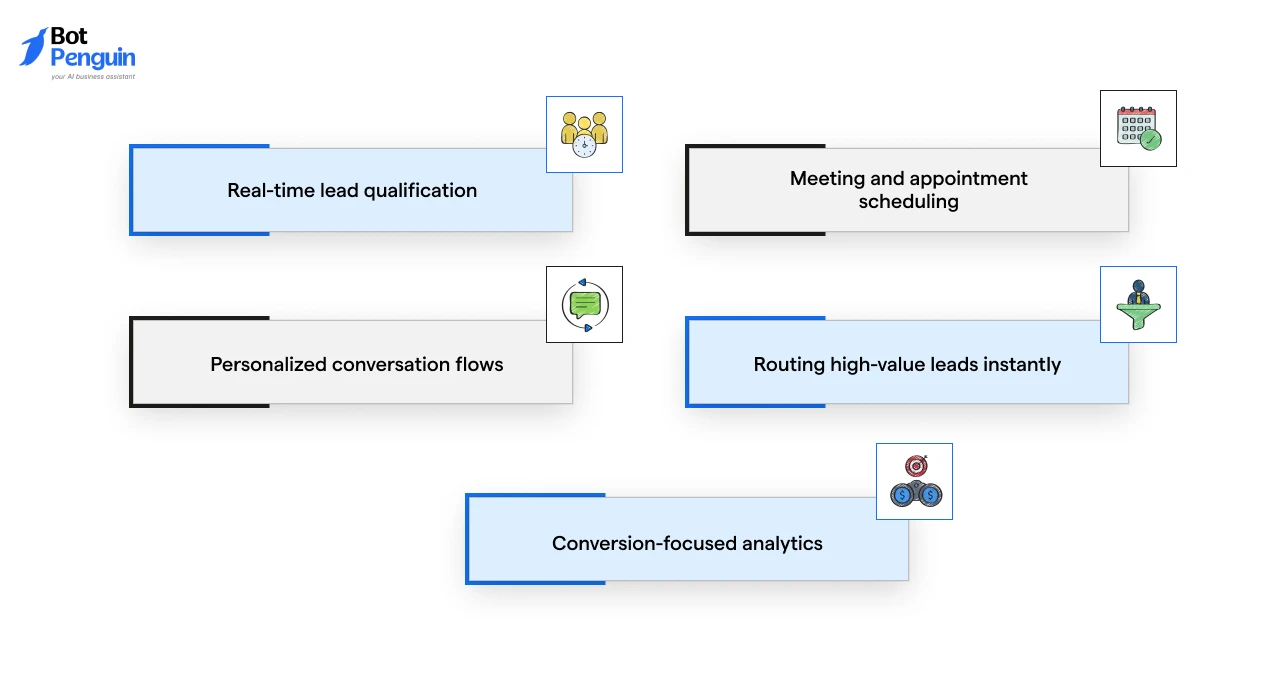
Best For: Dealerships selling high-value vehicles
Limitation: Primarily focused on website interactions
Verdict: Effective for sales-driven workflows but limited in channel coverage
Respond.io is an automotive chatbots platform for dealerships managing conversations across WhatsApp and multiple messaging platforms.
Key Features
Best For: Multi-location dealerships using WhatsApp heavily
Limitation: Website chatbot experience is secondary.
Verdict: Strong choice for messaging-first dealership operations
Chatfuel is an AI chatbot for automotive teams that want quick automation for WhatsApp and Instagram-based sales conversations.
Key Features
Best For: Dealerships focused on messaging-based sales
Limitation: Advanced custom integrations may require API setup
Verdict: Good for quick setup and social selling workflows
Freshchat is an AI-powered conversational support platform that helps dealerships manage customer conversations across digital and messaging channels.
Key Features
Best For: Dealerships handling both sales and support
Limitation: More support-focused than sales-focused
Verdict: A balanced tool for managing customer interactions end-to-end
Landbot is an AI chatbot platform for automotive businesses that want to build conversational flows without coding.
Key Features
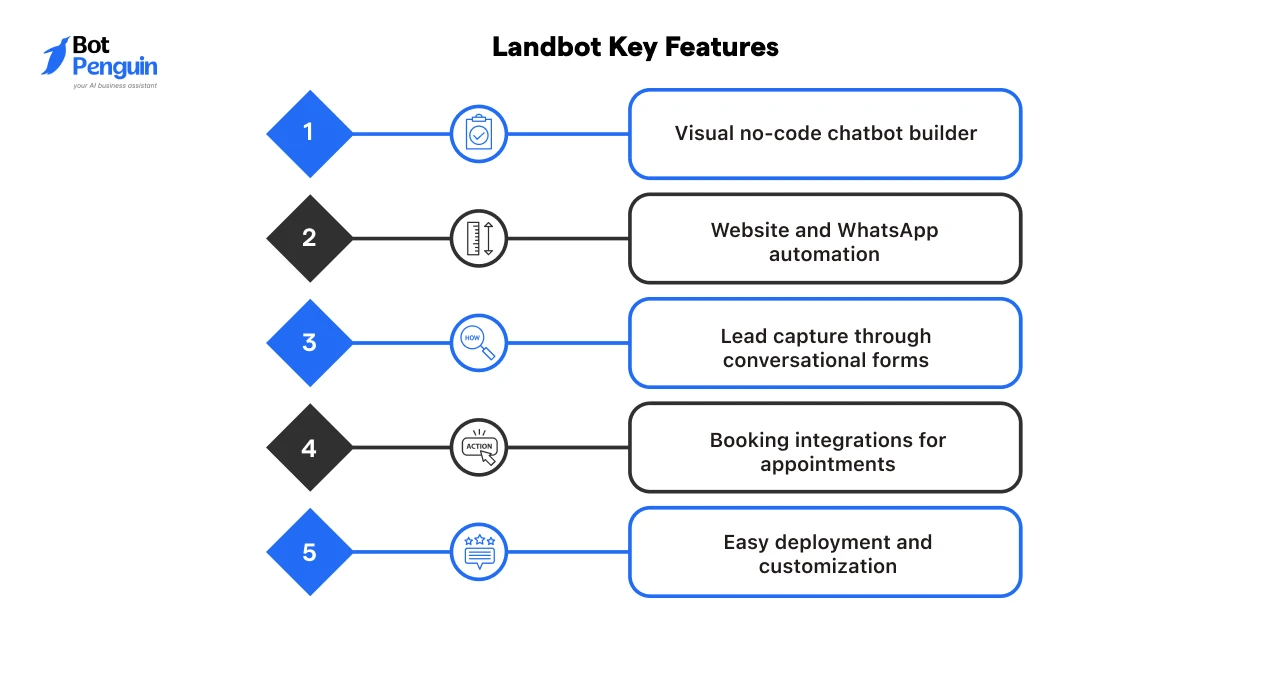
Best For: Dealerships wanting quick chatbot setup
Limitation: Custom non-native channels may require API chat setup
Verdict: Ideal for simple workflows and fast deployment
Botpress is an automotive chatbot platform designed for teams that need custom AI workflows and deeper control over chatbot behavior.
Key Features
Best For: Dealerships with technical teams
Limitation: Requires technical setup
Verdict: Best suited for complex, custom chatbot implementations
Choosing the right automotive chatbot platform comes down to how well it captures leads, responds instantly, and turns conversations into booked test drives.
Businesses should pick the one that aligns with how their dealership actually sells. The next section clarifies that choice.
The difference between a chatbot that just replies and one that drives sales is clear in how it handles leads, conversations, and follow-ups.
The best tools focus on outcomes, not just features. Here’s what you should consider:
Every inquiry is a potential sale, but not every visitor is ready to buy. A strong automotive chatbot captures details instantly and asks smart questions to identify serious buyers.
This helps sales teams focus on high-intent leads instead of filtering manually.
Speed matters when a customer shows interest. An AI chatbot for automotive can schedule test drives or showroom visits in real time.
When a user asks about availability, the chatbot shares slots and confirms bookings without delays.
Customers don’t stick to one platform. The best automotive chatbots work across websites, WhatsApp, Instagram, and Facebook.
This ensures consistent responses whether a buyer reaches out from an ad, landing page, or direct message.
Managing leads across platforms can get messy. An automotive chatbot integrates with CRM systems to store customer data, track conversations, and update lead status automatically.
This removes manual entry and keeps the sales pipeline organized.
Basic bots follow scripts. An AI chatbot for automotive understands intent, handles varied questions, and responds naturally.
It can manage multiple conversations, share relevant details, and escalate complex queries when needed, keeping the experience smooth and efficient.
The ideal automotive chatbot platform brings together speed, intelligence, and automation to turn every interaction into a seamless, conversion-driven customer experience.
The wrong chatbot creates more friction than value.
The best automotive chatbot fits your dealership’s workflow, handles real customer behavior, and supports your sales process without adding complexity.
Here are the top factors to evaluate:
A small dealership needs quick setup and basic automation.
Multi-location dealerships require advanced workflows, multi-agent access, and deeper control over lead distribution and tracking.
Buyers reach out across platforms. Choose a chatbot that supports websites, WhatsApp, and social media.
Limiting channels means losing conversations from potential customers already showing interest.
Your chatbot should connect with CRM systems and tools you already use.
This ensures every lead is tracked, conversations are stored, and follow-ups happen without manual effort.
Cost matters, but returns matter more. A chatbot that increases bookings and conversions will justify its price.
Focus on how it impacts lead quality, response speed, and sales outcomes.
For dealership-focused automation, explore BotPenguin’s automotive chatbot for dealerships for lead capture, bookings, and customer communication.
Its ability to manage lead capture, test drive bookings, and customer conversations across WhatsApp, websites, and social media makes it a practical choice for growing automotive businesses.
BotPenguin is built as an AI chatbot building platform for automotive businesses that need more than just replies.
It focuses on capturing intent, qualifying leads, and driving real dealership outcomes.
Here’s why it remains a popular choice among automotive businesses:
Thus, BotPenguin is a practical choice for dealerships that want to turn conversations into qualified leads and consistent bookings.
Your choice for the best automotive chatbot depends on your dealership’s sales process, customer channels, and automation needs.
Some tools are better for social media engagement, while others focus on website conversations, WhatsApp automation, or enterprise support.
When comparing the best automotive chatbot platforms, focus on lead capture, response speed, CRM integration, booking automation, and multichannel support.
The right platform should help your team convert more inquiries into test drives and sales without increasing manual workload.
For dealerships looking for a balanced all-in-one solution, platforms like BotPenguin combine AI-powered conversations, lead qualification, and booking automation across WhatsApp, websites, and social channels.
No single option is best for every dealership. Compare platforms based on lead sources, channels, booking needs, CRM integrations, AI capabilities, and team size. The strongest fit matches how your dealership captures, qualifies, and converts buyers.
Popular providers include BotPenguin, ManyChat, Tidio, Intercom, Drift, Respond.io, Chatfuel, Freshchat, Landbot, and Botpress. They differ in channel coverage, AI capabilities, customization, integrations, and whether they focus more on sales, support, or messaging automation.
Prioritize platforms that support lead qualification, test-drive booking, CRM connections, human handoff, and the channels your buyers actually use. Social-first, website-first, and enterprise support platforms may suit different dealership models.
Compare supported channels, AI quality, booking workflows, CRM integration, reporting, human handoff, setup effort, and total cost. Also consider automotive workflows such as vehicle inquiries, test drives, service bookings, and follow-ups.
Yes. Depending on the platform and integrations, dealerships can automate service reminders, maintenance updates, feedback requests, appointment scheduling, and routine post-purchase support. Verify each provider’s supported workflows before deployment.
Turn Automotive Inquiries into Test Drive Bookings
BotPenguin helps dealerships capture leads instantly, automate follow-ups, and manage customer conversations across WhatsApp, websites, and social media.
Start with BotPenguin TodayCheckout our related blogs you will love.
Updated at Sep 24, 2026
11 min to read
Updated at Oct 13, 2026
11 min to read
Updated at Oct 9, 2026
10 min to read
Updated at Oct 9, 2026
12 min to read
Updated at Oct 7, 2026
12 min to read
Updated at Oct 7, 2026
13 min to read
Table of Contents