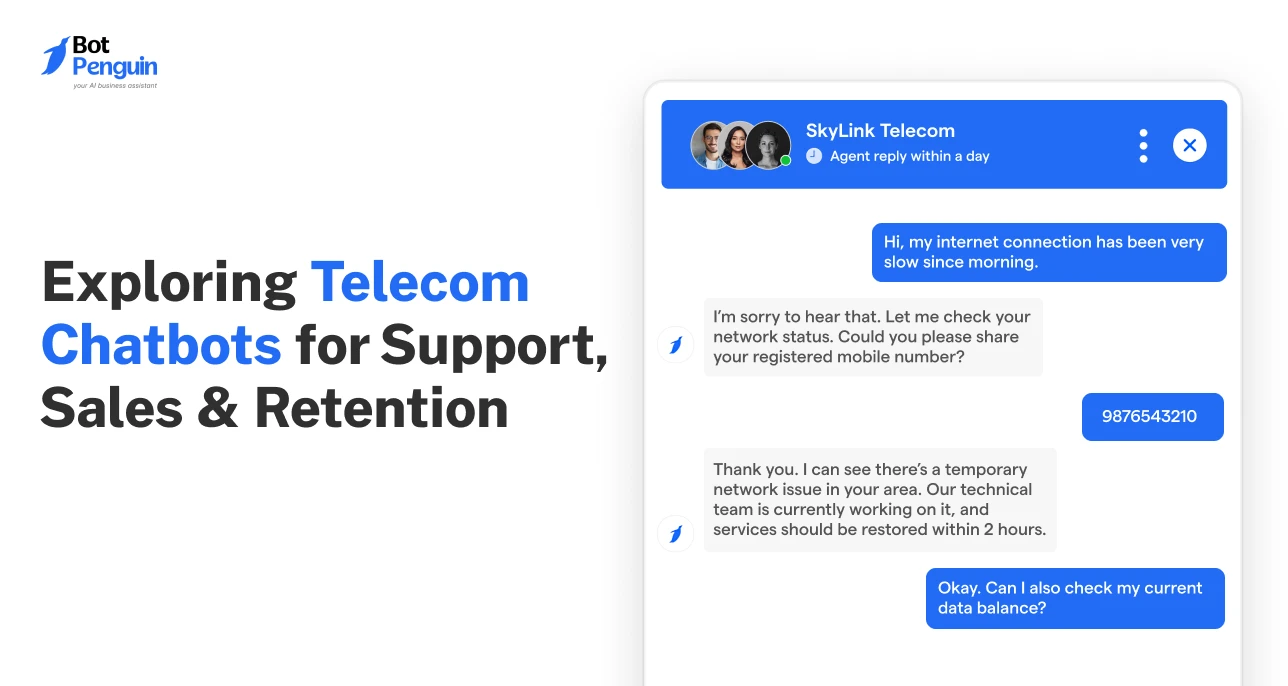
Exploring Telecom Chatbots for Support, Sales & Retention
Updated at Jul 28, 2026
11 min to read
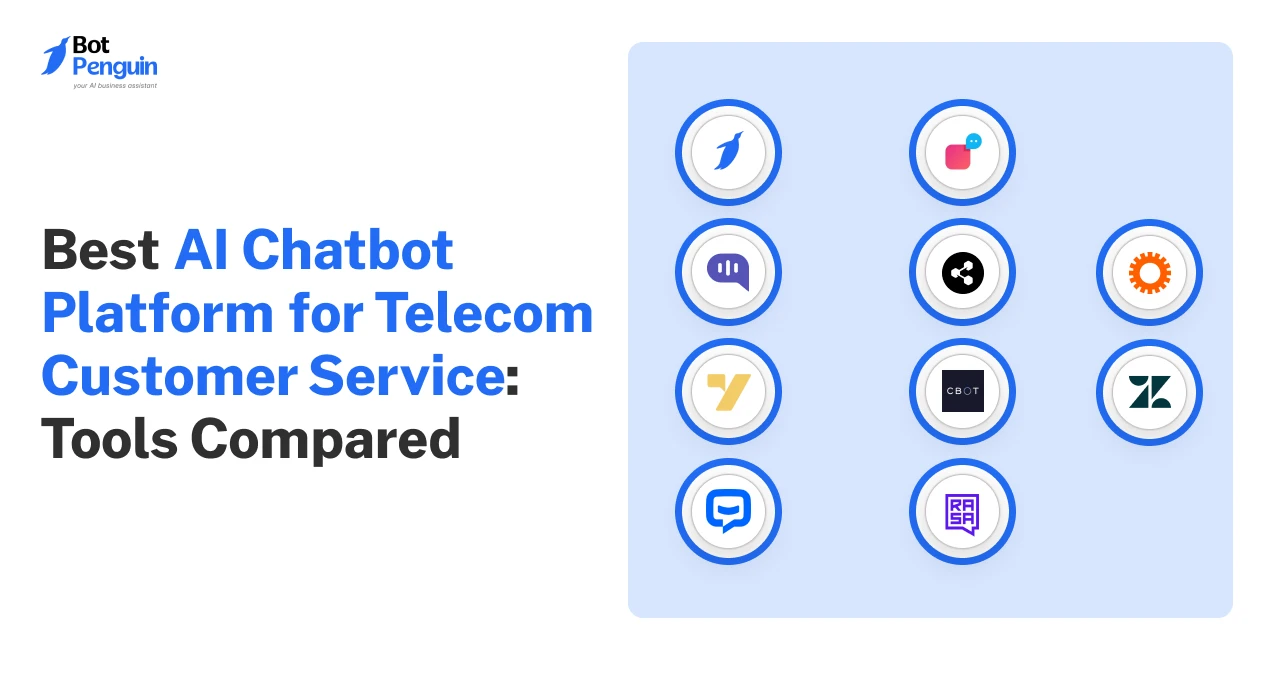
Not every telecom chatbot platform is built for the pressure of telecom customer service.
The best AI chatbot platforms for telecom customer service must do more than answer recurring questions. It should fit how telecom support teams manage high-volume queries, complex customer accounts, live escalations, and service-sensitive conversations.
For telecom CX and support leaders comparing AI chatbot platforms, the decision comes down to practical fit.
This guide compares the strongest telecom chatbot options so you can shortlist platforms with more clarity and less guesswork.
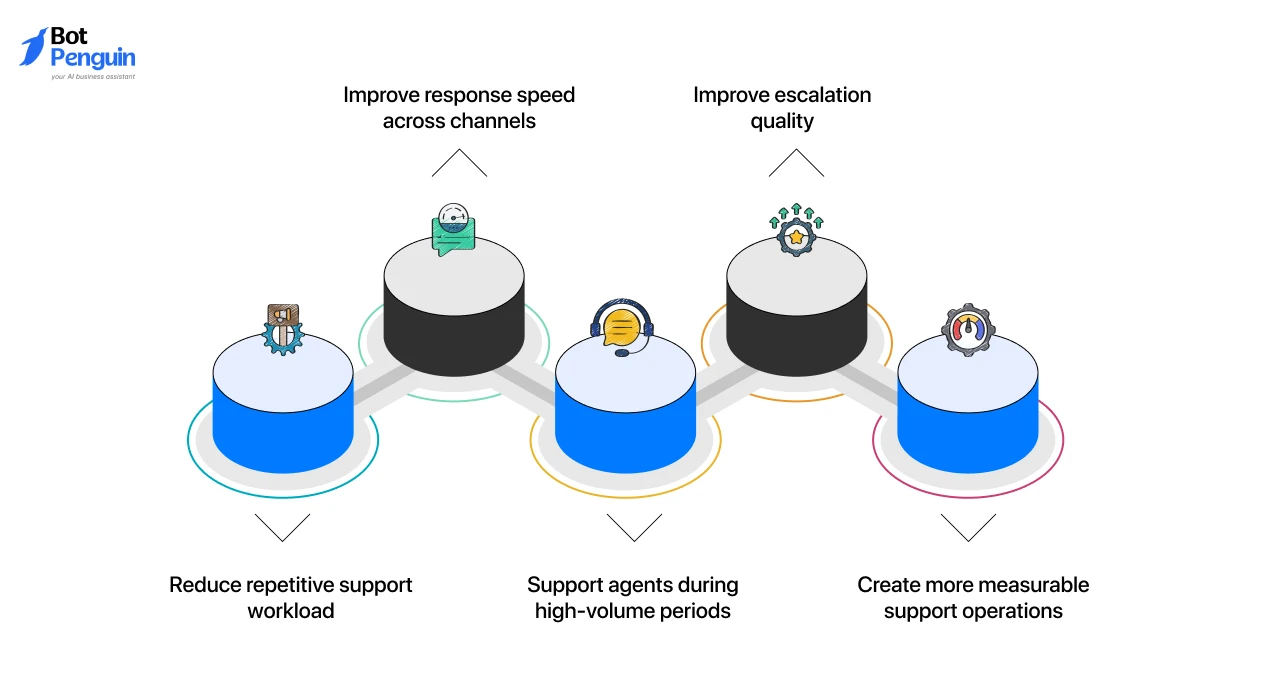
Telecom companies are investing in AI chatbots to manage high-volume, recurring support queries without scaling agent workload at the same pace.
A telecom AI survey found that 44% of telecom professionals are investing in AI to optimize the customer experience, making it the top AI investment area in the industry.
Telecom companies are investing in AI chatbots to:
For a broader breakdown of telecom chatbot use cases, benefits, and implementation, read our guide on telecom chatbots.
And before comparing platforms in this article, it helps to define what makes a telecom chatbot worth shortlisting. The next section breaks down the evaluation criteria used to assess the best options for customer service teams.
We evaluated each telecom AI chatbot by how well it supports real customer service operations, not by feature count alone.
The review focused on practical fit for telecom CX teams. That includes telecom workflows, channel coverage, integrations, handoff quality, reporting, compliance readiness, pricing clarity, and deployment effort.
Below are the core evaluation areas used to judge whether each chatbot can support telecom customer service beyond basic FAQ automation:
We checked whether each platform supports the telecom queries customers raise most often.
A stronger chatbot should help with billing, recharge, outage updates, SIM activation, plan changes, device troubleshooting, and account support. It should reduce repetitive workload without leaving agents to handle every routine request.
We evaluated whether each platform supports the channels telecom customers already use.
Website chat, WhatsApp, live chat, mobile messaging, and social channels matter because support demand does not stay in one place. Stronger platforms make these conversations easier to manage within a single support workflow.
We checked whether each chatbot can connect with the systems that telecom teams rely on.
Static FAQ bots can answer simple questions, but they struggle with account-specific support. Platforms ranked stronger when they could pull customer details, update tickets, check billing data, and sync conversation history with agent tools.
We evaluated how well each platform manages escalation and protects customer data.
A strong handoff should pass the full conversation context to agents. Since telecom support often involves billing records and account details, platforms with access controls, audit trails, GDPR, SOC 2, or ISO 27001 readiness were stronger fits.
We also considered whether each platform could be realistically measured, launched, and scaled.
In telecom specifically, well-implemented chatbots can achieve containment rates of 65-85%. (Source: SalesGroup)
Useful reporting should cover containment, escalation rate, resolution trends, CSAT, and the impact on agent workload. Transparent pricing, no-code setup, onboarding support, and lower engineering dependency also mattered during evaluation.
Once these evaluation criteria are clear, the next step is to compare the top platforms side by side.
A quick comparison helps telecom CX leaders narrow the field before reading detailed platform reviews.
The table below compares the best telecom chatbot software options by the criteria that matter most during vendor evaluation:
*Disclaimer: Pricing information is based on publicly available starter or base plans at the time of publishing and may change over time. For the latest pricing, enterprise plans, and telecom-specific requirements, check with the platform provider directly.
The next section breaks down these platforms individually so telecom support teams can assess their strengths and limitations and shortlist the most suitable options.
While some telecom chatbot platforms focus on fast omnichannel deployment, others are built for enterprise automation, customization, or AI-assisted support operations.
Below are the 10 best AI chatbot platforms for telecom customer support teams, each compared by telecom use cases, strengths, limitations, and best-fit buyers.
1. BotPenguin
BotPenguin is a strong fit for telecom teams seeking no-code, omnichannel chatbot automation without lengthy deployment cycles.
The platform supports website chat, WhatsApp, Facebook Messenger, Telegram, and live chat workflows. This makes it suitable for telecom providers managing customer conversations across multiple support channels.
Core features:
No-code chatbot builder for fast and easy deployment
Omnichannel customer support with unified inbox
AI-powered FAQ and query automation trained on business data
Live agent handoff for complex telecom support conversations
80+ integrations across CRM, ticketing, support, and workflow tools
Multilingual chatbot support for diverse customer bases
GDPR, SOC 2, and CCPA compliance support for secure customer data handling
Pricing: Free Forever plan available. Paid plans start at $15/month for WhatsApp and $29/month for omnichannel support.
Best fit for: Small-to-mid-sized telecom providers, ISPs, broadband service providers, and regional telecom operators
Limitation: Advanced custom workflow setup may require additional configuration.
Kommunicate works well as a telecom chatbot platform for teams that want AI automation while staying closely connected to live-agent support.
The platform supports web chat, mobile apps, WhatsApp, and live chat workflows. This makes it useful for teams handling recurring telecom customer support queries while keeping agents available for complex cases.
Core features:
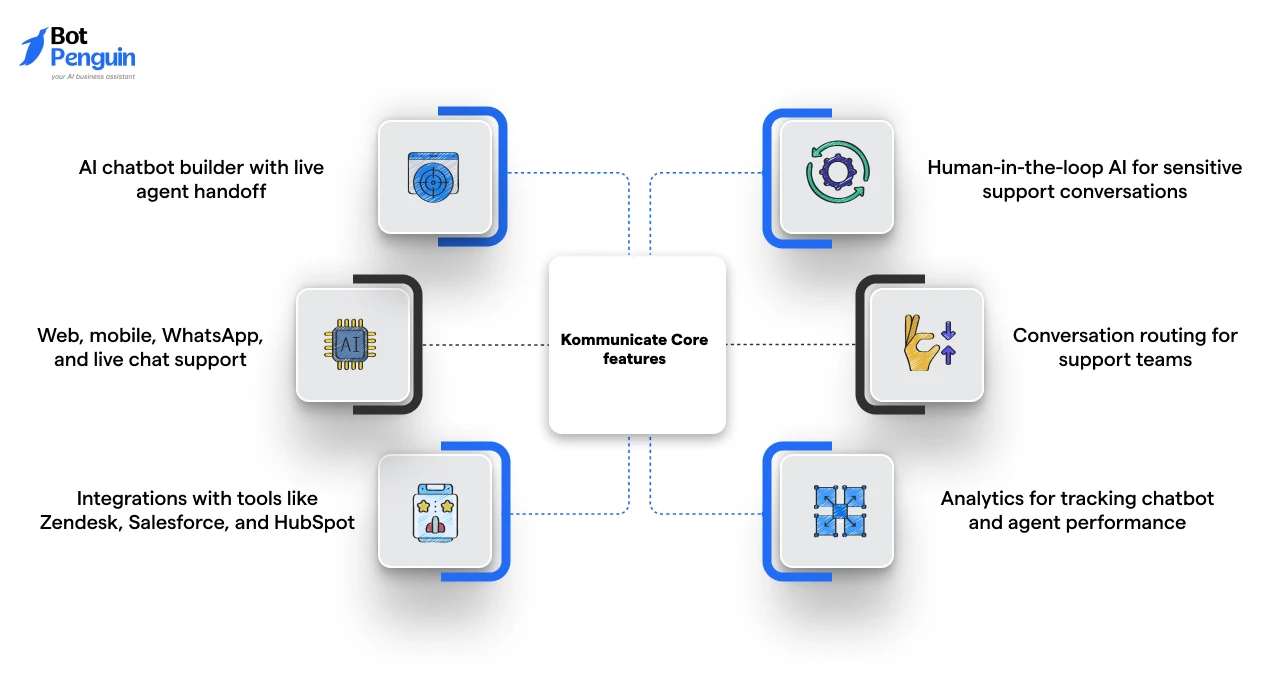
AI chatbot builder with live agent handoff
Human-in-the-loop AI for sensitive support conversations
Web, mobile, WhatsApp, and live chat support
Conversation routing for support teams
Integrations with tools like Zendesk, Salesforce, and HubSpot
Analytics for tracking chatbot and agent performance
Pricing: A free trial is available. Paid plans start at $40/month.
Best fit for: Mid-sized telecom providers, MVNOs, and digital-first support teams
Limitation: Advanced setup may take more configuration for teams with complex telecom workflows.
3. Yellow.ai
Yellow.ai is a strong fit for telecom companies managing high volumes of customer support conversations across chat and voice channels.
The platform supports AI chatbots, voice bots, WhatsApp, mobile apps, and social messaging workflows. This makes it useful for telecom providers handling outage updates, billing support, account queries, and self-service automation at scale.
Core features:
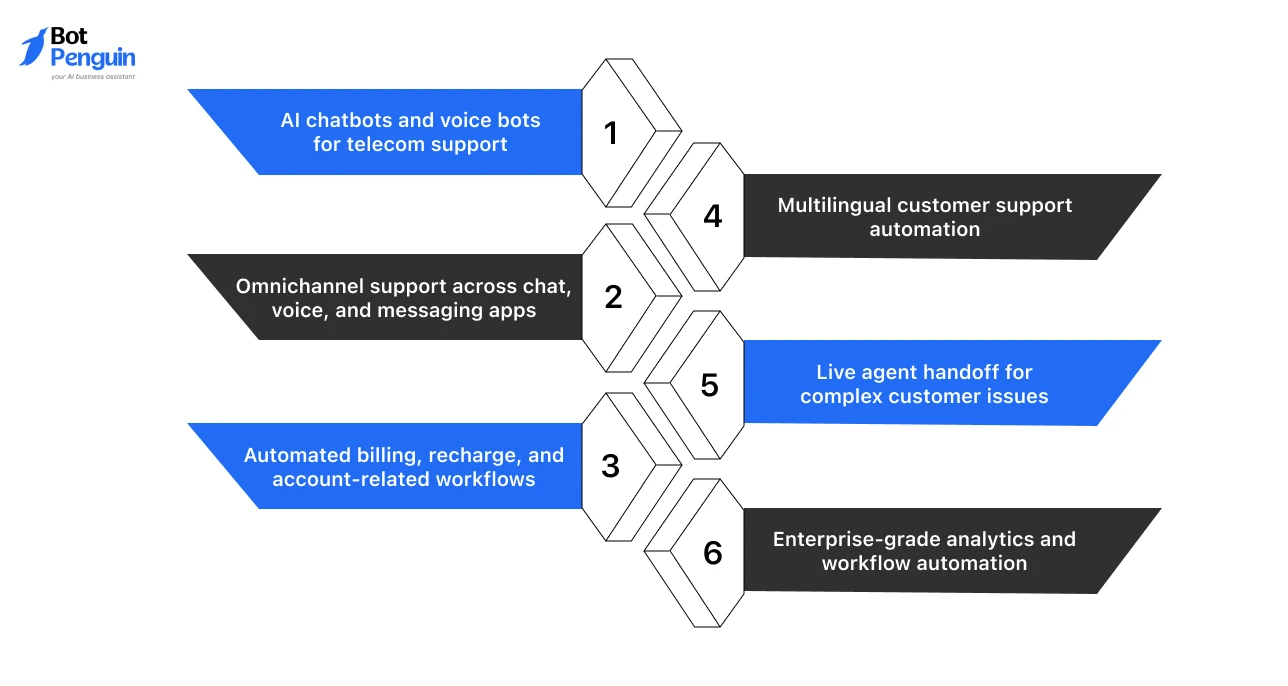
AI chatbots and voice bots for telecom support
Omnichannel support across chat, voice, and messaging apps
Automated billing, recharge, and account-related workflows
Multilingual customer support automation
Live agent handoff for complex customer issues
Enterprise-grade analytics and workflow automation
Pricing: Offers custom enterprise pricing based on deployment requirements
Best fit for: Enterprise telecom providers and large digital support teams
Limitation: Some advanced workflows may require onboarding support during initial setup.
4. ChatBot.com
ChatBot.com suits telecom teams that need quick self-service deployment across common customer support journeys without a heavy technical setup.
The telecom chatbot platform supports website chat, Messenger, Slack, and live chat integrations. This makes it useful for telecom providers to automate billing questions, account requests, plan inquiries, and customer self-service workflows.
Core features:
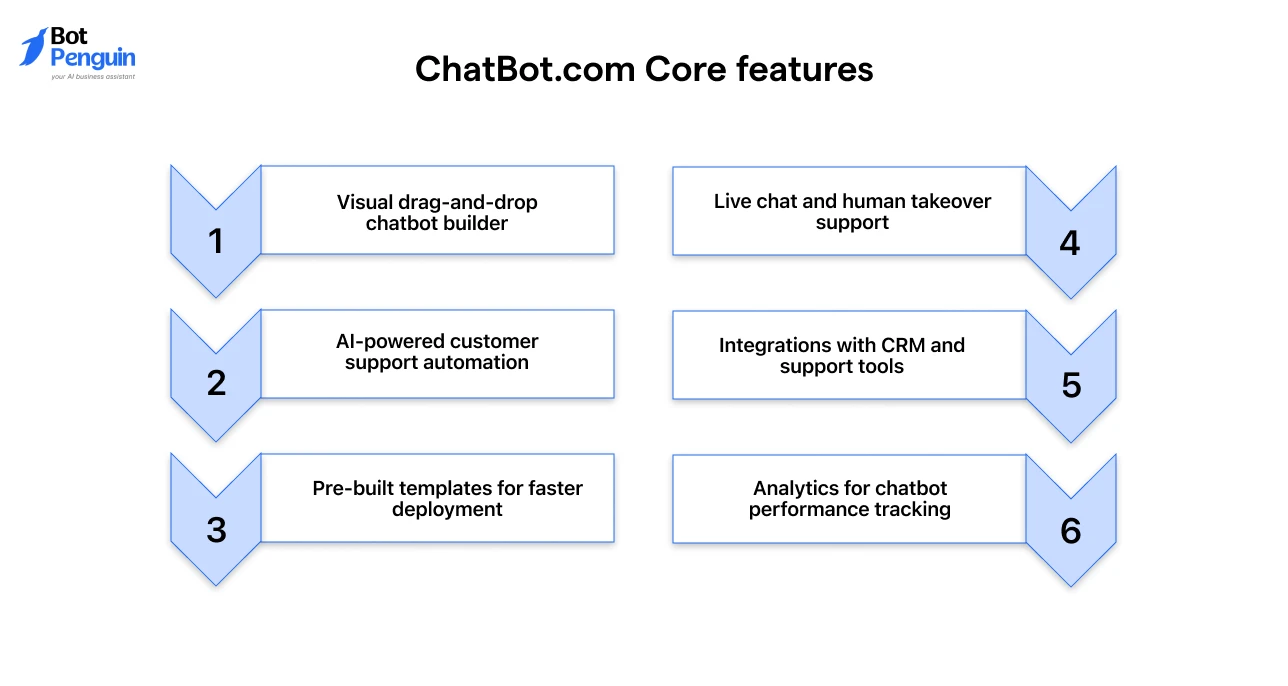
Visual drag-and-drop chatbot builder
AI-powered customer support automation
Pre-built templates for faster deployment
Live chat and human takeover support
Integrations with CRM and support tools
Analytics for chatbot performance tracking
Pricing: Provides a free trial; paid plans start at $19 per user/month.
Best fit for: Small telecom providers, ISPs, and growing customer support teams
Limitation: Advanced telecom workflow customization may require additional integrations.
5. Verloop.io
Verloop.io is a strong fit for telecom teams managing large volumes of conversational customer support across chat and voice channels.
The platform supports WhatsApp, website chat, voice AI, and social messaging workflows. This makes it useful for telecom providers to automate recharge support, service requests, account queries, and customer escalations.
Core features:
AI chat and voice automation for telecom support
Omnichannel support across WhatsApp, web, and social channels
Live agent handoff with conversation context
Multilingual customer support workflows
CRM and helpdesk integrations
Analytics and workflow automation tools
Pricing: Offers custom pricing based on business requirements
Best fit for: Mid-sized telecom providers and high-volume digital support teams
Limitation: Some enterprise integrations may require additional setup support.
6. Botpress
Botpress is a strong fit for telecom teams that need highly customizable AI chatbot workflows and developer-level control.
The platform supports AI agents, custom integrations, knowledge base automation, and omnichannel deployment. This makes it useful for telecom providers building advanced customer support and self-service experiences.
Core features:
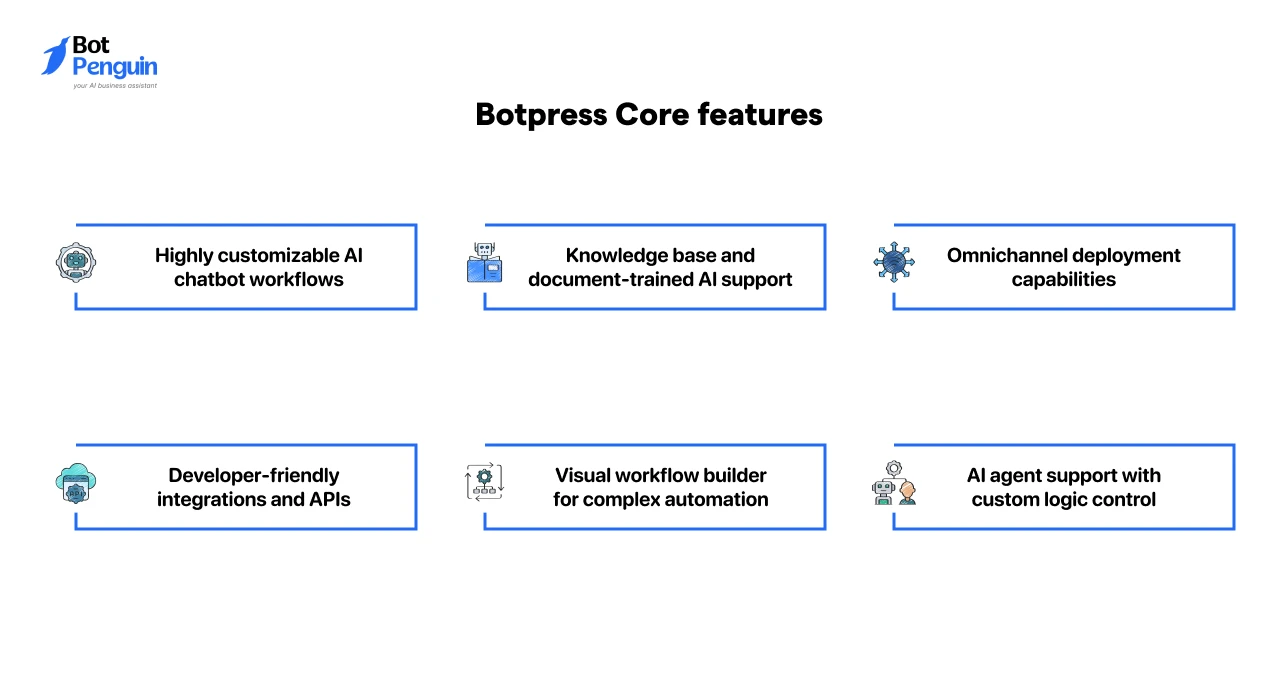
Highly customizable AI chatbot workflows
Knowledge base and document-trained AI support
Omnichannel deployment capabilities
Developer-friendly integrations and APIs
Visual workflow builder for complex automation
AI agent support with custom logic control
Pricing: Offers a free plan; paid plans start at $189/month.
Best fit for: Enterprise telecom teams and telecom businesses with technical resources
Limitation: Teams without technical support may face a steeper setup process initially.
7. CBot
CBot is designed specifically for telecom and customer service automation workflows.
The platform supports AI chatbots for billing support, subscriber engagement, service requests, and customer query management. This makes it useful for telecom providers seeking industry-focused chatbot deployments.
Core features:
Telecom-focused chatbot workflows
Customer query and subscriber support automation
Omnichannel conversational support
AI-powered self-service experiences
CRM and backend integration support
Live agent escalation workflows
Pricing: Offers custom pricing based on deployment requirements
Best fit for: Telecom operators and customer service teams with industry-specific support needs
Limitation: Public pricing and onboarding details are more limited than on larger chatbot platforms.
8. Rasa
Rasa is a strong fit for telecom companies that need highly customized chatbot workflows and deeper backend control.
The platform is developer-focused and supports advanced conversational AI workflows across chat and voice channels. This makes it useful for telecom providers building complex support journeys that integrate with billing systems, account management, and internal telecom operations.
Core features:
Highly customizable chatbot workflows
Advanced NLP and intent management
Backend and API integration flexibility
Omnichannel deployment support
On-premise and private cloud deployment options
Strong control over AI training and data handling
Pricing: Offers custom enterprise pricing
Best fit for: Enterprise telecom providers and technically mature support teams
Limitation: Initial deployment and maintenance may require dedicated technical resources.
9. LivePerson
LivePerson functions as an enterprise-grade telecom chatbot platform for operators managing high-volume messaging conversations across digital channels.
The platform supports AI chatbots, messaging automation, and digital customer engagement across web, mobile, and messaging channels. This makes it useful for telecom providers handling high volumes of customer conversations through chat-first support models.
Core features:
Enterprise-grade messaging automation
AI chatbot and live agent support workflows
Omnichannel customer engagement capabilities
Strong CRM and enterprise integrations
AI-powered conversation analytics
Automation across support and customer engagement journeys
Pricing: Provides custom enterprise pricing
Best fit for: Large telecom operators and enterprise digital support teams
Limitation: The platform may feel feature-heavy for smaller support teams.
10. Zendesk AI
Zendesk AI is a practical fit for telecom teams that already manage customer support within the Zendesk ecosystem.
The platform adds AI chatbot automation, self-service workflows, and agent-assist capabilities to existing support operations. This makes it useful for telecom providers looking to improve ticket handling and customer support efficiency without switching platforms.
Core features:
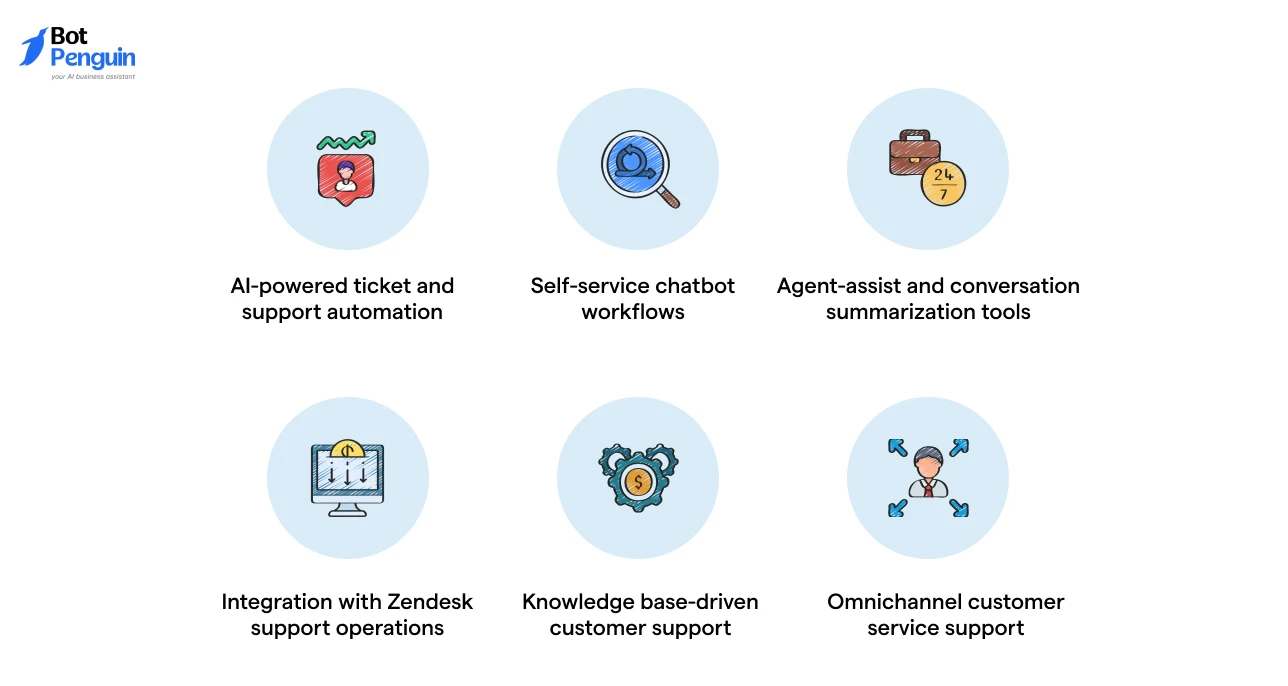
AI-powered ticket and support automation
Self-service chatbot workflows
Agent-assist and conversation summarization tools
Integration with Zendesk support operations
Knowledge base-driven customer support
Omnichannel customer service support
Pricing: Paid pricing starts at $19 per agent/month on eligible plans.
Best fit for: Telecom support teams already using Zendesk
Limitation: Advanced AI automation capabilities depend heavily on the broader Zendesk ecosystem.
Each platform approaches telecom customer service differently. Some focus on faster self-service automation, while others prioritize enterprise workflows and backend integrations.
Comparing platforms is only half the decision. The bigger challenge is narrowing the list down to the few options that realistically fit your telecom support operations, budget, and rollout priorities.
Based on the platforms covered above, here’s a concise overview of which tools are best suited to different telecom customer service environments.
A stronger shortlist usually comes from knowing what your support operation actually needs, not from choosing the platform with the most features.
Once the shortlist is clear, the next step is to pressure-test vendors with the right telecom-focused demo questions before making a final decision.
A telecom chatbot demo should help validate operational fit, not just showcase AI responses.
Use the checklist below while evaluating AI chatbot vendors for telecom customer service.
The answers to these questions often reveal more about long-term platform fit than the demo itself. They also indicate whether the platform can scale with real telecom customer support operations.
Choosing the right telecom chatbot platform becomes easier when teams focus on operational fit instead of feature volume.
This guide compared platforms across telecom use cases, deployment flexibility, integrations, handoff quality, pricing, and support complexity. These factors help telecom teams shortlist tools that match their service model, internal resources, and customer communication needs.
The right choice should improve response speed, reduce repetitive workload, support agent efficiency, and create smoother customer service workflows.
For telecom teams evaluating chatbot platforms, the next step is to compare real workflows, demo performance, and long-term scalability before making a final decision.
Teams should evaluate workflow support, integrations, escalation quality, analytics, deployment complexity, compliance readiness, and long-term operational scalability.
Smaller telecom teams usually prioritize affordability, faster deployment, and easier management. Platforms like BotPenguin and ChatBot.com are often easier starting points.
How should telecom teams shortlist AI chatbot platforms for their business?
Teams should shortlist platforms by matching use cases, channels, integrations, pricing, deployment effort, and support complexity with their current telecom operations.
Are all AI chatbot platforms suitable for telecom customer service?
No. Telecom teams should prioritize platforms that support billing queries, outage handling, account workflows, live handoff, and telecom-specific integrations.
Pricing varies by channels, AI usage, integrations, and deployment scale. Some platforms offer free plans, while enterprise platforms use custom pricing models.
Yes. Many telecom chatbot platforms support WhatsApp automation for billing support, account queries, outage notifications, and customer engagement workflows.
Explore Telecom Support Chatbot
Reduce telecom support workload using BotPenguin’s AI chatbot for telecom customer service.
Book DemoCheckout our related blogs you will love.
Updated at Jul 28, 2026
11 min to read
Updated at Oct 19, 2026
11 min to read

Updated at Oct 14, 2026
11 min to read
Updated at Oct 14, 2026
10 min to read
Updated at Oct 14, 2026
10 min to read
Updated at Oct 13, 2026
11 min to read
Table of Contents