



10 Best Dental Chatbots & AI Receptionists in 2026
Updated at Sep 28, 2026
11 min to read
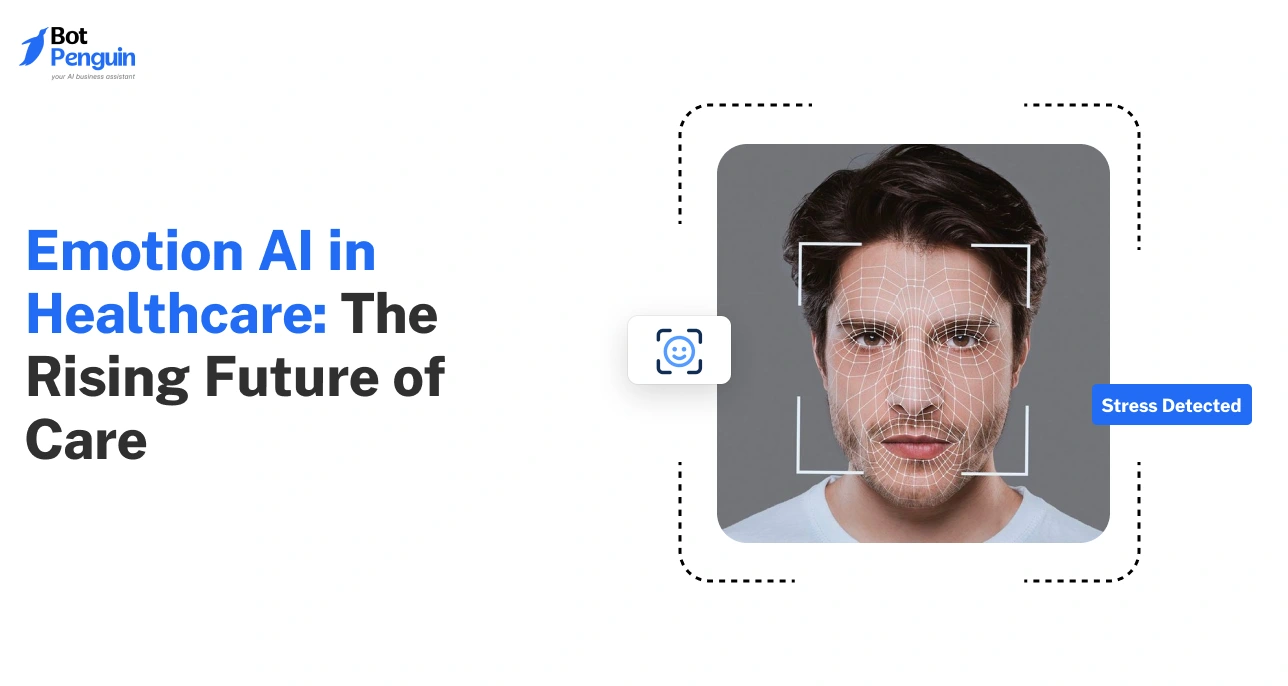
Patients don’t always say how they feel. And in healthcare, that silence can lead to missed risks and poor outcomes.
Most systems rely on symptoms, reports, and clinical data. But they often overlook emotions such as stress, fear, or confusion. Yet, these signals shape how patients communicate, follow treatment, and respond to care.
This is where emotion AI in healthcare starts to matter. It helps detect and interpret human emotions using data from voice, text, facial cues, and behavior.
In this guide, you’ll learn what emotion AI in healthcare is, how it works, and where it fits in modern care delivery.
Emotion AI in healthcare is the use of artificial intelligence to detect and understand human emotions in medical settings like hospitals or clinics.
By interpreting signals like the tone of your voice, facial expressions, text, or behavior, AI helps providers identify how a patient feels.
Example: During a virtual consultation, AI can detect stress or anxiety in a patient’s voice even if they don’t say it directly.
Kintsugi, for instance, used voice biomarkers to passively screen for depression and anxiety during routine calls, making mental health detection a seamless part of everyday patient care.
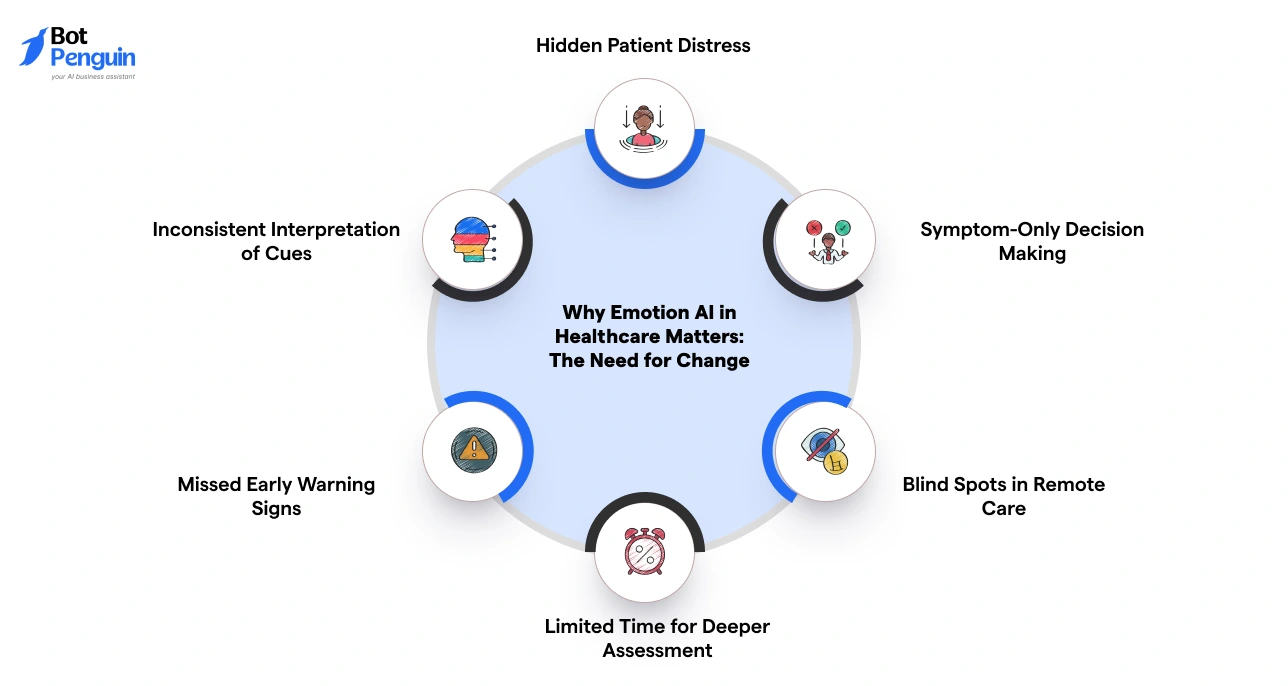
Treating emotions as invisible data leads to missed risks, weaker communication, and incomplete care, especially as digital and remote interactions become the norm.
Here’s why AI emotion recognition in healthcare is becoming critical:
These gaps are exactly where intelligent conversational systems can make a difference. When built with emotional context in mind, modern healthcare tools like chatbots or virtual assistants can go beyond scripted replies to recognize patients’ frustration or urgency.
Likewise, platforms like BotPenguin enable AI-powered healthcare chatbots to integrate human escalation capabilities. If a patient shows signs of distress or repeated confusion in a conversation, the system automatically routes them to a human agent or care coordinator.
At its core, AI detecting human emotions is about enabling healthcare systems to leverage emotional signals alongside clinical data.
There’s a combination of rich data, processors, and ML algorithms that helps the systems understand human emotions in context.
This process typically follows a structured pipeline:
Important Points to Remember:
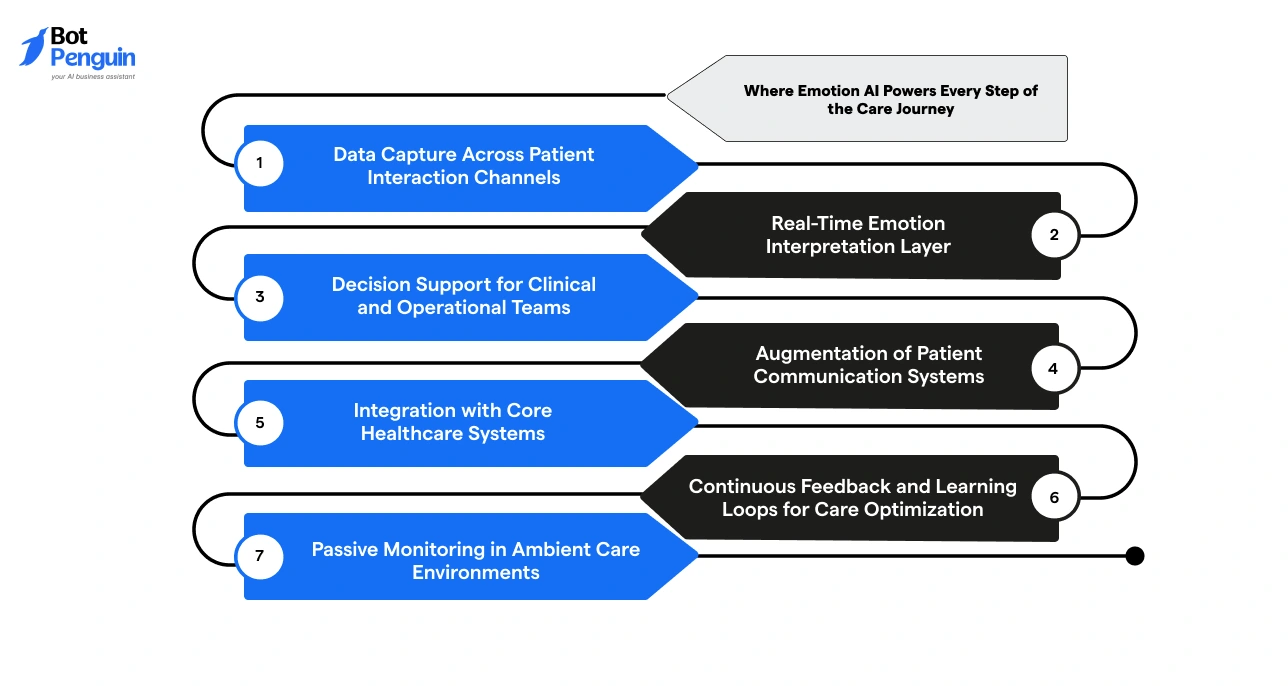
Emotion-aware systems can plug into existing care journeys.
From first contact to ongoing monitoring, they add an emotional intelligence layer of insight that supports both clinical and operational decisions.
Signals are collected across touchpoints like calls, chat, video consultations, and in-person visits.
For instance, tone shifts during a teleconsult or hesitation in chat responses can indicate anxiety or confusion early on.
Captured inputs are analyzed instantly to surface patterns like stress, disengagement, or urgency. This allows care teams to respond during the interaction, not after it ends.
Insights are translated into prompts or flags within dashboards.
A provider might be nudged to probe deeper, while support staff may prioritize certain cases based on emotional intensity.
Imagine: A patient reporting mild symptoms but showing high emotional distress is automatically flagged for priority review, preventing potential escalation.
Healthcare chatbots and virtual assistants adapt responses based on detected sentiment. A frustrated patient may receive simplified guidance or faster escalation to a human agent.
The insights are embedded into EHRs, telehealth platforms, and CRM tools, ensuring they are accessible within existing workflows without adding friction.
The impact? Reduced missed distress signals, improved patient satisfaction scores, and more proactive care delivery.
Systems improve over time by learning from interactions, refining how signals are interpreted across different patient groups and contexts.
In settings like elder care or recovery at home, ambient AI in healthcare tracks subtle behavioral or vocal changes, helping identify emotional decline without active input.
For instance, reduced movement, altered speech patterns, or prolonged silence may signal emotional decline, enabling early intervention.
Traditional healthcare AI systems are built around clinical data and pattern recognition.
Emotion AI extends this by introducing an emotional context layer, helping systems interpret not just what patients report, but how they experience it.
The Bottom Line: Emotion AI does not replace traditional healthcare AI. It complements it by adding a human intelligence layer that clinical data alone cannot capture, enabling more responsive and context-aware care.
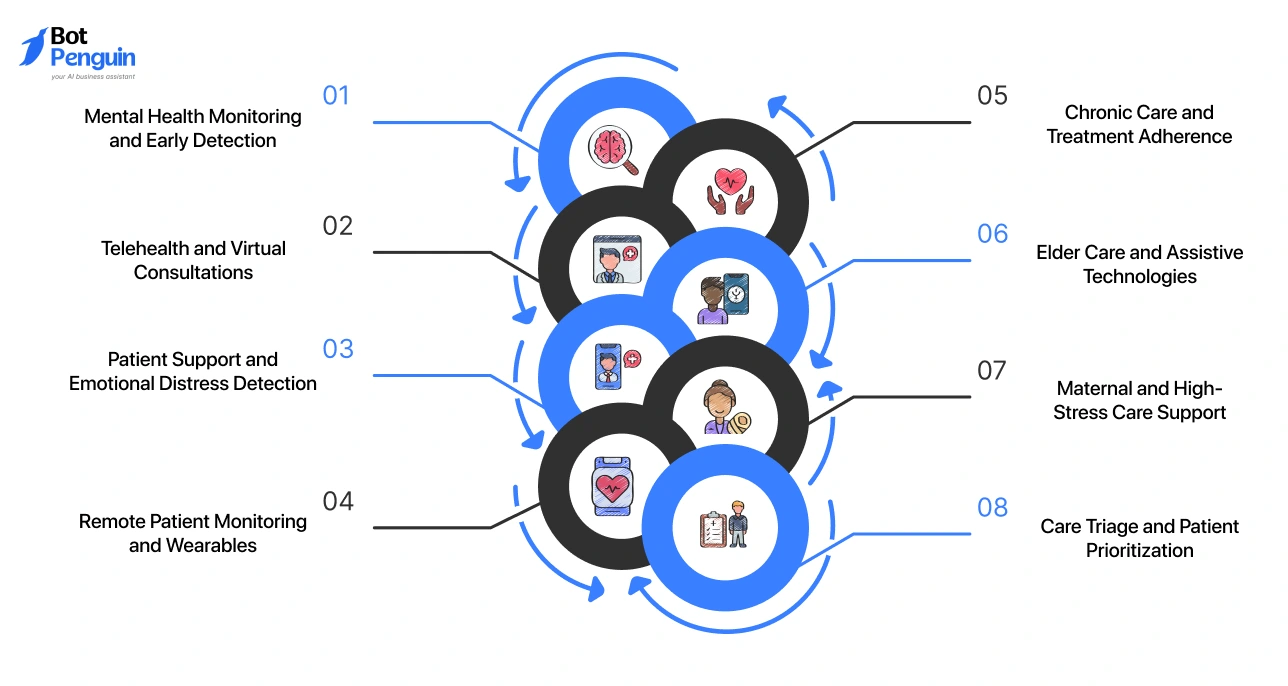
Emotion-aware capabilities bring visibility into patient experience, enabling earlier action, better prioritization, and more adaptive support.
This section breaks down the top use cases, depicting how healthcare organizations are integrating emotion AI:
Subtle shifts in speech patterns or messaging tone can signal anxiety, burnout, or depressive trends.
Tools like Wysa help healthcare systems detect early emotional distress through AI-powered conversations, flagging patterns of anxiety or low mood that might otherwise go unnoticed.
Early flags allow timely intervention before conditions escalate.
During video or voice consultations, systems pick up hesitation, stress, or confusion. Voice emotion recognition AI helps clinicians adjust questioning style or spend more time where needed.
Support channels identify frustration or urgency in conversations.
For example, a distressed patient can be fast-tracked to human assistance instead of standard automated flows, reflecting the need of AI for patient emotional support.
Wearables and voice-based check-ins detect behavioral or vocal changes over time. This adds context beyond vitals, especially in long-term recovery scenarios.
Emotional signals can reveal disengagement or resistance to treatment plans. Care teams can intervene with personalized nudges or counseling before adherence drops.
Imagine: A cancer patient’s chatbot check-in detects frustration in their tone. A care coordinator is alerted before they quietly stop showing up to chemotherapy.
In assisted living or home settings, passive tracking of voice or activity changes can indicate loneliness, confusion, or cognitive decline.
Systems like ElliQ, developed by Intuition Robotics, learn individual user preferences and suggest personalized activities, providing a companionship experience tailored to each person's needs.
In high-pressure situations like pregnancy or critical care, emotional cues help identify distress early, enabling more attentive and responsive care delivery.
Emotion-informed scoring helps prioritize cases based on urgency, not just symptoms, ensuring that vulnerable patients receive timely attention.
Ambient intelligence, often referred to as ambient AI, allows systems to quietly observe, interpret, and respond in the background, bringing a more continuous and context-aware layer to care delivery.
Ambient intelligence refers to environments embedded with sensors and AI that monitor patient behavior, movement, and interactions without direct input.
These systems operate passively, capturing signals during everyday activities rather than formal consultations.
Emotion-aware capabilities add depth to this setup. Instead of only tracking activity or vitals, systems can pick up changes in voice, mood, or behavior.
For example, a sudden drop in engagement or altered speech patterns may indicate distress, even if no symptoms are reported.
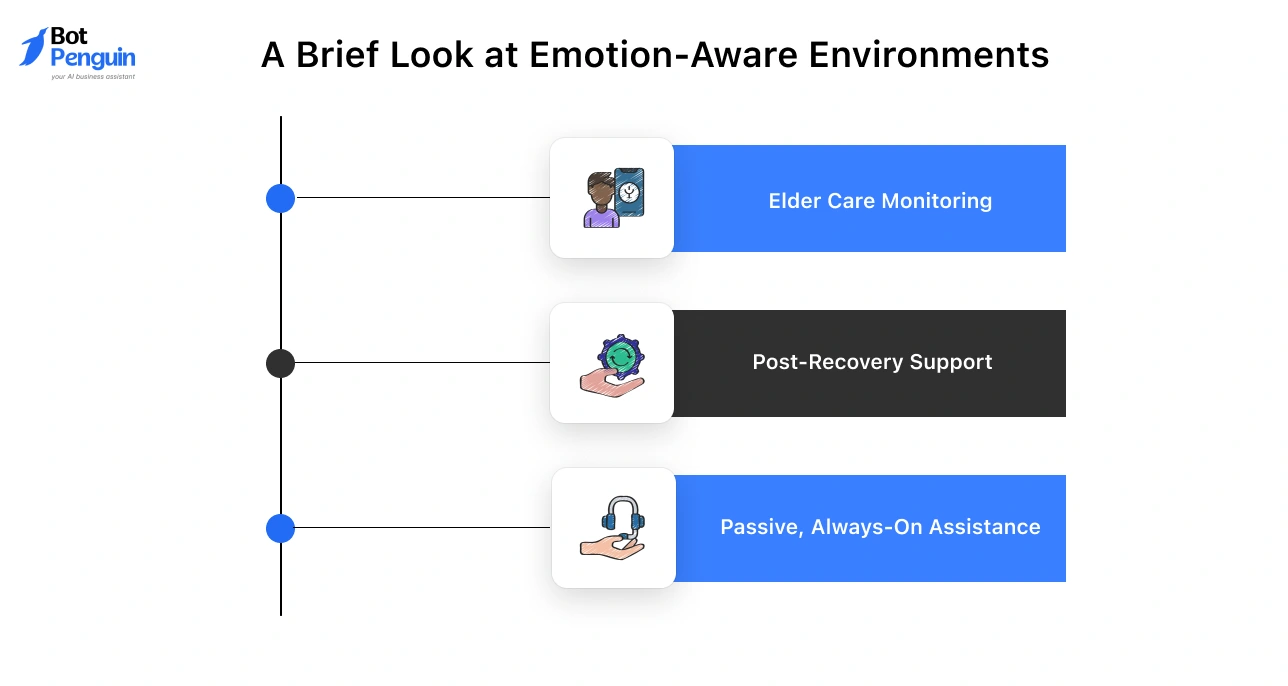
These are some practical, real-world settings where emotion-aware systems operate:
Together, ambient intelligence and Emotion AI shift healthcare from reactive care to continuous, context-aware support that adapts to patients in real time.
With the rapid digitization of healthcare, it has become crucial to understand patient emotions for delivering care that truly connects.
Here’s how emotion AI in healthcare betters care outcomes:
By combining clinical data with emotional insight, healthcare systems move closer to delivering care that is genuinely patient-centered.
While promising, emotion AI brings real challenges that must be addressed to ensure safe, reliable, and ethical use. Here’s what to look for:
Challenge: Emotional signals vary widely across individuals and environments. Background noise in calls or poor video quality can distort interpretation.
Solution: Combine multiple inputs and continuously validate models in real clinical conditions to improve reliability.
Challenge: Models trained on limited datasets may misread expressions across different cultures, age groups, or languages.
For example, tone variations may be interpreted differently across regions.
Solution: Use diverse training data and conduct ongoing bias audits to ensure fair and consistent performance.
Challenge: Emotional data is highly sensitive, especially when derived from voice, video, or behavioral tracking, raising concerns around misuse or breaches.
Solution: Implement strong data governance, encryption, and strict access controls to protect patient information.
Challenge: Patients may not always be aware that their emotional signals are being analyzed, leading to concerns around transparency and consent.
Solution: Ensure clear communication, explicit consent mechanisms, and opt-in frameworks for ethical deployment.
Challenge: Clinicians may find it difficult to trust outputs that lack clear reasoning, especially in high-stakes decisions.
Solution: Provide interpretable insights and context so users understand how conclusions are derived.
Challenge: Many implementations lack large-scale clinical validation, and emotional datasets remain fragmented or incomplete.
Solution: Invest in clinical trials, real-world testing, and standardized benchmarks to strengthen credibility.
Addressing these challenges while aligning with standards like HIPAA and GDPR is essential to ensure Emotion AI is not only effective but also safe and trusted in healthcare environments.
When it comes to deploying emotion-aware communication systems and chatbots, platforms like BotPenguin play a key role. With built-in HIPAA and GDPR compliance, secure data handling, and controlled human escalation, such conversational solutions ensure that emotional insights are acted on safely and transparently.
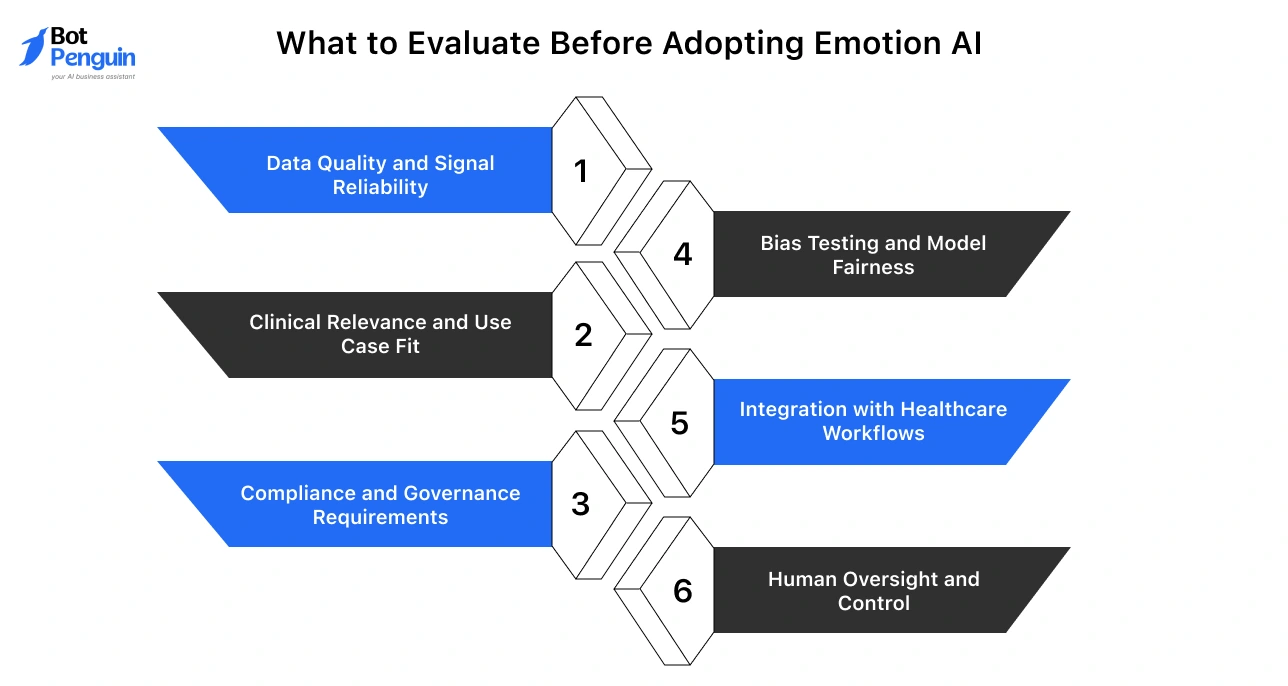
Adopting emotion-aware capabilities requires more than technical interest. It demands careful evaluation to ensure safety and real clinical value before these are used in real care settings.
A structured evaluation ensures these systems deliver meaningful impact without introducing unnecessary risk.
Emotion AI is moving from experimental to essential, where the ability to interpret emotional signals will become a core capability. Advancements in multimodal analysis, ambient intelligence, and real-time processing will make these systems more accurate and context-aware.
At the same time, success will depend on solving challenges around bias, privacy, and clinical validation. When integrated responsibly, emotion AI can enhance decision-making, improve patient engagement, and support more human-centered care.
The future isn’t just data-driven; it’s emotion-aware, adaptive, and deeply aligned with how patients actually experience care.
Emotion AI in healthcare uses artificial intelligence to detect and interpret patient emotions from voice, text, facial expressions, and behavior to improve care delivery.
Emotion AI analyzes signals like speech tone, facial cues, and text sentiment using machine learning models to identify emotional states and support real-time decision-making.
Common use cases include mental health monitoring, telehealth support, patient engagement, distress detection, remote monitoring, and improving communication across healthcare interactions.
Accuracy depends on data quality and context. Multimodal systems using multiple signals improve reliability, but real-world validation and continuous model refinement are essential.
Key risks include bias, privacy concerns, inaccurate interpretation, lack of clinical validation, and ethical issues around consent and transparency in emotional data analysis.
Traditional AI focuses on clinical data, while emotion AI adds emotional context, helping systems understand patient feelings and improve communication, engagement, and decision-making.
Emotion AI can be compliant if built with strong data governance, encryption, consent mechanisms, and adherence to regulations like HIPAA and GDPR for handling sensitive patient data.
Enhance Patient Care With Emotion-Aware AI Chatbots
Detect patient emotions across conversations, improve responses in real time, and deliver more personalized care with AI-powered communication workflows.
Get Started NowCheckout our related blogs you will love.
Updated at Sep 28, 2026
11 min to read
Updated at Sep 25, 2026
12 min to read
Updated at Sep 24, 2026
11 min to read
Updated at Sep 24, 2026
14 min to read
Updated at Sep 24, 2026
11 min to read
Updated at Sep 18, 2026
8 min to read
Table of Contents