


How to Add a Chatbot to Your Website: A Complete Step-by-Step Guide
Updated at Oct 6, 2026
17 min to read
Customer support teams are handling higher ticket volumes across more channels than ever. At the same time, customers expect instant and accurate responses without long wait times.
That is why businesses are investing in AI chatbots for customer support.
These platforms help automate repetitive queries, improve support efficiency, and scale customer service operations without rapidly expanding support teams. However, not every AI chatbot platform fits every support workflow.
This guide compares the best AI chatbots for customer support to help you shortlist the right platform faster based on your support volume, business size, customer channels, and automation requirements.
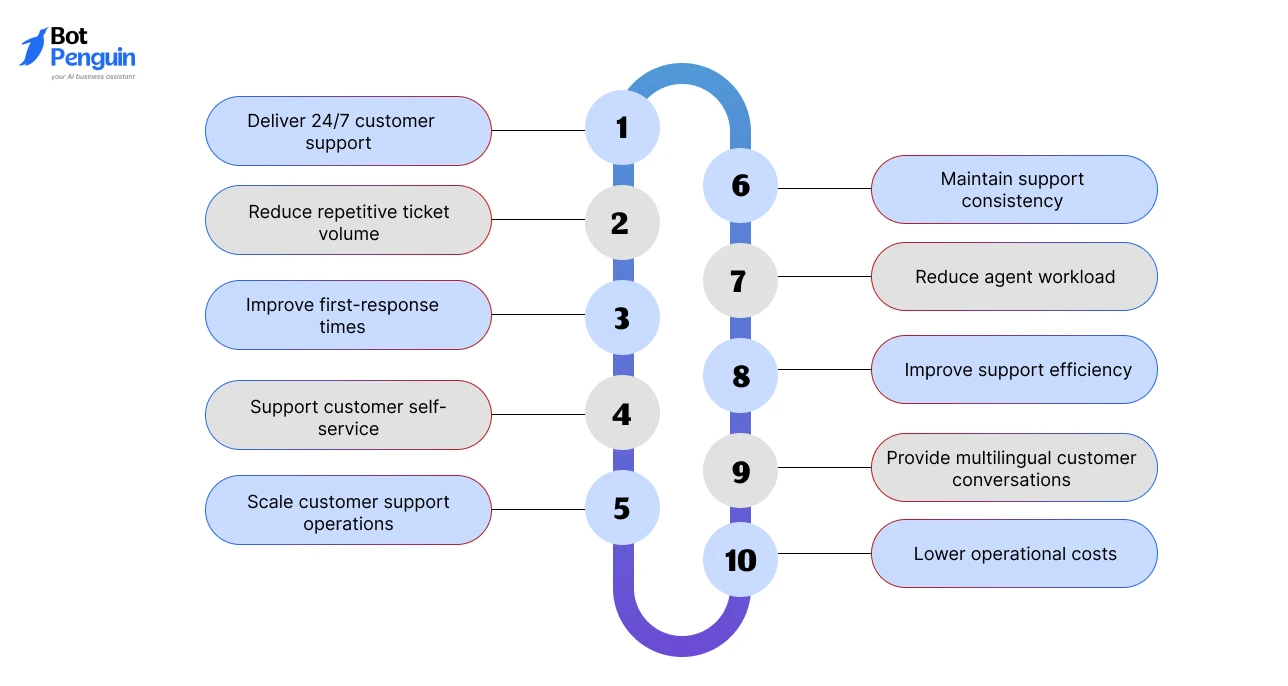
Businesses are adopting AI customer support chatbots to manage rising support demand without proportionally increasing support costs or team size.
These platforms help automate routine conversations, improve support availability, and maintain faster response times across channels.
If you want a deeper understanding of how these systems work, you can also explore our complete guide on AI customer support chatbots.
Businesses are investing in AI chatbot platforms for customer support because they help:
However, not every chatbot platform supports the same level of automation, scalability, or integration flexibility. That makes platform evaluation critical before implementation.
Next, let’s look at the criteria used to compare top-performing AI customer support chatbot platforms.
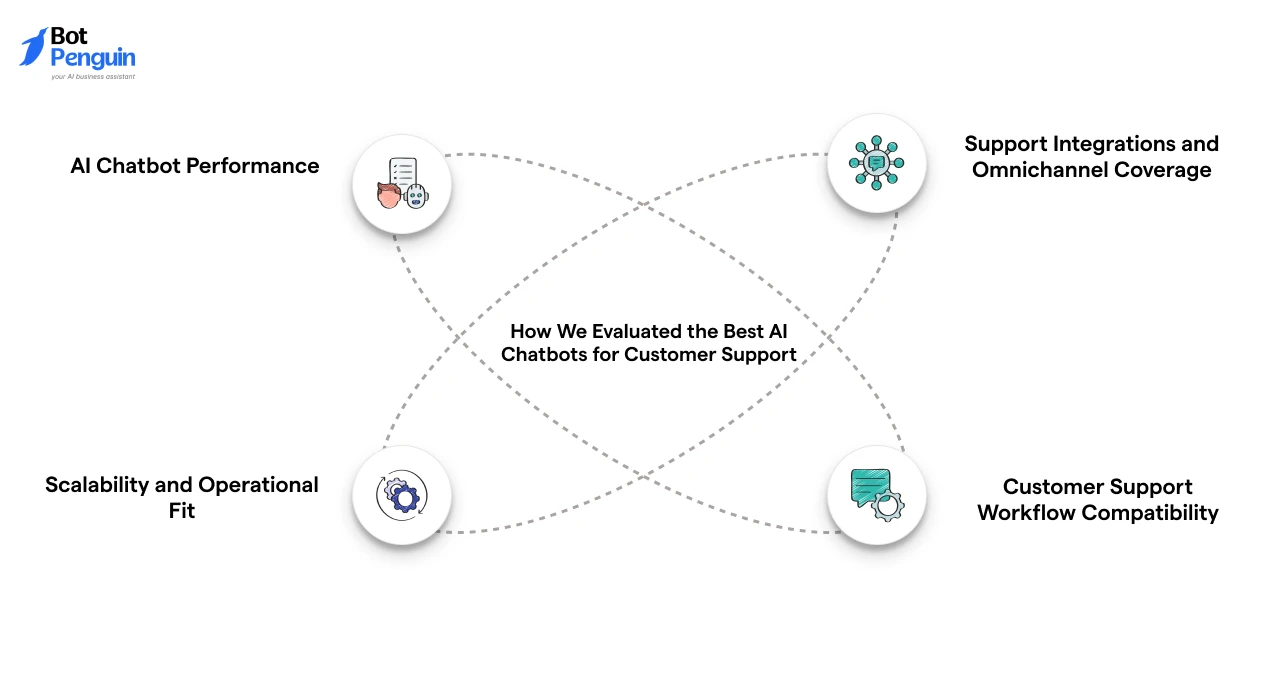
The best AI customer service chatbot is not always the platform with the most features. It’s the one that supports your business workflows, customer channels, scalability, and integration requirements.
To keep this comparison practical, we evaluated each chatbot platform using the following criteria.
We assessed how effectively each chatbot handles customer conversations, common support queries, and conversational accuracy.
The focus remained on real customer support automation instead of generic AI interactions.
We compared how well each platform supports CRM integrations, helpdesk connectivity, messaging channels, and omnichannel customer support workflows.
Platforms with stronger workflow compatibility were given more importance.
We evaluated whether the chatbot platform can support growing ticket volumes, multilingual customer conversations, and scalable, long-term support.
Deployment complexity and chatbot training requirements were also considered.
We prioritized platforms built specifically for customer support use cases instead of general conversational AI tools. This included human handoff support, ticket escalation, and customer self-service capabilities.
Now, let’s compare the leading AI chatbot platforms for customer support using these evaluation criteria.
The top AI chatbots for customer support differ in deployment flexibility, automation depth, integration support, and operational scalability.
To help you narrow your evaluation more quickly, here is a high-level comparison of the leading chatbot platforms covered in this guide.
*Disclaimer: Pricing information in this comparison was sourced from the respective platform websites at the time of publication and may change over time. Please refer to the official pricing pages for the latest plans and billing details.
Now, let’s look at each platform in detail, compared specifically through the lens of customer support chatbot capabilities.
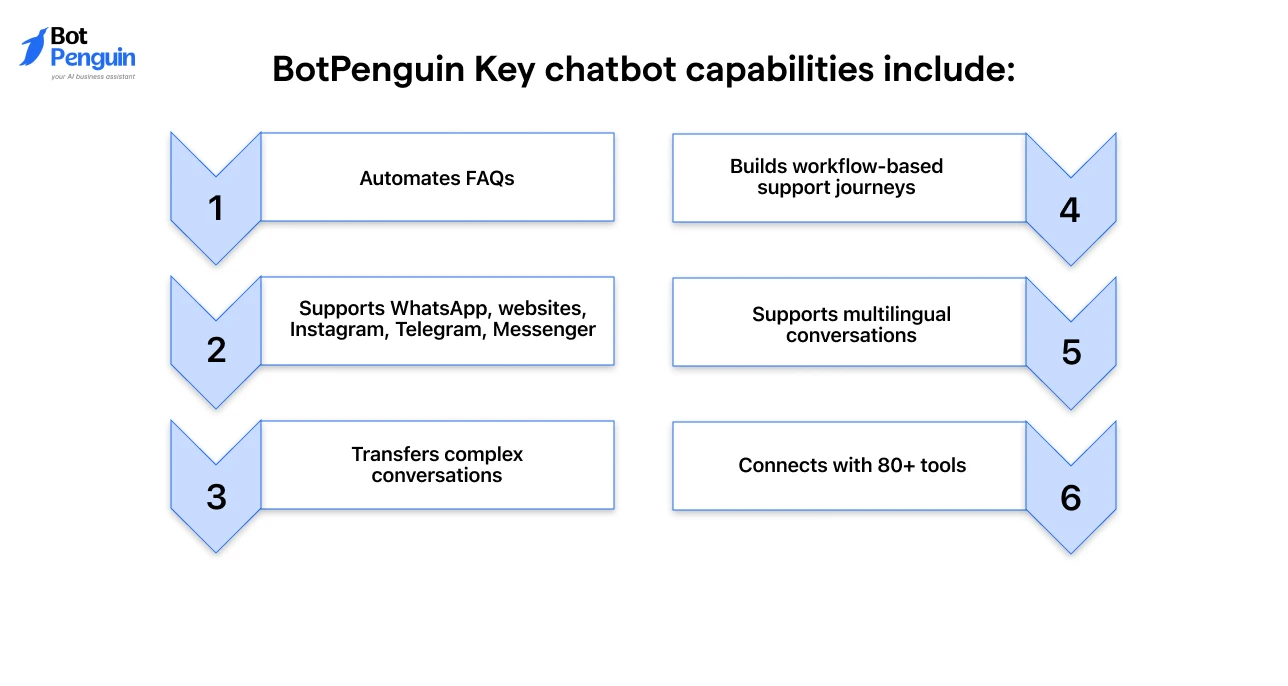
BotPenguin is useful for support teams that need no-code AI chatbot automation across WhatsApp, websites, live chat, and social messaging channels.
It helps automate common customer queries, route conversations, and centralize support communication without a heavy reliance on developers.
Best for: Ecommerce support teams, D2C brands, healthcare clinics, education businesses, and customer support operations
Pricing: Free forever plan available. Paid plans start at $15/month for WhatsApp, with omnichannel plans from $29/month.
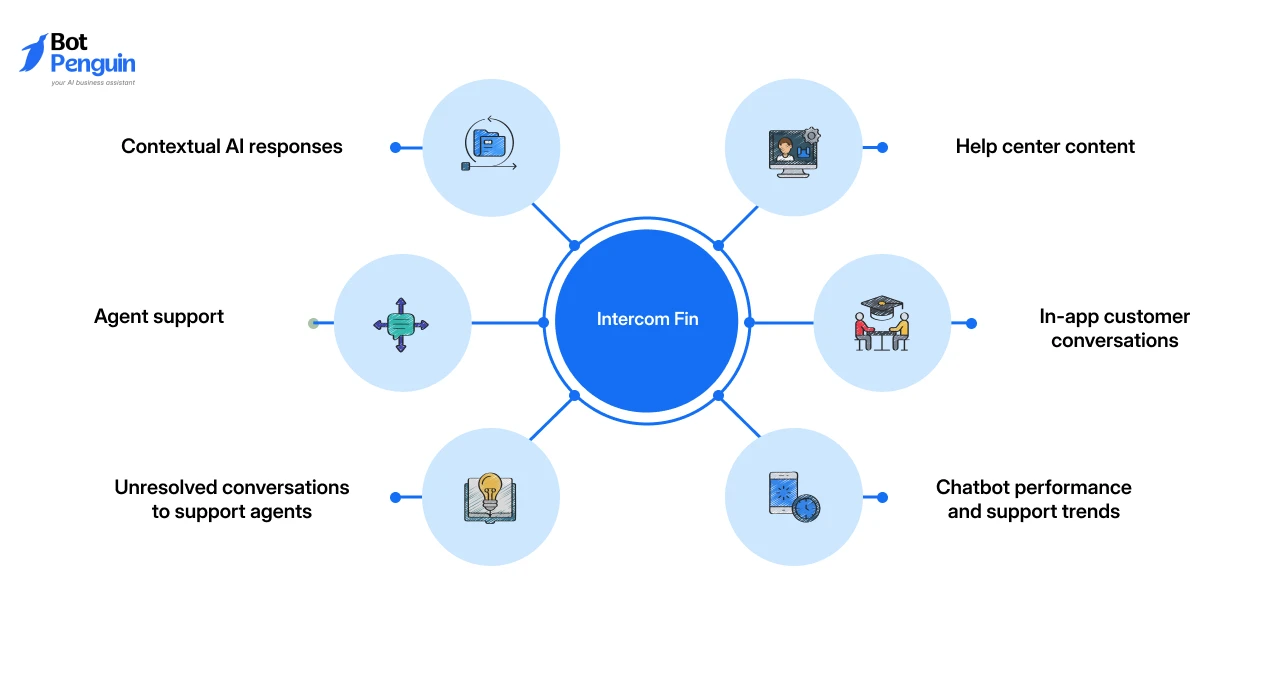
Intercom Fin is useful for SaaS and digital-first teams that need AI chatbot support for chat-based customer conversations.
It uses existing help center content to resolve standard queries, support self-service, and reduce ticket load.
Best for: SaaS support teams, product-led businesses, customer success teams, and digital platforms managing high-volume chat support
Pricing: Paid plans start at $29/seat/month. Fin usage is charged separately at $0.99 per Fin outcome.
Zendesk AI is useful for enterprise support teams that need chatbot automation within a larger customer service system.
It helps automate everyday support requests, manage customer conversations, and maintain visibility across ticketing workflows.
Best for: Enterprise customer support teams, IT support operations, SaaS enterprises, telecom businesses, and large service organizations
Pricing: Paid plans start at $19/agent/month. Plans with AI and omnichannel support start at $55/agent/month, while Copilot is available as an add-on.
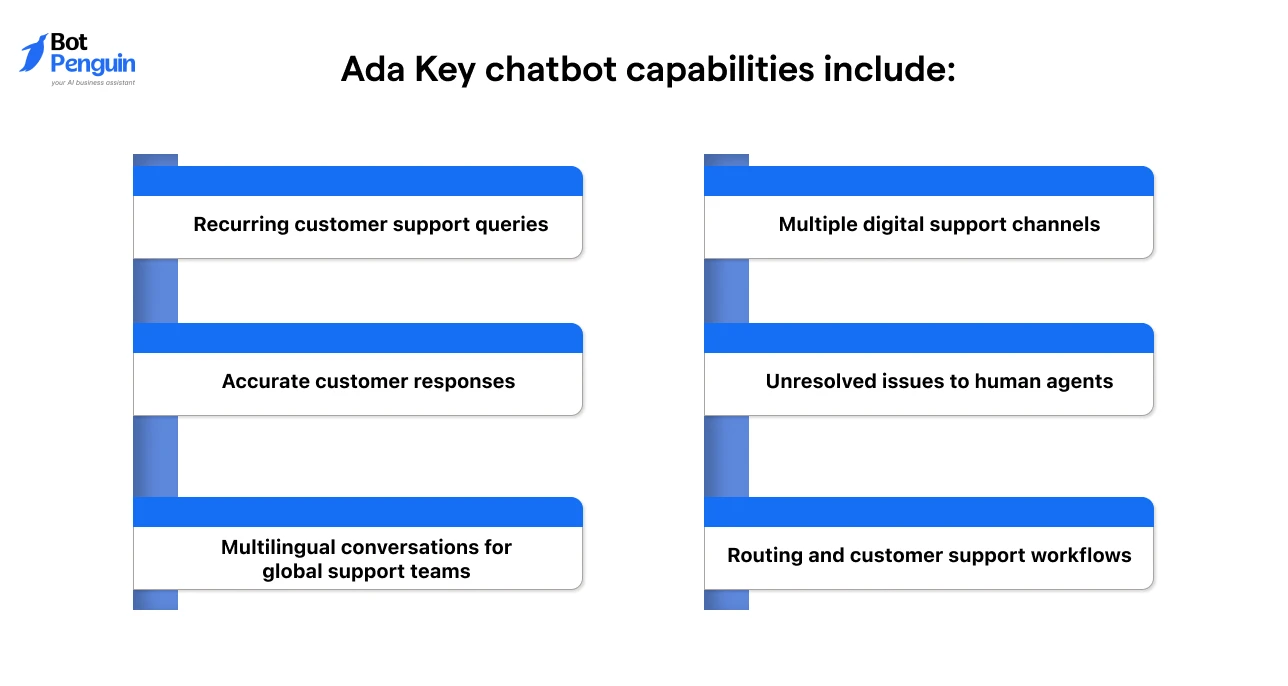
Ada is useful for enterprises that need AI chatbot automation for high-volume customer support.
It helps resolve routine queries, support self-service, and manage customer conversations across digital channels.
Best for: Enterprise support teams, SaaS companies, ecommerce businesses, telecom providers, and global customer service operations
Pricing: Custom pricing is available after consultation. Ada’s pricing depends on support volume, deployment scope, and automation requirements.
Freshchat is useful for growing support teams that want AI chatbot automation across customer messaging channels.
It helps businesses move from manual support workflows to faster, AI-assisted customer conversations.
Best for: Growing support teams, SaaS businesses, ecommerce brands, IT support teams, and mid-market customer service operations
Pricing: Free plan available. Paid plans start at $19/agent/month, with higher-tier plans for advanced routing, dashboards, and enterprise support needs.
Tidio is useful for SMBs that need affordable AI chatbot automation for website and ecommerce support. It helps automate common customer queries while keeping live chat available for complex issues.
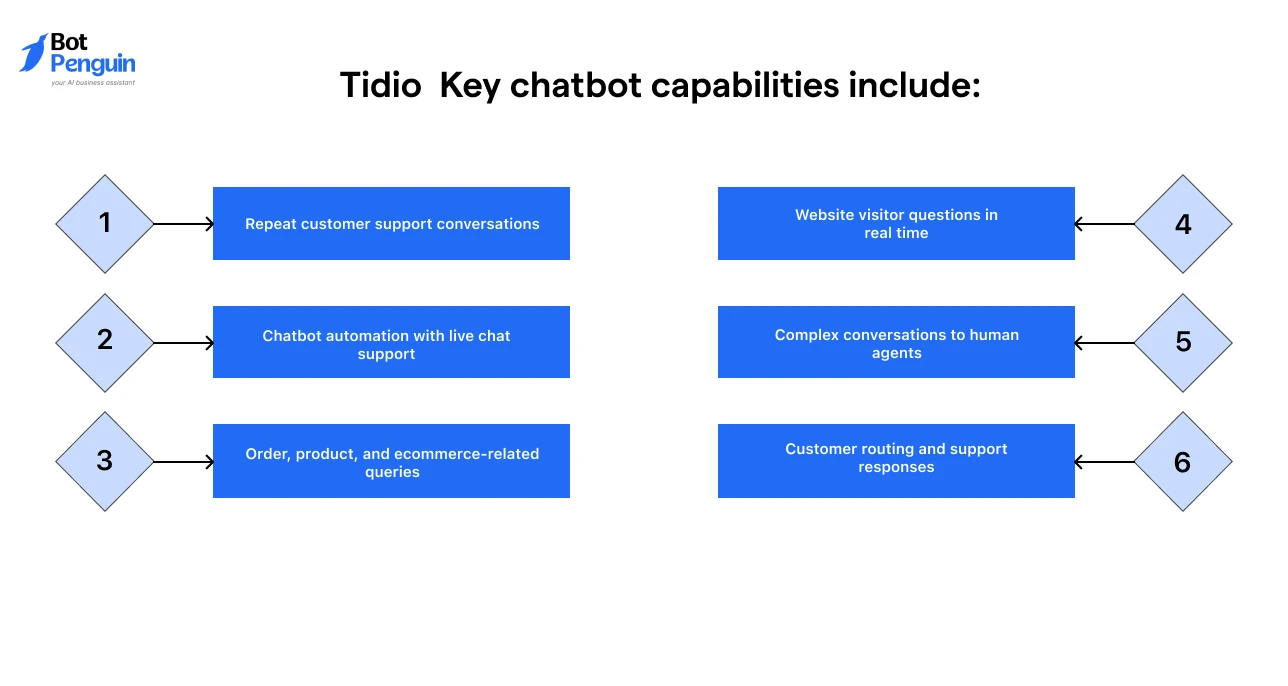
Best for: SMB support teams, ecommerce businesses, Shopify stores, online retailers, and small customer service teams
Pricing: Paid plans start at $24.17/month. Pricing varies by billable conversations, Lyro AI conversations, and automation usage limits.
LivePerson is useful for enterprises that manage high-volume customer conversations across digital messaging channels.
It helps automate frequent support interactions while keeping escalation paths open for complex issues.
Best for: Enterprise customer support teams, telecom providers, banking operations, ecommerce enterprises, and digital-first service teams
Pricing: Custom pricing is available upon request. Additional channel-related charges may apply to options such as X, SMS, WhatsApp, and proactive messaging.
Kore.ai is useful for enterprises that need AI chatbot automation across complex customer service workflows.
It supports large-scale customer conversations and connects chatbot workflows to enterprise systems.
Best for: Enterprise support operations, healthcare providers, banking institutions, telecom businesses, and large customer service teams
Pricing: Custom pricing is available through sales consultation. Final costs depend on deployment scale, integrations, and AI service requirements.
Yellow.ai is useful for businesses that manage customer support across regions, languages, and communication channels.
It helps automate multilingual customer conversations across chat, messaging, web, and voice-based support environments.
Best for: Global ecommerce businesses, airlines, telecom providers, BFSI companies, and enterprise support teams managing multilingual support
Pricing: Free plan available with 500 chat sessions/month. Enterprise pricing is custom, and extra resolutions may be usage-based.
Forethought is useful for enterprise support teams that need chatbot automation for repetitive customer queries.
It helps reduce manual ticket handling and connect automated conversations to existing helpdesk workflows.
Best for: Enterprise support operations, SaaS businesses, fintech companies, ecommerce enterprises, and customer service teams managing high ticket volumes
Pricing: Custom quote-based pricing is available for Basic, Professional, and Enterprise plans. Add-ons may apply for assist, QA, and Slack support features.
Gorgias is useful for ecommerce businesses that need chatbot automation to support storefront operations and handle order-related customer conversations.
It helps online stores automate common inquiries about shipping, returns, orders, and products.
Best for: Shopify stores, D2C brands, ecommerce support teams, online retailers, and customer service teams handling order-related queries
Pricing: Paid plans start at $10/month for the Starter plan. Automation pricing may be billed separately based on the volume of automated interactions.
Kommunicate is useful for businesses that want AI chatbot automation with live-agent support.
It helps teams automate repeat customer interactions while maintaining human escalation for complex or sensitive issues.
Best for: SaaS businesses, healthcare support teams, ecommerce brands, education platforms, and customer service teams needing hybrid support workflows
Pricing: Paid plans start at $40/month. Extra AI agents, team members, and additional conversations may increase the monthly cost.
Zoho SalesIQ is useful for businesses that want chatbot support connected with customer engagement and CRM workflows.
It works especially well for teams already using Zoho tools for customer relationship management or support operations.
Best for: SMB support teams, SaaS businesses, education platforms, ecommerce companies, and teams already using Zoho CRM or Zoho support tools
Pricing: Free plan available. Paid plans start at $10/operator/month, with pricing based on the number of operators and optional add-ons for higher usage.
Aisera is useful for enterprises that need chatbot automation for customer support, service requests, and the resolution of common issues.
It helps large support teams automate customer conversations and connect chatbot workflows to enterprise service systems.
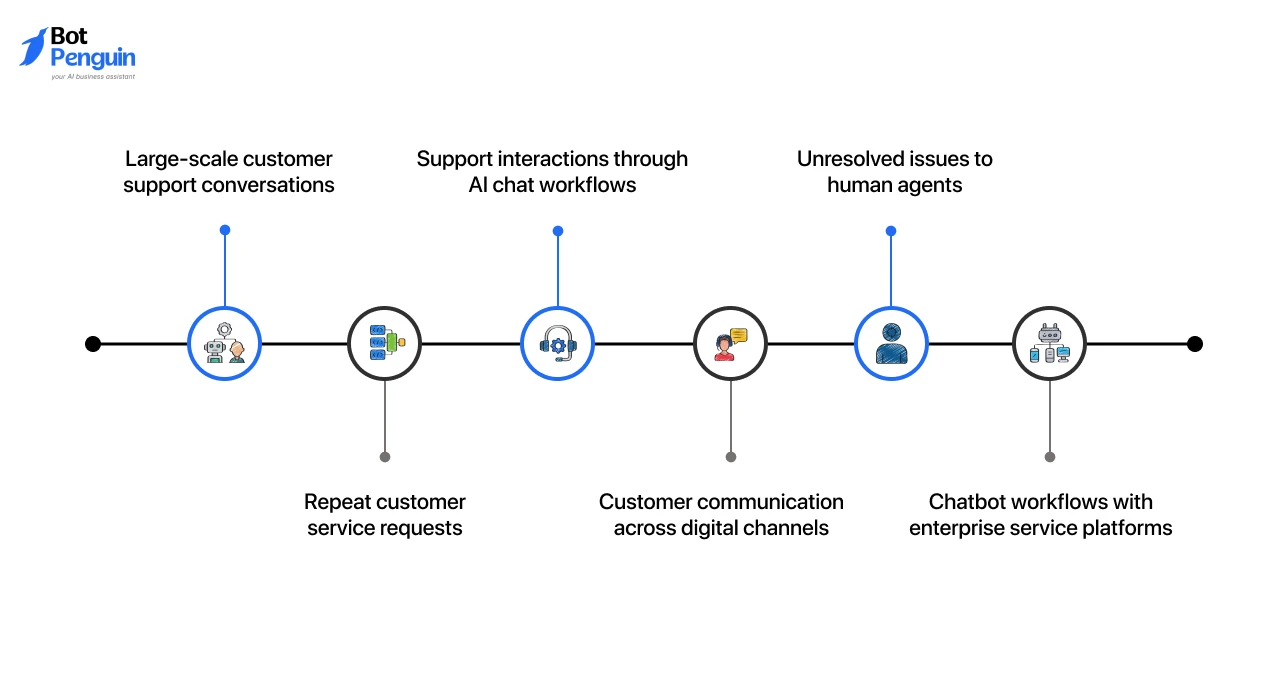
Best for: Enterprise support operations, IT service teams, healthcare organizations, telecom businesses, and financial institutions managing complex service workflows
Pricing: Custom pricing is available based on enterprise requirements. Businesses need to request details based on use case, scale, and customer service deployment needs.
Cognigy is useful for enterprises that need to automate chatbot across voice and digital customer service channels.
It supports automated customer conversations and connects chatbot workflows to enterprise support infrastructure.
Best for: Enterprise support teams, telecom providers, airlines, banking operations, and businesses managing voice and digital customer service workflows
Pricing: Custom pricing is available through a demo request. Final costs depend on requirements for voice, chat, messaging, and deployment.
The right AI chatbot platform depends on your specific needs. That is why businesses should evaluate chatbot platforms based on long-term support and fit, rather than features alone.
Next, let’s look at how to identify the right AI customer support chatbot for your specific business requirements.
The perfect customer support chatbot for your business depends on your support volume, customer communication channels, operational complexity, and integration requirements.
To narrow your evaluation, the table below represents how the chatbot platforms discussed above align with different business requirements.
The right chatbot platform should improve support efficiency without disrupting your existing customer service workflows or creating operational complexity.
The next step is understanding which evaluation mistakes businesses should avoid before selecting an AI customer support chatbot platform.
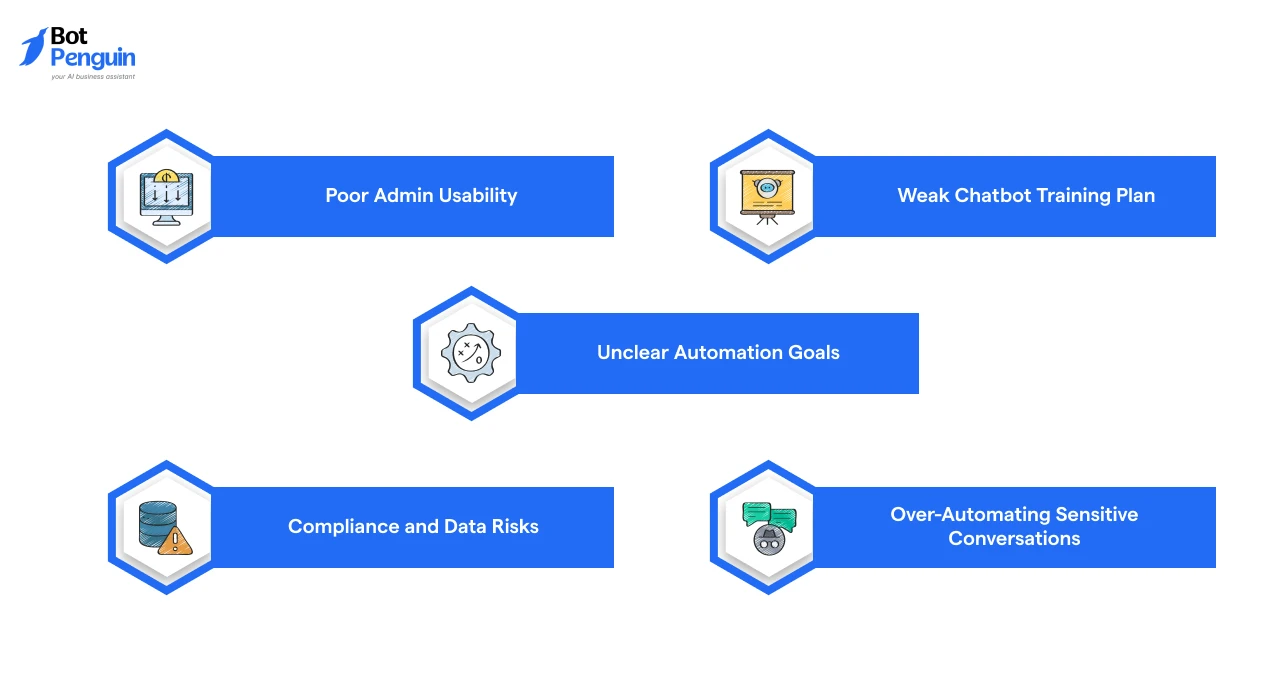
Many chatbot deployments underperform because businesses focus on vendors' claims rather than real implementation risks. These mistakes can reduce adoption, increase manual work, and limit the impact of long-term support.
The points below highlight the selection mistakes that often lead to adoption, accuracy, and compliance issues after chatbot deployment.
A chatbot may have strong automation features, but support teams can struggle if they cannot easily edit flows, update replies, manage access, or review conversations.
Chatbot accuracy can drop when product details, policies, pricing, or customer questions change, but the chatbot content is not updated regularly.
A chatbot can become difficult to evaluate when teams launch it without deciding which queries it should handle and what success should look like.
Customer support chatbots may collect or process sensitive details such as payment, account, health, or personal customer information.
Some support cases can damage customer trust if handled solely by automation, especially complaints, cancellations, billing disputes, or urgent issues.
Choosing the right chatbot is not only about the depth of automation. It is also about how safely, accurately, and smoothly the platform fits into daily customer support operations.
The best customer support chatbots streamline support operations, improve response efficiency, and scale with growing customer communication demands.
In this guide, we compared leading chatbot platforms based on how well they support real customer service workflows, from omnichannel conversations and self-service automation to enterprise scalability and support integrations.
We also covered the key evaluation factors and common selection mistakes businesses should consider before deployment.
For businesses seeking to benefit from no-code chatbot automation across WhatsApp, websites, and social messaging channels, BotPenguin stands out as a top choice with its omnichannel support workflows, easy deployment, and scalable customer conversation automation.
Compare BotPenguin’s customer support use case and book a demo to see how it can fit your current support workflow.
BotPenguin is a strong pick for an omnichannel customer support AI chatbot. Intercom Fin fits SaaS teams, Zendesk AI suits enterprises, and Gorgias works well for ecommerce.
AI chatbot pricing can range from free plans to custom enterprise pricing. Costs usually depend on users, conversations, AI usage, channels, and integrations.
Businesses often struggle with unclear automation goals, weak admin usability, chatbot training needs, compliance risks, and poor escalation planning. These issues can reduce chatbot adoption after deployment.
Highly rated AI chatbots for customer support include BotPenguin, Intercom Fin, Zendesk AI, Ada, Freshchat, Tidio, Gorgias, Yellow.ai, and Kommunicate.
Businesses should review automation quality, integrations, scalability, human handoff, pricing, analytics, language support, deployment effort, and the fit of the customer support workflow.
Choose Best Customer Support Chatbots
Reduce support delays and automate high-volume customer queries across every channel with BotPenguin.
Get in TouchCheckout our related blogs you will love.
Updated at Oct 6, 2026
17 min to read
Updated at Sep 28, 2026
15 min to read
Updated at Sep 28, 2026
19 min to read
Updated at Sep 25, 2026
9 min to read
Updated at Sep 1, 2026
10 min to read
Updated at Jun 24, 2026
10 min to read
Table of Contents