


Telegram Bot Maker Free vs Paid Options You Should Compare
Updated at Sep 23, 2026
7 min to read
Updated On Jul 28, 2026
13 min to read
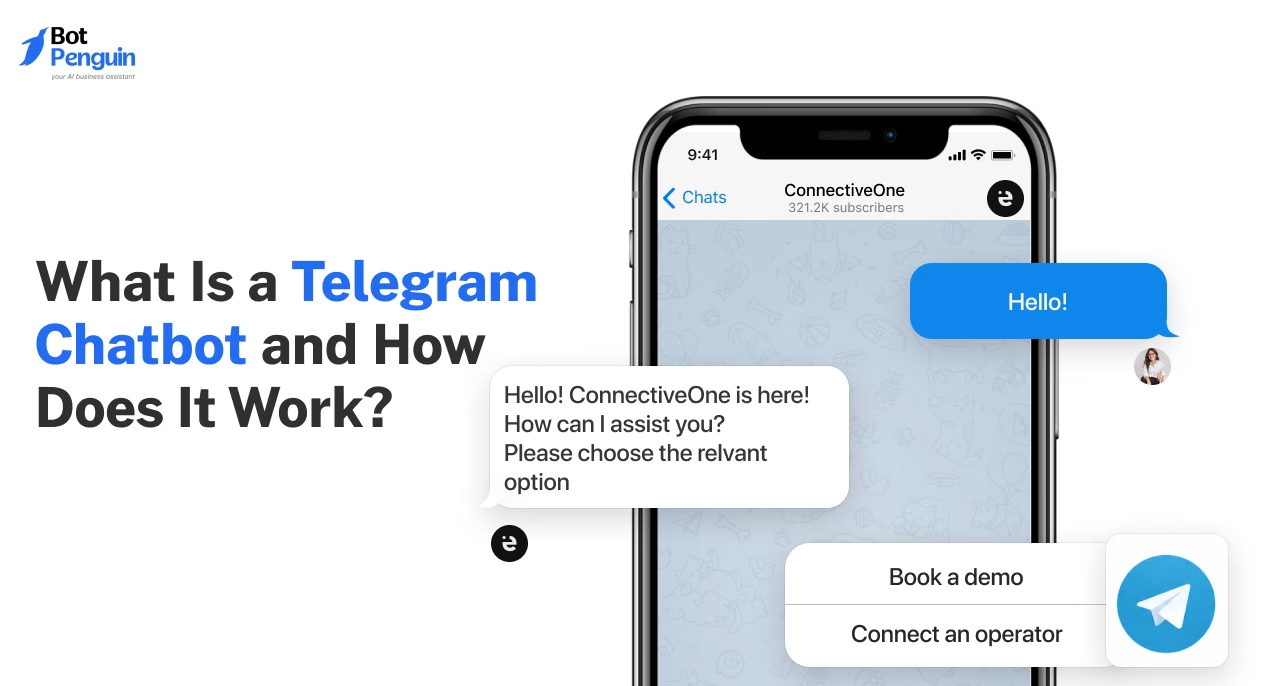
Telegram might be doing more for businesses than you think.
It's no longer just a messaging app. Businesses use Telegram to answer routine questions, send updates, generate leads, build communities, and automate conversations.
That's where a Telegram chatbot comes in. It lets companies reply immediately, manage day-to-day tasks, and remain accessible round the clock.
In this guide, you'll learn what a Telegram chatbot is, how it works, its key features, common use cases, benefits, limitations, and how to build one.
Whether you're just exploring automation or ready to create your first bot, this guide covers everything you need to know.
A Telegram chatbot is an automated program that interacts with users on Telegram through text, buttons, images, files, and other media. It can answer questions, collect information, send updates, process requests, and complete tasks with minimal human input.
Unlike basic autoresponders, modern Telegram chatbots can follow conversation flows, integrate with business tools, and use AI to respond naturally.
Telegram has over 1 billion monthly active users, giving businesses a massive, ready-made audience to build chatbot experiences on.
Here’s what’s really at stake when a business can’t respond fast enough or scale its conversations:
As customer expectations continue to rise, Telegram chatbots have become more than a convenience; they’re a practical way to improve responsiveness and boost customer engagement.
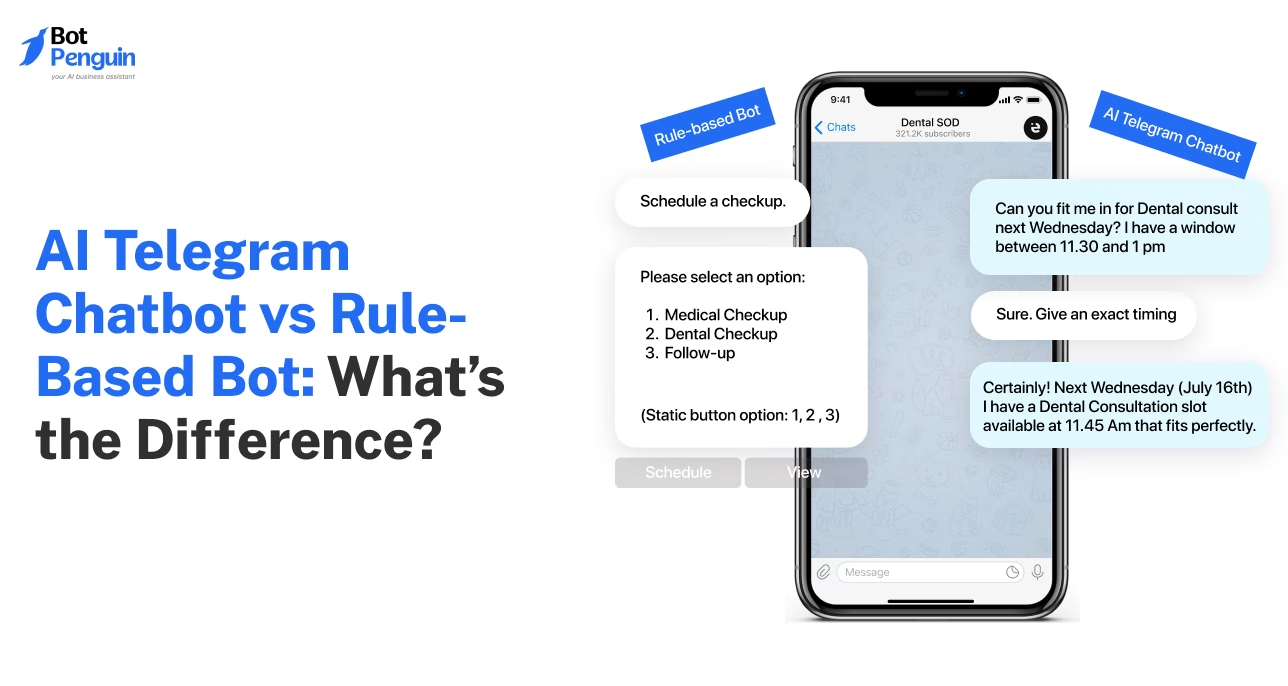
There are different kinds of Telegram chatbots. Some follow rules, while others understand natural language and adapt to user input.
The right choice depends on how complex your conversations are and how much flexibility your business needs.
Rule-based Telegram bots are ideal for simple tasks; AI bots excel at handling natural conversations, while hybrid Telegram bots offer the best of both.
Most businesses choose hybrid Telegram chatbots because they combine the reliability of structured workflows with the flexibility of AI.
Looking to build a hybrid Telegram chatbot? Platforms like BotPenguin let you combine AI conversations with rule-based workflows, connect your bot to business tools, and deploy on Telegram without starting from scratch.
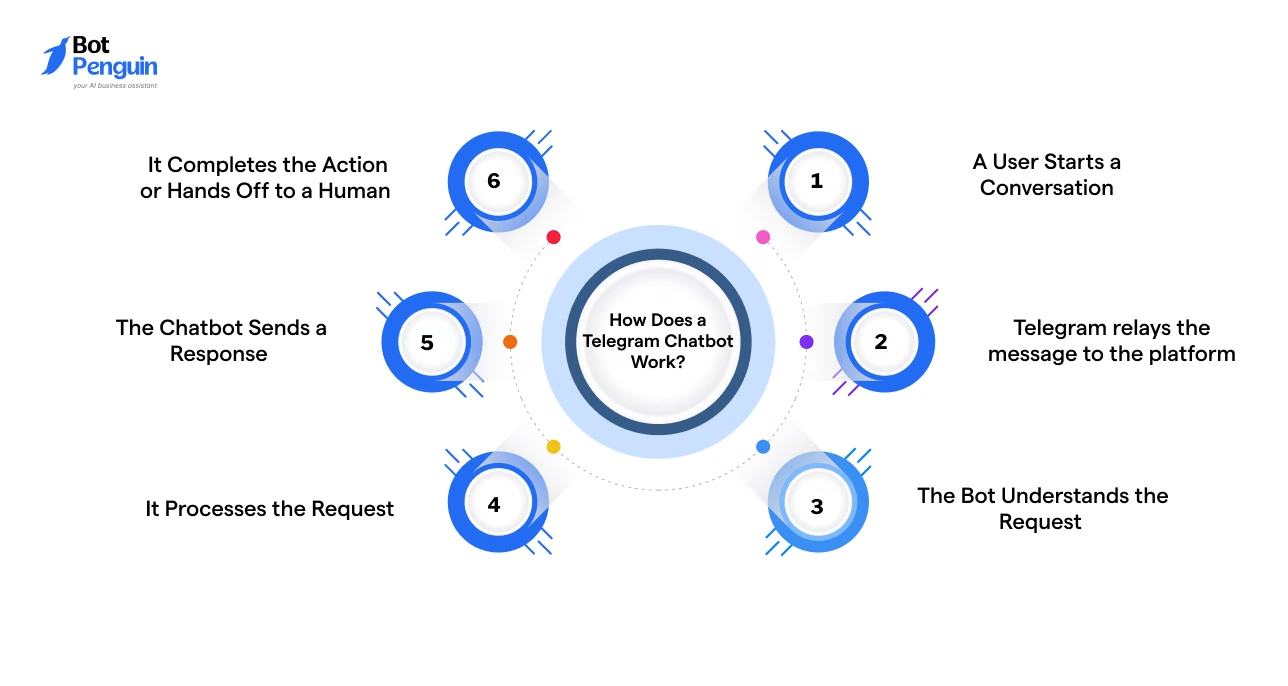
Every interaction starts when a user sends a message, and the bot decides how to respond based on predefined rules, AI, or a combination of both.
Here’s how a Telegram chatbot actually works:
The interaction begins when someone sends a message, taps a button, shares a command, or triggers the bot from a Telegram group or channel.
Telegram’s Bot API forwards the message to your chatbot platform, which manages the webhook or long polling setup behind the scenes, so businesses get the message instantly without configuring any of this manually.
The chatbot analyzes the input. Rule-based bots match predefined keywords or flows, while AI bots interpret the user’s intent using natural language processing.
Based on the request, the bot retrieves information, follows a workflow, or connects with external systems like CRMs, payment gateways, calendars, or databases.
Remember: Keep each chatflow focused on one outcome. Bots that try to handle too many branches in a single flow become harder to debug and confuse users with too many options at once.
It replies with text, buttons, images, documents, links, or other interactive elements. If needed, it asks follow-up questions to continue the conversation.
Once the task is finished, the chatbot can confirm the action, save the information, or transfer the conversation to a human agent for more complex queries.
Behind this simple flow is a powerful automation engine that can handle thousands of conversations simultaneously, helping businesses deliver faster and more consistent customer experiences.
Telegram chatbots aren't a single-purpose tool. The same bot infrastructure can power a support desk, a sales funnel, a community manager, and a broadcast channel, often within one business.
That range is possible partly because of scale: Telegram’s developer platform has grown to support over 10 million bots at no cost to either builders or users.
Below is a quick reference table, followed by a deeper look at each use case (including a few that most “chatbot use case” lists skip entirely):
Now, let’s explore each of these use cases in detail below:
Beyond answering FAQs, a well-built support bot can triage by urgency before a human ever sees the ticket.
It can tag a query as billing, technical, or general based on keywords or intent, and route each type to the right team automatically.
This turns the bot into a filter, not just a responder, so human agents only see what actually needs their judgment.
The real value here is timing, not just screening.
A Telegram bot can trigger a qualifying conversation the moment someone joins a related group or clicks a specific link in an ad, catching interest while it's still warm.
Compare that to a form-fill that sits unanswered for hours, and the difference in conversion is significant.
Moderation bots can also double as light-touch community intelligence tools.
Beyond filtering spam, they can flag recurring questions across a group, giving community managers a running list of what members are actually confused about, without anyone manually tracking it.
What’s easy to miss is that Telegram supports rich, interactive order updates, not just plain text.
A shipping notification can include a live tracking link, a reschedule button, or a quick “report an issue” option, turning a one-way notification into a self-service moment.
Telegram channels can push content to unlimited subscribers with no algorithm deciding who sees what, unlike social feeds.
A bot layered on top of a channel can let subscribers self-select topics they care about, so a single channel can serve several audience segments without spamming everyone with everything.
This one rarely makes generic chatbot lists, but it's one of Telegram's strongest niches.
Bots can verify wallet ownership, confirm token holdings, and grant or revoke access to gated groups automatically, replacing what used to be manual, error-prone verification by community mods.
Teams use Telegram bots internally to route expense approvals, send shift or deadline alerts, or let employees request time off directly in a chat, cutting out email threads and status meetings for routine requests.
A bot can handle registration, send automatic reminders as the event approaches, and follow up afterward with a recording or feedback form, all inside the same chat thread the person registered from, so nothing gets lost across email and calendar apps.
A single Telegram chatbot built on a chatbot platform can run all of these at once: support, lead qualification, moderation, order updates, and more, from one dashboard.
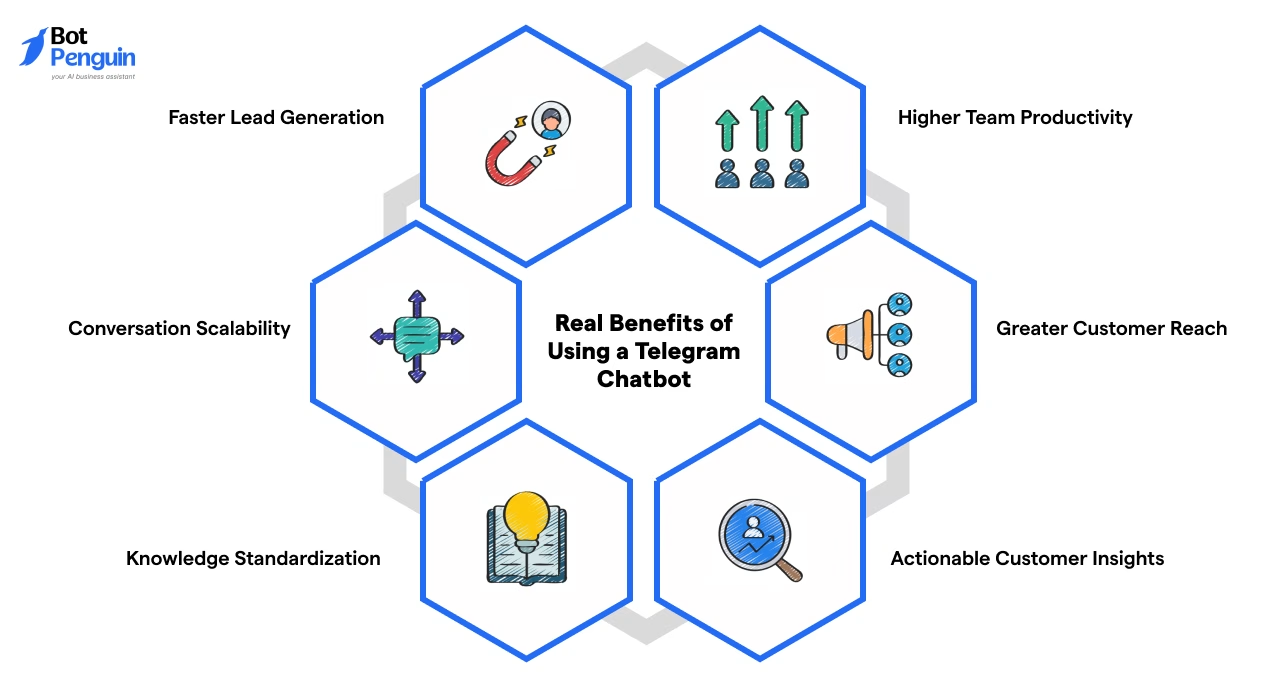
A Telegram chatbot helps businesses avoid operational bottlenecks, achieve growth, and deliver a better experience for both customers and teams.
Together, these benefits make Telegram chatbots valuable not just for minimizing manual work, but for building a more measurable and data-driven customer communication strategy.
With Telegram's Bot API and modern no-code platforms, you can create, test, and launch a chatbot without writing code. Here’s the typical process businesses follow:
These six steps cover the basics of building a Telegram chatbot.
As your business grows, you can continue improving your bot with AI, integrations, analytics, and new workflows to deliver a better customer experience.
A Telegram chatbot can simplify communication, but it also comes with a few practical limitations.
Understanding these challenges early helps you choose the right setup and avoid issues as usage grows:
Public and community groups can attract spam, irrelevant promotions, and abusive users. Without moderation controls, the quality of the group can decline quickly.
Solution: Use keyword filters, automated moderation rules, blocked-word lists, and admin alerts to identify and remove unwanted activity early.
Telegram limits how many messages a bot can send within a specific period. During sudden traffic spikes, these limits may delay responses or affect message delivery.
Solution: Use a platform with message queuing and retry handling so requests are processed gradually instead of being dropped.
Building directly with the Telegram Bot API requires knowledge of webhooks, servers, error handling, hosting, and ongoing maintenance. This can be difficult for teams without developers.
Solution: Choose a no-code Telegram chatbot platform that manages the technical infrastructure while letting you build workflows visually.
Rule-based Telegram chatbots often depend on exact keywords or predefined paths. When users phrase questions differently, the bot may fail to understand the request.
Solution: Add an AI fallback that interprets varied user inputs and steps in when the structured flow cannot find a suitable response.
Bot flows can become outdated as products, policies, and customer questions change. Unchecked workflows may return incorrect information or send users into broken paths.
Solution: Review conversations regularly, update responses, test key workflows, and track where users abandon or repeat questions.
Telegram chatbots may process sensitive customer or business information. Weak token management, unnecessary data storage, or insecure integrations can expose user data.
Solution: Store only essential data, protect bot tokens, restrict admin access, secure integrations, and clearly explain how user information is handled.
Overall, these challenges are not reasons to avoid using a Telegram chatbot. They simply show why the right platform, moderation controls, AI support, and regular monitoring matter.
Many of these challenges can be addressed by choosing the right chatbot platform. BotPenguin, for example, combines AI, visual workflow building, integrations, and analytics to help businesses build and manage Telegram chatbots more easily.
When you launch a Telegram chatbot, there are many things you need to keep in check.
You need to measure whether users receive timely answers, complete intended actions, and remain engaged throughout the conversation.
The right Telegram chatbot metrics help uncover slow responses, confusing questions, weak bot understanding, and conversation steps that need improvement.
*Note: These figures are general reference points, not fixed performance standards. Results can vary significantly by use case, audience, traffic quality, and chatbot design.
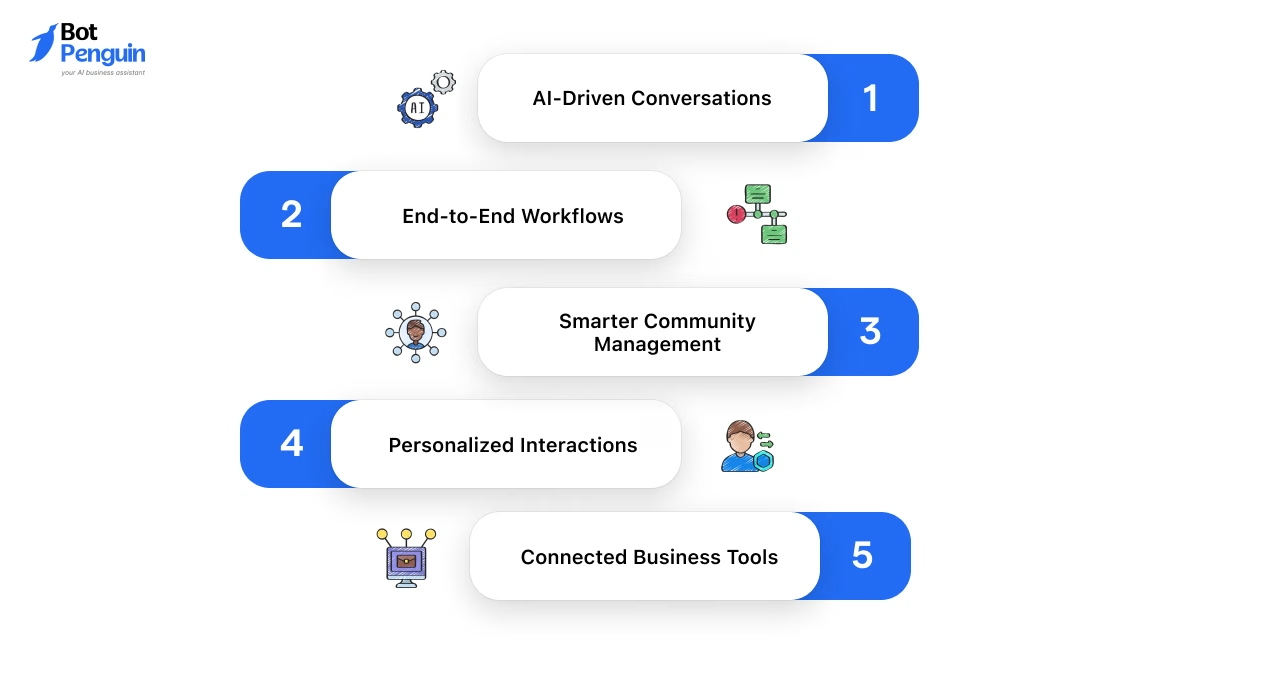
As AI advances and customer expectations change, businesses are using Telegram chatbots to deliver richer conversations, complete more tasks, and support larger audiences.
Here are the top trends shaping the future of Telegram bots:
Future Telegram chatbots will understand intent and context instead of relying only on predefined keywords.
This will make conversations feel more natural and flexible.
Telegram chatbots are expanding beyond answering questions.
They can guide users through bookings, purchases, payments, registrations, and other business processes from start to finish.
The growing TON Foundation ecosystem is making it easier for Telegram bots to support payments and digital services without users leaving the app.
As brands and creators build larger Telegram communities, chatbots are becoming essential for welcoming members, sharing resources, answering common questions, and keeping communities organized.
Large communities like Binance rely on Telegram to engage members, making community bots increasingly valuable.
By using customer preferences and conversation history, Telegram chatbots can deliver more relevant recommendations and responses for each user.
Telegram chatbots are increasingly connecting with CRMs, help desks, calendars, payment gateways, and other business software, allowing conversations to trigger actions across different systems.
Thus, the future of Telegram chatbots isn't just better conversations; it's creating connected customer experiences that scale alongside your business.
Telegram chatbots have moved far beyond basic automated replies. They help businesses answer questions, capture leads, support customers, build communities, and connect with the tools they already rely on.
Whether you choose a rule-based, AI-powered, or hybrid bot depends on your business needs, audience, and the type of conversations you want to manage. The key is choosing a platform that grows with you.
As customer expectations continue to rise, Telegram chatbots will play a bigger role in delivering faster service, smarter interactions, and connected customer journeys. Start with the fundamentals today, and you'll be ready for what's next.
A Telegram chatbot is an automated bot that communicates with users, answers questions, shares updates, collects information, and completes predefined actions directly within the Telegram messaging platform.
Telegram’s Bot API is free to use. However, third-party chatbot platforms may charge for advanced automation, AI features, integrations, higher usage limits, premium support, or additional tools.
No. No-code chatbot builders let you create Telegram chatbots using visual workflows, buttons, triggers, templates, and integrations without writing code or managing complex technical infrastructure yourself.
Yes. AI-powered Telegram chatbots can understand natural language, answer open-ended questions, remember conversation context, generate relevant replies, and handle queries beyond fixed rules or predefined keywords.
Yes. Telegram chatbots can answer common questions, collect customer details, share order updates, guide users through basic issues, and transfer complex conversations to a human support agent.
Yes. Telegram bots can welcome new members, moderate discussions, filter spam, enforce community rules, answer recurring questions, and notify administrators when suspicious or unwanted activity appears.
A Telegram bot performs automated tasks such as sending alerts or managing groups, while a Telegram chatbot is specifically designed to hold interactive, two-way conversations with users.
Choose a platform that supports AI, no-code workflow building, third-party integrations, analytics, and human handoff. It should be easy to use today while giving you the flexibility to scale your Telegram chatbot as your business grows.
Subscribe to Our Newsletter
Get the latest business insights straight into your inbox.
Checkout our related blogs you will love.
Updated at Sep 23, 2026
7 min to read
Updated at Aug 11, 2026
8 min to read
Updated at Jul 31, 2026
6 min to read
Updated at Jul 28, 2026
9 min to read
Updated at Jul 28, 2026
10 min to read
Table of Contents