


Telegram Bot Maker Free vs Paid Options You Should Compare
Updated at Sep 23, 2026
7 min to read
Updated On Jul 28, 2026
10 min to read
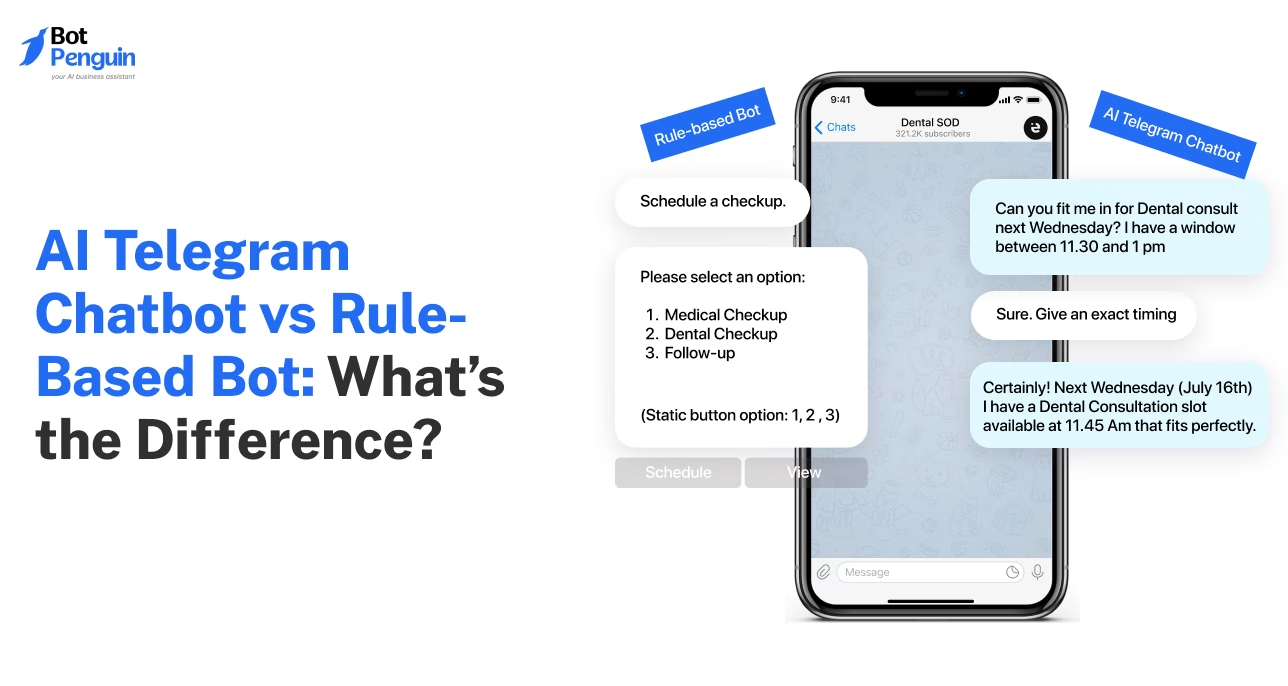
Most Telegram bots aren’t actually intelligent.
They follow scripts. If a user says something unexpected, the conversation often breaks. It has no fallback for real conversation.
This is where a Telegram AI bot changes the experience. Instead of following fixed rules, it understands intent, answers more flexibly, and learns from your knowledge base.
But AI isn’t always the right choice.
In this guide, you'll learn the difference between an AI Telegram chatbot and a rule-based bot, where each one works best, and how to choose the right option for your business.
The type of Telegram bot you choose affects implementation cost, customer experience, operational efficiency, and how easily your automation scales over time.
Making the wrong choice often leads to rebuilding your bot sooner than expected. Here’s why choosing the right option matters for businesses:
Some businesses only need structured workflows like booking appointments or collecting leads.
Others need a bot that can understand natural language, answer complex questions, and provide personalized responses.
Choosing the wrong architecture limits what you can automate.
A rule-based bot is usually less expensive to build but becomes harder to maintain as workflows grow.
An AI-powered Telegram chatbot may cost more upfront but can reduce maintenance and manual support for complex use cases.
Users expect conversations, not decision trees.
If customers frequently ask questions outside predefined flows, a rule-based bot creates dead ends, while an AI bot can continue the conversation naturally.
When a bot cannot resolve customer queries independently, conversations escalate to human agents.
This increases support workload and reduces the ROI of automation.
Gartner forecasts a major shift in customer service by 2029, with agentic AI expected to independently handle 80% of routine support issues, a shift that could shrink operational costs by around 30%.
A rule-based bot has no path to numbers like that. Every query outside its scripted flow still lands on a human's desk.
As products, services, and customer journeys evolve, you'll need to update your bot.
AI bots generally adapt to expanding knowledge bases faster, whereas rule-based bots require continuous flow redesign.
Whether your goal is lead generation, customer support, or internal automation, selecting a bot that doesn't match your use case leads to lower adoption, poor engagement, and slower returns on your investment.
The best Telegram bot is the one that’s built for your business goals. Before comparing them, let’s understand how AI Telegram chatbots and rule-based bots actually work.
For businesses looking to build an AI-powered Telegram chatbot, platforms like BotPenguin make it easier to create, train, and deploy bots across customer touchpoints. With AI capabilities and no-code setup, businesses can build Telegram bots that handle real conversations while keeping setup simple.
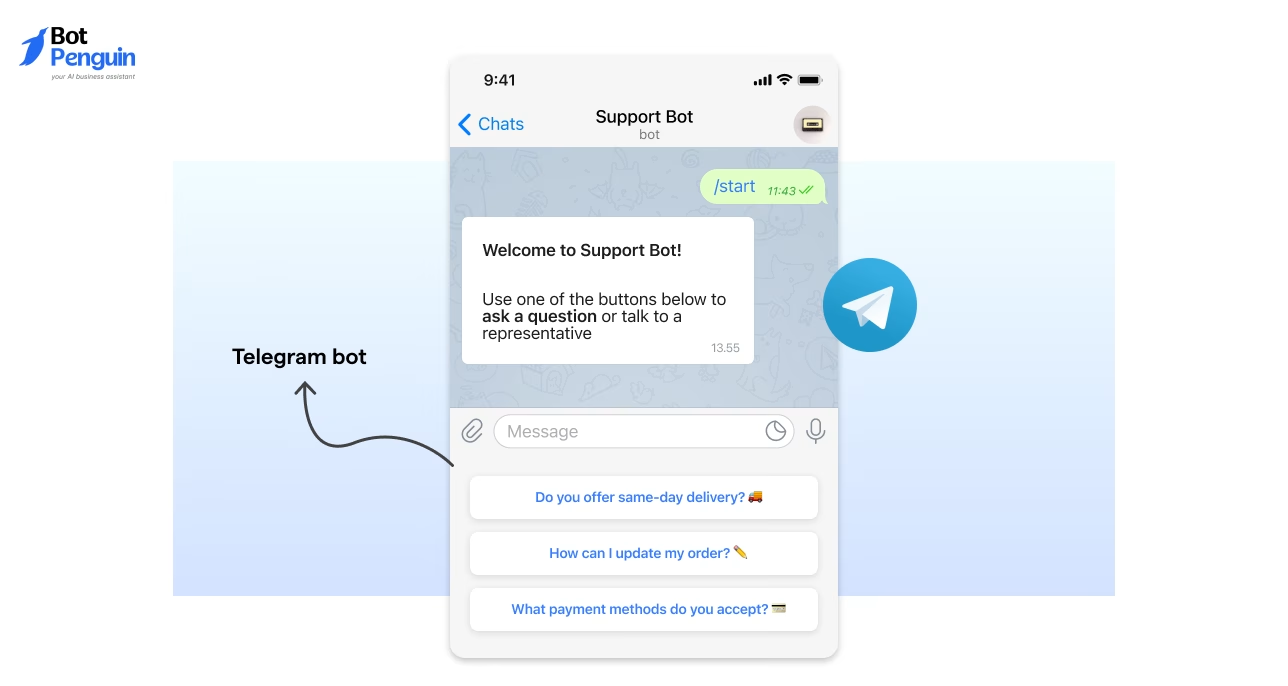
A rule-based Telegram bot is a chatbot that responds using predefined rules and conversation flows. Every reply is mapped to a specific keyword, button, or user action.
For example, if a user taps “Track Order”, the bot asks for an order ID and returns the mapped tracking response. If the user types, “Where is my package?” instead, the bot may not recognize the request unless that phrase was added as a trigger.
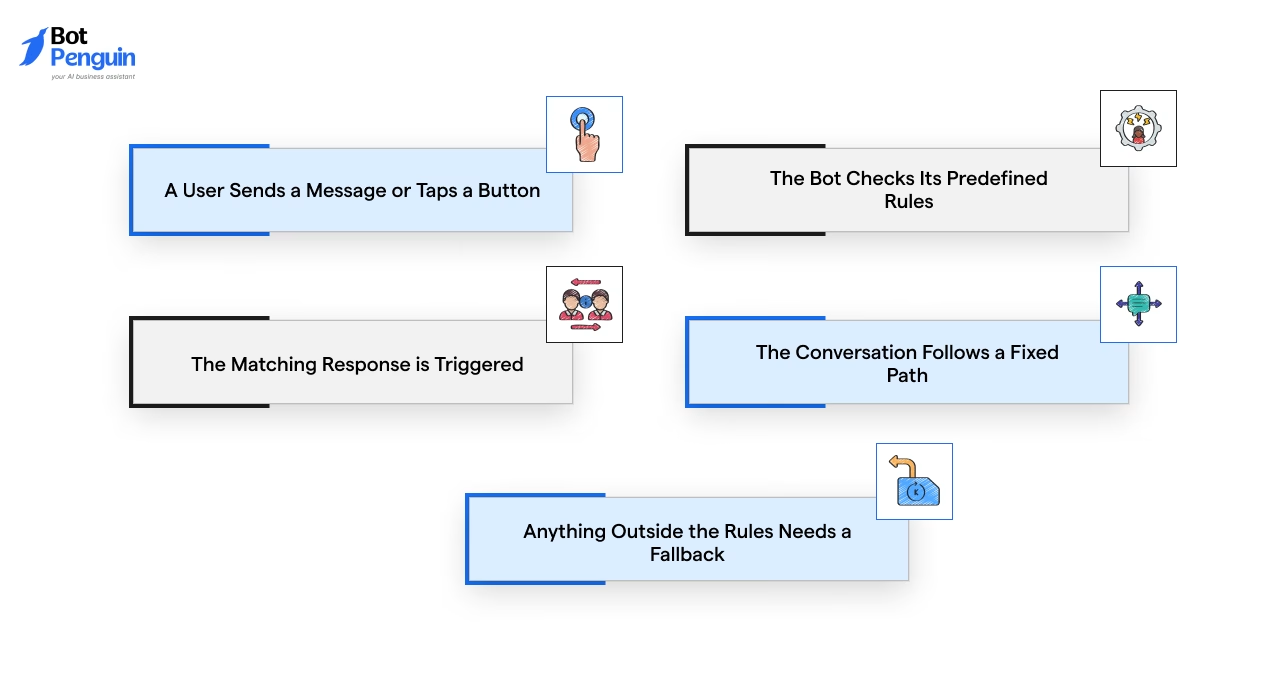
A rule-based Telegram bot works by matching each user input with a programmed condition and moving the conversation through a fixed sequence of responses.
To understand why businesses choose different types of Telegram bots, it's important to first understand how AI-powered bots work.
A Telegram chatbot AI solution uses artificial intelligence and natural language processing (NLP) to understand user messages and respond based on meaning rather than exact commands.
Instead of relying only on predefined paths, an AI bot can interpret different ways of asking the same question and generate responses based on the context.
For example, it can understand that “What time do you open?” and “Are you open today?” are asking about business hours, even though the wording is different.
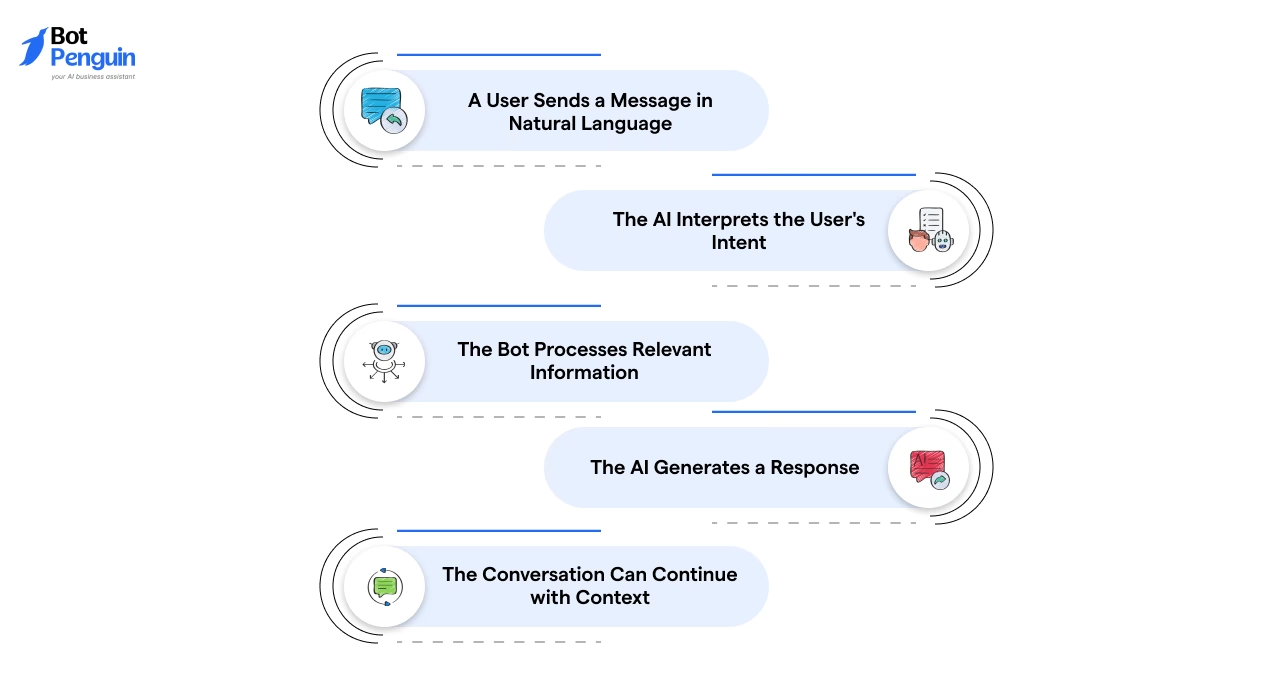
Here’s a step-by-step overview of how an AI-powered Telegram bot understands messages, processes information, and generates relevant responses:
This allows the bot to process user messages based on meaning and context rather than relying only on predefined inputs.
New to Telegram bots? Read our complete Telegram chatbot guide to learn how they work and where businesses use them.
Now that you know how rule-based and AI-powered Telegram bots work, the key question is which one fits your business needs better.
While both can automate conversations, they differ in how they handle user requests, manage conversations, require maintenance, and support business growth.
The table below breaks down the major differences between an AI Telegram bot and a rule-based bot to help you make the right choice:
The right choice isn’t about which bot is smarter; it's about which one matches what your users actually need to get done.
Every business ends up asking this question the moment its Telegram bot starts fielding real customer traffic.
The answer isn't about which technology is more advanced; it's about matching the bot to how your customers actually talk and what they actually need.
Gartner found that just 14% of customer service issues get fully resolved through rigid self-service, since most questions don't fit neatly into pre-set boxes.
For many businesses, the answer isn't either-or. A common setup keeps rules in charge of high-volume, recurring requests like order status or FAQs, and hands off anything unscripted to AI.
That way, simple queries stay fast and cheap, while complex ones still get a real answer instead of being left unresolved.
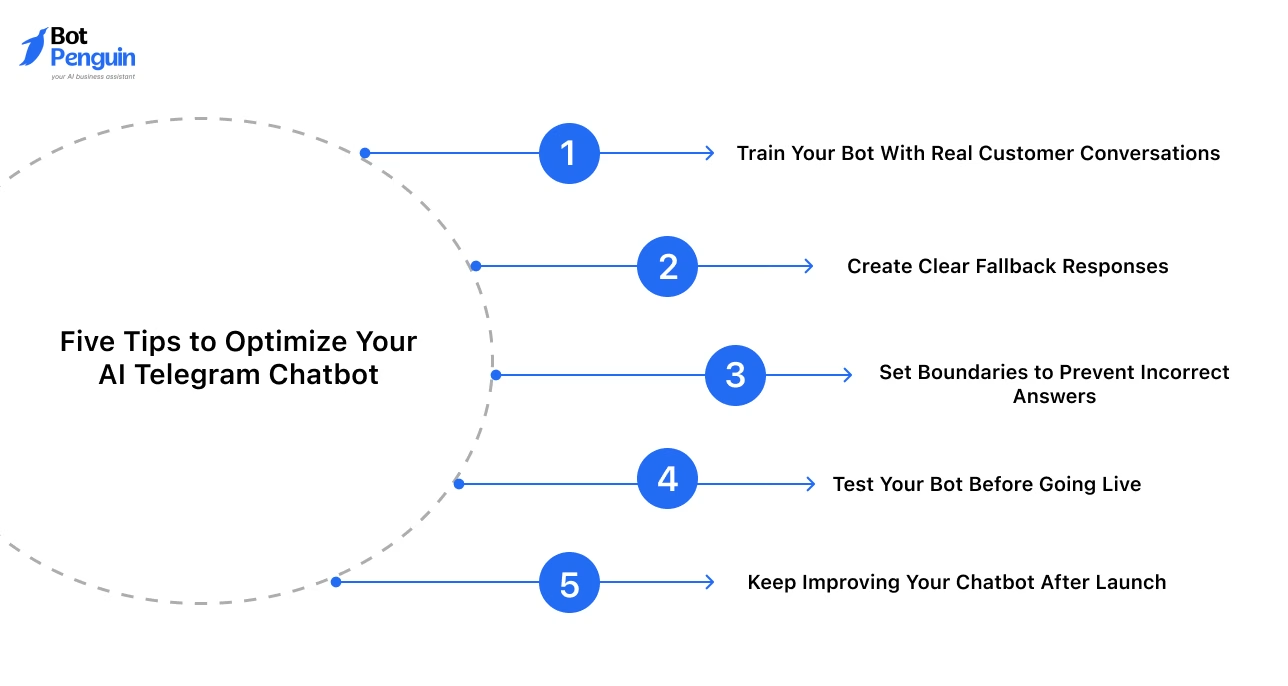
If you're thinking of going the AI-powered route, building the bot is the easy part; getting it to actually understand and help your customers is where most businesses fall short.
The quality of its responses depends on how well it is trained, tested, and managed over time.
These 5 best practices can help you improve accuracy, avoid poor user experiences, and get more value from your chatbot:
Your chatbot learns best from real interactions, not assumptions.
Use actual customer questions from support tickets, chat histories, and sales conversations to build your knowledge base.
Real examples show how customers phrase questions and where they usually get stuck, leading to more relevant responses than training on sample queries alone.
Even the best AI chatbot will encounter questions it cannot answer.
Instead of generating uncertain responses, set up clear fallback messages for situations where the bot lacks enough information.
A good fallback should acknowledge the limitation and guide users toward the next step, such as connecting with a human agent or sharing more details.
An AI chatbot should only answer from your verified knowledge base, not generate information it wasn't given.
For example, a banking chatbot should answer questions about account services, fees, and branch policies only from approved internal information. It should not improvise answers about loan eligibility or compliance requirements.
Thus, define clear boundaries for what a chatbot can respond to, especially for pricing, policies, or anything with legal weight.
If a query falls outside those boundaries, the bot should default to a fallback response rather than guessing.
Testing helps identify gaps before customers interact with your chatbot.
Start with a smaller group of users and observe how the bot handles real conversations.
Review where the bot misunderstands intent or gives incomplete answers, then use those findings to refine your knowledge base before a wider launch.
Treat your chatbot as ongoing work, not a one-time setup.
Revisit it whenever your products, policies, or seasonal queries change, not just when something breaks.
Regular updates keep the bot accurate and useful as your business evolves.
In short: An AI Telegram chatbot gets sharper with real data, safer with clear boundaries, and more reliable with regular review, so the effort you put in after launch matters just as much as the setup itself.
Platforms like BotPenguin make it easier to apply these best practices with tools for AI training, knowledge management, and chatbot optimization, helping businesses build Telegram bots that deliver better customer experiences.
Choosing between an AI Telegram bot and a rule-based bot depends on what your business needs from automation.
Rule-based bots work well for simple tasks with clear steps, while an AI chatbot Telegram setup is better for conversations that require context, flexible wording, and more varied responses.
The right choice is not always the most powerful option. It is the one that fits your goals, budget, and customer needs.
Look at the questions your customers ask, the experience you want to create, and how your needs may change over time. With the right setup, your Telegram bot can become a useful tool for improving customer conversations and saving time.
An AI Telegram bot is better for varied, natural conversations. A rule-based bot is more suitable for simple tasks, predictable questions, and fixed workflows.
An AI bot understands intent, context, and different wording. A rule-based bot follows predefined keywords, buttons, conditions, and conversation paths.
Yes. Many chatbot platforms let you add AI capabilities to existing rule-based flows, so you can upgrade without rebuilding the entire Telegram bot.
Usually, yes. AI chatbots may include model usage or processing charges, while rule-based bots generally cost less because they require fewer computing resources.
A rule-based bot struggles with unexpected wording, follow-up questions, and changing context because it can only respond to programmed inputs, triggers, and conditions.
No. No-code platforms let you connect Telegram, upload business information, configure responses, test flows, and launch an AI chatbot without writing code.
Yes. A hybrid Telegram bot can use fixed flows for structured tasks and AI for open-ended questions, follow-ups, or unpredictable customer conversations.
Create an AI Telegram Bot Without Coding
Automate customer support, answer questions, and manage Telegram conversations with an AI chatbot that understands user intent and delivers relevant responses.
Explore Now!Checkout our related blogs you will love.
Updated at Sep 23, 2026
7 min to read
Updated at Aug 11, 2026
8 min to read
Updated at Jul 31, 2026
6 min to read
Updated at Jul 28, 2026
9 min to read
Updated at Jul 28, 2026
13 min to read
Table of Contents