


Telegram Bot Maker Free vs Paid Options You Should Compare
Updated at Sep 23, 2026
7 min to read
Updated On Jul 31, 2026
6 min to read
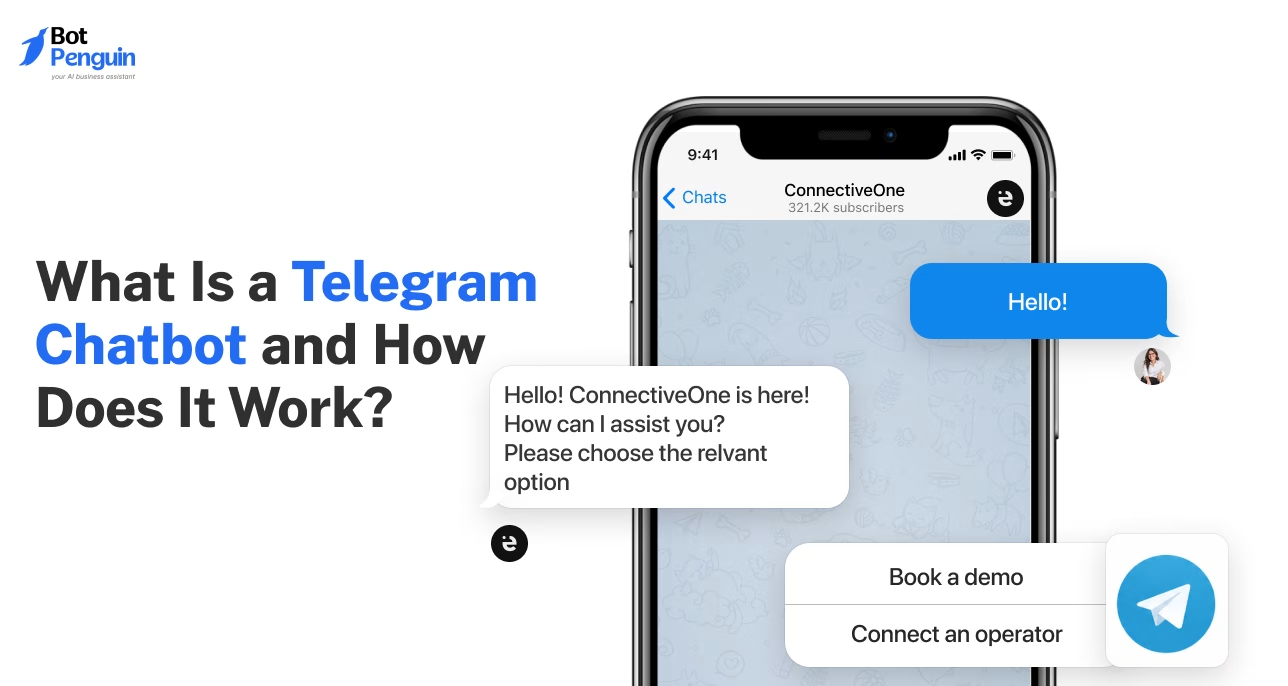
A Telegram chatbot conversation usually begins with a greeting. It then offers quick replies or asks a simple question. The bot answers common requests directly or collects details for the next step. When the issue needs human support, it transfers the conversation with the available context.
A chatbot flow can sound useful on paper and still feel awkward in practice.
That is why real Telegram chatbot examples matter. They show how each message, reply, and handoff works inside an actual conversation.
The challenge is not deciding what the bot should do. It is arranging each step clearly for the user.
This guide shows practical flows for support, lead generation, ecommerce, and group moderation. You will see how bots greet users, ask questions, collect details, share updates, and transfer complex requests.
To understand the foundation behind these flows, first review what a Telegram chatbot is.
A support bot should resolve common questions and clearly escalate complex issues.
Bot: Hi, how can we help today?
Quick-reply options:
Customer: Request a return
Bot: Please share your order number.
Customer: BP10482
Bot: Was the product damaged, incorrect, or no longer needed?
Customer: The product arrived damaged, and the charger is missing.
The bot recognizes that the issue needs human review. It collects the missing details before transferring the chat.
Bot: Please describe the package condition.
Customer: The outer box was torn.
Support summary:
Bot: Thank you. I am transferring this chat to a support agent.
The agent receives the full conversation and summary. The customer does not need to repeat the issue.
This Telegram chat bot handles routine requests while preserving human support for exceptions.
A lead generation bot should qualify interest without feeling like a long form.
Bot: What would you like help with?
Quick-reply options:
Visitor: Request a demo
Bot: Which goal are you trying to support?
Visitor: Lead generation
Bot: How many inquiries do you receive monthly?
Quick-reply options:
Visitor: 500 to 2,000
The bot now collects contact details.
Bot: What is your name?
Visitor: Priya Sharma
Bot: Which contact method do you prefer?
Visitor: Email
Bot: Please share your business email.
Visitor: priya@example.com
Lead summary:
The sales team receives this summary automatically.
Bot: Thank you, Priya. A sales specialist will contact you by email.
This flow gives the sales team useful context without asking unnecessary questions.
An ecommerce bot should keep customers informed from purchase through delivery.
Bot: Your order has been confirmed.
Order details:
Customer: When will my order ship?
Bot: Order BP20841 is being prepared for shipping.
The bot sends another update after dispatch.
Bot: Your order has shipped.
Shipping details:
Bot: Your order is out for delivery today.
After delivery, the bot confirms receipt.
Bot: Order BP20841 has been delivered. Did you receive it?
Quick-reply options:
Customer: Package is missing
Bot: Please confirm your address and describe the issue.
Customer: The address is correct, but no package arrived.
Bot: Your missing-order request has been sent to support.
This journey keeps customers updated from purchase through delivery. It also provides a clear support path when an order is delayed or missing.
Customers planning similar flows can review our guide on Telegram chatbot for ecommerce for broader use cases.
A group moderation bot manages shared conversations, not private customer chats.
Bot: Welcome, Arjun. Please review the group rules.
Community rules:
The bot can also answer repeated questions.
Member: When is the next event?
Bot: Check the Events channel and pinned message for current details.
This prevents admins from repeatedly answering the same question.
The bot also checks restricted keywords and suspicious links.
Member: Click this link for instant followers.
Bot: This message may violate the group rules. It has been flagged.
The bot can remove the message or warn the member.
Admin alert:
The bot can also direct members toward approved resources.
Member: Where is the onboarding guide?
Bot: Open the Resource Library channel. The guide is pinned there.
Unlike one-to-one bots, this flow protects a shared space. Human admins still handle sensitive decisions and disputed actions.
These examples can now be adapted into working Telegram flows using BotPenguin. Let’s see how in the next section.
Choose the example that best matches your business goal. Then, use its structure as the base for your own flow.
Open BotPenguin’s flow builder and select a relevant template. You can also start with a blank flow when needed.
Adapt the main conversation elements:
Keep each message short and purposeful. Remove any step that does not support the intended outcome. For example, a support flow can separate returns from order tracking. A lead flow can qualify interest before collecting contact details.
Before publishing, test every branch. Check buttons, replies, conditions, and handoff triggers.
Each path should end with a useful response or clear next action.
These Telegram chatbot examples should guide the structure, not restrict it. Adjust the wording, logic, and tone to match your business and audience.
Yes. You can copy the flow structure, message order, and reply options. However, adjust the wording, logic, and handoff rules for your business. These Telegram chatbot examples work best as practical starting points, not fixed scripts.
No. You can recreate these flows using a no-code builder. The main task is arranging messages, replies, conditions, and handoff steps clearly. Basic planning matters more than visual design or coding experience.
Customer support is one of the most common examples. It answers FAQs, collects issue details, and transfers complex requests to an agent. This structure works because it combines fast automation with human support.
Yes. Group templates can welcome members, share rules, answer common questions, flag spam, and direct users toward resources. Unlike private support flows, they manage shared conversations and protect the wider community.
Choose the closest example, then recreate it inside BotPenguin’s flow builder. Update the questions, answers, conditions, and handoff logic. Test every path before connecting and publishing the bot on Telegram.
Seeing a complete chatbot conversation removes much of the guesswork. Real Telegram chatbot examples show how messages, replies, branches, and handoffs work together.
Start with the example closest to your business goal. Choose support, lead generation, ecommerce, or group moderation.
Then adapt the template to match your audience and process. Change the questions, reply options, conditions, and handoff rules. Keep every step focused on one clear outcome.
Test the flow before publishing it. Confirm that each path gives users a useful next step.
Once the structure works, build your free Telegram chatbot with BotPenguin and adjust it as real conversations reveal new needs.
Subscribe to Our Newsletter
Get the latest business insights straight into your inbox.
Checkout our related blogs you will love.
Updated at Sep 23, 2026
7 min to read
Updated at Aug 11, 2026
8 min to read
Updated at Jul 28, 2026
9 min to read
Updated at Jul 28, 2026
10 min to read
Updated at Jul 28, 2026
13 min to read
Table of Contents