Comparison of Methods to Send Bulk Messages on WhatsApp
Methods to Send Bulk Messages on WhatsApp
How to Send Bulk Messages on WhatsApp Using Broadcast Lists
How to Send Bulk Messages Using WhatsApp Business API
How to Send Bulk Messages Using WhatsApp Automation Tools
How to Send Bulk Messages on WhatsApp From Excel
How to Send Bulk Messages on WhatsApp Without Getting Banned
How to Send Bulk Messages on WhatsApp Without Adding Contacts
Send Bulk WhatsApp Messages Easily With Meta Approved Platform
Final Thoughts
Frequently Asked Questions (FAQs)
Share
Link copied
TL;DR
You can send bulk messages on WhatsApp using broadcast lists, the WhatsApp Business app, or the WhatsApp Business API.
Broadcast lists work best for small contact groups where recipients have your number saved.
The WhatsApp Business API and automation tools support large-scale messaging and campaign automation.
Businesses must follow opt-in and anti-spam rules to avoid account restrictions.
BotPenguin helps automate WhatsApp messaging with campaigns, chatbots, and CRM integrations.
WhatsApp has 2+ billion users worldwide, and more than 100 billion messages are sent daily. Because of this massive reach, businesses increasingly use WhatsApp to communicate with customers instantly. WhatsApp messages also achieve open rates of up to 90 percent, far higher than most traditional channels.
For businesses managing hundreds or thousands of customers, sending messages individually is not practical. This is why many companies look for ways to send bulk messages on WhatsApp to share updates, promotions, reminders, or notifications efficiently.
What is WhatsApp Bulk Messaging
WhatsApp bulk messaging refers to the process of sending the same message to multiple recipients at the same time through WhatsApp. Instead of messaging each contact individually, businesses can send bulk WhatsApp messages to share updates, announcements, or promotional content efficiently.
Companies commonly use bulk messaging for purposes such as promotional offers, product launches, appointment reminders, order confirmations, and customer notifications. This allows businesses to reach large customer groups quickly while maintaining direct communication within the WhatsApp chat environment.
It is important to understand that WhatsApp bulk messaging is different from group messaging. In a group chat, everyone can see messages from all participants. With broadcast messaging, the message is delivered individually to each recipient, creating a more private and personalized interaction.
Messaging Type
Description
Group Message
Visible to all participants in the group chat
Broadcast Message
Sent individually to each recipient as a private message
Why Businesses Use WhatsApp Messaging
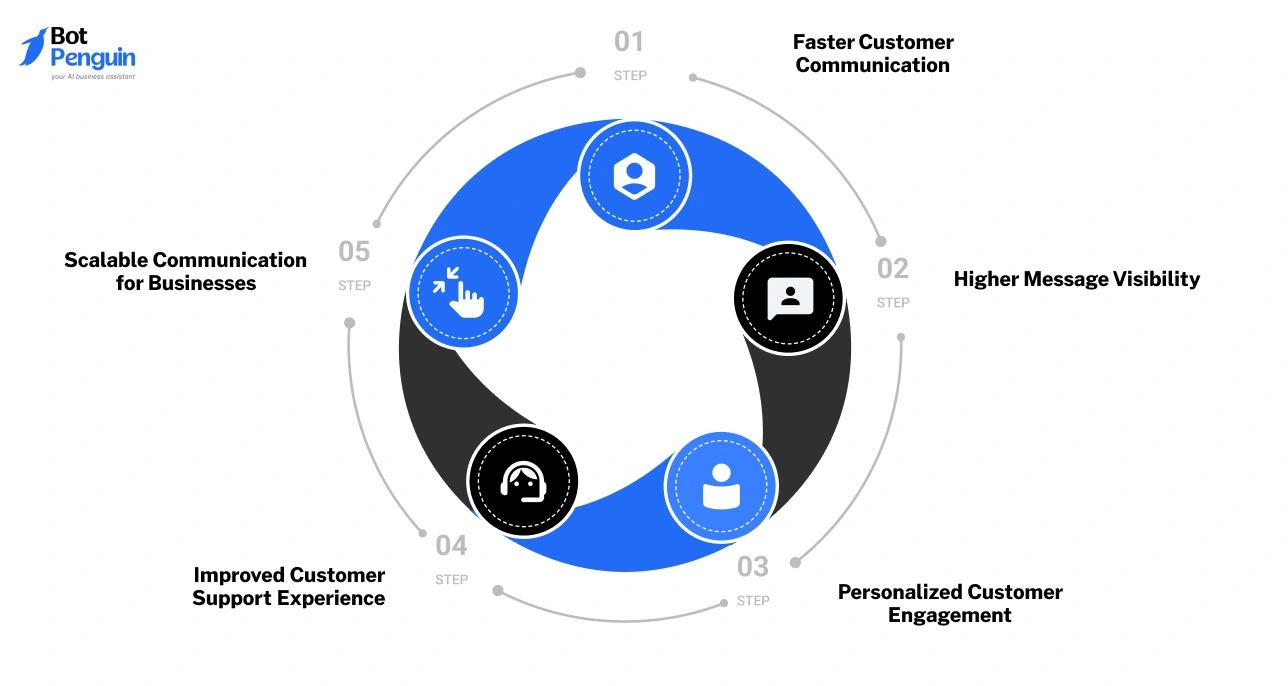
Businesses increasingly adopt WhatsApp business messaging because it allows them to reach customers quickly, personally, and at scale. Unlike traditional communication channels such as email or phone calls, WhatsApp enables direct, conversational interactions that customers are more likely to engage with.
Several factors make WhatsApp a powerful channel for WhatsApp marketing and messaging campaigns.
1. Faster Customer Communication
WhatsApp enables real-time conversations between businesses and customers. Companies can instantly respond to inquiries, confirm orders, send reminders, and provide support updates without delays.
2. Higher Message Visibility
Messages sent through WhatsApp are typically opened much faster than emails or SMS. This makes it an effective channel for time sensitive updates such as delivery notifications, appointment confirmations, or promotional offers.
3. Personalized Customer Engagement
Businesses can send tailored messages based on customer preferences or behavior. For example, companies often use WhatsApp to share product recommendations, targeted promotions, loyalty rewards, and service reminders.
4. Improved Customer Support Experience
WhatsApp allows businesses to provide support within a familiar chat interface. Customers can ask questions, share images or documents, and receive assistance without needing to switch platforms.
5. Scalable Communication for Businesses
With tools like broadcast lists, automation platforms, and the WhatsApp Business API, companies can manage large messaging campaigns while still maintaining a one to one communication experience.
Because of these capabilities, many organizations now integrate WhatsApp messaging campaigns into their marketing, sales, and customer service strategies to improve engagement and strengthen long term customer relationships.
Comparison of Methods to Send Bulk Messages on WhatsApp
Method
How It Works
Best For
Messaging Scale
Automation Level
Contact Requirement
Broadcast Lists
Create a broadcast list, select contacts, and send one message to all recipients
Individuals and small businesses
Low
Limited
Recipient must save your number
WhatsApp Business App
Use broadcast lists and basic tools like quick replies and auto messages
Small businesses managing customer chats
Low to Medium
Basic
Contacts must be saved
WhatsApp Business API
Connect API with a platform, create message templates, and send campaigns
Medium to large businesses
High
Advanced
Customer opt-in required
Automation Tools
Use platforms connected to the API to run campaigns and automated workflows
Businesses running structured campaigns
High
Advanced workflows
Customer opt-in required
Excel + CRM Integration
Import Excel contact lists into CRM or messaging tools and send campaigns
Businesses managing large contact databases
High
Campaign automation
Customer opt-in required
Tip:
Broadcast lists work well for small contact groups, while the WhatsApp Business API and automation tools are better suited for large-scale messaging campaigns.
Methods to Send Bulk Messages on WhatsApp
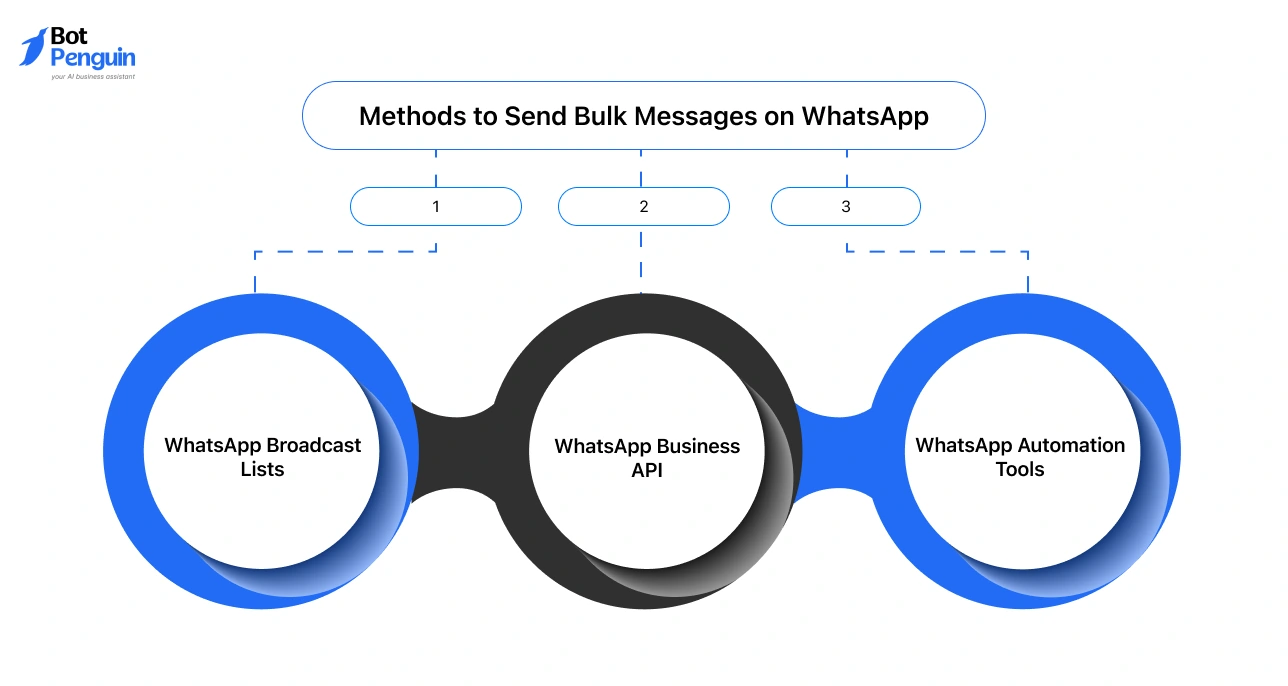
You can send bulk messages on WhatsApp using several methods designed for different messaging needs and business sizes. The most common approaches include broadcast lists, the WhatsApp Business app, and the WhatsApp Business API.
1. WhatsApp Broadcast Lists
Broadcast lists allow you to send one message to multiple contacts at the same time while keeping each conversation private. Each recipient receives the message as an individual chat, which helps maintain a personal communication experience.
2. WhatsApp Business API
The WhatsApp Business API is designed for companies that need to send messages at scale. Businesses can automate notifications, confirmations, and customer updates while integrating WhatsApp with CRM systems and other business tools.
3. WhatsApp Automation Tools
Many companies use automation platforms connected to the WhatsApp Business API to manage messaging campaigns. These tools allow businesses to schedule messages, segment audiences, personalize communication, and track campaign performance.
Understanding these methods helps businesses choose the most suitable way to send bulk messages on WhatsApp efficiently and responsibly.
How to Send Bulk Messages on WhatsApp Using Broadcast Lists
Broadcast lists are one of the easiest ways to send bulk messages on WhatsApp without using external tools. This feature lets you send the same message to multiple contacts while keeping each conversation private.
Follow the steps below to create a broadcast list and send messages to several contacts at once.
Using WhatsApp Broadcast Lists in a Personal Account
A WhatsApp broadcast list lets businesses send one message to multiple contacts at the same time. Unlike a group chat, the message is delivered as a private individual chat to each recipient.
This makes broadcast lists useful for small businesses that want to share updates, reminders, or offers without exposing recipients to one another. It feels more personal and keeps the conversation private.
There is one important condition: recipients must have your number saved in their contact list. If they have not saved it, they may not receive the message.
Why Businesses Use Broadcast Lists
Private delivery unlike group chats
Simple setup inside WhatsApp or WhatsApp Business
Useful for small campaigns such as reminders or announcements
No group clutter since recipients cannot see each other
WhatsApp Broadcast List at a Glance
Feature
Broadcast Lists
Maximum contacts
256
Message visibility
Private
Contact requirement
Number must be saved
Because of these limits, broadcast lists work best for small-scale WhatsApp messaging rather than large campaigns.
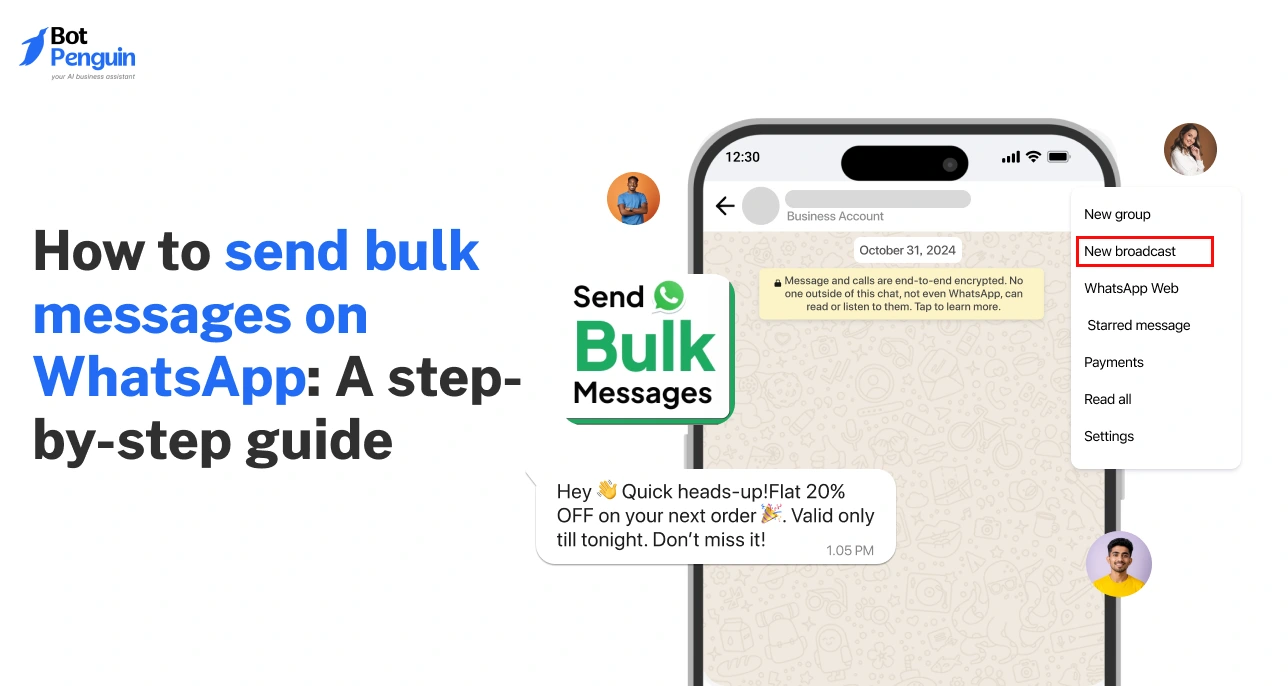
If you want to send bulk messages on WhatsApp, the simplest method is to use a broadcast list. This lets you send one message to multiple contacts while keeping each chat private.
Broadcast Flow
Open WhatsApp ↓ Go to the Chats tab ↓ Tap the three-dot menu ↓ Select New Broadcast ↓ Choose the contacts ↓ Create the broadcast list ↓ Write your message ↓ Tap Send
What Happens Next
Each recipient gets the message as an individual private chat, not as a group message. This makes the communication feel more personal.
Important: contacts must have your number saved to receive the broadcast message. That is why this method works best for small, permission-based customer lists.
How to Send Bulk Messages on WhatsApp Business
The WhatsApp Business app helps small businesses manage customer communication more efficiently. It includes features like broadcast lists, quick replies, greeting messages, and away messages, which make it easier to send updates and respond faster.
For small-scale outreach, businesses can use the app to message multiple contacts without needing advanced technical setup.
How the WhatsApp Business App Works
Open WhatsApp Business ↓ Go to the Chats tab ↓ Create a Broadcast List ↓ Select saved contacts ↓ Write your message ↓ Send updates, offers, or reminders
Built-in Features Businesses Can Use
Broadcast Lists Used to send one message to multiple contacts at once while keeping each conversation private.
Quick Replies Used to save and reuse common responses for faster customer communication.
Greeting and Away Messages Used to automate simple replies when customers message for the first time or outside business hours.
When Businesses Move Beyond the App
Small contact list ↓ Manual or basic messaging needs ↓ Use WhatsApp Business app
Larger audience ↓ Need automation and integrations ↓ Move to WhatsApp Business API
Because of these differences, the WhatsApp Business app works best for smaller businesses, while the WhatsApp Business API is better suited for brands that need high volume messaging and automation.
WhatsApp Bulk Messaging Limits
WhatsApp applies specific messaging limits and policies to prevent spam and protect user experience. Businesses that want to send bulk messages must understand these WhatsApp messaging limits, especially when using broadcast lists or the WhatsApp Business API.
These restrictions ensure that communication remains permission based and relevant to recipients. If businesses ignore these guidelines, messages may fail to deliver and accounts can face temporary restrictions or even permanent bans.
For smaller messaging campaigns, broadcast lists can be used. However, when businesses need to send messages to larger audiences, they typically rely on the WhatsApp Business API, which requires approved message templates and proper user consent.
Key WhatsApp Bulk Messaging Limits
Feature
Limit
Broadcast contacts
Up to 256 recipients per broadcast list
Message templates
Required for API based campaigns
Opt in requirement
Mandatory before sending messages
Spam monitoring
Messages may be flagged if reported by users
Following these WhatsApp bulk message limits helps businesses maintain high deliverability, avoid spam complaints, and build long term trust with customers.
Automate Your WhatsApp Bulk Messaging Effortlessly
How to Send Bulk Messages Using WhatsApp Business API
The WhatsApp Business API is designed for companies that need to manage large-scale WhatsApp business messaging. Unlike the WhatsApp Business app, the API allows businesses to automate conversations, send notifications to thousands of users, and integrate WhatsApp with internal systems such as CRM platforms and customer support tools.
Large organizations use the WhatsApp Business API for bulk messaging because it supports automation and structured communication. Businesses can send approved message templates, trigger automated notifications, and run targeted messaging campaigns while maintaining compliance with WhatsApp policies.
Why Businesses Use the WhatsApp Business API
Automation capabilities for sending notifications and responses
Message templates for approved business communications
CRM and system integrations for managing customer data
Scalable messaging for large customer bases
Common Business Use Cases
Businesses use the WhatsApp Business API for several customer communication scenarios:
Order updates such as confirmations, shipping alerts, and delivery notifications
Appointment reminders for healthcare, salons, or service bookings
Promotional campaigns, including offers, discounts, and product announcements
WhatsApp Business API Overview
Feature
WhatsApp Business API
Best for
Medium to large businesses
Messaging scale
High volume messaging
Automation
Advanced automation support
Integrations
CRM and business systems
Because of its scalability and automation features, the WhatsApp Business API is the preferred solution for businesses that want to run structured and high-volume WhatsApp messaging campaigns.
How to Send Bulk Messages Using WhatsApp Automation Tools
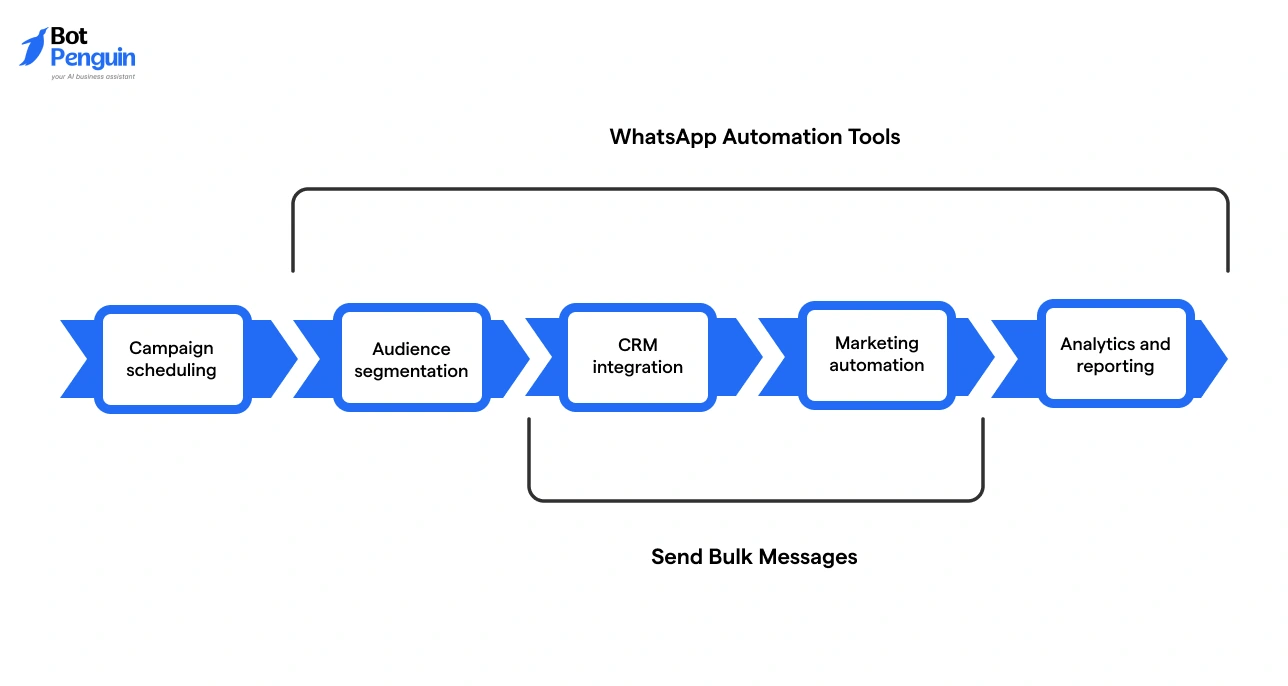
Businesses often use WhatsApp automation tools that integrate with CRM and marketing platforms to manage large messaging campaigns more efficiently. These tools connect with the WhatsApp Business API and allow companies to automate conversations, organize contacts, and run structured messaging campaigns from a centralized dashboard.
Instead of manually sending messages, automation platforms help businesses schedule campaigns, segment audiences, and trigger messages based on customer actions. This makes it easier to manage WhatsApp marketing automation while maintaining personalized communication with customers.
How WhatsApp Automation Tools Work
Connect WhatsApp Business API with an Automation Tool ↓ Integrate the platform with CRM or marketing tools ↓ Import or sync customer contact lists ↓ Segment audiences based on behavior or preferences ↓ Create messaging campaigns or automated workflows ↓ Send automated WhatsApp messages
Why Businesses Use WhatsApp Automation Tools
Campaign scheduling to send messages at optimal times
Audience segmentation for targeted messaging campaigns
CRM integration to manage customer data and conversations
Marketing automation to trigger messages based on customer activity
Analytics and reporting to track engagement and campaign performance
Common Use Cases
Businesses typically use automation platforms for:
Promotional campaigns and product announcements
Customer onboarding and follow up messages
Abandoned cart reminders and purchase confirmations
Customer support automation through chatbot workflows
WhatsApp Automation Tools Overview
Feature
Automation Platforms
Messaging scale
High
Automation
Workflow based messaging
Campaign management
Scheduling and segmentation
Integrations
CRM and marketing platforms
By combining WhatsApp automation tools with CRM and marketing systems, businesses can run scalable messaging campaigns while keeping customer communication organized and personalized.
How to Send Bulk Messages on WhatsApp From Excel
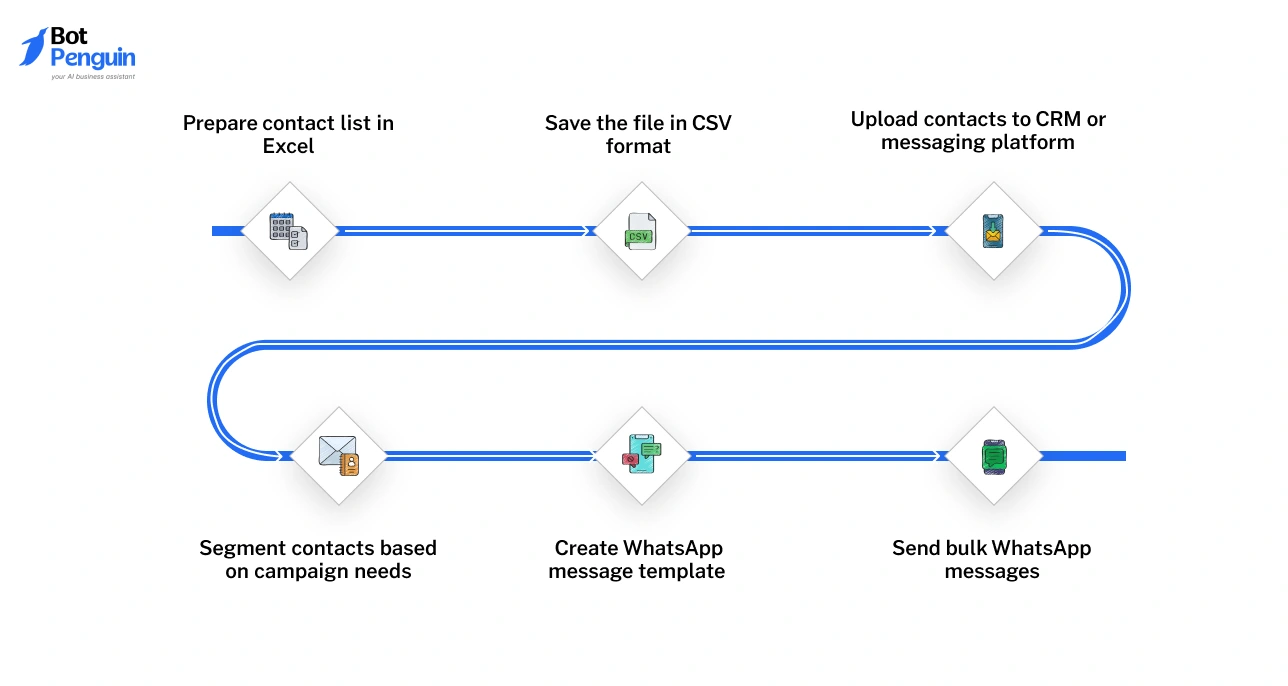
Many businesses store customer contacts in spreadsheets. This makes it possible to send bulk messages on WhatsApp from Excel by importing contact lists into CRM systems or messaging automation tools connected to the WhatsApp Business API.
Instead of adding contacts manually, businesses can upload structured customer data and run messaging campaigns directly from integrated platforms.
How Sending WhatsApp Messages From Excel Works
Prepare contact list in Excel ↓ Save the file in CSV format ↓ Upload contacts to CRM or messaging platform ↓ Segment contacts based on campaign needs ↓ Create WhatsApp message template or campaign ↓ Send bulk WhatsApp messages
Key Requirements
Excel file must contain valid phone numbers
Contacts must follow international number format
Customers must opt in to receive messages
Messaging platforms must connect with the WhatsApp Business API
Excel Contact List Example
Name
Phone Number
Segment
John
+1XXXXXXXXXX
Customers
Maria
+44XXXXXXXXXX
Leads
Using Excel integration allows businesses to manage large customer lists efficiently while running structured WhatsApp messaging campaigns.
How to Send Bulk Messages on WhatsApp Without Getting Banned
WhatsApp enforces strict messaging policies to prevent spam and protect users. Businesses sending bulk messages must follow permission-based communication practices to avoid restrictions or account bans.
If messages are reported as spam or sent without consent, WhatsApp may temporarily block messaging capabilities or suspend accounts.
Collect customer opt-in Customers must agree to receive messages before communication begins.
Send relevant messages Only send information customers expect, such as updates, reminders, or promotions.
Control message frequency Avoid sending too many messages within a short time period.
Use approved message templates API-based messaging requires template approval before campaigns are sent.
Safe Messaging Workflow
Collect customer consent ↓ Store contacts in CRM database ↓ Create approved message templates ↓ Segment customer groups ↓ Send relevant WhatsApp campaigns
Messaging Best Practices
Practice
Benefit
Collect opt-in
Prevent spam complaints
Segment contacts
Higher engagement
Use approved templates
Avoid policy violations
Limit campaign frequency
Reduce spam reports
Following these practices helps businesses run safe, compliant WhatsApp messaging campaigns.
How to Send Bulk Messages on WhatsApp Without Adding Contacts
Normally, WhatsApp requires recipients to have your number saved when using broadcast lists. However, businesses can send bulk messages without adding contacts by using platforms connected to the WhatsApp Business API.
These tools allow businesses to send messages using phone numbers stored in databases or CRM systems without manually saving each contact.
Typical Messaging Workflow
Store customer phone numbers in CRM ↓ Connect CRM with WhatsApp Business API ↓ Create message templates or campaigns ↓ Segment customer groups ↓ Send bulk WhatsApp messages
Important Considerations
Customers must opt in before receiving messages
Businesses must follow WhatsApp messaging policies
Campaigns typically use approved message templates
Contact Management Comparison
Method
Contact Requirement
Broadcast Lists
Number must be saved
API Messaging
Contact save not required
This approach is commonly used by businesses that manage large customer databases and automated messaging campaigns.
Send Bulk WhatsApp Messages Easily With Meta Approved Platform
Managing WhatsApp campaigns manually can become difficult as customer lists grow. Businesses often need tools to organize contacts, automate messaging, and track campaign performance.
Platforms like BotPenguin’s WhatsApp chatbot simplify this process by combining automation, AI chatbots, and CRM integrations into a single system.
BotPenguin helps businesses run structured WhatsApp campaigns while maintaining personalized conversations with customers.
How BotPenguin Automates WhatsApp Messaging
Import customer contacts ↓ Segment audiences based on behavior ↓ Create broadcast or drip campaigns ↓ Automate responses using chatbot workflows ↓ Track engagement and conversations
What Businesses Can Do With BotPenguin
Run broadcast and drip campaigns
Automate customer support conversations
Capture and qualify leads through chat
Send order updates and reminders
Integrate WhatsApp with CRM and marketing tools
BotPenguin WhatsApp Automation Features
Feature
Description
No-code chatbot builder
Create WhatsApp chatbots easily
Broadcast campaigns
Send targeted customer messages
CRM integrations
Sync contacts and conversations
AI chatbot automation
Respond to customer queries automatically
Multi-platform support
Works across messaging channels
With automation and integrations, BotPenguin helps businesses scale WhatsApp messaging while maintaining personalized customer engagement.
Boost Engagement With WhatsApp Automation
Final Thoughts
Sending bulk messages on WhatsApp helps businesses communicate faster, share updates, and run targeted messaging campaigns at scale. From broadcast lists for small audiences to the WhatsApp Business API for large campaigns, choosing the right method depends on your messaging needs and customer base.
For businesses looking to automate and manage WhatsApp messaging more efficiently, platforms like BotPenguin’s WhatsApp chatbot make the process easier. With campaign automation, CRM integrations, and AI powered conversations, BotPenguin helps businesses send bulk messages, engage customers, and manage WhatsApp communication from a single platform.
Frequently Asked Questions (FAQs)
How Do Businesses Send Bulk Messages on WhatsApp Without Saving Numbers?
Businesses can send bulk messages without saving numbers by using platforms connected to the WhatsApp Business API. These tools allow companies to upload customer phone numbers from databases or CRM systems and send messages through approved templates.
Is WhatsApp Bulk Messaging Allowed for Marketing Campaigns?
Yes, WhatsApp allows marketing campaigns as long as businesses follow messaging policies. Customers must opt in to receive messages, and campaigns should provide relevant updates, promotions, or useful information instead of unsolicited spam.
What is the Difference Between WhatsApp Broadcast and WhatsApp Bulk Messaging?
A WhatsApp broadcast sends a message to multiple saved contacts while keeping each conversation private. Bulk messaging is a broader concept that includes broadcast lists, API messaging, and automation tools used for larger messaging campaigns.
Can Small Businesses Send Bulk Messages on WhatsApp Without Using the API?
Yes, small businesses can use the WhatsApp Business app broadcast feature to send messages to multiple contacts. However, this method works best for smaller contact lists and does not support advanced automation or integrations.
What Types of Messages Work Best for WhatsApp Bulk Messaging?
Businesses typically achieve better results with messages such as order confirmations, appointment reminders, product updates, exclusive offers, and event announcements, as these provide clear value to recipients.
How Can Businesses Personalize Bulk WhatsApp Messaging Campaigns?
Businesses can personalize campaigns by segmenting customer lists, addressing recipients by name, sending messages based on purchase behavior, and timing messages according to customer activity.
3X Your Business Growth on WhatsApp
See how our chatbot automates replies, qualifies leads & books appointments on autopilot.