Generative AI in Ecommerce: Use Cases, Benefits, and How to Implement It for Growth
Updated at Oct 13, 2026
11 min to read
Running an ecommerce brand today means managing more than just products. You need to capture attention, recover lost sales, and keep customers coming back.
Most stores already use multiple tools. But disconnected systems lead to missed follow-ups, abandoned carts, and inconsistent customer experiences. The result is lost revenue.
The difference comes from using the right marketing automation tools for ecommerce that connect these touchpoints and drive conversions consistently.
In this guide, we compare the top tools based on pricing, features, and real use cases so you can choose what actually fits your growth stage.
Not all automation platforms solve the same problem. Some focus on email. Others on omnichannel engagement or deep customer journeys.
The table below gives you a quick way to compare the best ecommerce marketing automation tools based on what actually matters. Use it to shortlist tools before diving deeper into each option.
*Pricing varies based on contacts, usage, and features. Always refer to official pricing pages for the latest details.
Shortlisting tools is only the first step. The real decision comes down to how they fit into your customer journey.
Some tools help you engage users in real time across channels. Others focus on campaigns or lifecycle messaging. Understanding these differences makes it easier to choose what actually drives conversions for your store.
Modern ecommerce journeys don’t happen in one place. Customers move between your website, WhatsApp, and social channels before buying.
These marketing automation tools for e-commerce help you stay present across those touchpoints and automate conversations that drive conversions in real time.
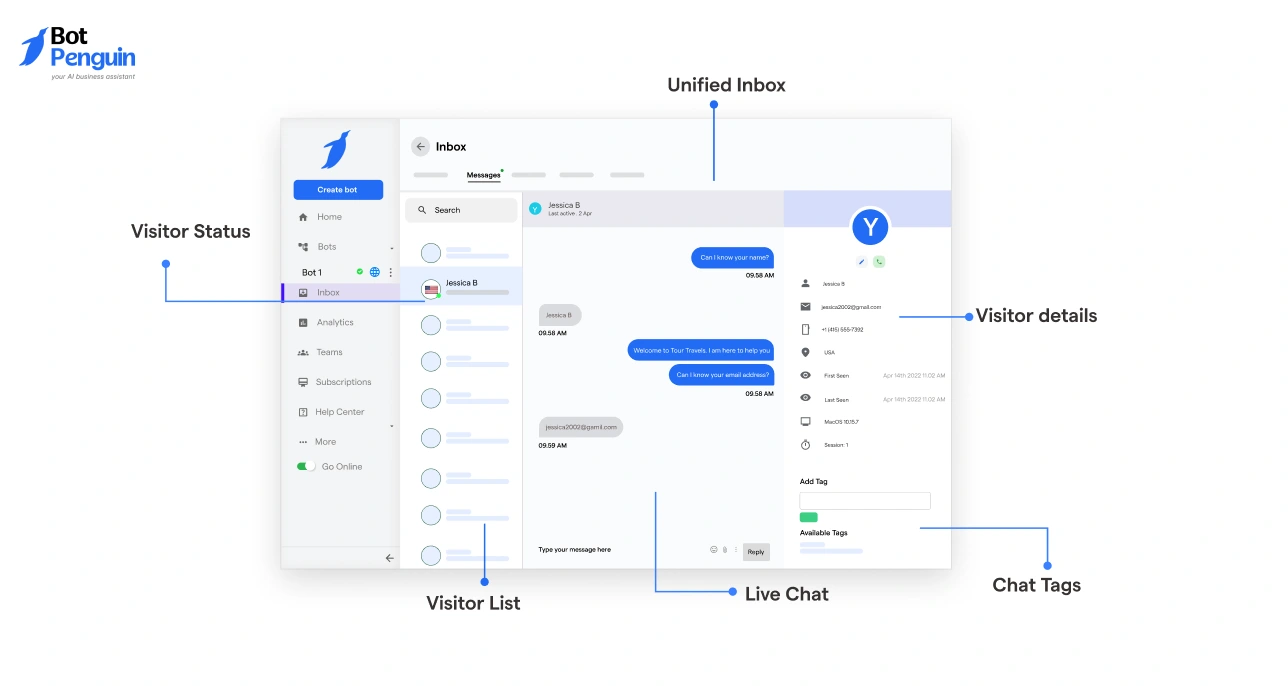
BotPenguin helps ecommerce brands automate customer conversations across the entire buying journey, not just campaigns.
It enables real-time engagement across WhatsApp, website, and social channels, so customers get instant responses while browsing or deciding. This reduces drop-offs and improves conversion rates without increasing manual effort.
What it does best for ecommerce:
Best for: Brands focused on high-intent engagement and conversion through real-time conversations.
Pricing: Free plan available, paid plans starting from ~$29/month
Omnisend is built for ecommerce brands that want to run structured campaigns across multiple channels from one platform.
It combines email, SMS, and push notifications to help you execute coordinated campaigns without switching tools. This makes it easier to manage promotions, automate workflows, and drive repeat purchases.
What it does best for ecommerce:
Best for: Brands focused on campaign-driven growth and retention across multiple channels.
Pricing: Free plan available, paid plans starting from ~$16/month
Email remains one of the highest-converting channels for ecommerce when used correctly. From cart recovery to post-purchase follow-ups, the right tools help you automate email communication at every stage of the customer journey.
These platforms are built to automate email marketing for ecommerce, with a strong focus on segmentation, personalization, and lifecycle campaigns.
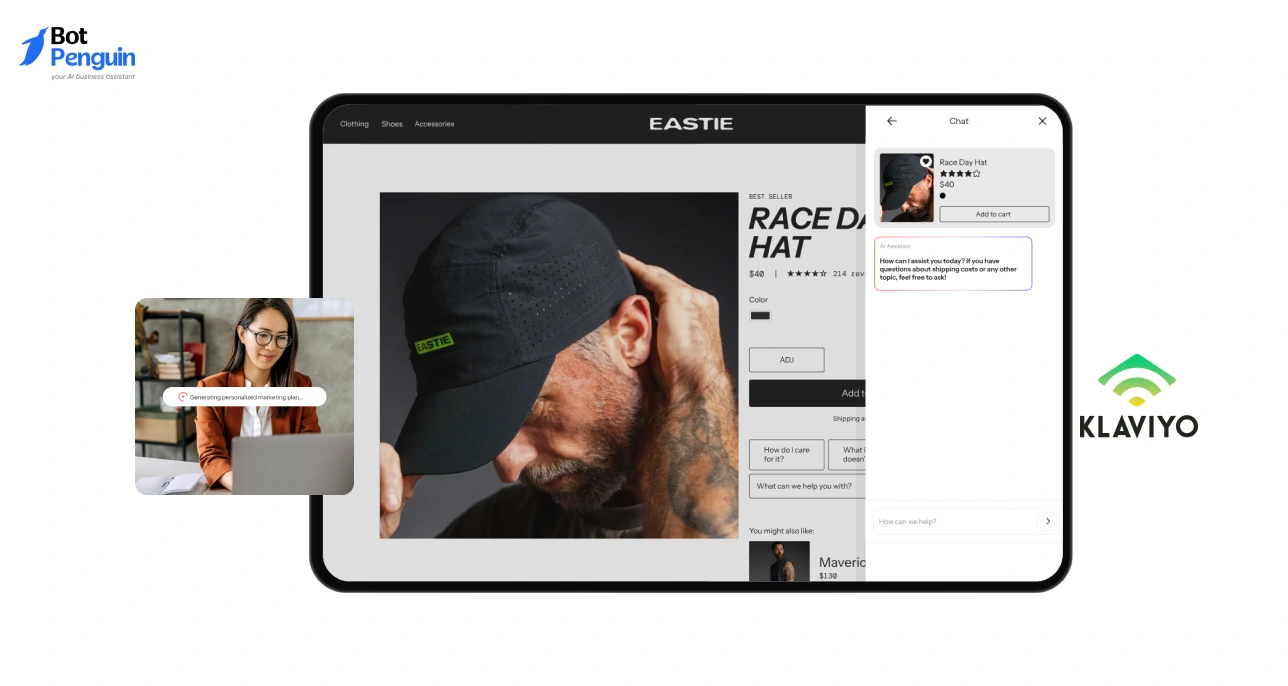
Klaviyo is built specifically for ecommerce brands that want to drive revenue through data-driven email and SMS campaigns.
It connects deeply with ecommerce platforms to track customer behavior and trigger highly personalized emails. This makes it easier to send the right message at the right time.
What it does best for ecommerce:
Best for: Brands focused on maximizing email revenue through deep personalization and segmentation.
Pricing: Free plan available, paid plans starting from ~$20/month
Drip is designed for ecommerce brands that want more control over customer journeys and lifecycle marketing.
It focuses on building personalized email flows that adapt based on user behavior, helping brands nurture leads and increase repeat purchases.
What it does best for ecommerce:
Best for: Brands looking for flexible lifecycle automation and deeper customer journey control.
Pricing: No free plan, paid plans starting from ~$39/month
GetResponse offers a broader marketing suite with strong email automation capabilities tailored for ecommerce campaigns.
It combines email marketing with funnels and landing pages, making it easier to manage both acquisition and conversion within one platform.
What it does best for ecommerce:
Best for: Brands that want a combined email automation and funnel-building solution in one platform.
Pricing: Free plan available, paid plans starting from ~$19/month
Some ecommerce brands prefer managing everything from a single platform instead of juggling multiple tools. These platforms combine CRM, automation, and campaign management to give you a centralized view of your customers and marketing efforts.
They work well when your focus is on aligning marketing, sales, and customer data in one system.
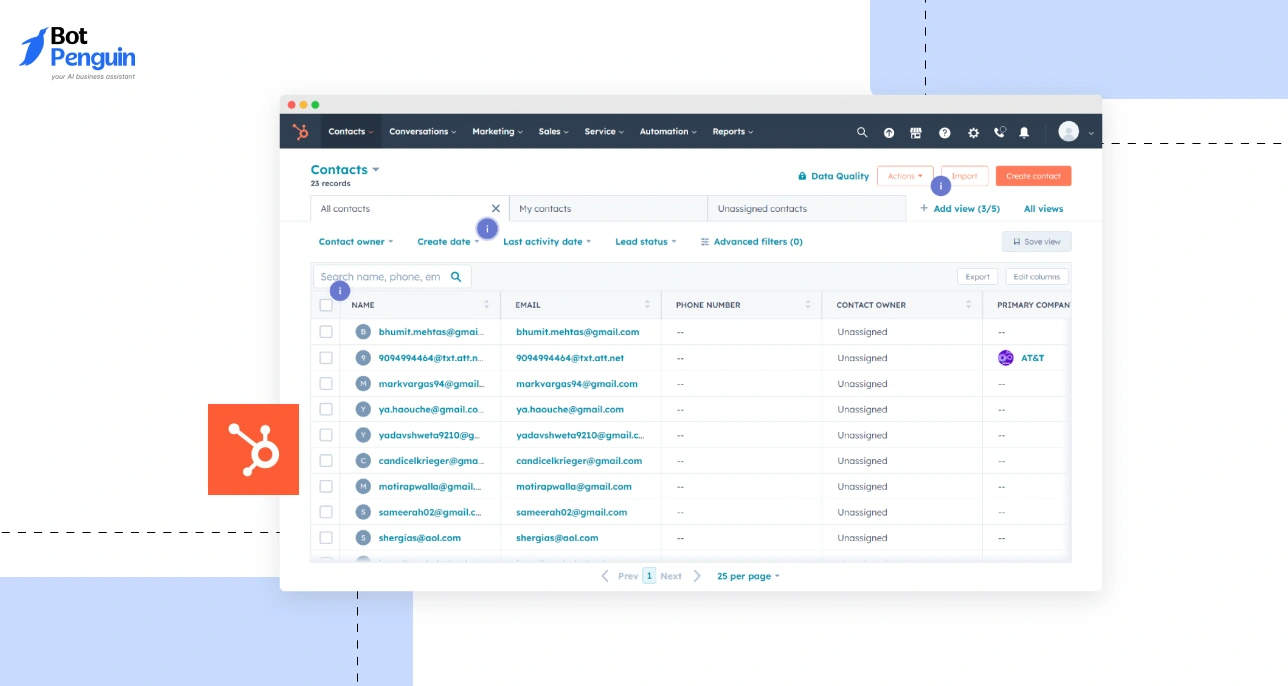
HubSpot offers a full-suite platform that combines CRM, marketing automation, and analytics in one place.
It helps ecommerce brands track customer interactions across channels and build workflows that connect marketing and sales efforts. This makes it easier to manage leads, campaigns, and customer relationships without switching tools.
What it does best for ecommerce:
Best for: Brands looking for a scalable, all-in-one platform to manage marketing and customer relationships together.
Pricing: Free plan available, paid plans starting from ~$20/month (basic tiers; advanced features scale significantly higher)
ActiveCampaign focuses on combining email automation with CRM-driven customer journeys.
It allows ecommerce brands to create detailed workflows that adapt based on user behavior, while also managing customer relationships through its built-in CRM.
What it does best for ecommerce:
Best for: Brands that want advanced automation with CRM capabilities without moving to a complex enterprise platform.
Pricing: No free plan, paid plans starting from ~$29/month
Not every ecommerce brand needs a complex automation stack from day one. Many startups and growing stores look for tools that offer essential features without high upfront costs.
These affordable automation tools help small ecommerce brands get started with campaigns, automation, and customer engagement while staying within budget.
Mailchimp is one of the most accessible platforms for ecommerce brands starting with automation.
It offers an easy-to-use interface with pre-built templates and basic automation features, making it simple to launch campaigns quickly without a steep learning curve.
What it does best for ecommerce:
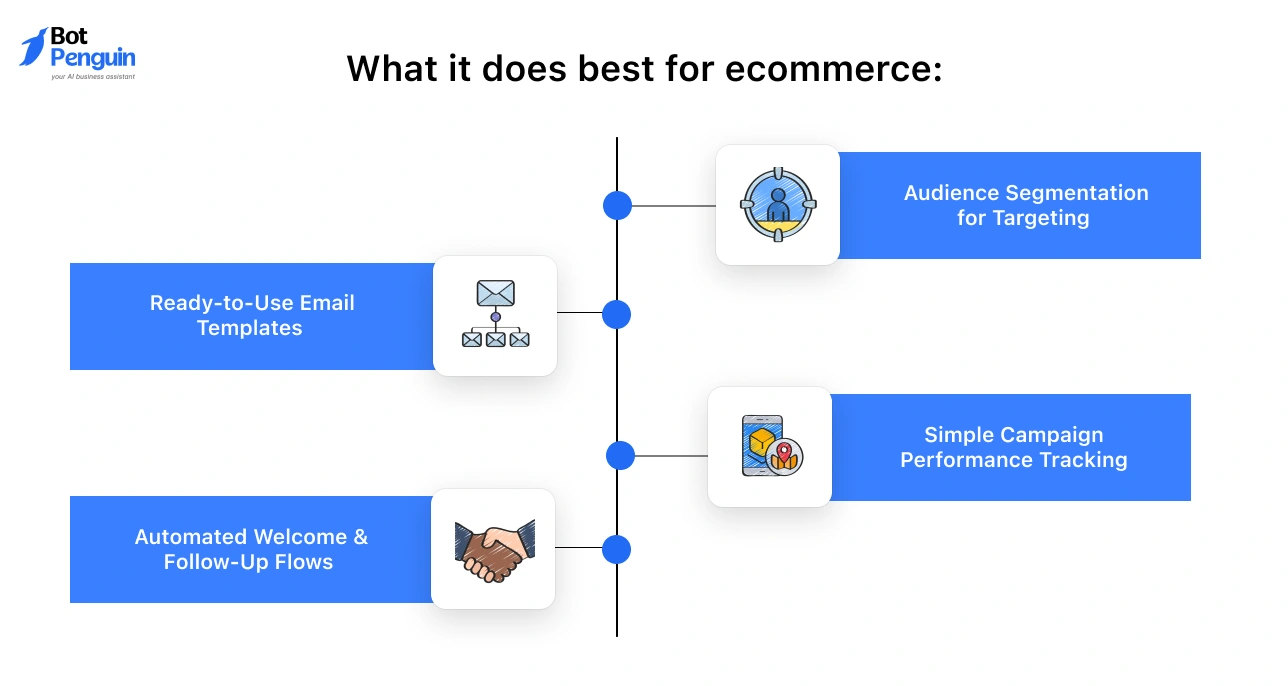
Best for: Small ecommerce stores looking for an easy-to-use platform to get started with automation and campaigns.
Pricing: Free plan available, paid plans starting from ~$13/month
Brevo (formerly Sendinblue) offers a cost-effective way to run automation across email and SMS without high subscription costs.
It is designed for businesses that want more flexibility in pricing, especially when sending volume varies.
What it does best for ecommerce:
Best for: Ecommerce brands that want multi-channel automation at a lower cost with flexible pricing models.
Pricing: Free plan available, paid plans starting from ~$25/month
As ecommerce brands grow, basic automation is no longer enough. You need tools that react to customer behavior in real time and personalize communication at scale.
These ecommerce marketing automation tools focus on event-based workflows, allowing you to trigger actions based on what users actually do, not just predefined schedules.
Customer.io is built for ecommerce teams that want deep control over event-driven messaging and customer journeys.
It allows you to trigger emails, push notifications, and messages based on real-time user actions, making automation highly personalized and responsive.
What it does best for ecommerce:
Best for: Brands that rely on data-driven automation and need flexibility to build custom customer journeys.
Pricing: No free plan, custom pricing based on usage
Moosend offers a balance between affordability and advanced automation capabilities, making it suitable for growing ecommerce brands.
It provides behavior-based automation and personalization without the complexity of enterprise-level tools.
What it does best for ecommerce:
Best for: Brands looking for advanced automation features without moving to expensive enterprise tools.
Pricing: No free plan, paid plans starting from ~$9/month
ConvertKit is designed for audience-first brands that rely on content, newsletters, and repeat engagement to drive sales.
It focuses on building relationships through email while enabling automation based on subscriber behavior and interests.
What it does best for ecommerce:
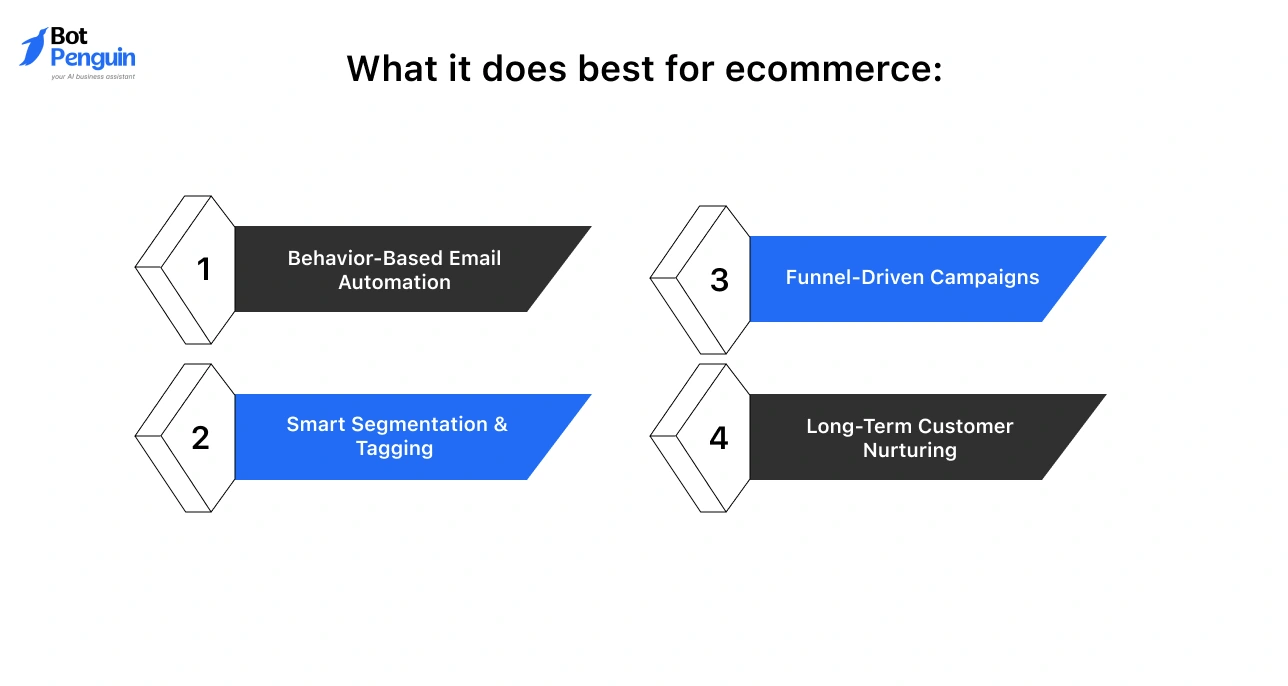
Best for: Ecommerce brands that rely on content-driven engagement and audience building to drive conversions.
Pricing: Free plan available, paid plans starting from ~$15/month
Choosing the right platform is not about picking the most feature-rich option. It is about finding the one that fits how your store acquires, engages, and converts customers.
Start by identifying your primary growth driver. Next, think about how much control you need. Finally, consider long-term fit.
Below is a step-by-step guide on how you can select the perfect marketing automation tool for your business.
Choosing the right marketing automation tools for ecommerce is less about features and more about fit. What works for a growing store may not work for a scaling brand with more complex workflows and customer journeys.
Focus on how your store engages customers and where conversions actually happen. If real-time interactions, messaging, and faster responses drive your sales, your automation setup should reflect that.
Platforms like BotPenguin are built around this shift toward conversational, multi-channel engagement. If that aligns with your growth strategy, it’s worth exploring how it works in practice.
The best way to decide is to try BotPenguin yourself and see how it fits into your workflow.
The best tools depend on your use case. Platforms like Klaviyo work well for email-driven campaigns, while BotPenguin support multi-channel engagement. For advanced workflows, tools like ActiveCampaign or Customer.io are better suited.
Small stores benefit from tools like Mailchimp or Brevo due to low cost and ease of use. As complexity grows, platforms with deeper automation become more suitable.
Look for workflow automation, customer segmentation, and integration with your ecommerce platform. Multi-channel support is also important.
These tools automate follow-ups, recover abandoned carts, and personalize customer interactions. For example, BotPenguin can engage users instantly through messaging, while tools like Klaviyo send targeted email campaigns. This improves response time, engagement, and conversions.
Yes, tools like Mailchimp, Brevo, and Moosend offer low-cost plans. They provide essential automation features suitable for startups and growing ecommerce businesses.
Email automation focuses on campaigns. Omnichannel tools like BotPenguin and Omnisend connect messaging, web, and notifications for a unified customer experience across touchpoints.
Start by identifying your main conversion channels and automation needs. Then evaluate tools based on ease of use, integrations, scalability, and pricing.
Automate Ecommerce Marketing
Move beyond basic campaigns. Use chatbot automation to connect touchpoints, respond instantly, and convert more users across your website, social channels, and WhatsApp without manual effort.
Try BotPenguinCheckout our related blogs you will love.
Updated at Oct 13, 2026
11 min to read
Updated at Oct 7, 2026
12 min to read
Updated at Sep 25, 2026
13 min to read
Updated at May 29, 2026
11 min to read
Updated at May 27, 2026
9 min to read
Updated at May 20, 2026
8 min to read
Table of Contents