WhatsApp Chatbot for Ecommerce: Use Cases, Examples, and Setup
Updated at Oct 7, 2026
12 min to read
TL;DR
Ecommerce customer service directly impacts customer retention, satisfaction, and revenue.
Integrating channels like email, live chat, social media, and messaging into a unified ecommerce customer service system prevents fragmented support and delivers faster, more consistent responses.
Automating repetitive queries with AI chatbots can resolve up to 60 percent of support requests, reduce operational costs, and free agents for complex issues.
The fastest way to improve ecommerce customer service at scale is to identify repetitive queries, automate them, and adopt an AI-driven omnichannel platform tailored to your business needs.
Great products alone don’t build successful ecommerce businesses anymore.
What truly sets brands apart is how they support customers before, during, and after a purchase. From quick responses to seamless issue resolution, every interaction shapes the overall experience.
This guide breaks down everything you need to know about ecommerce customer service, including channels, systems, best practices, and strategies to scale it effectively as your business grows.
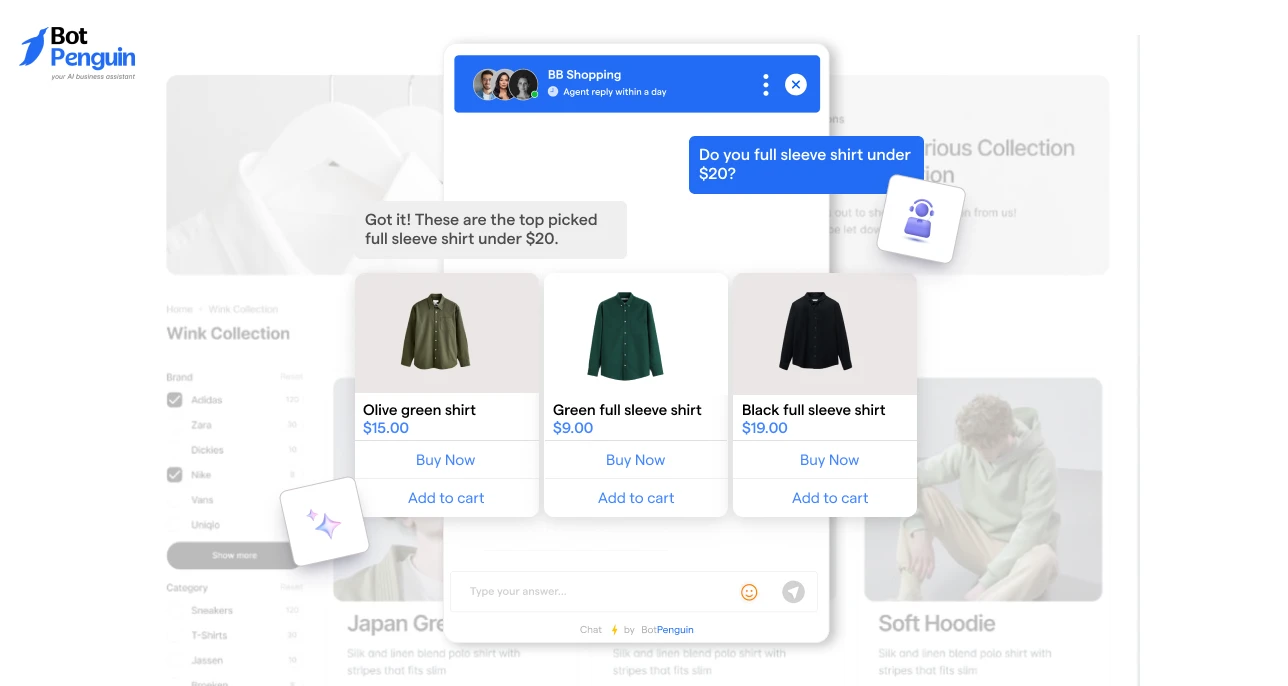
Ecommerce customer service refers to the support and assistance businesses provide to customers throughout their online shopping journey. It covers everything from pre-purchase queries to post-purchase support, including order management, returns, refunds, and issue resolution.
Unlike traditional retail, where assistance happens face to face, customer service ecommerce operates across digital channels such as email, live chat, social media, and messaging platforms. This makes speed, clarity, and consistency far more critical, as customers expect near-instant responses regardless of where they reach out.
It is not just about solving problems. It directly shapes the overall customer experience. Studies show that 86 percent of customers are willing to pay more for a better experience, highlighting how service quality influences buying decisions.
Strong customer support also impacts key business outcomes. Faster response times improve satisfaction, efficient resolutions reduce churn, and positive interactions drive repeat purchases. In ecommerce, where switching brands takes seconds, service becomes a major differentiator.
Understanding what ecommerce customer service is sets the foundation. The real question is how much impact it actually has on growth, retention, and long-term success.
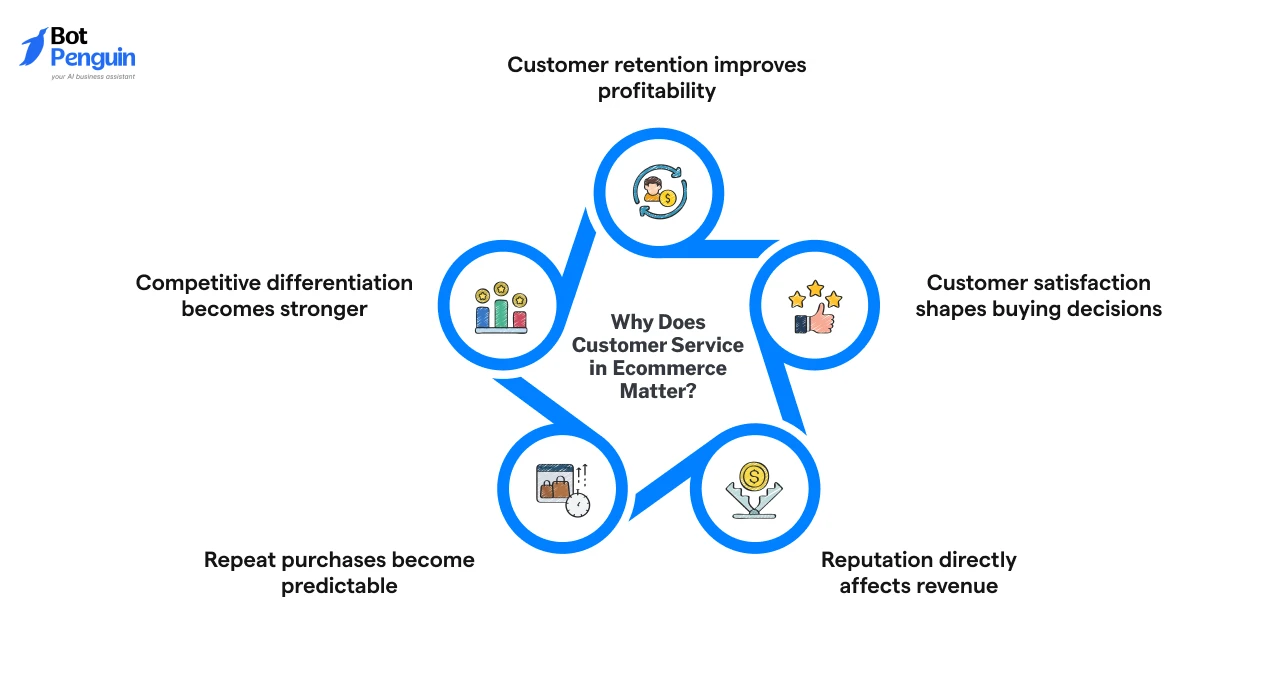
Customer service in ecommerce directly impacts revenue, retention, and brand perception. It is no longer just a support function but a core growth lever.
Here’s how it drives measurable business outcomes:
In short, better service leads to higher retention, stronger trust, and increased revenue.
This makes one thing clear: delivering great service is essential, but where and how you deliver it matters just as much.
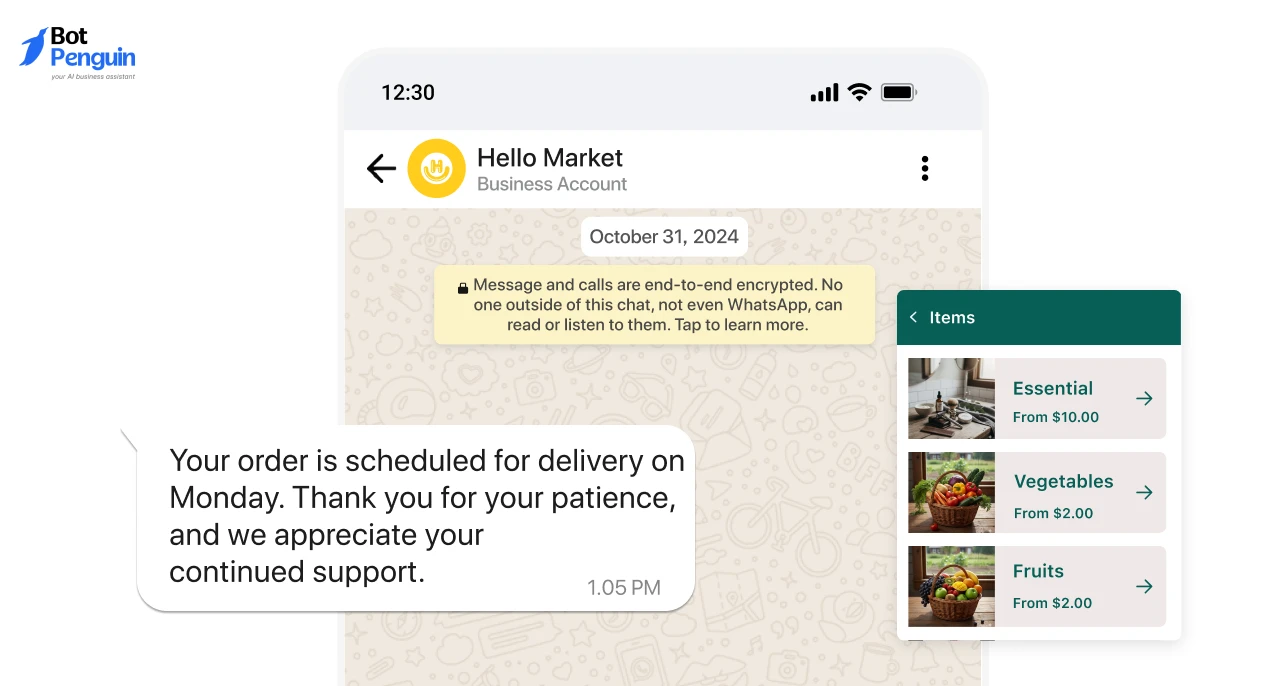
Your ecommerce customer service should prioritize email, live chat, phone, social media, WhatsApp, and SMS based on where your customers are most active and their interaction preferences. Email handles detailed queries with 12-24 hour response windows, while live chat and messaging provide instant support.
The goal isn't to be everywhere, but to integrate these channels into a unified experience that meets customer expectations on their preferred platform.
Here’s how each channel fits into your strategy:
Each channel plays a different role. Live chat helps reduce drop-offs during checkout, while email supports structured issue resolution. Messaging channels like WhatsApp enable faster, more conversational interactions.
To choose the right channels, focus on:
The objective is not to be everywhere, but to connect channels into a unified experience.
Once channels are defined, the next step is building a system that can manage them efficiently at scale.
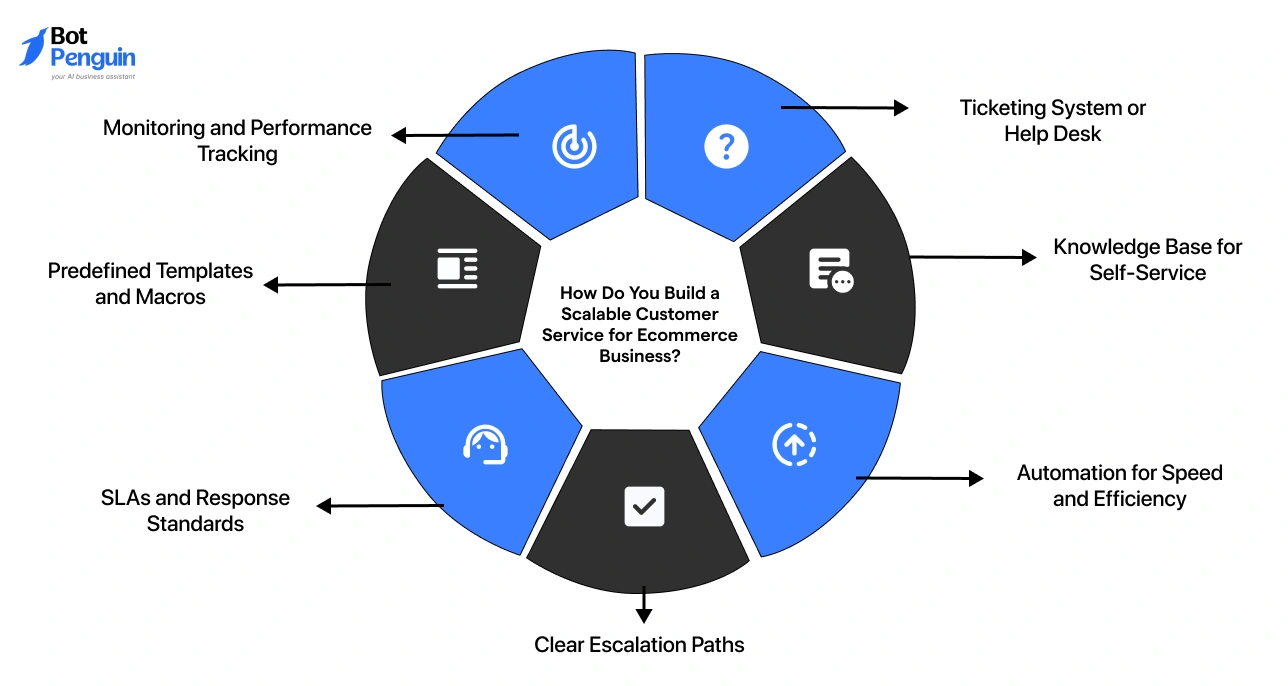
To build a scalable customer service for ecommerce business system, you need a structured setup that combines tools, processes, and performance tracking. The goal is to handle increasing query volume without compromising speed or quality.
Here are the core components every scalable system should include:
A ticketing system centralizes all customer queries from different channels into one place. This ensures no request is missed and helps teams prioritize, assign, and resolve issues efficiently.
A well-structured knowledge base reduces support load by allowing customers to find answers instantly. FAQs, guides, and policies can deflect up to 30 to 40 percent of repetitive queries.
Automation helps manage high volumes without increasing team size. Use it for:
This improves response time and reduces manual effort.
Not all issues can be resolved at the first level. Define escalation rules so complex or sensitive queries are quickly routed to experienced agents, avoiding delays and frustration.
Set clear SLA (Service Level Agreements) for response and resolution times across channels. For example:
This creates consistency and accountability.
Templates help agents respond faster while maintaining consistency. They are especially useful for common queries like shipping updates, returns, and refunds.
Monitor KPIs such as response time, resolution time, and customer satisfaction. This helps identify bottlenecks and continuously improve the system.
But knowing what to build is only part of the equation; you also need to evaluate the right platform that brings all these components together.
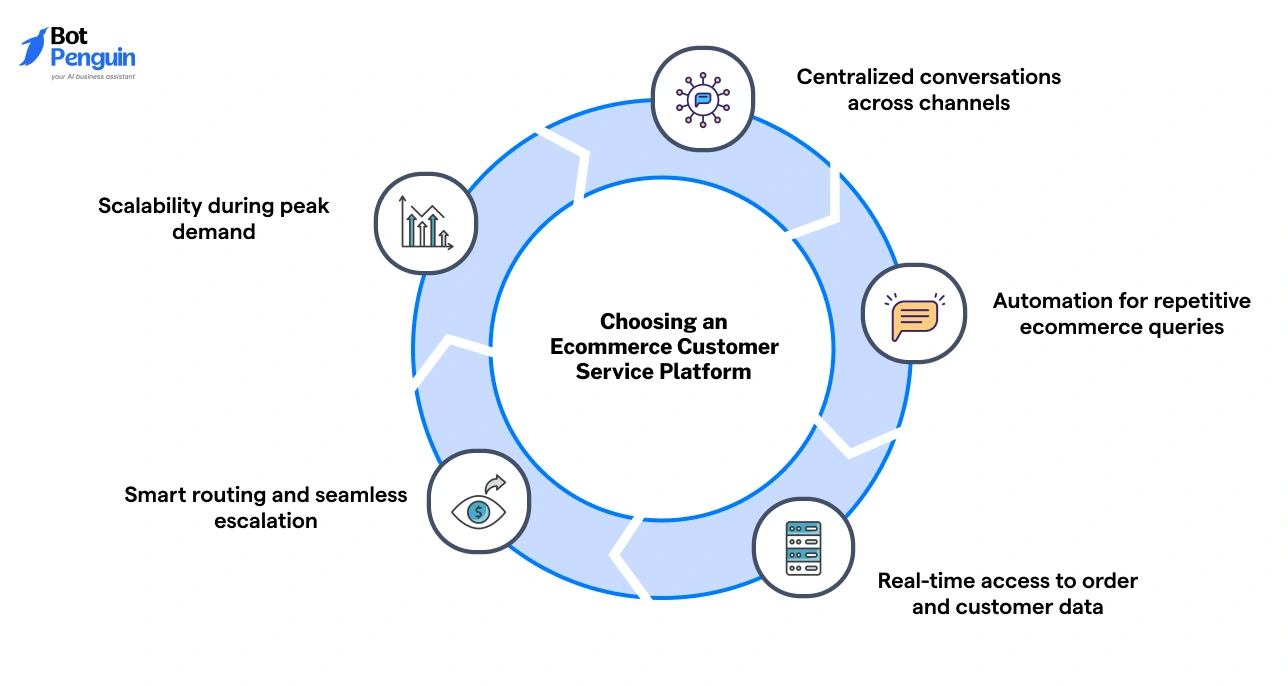
To move from multichannel to true omnichannel support, ecommerce businesses need a system built specifically for handling high-volume, order-driven interactions across channels. Without this, conversations remain fragmented and difficult to scale.
A strong ecommerce-focused setup should include:
Solutions like BotPenguin bring these capabilities together by enabling businesses to manage conversations across channels, automate high-volume queries, and seamlessly transition from AI to human support when needed.
If you want to explore how to evaluate and choose the right setup in detail, it helps to look deeper into the specific capabilities and comparison factors involved.
With the right setup in place, the focus shifts to how well it is executed through best practices.
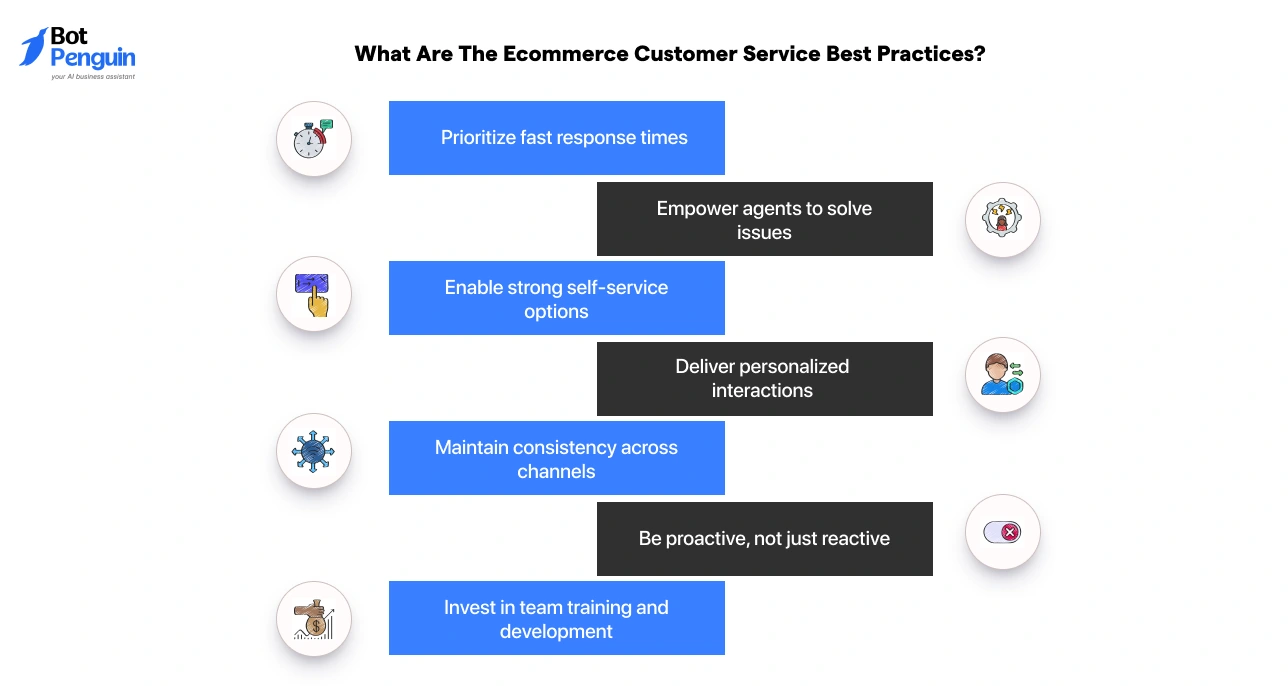
The best practices for ecommerce customer service focus on delivering fast, consistent, and personalized support while enabling teams to operate efficiently at scale. These practices directly improve service quality, customer trust, and long-term loyalty.
Here are the most important ones to implement:
Individually, these practices improve specific parts of the experience. Together, they create a system where customers feel valued, supported, and confident in your brand.
Even with best practices in place, ecommerce businesses still face recurring challenges that can impact service quality and scalability.
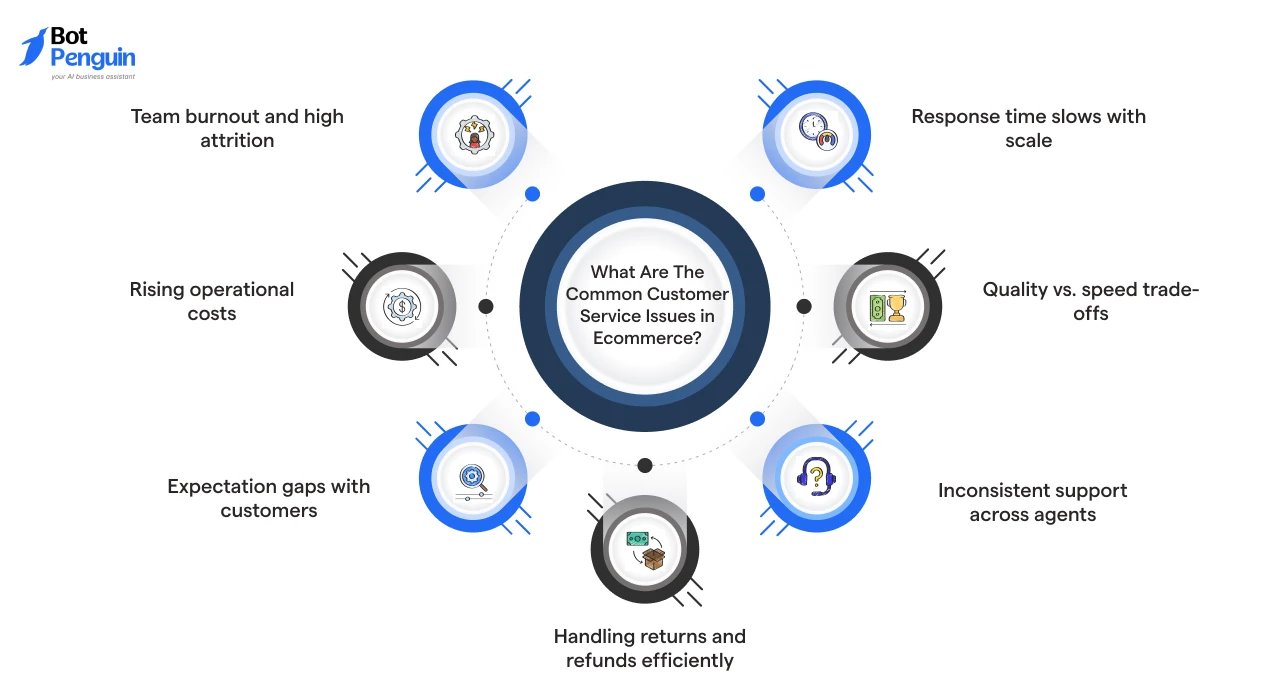
The most common customer service issues in ecommerce include slow response times, inconsistent support quality, complex returns handling, rising costs, and team burnout. These challenges intensify as businesses scale and directly impact customer satisfaction.
Here are the key pain points and how they typically show up:
This is where automation and omnichannel systems start to make a measurable difference. Centralized platforms that unify channels, automate repetitive queries, and streamline workflows help reduce response time, improve consistency, and lower operational costs.
For example, solutions like BotPenguin’s omnichannel automation enable businesses to manage conversations across platforms, automate common queries, and maintain consistent responses without overloading teams.
Addressing these challenges effectively requires not just multiple channels, but a more integrated approach to managing them.
The difference between multichannel and omnichannel customer service for ecommerce is simple: multichannel uses multiple independent channels, while omnichannel connects them into a unified, seamless experience.
In a multichannel setup, businesses offer support across platforms like email, chat, and social media, but each channel operates separately. This often leads to fragmented conversations and inconsistent responses.
In contrast, omnichannel support integrates all channels into a single system, often through a unified inbox, allowing agents to view customer history and continue conversations seamlessly across platforms.
Here’s a quick comparison:
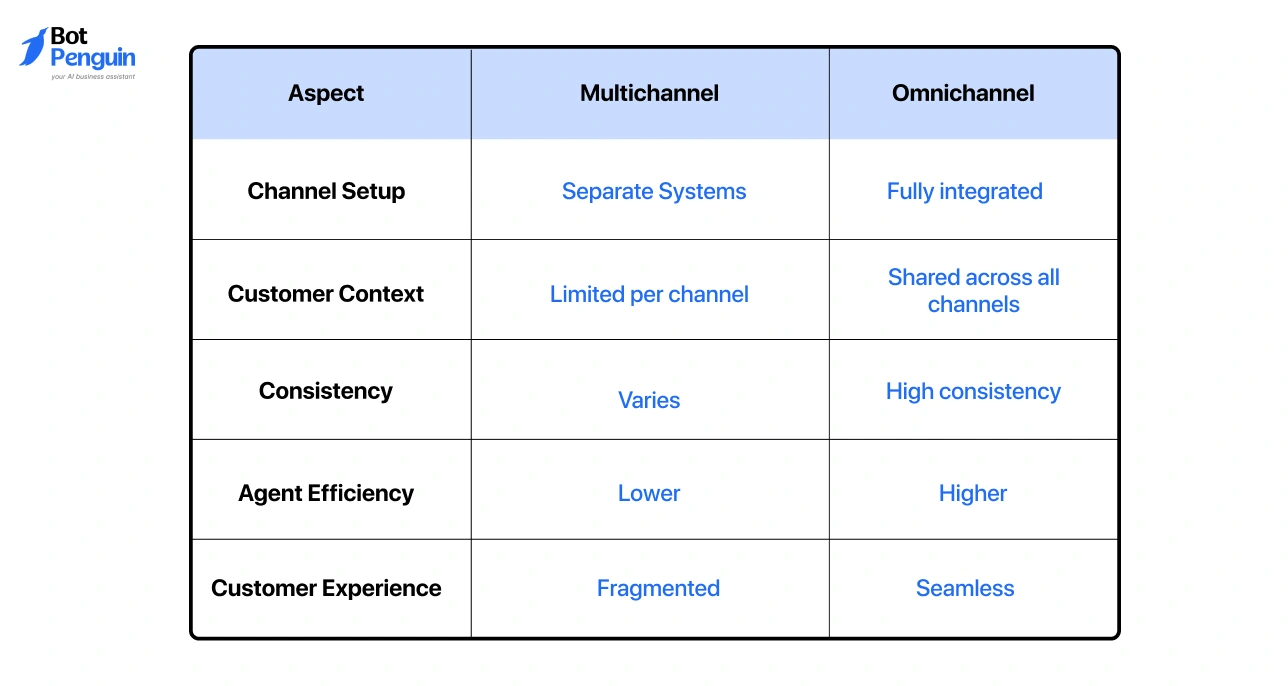
Why omnichannel matters
However, implementing omnichannel customer service for ecommerce comes with challenges. It requires strong channel integration, data syncing, and the right tools to unify conversations without creating complexity.
Response expectations also vary by channel. Messaging platforms demand near-instant replies, while email allows longer windows. Omnichannel systems help manage these expectations more effectively.
The transition strategy is gradual and once done, the next step is understanding how well your customer service is actually performing.
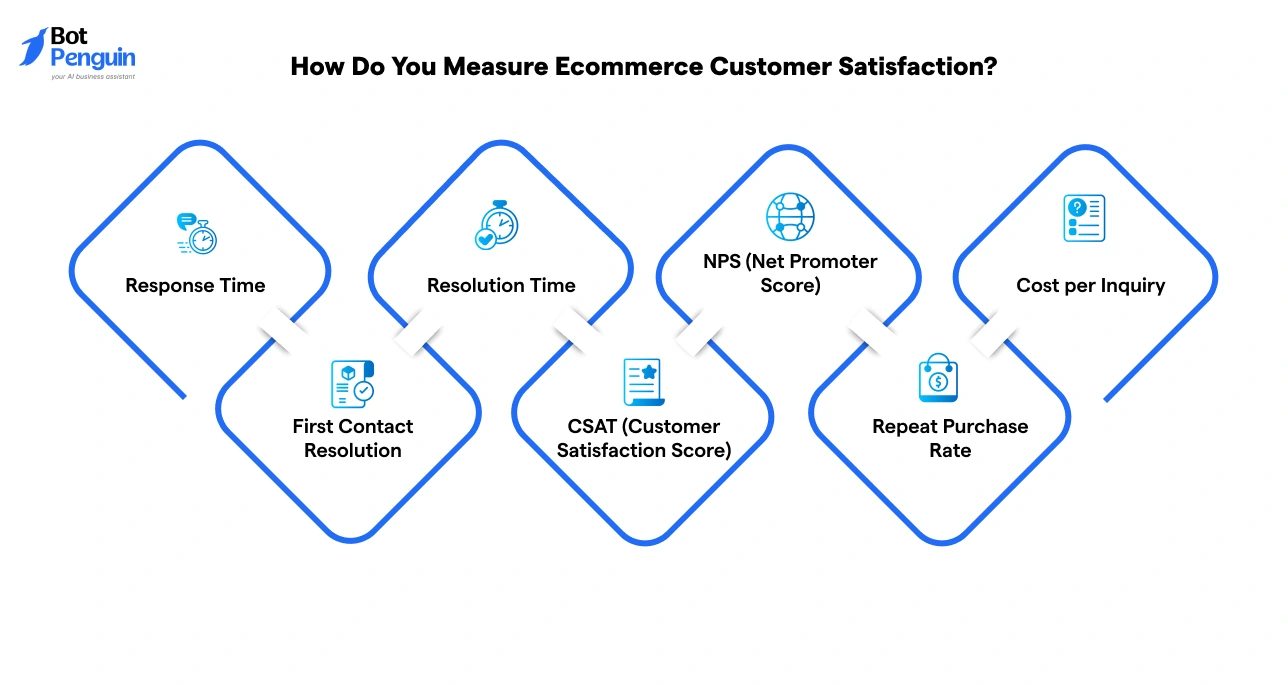
To measure ecommerce customer satisfaction, you need to track key customer satisfaction metrics that reflect both service efficiency and customer perception. These metrics help you understand what is working and where improvements are needed.
Here are the most important KPIs to monitor:
Tracking these metrics is only the first step. The real value comes from interpreting them together. For example, low response time with low CSAT may indicate rushed or poor-quality responses.
Use dashboards, feedback loops, and regular reviews to continuously optimize your support system.
Once you can measure performance effectively, the next challenge is scaling your customer service without compromising quality.
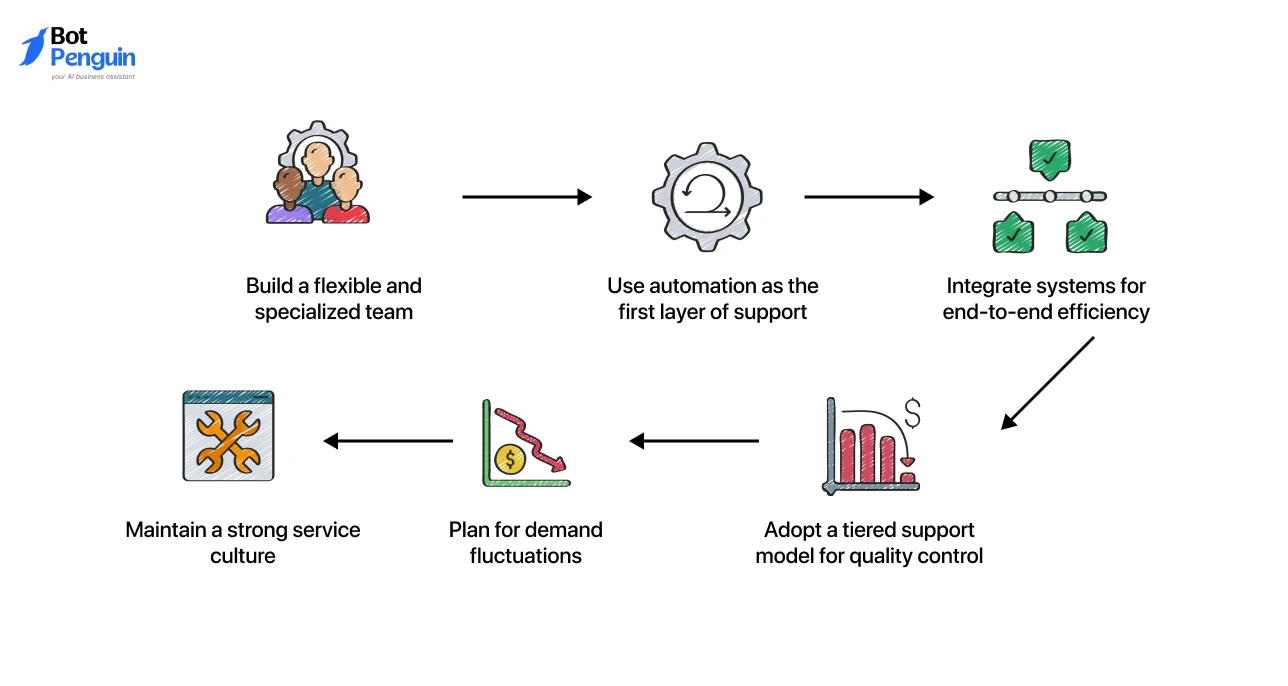
To scale customer service for ecommerce business, you need a balanced approach that combines process optimization and automation. The goal is to handle higher volumes without increasing costs at the same rate.
Here’s how to approach it:
Hire based on projected demand and create role clarity across channels and complexity levels. Combine specialization with cross-training so human agents can adapt during peak periods without affecting quality.
Studies show that 60 to 80 percent of customer queries in ecommerce are repetitive and can be automated, reducing load on support teams significantly.
Agentic AI based chatbots from BotPenguin enable you to train AI chatbots on your business data so it can resolve repetitive queries like order status, shipping updates, FAQs, and return policies accurately across channels. And, when queries go beyond automation, conversations are automatically routed to live agents within the same system, ensuring no context is lost.
Connect your support platform with CRM, order management, and other tools. This allows real-time responses such as order tracking or return updates without manual effort.
Automation and Level 1 support handle basic queries, while more complex issues move to experienced agents. This ensures faster resolution without overloading senior teams.
Ecommerce is highly seasonal. Combine automation with temporary scaling strategies to handle spikes without compromising service quality.
Continuous training, clear response guidelines, and performance tracking ensure consistency as your team grows.
Scaling is not about adding more people alone. It is about building a system where automation handles volume, and human agents focus on high-impact interactions.
With this foundation in place, the final step is to turn these insights into a clear action plan.
Effective ecommerce customer service comes down to building the right mix of channels, systems, and automation. Start by auditing your current support setup, identifying repetitive queries, and prioritizing areas where speed or consistency is lacking.
The next step is evaluating AI-powered, omnichannel platforms. Look for solutions that offer: automated responses for repetitive queries, AI agents that can be trained on your business data, seamless handoff from AI to human agents, and integration with CRM and order management systems.
These capabilities help you streamline support across channels while maintaining quality at scale.
Platforms like BotPenguin bring these elements together, but the key is finding a solution that fits your specific workflow and customer needs.
Start with a pilot: automate your top 5-10 repetitive queries, measure the impact on response time and team workload, then scale from there.
Ecommerce customer service is the support you provide customers throughout their online shopping journey, from pre-purchase questions to post-purchase issues like returns and tracking. It operates across email, chat, phone, social media, and messaging apps, and directly impacts your customer experience, satisfaction scores, and repeat purchase rates.
Customer service in ecommerce drives retention, trust, and revenue growth. It costs 5-7 times more to acquire a new customer than retain an existing one, so strong support increases lifetime value. Since customers can easily switch brands online, excellent service becomes your key competitive advantage and directly influences repeat purchases and brand loyalty.
Ecommerce customer service should use a mix of email, live chat, social media, WhatsApp, phone, and SMS. The right combination depends on your customer behavior and query type. Email works for detailed inquiries, live chat for instant support, messaging apps for real-time conversations, and social media for public engagement. The goal is creating a connected experience rather than isolated channels.
A scalable system includes five core components: a ticketing platform to centralize inquiries, a knowledge base for self-service support, automation for repetitive queries, clear escalation paths for complex issues, and performance tracking through KPIs. These elements work together to handle increasing query volume without compromising speed or quality, or proportionally increasing your team size.
The best tools combine automation, omnichannel support, and integrations. Look for platforms that offer AI-driven responses trained on your business data, a unified inbox for all channels, workflow automation, and seamless handoff to human agents. These capabilities reduce your team's workload by 40-60% while maintaining service quality and consistency across all customer touchpoints.
AI chatbots handle repetitive queries (order status, FAQs, returns, shipping updates) instantly, reducing response time by 50-70% and team workload significantly. Advanced platforms can be trained on your business data and automatically route complex queries to human agents, ensuring seamless support without losing customer context. This combination delivers instant responses for simple issues while preserving human expertise for complex ones.
Automate Customer Service Now
Turn repetitive customer queries into automated workflows. Use AI agents and chatbots across channels to instantly resolve common queries while your team focuses on complex conversations that drive better customer experience.
See How It WorksCheckout our related blogs you will love.
Updated at Oct 7, 2026
12 min to read
Updated at Sep 30, 2026
11 min to read
Updated at Sep 25, 2026
13 min to read
Updated at May 27, 2026
9 min to read
Updated at May 20, 2026
8 min to read
Updated at May 20, 2026
9 min to read
Table of Contents