WhatsApp Chatbot for Ecommerce: Use Cases, Examples, and Setup
Updated at Oct 7, 2026
12 min to read
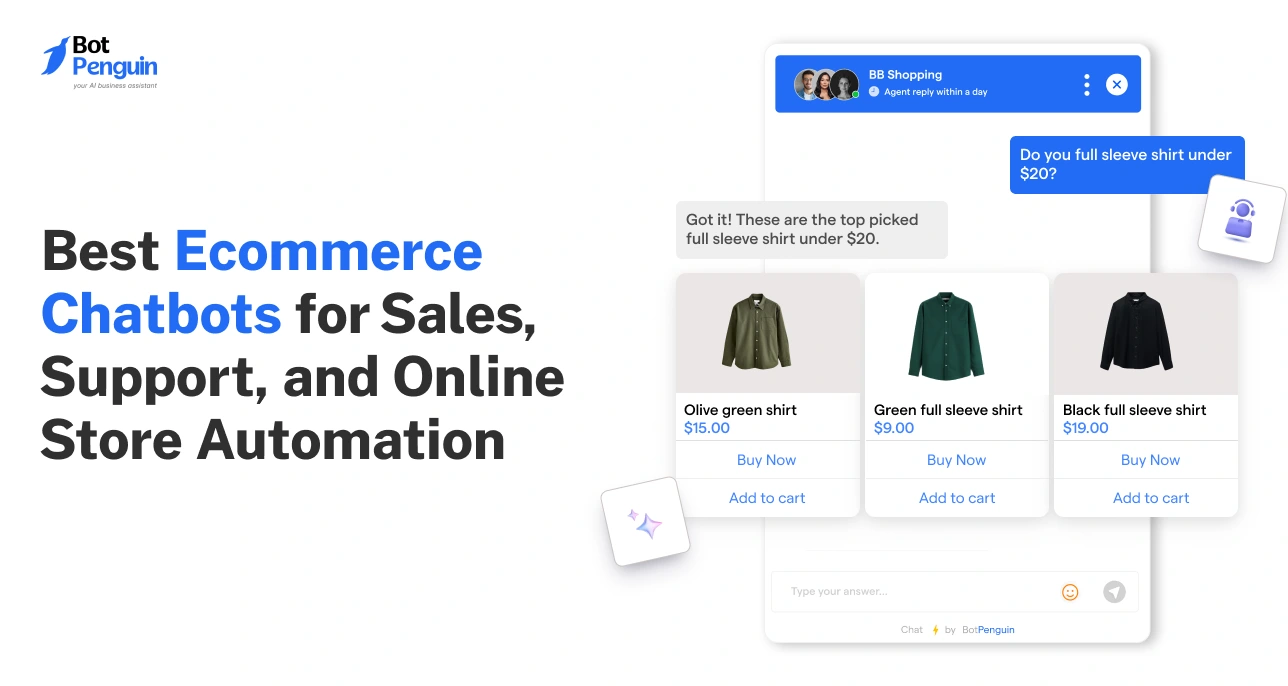
Not all chatbots drive ecommerce results. Some just answer queries. Others actively convert.
The best ecommerce chatbots go beyond basic responses. They automate conversations, support customers in real time, and guide buying decisions across the journey. A good AI chatbot for online store can reduce drop-offs and improve engagement at scale.
In this blog, we’ll break down the top tools, compare their strengths, and help you choose the right chatbot based on your business goals.
Some ecommerce chatbot platforms focus on automation and AI-driven conversations, while others are built for support workflows or social commerce.
This comparison table highlights tools based on use case, channel coverage, and key capabilities. Use it to shortlist tools based on your store’s needs before diving into detailed breakdowns.
Not every chatbot impacts revenue the same way. Some reduce support load, others drive conversions, and a few manage the full customer journey from discovery to post-purchase.
This breakdown focuses on what each platform is strongest at in an ecommerce setup, whether that’s automating order queries, recovering abandoned carts, or running multi-channel engagement workflows.
These platforms automate key ecommerce workflows, such as cart recovery, order updates, and customer engagement across channels, reducing manual effort and improving response speed.
BotPenguin is a conversational AI platform that helps ecommerce businesses automate conversations across web and messaging channels.
It allows businesses to manage the full customer journey from lead capture to post-purchase support.
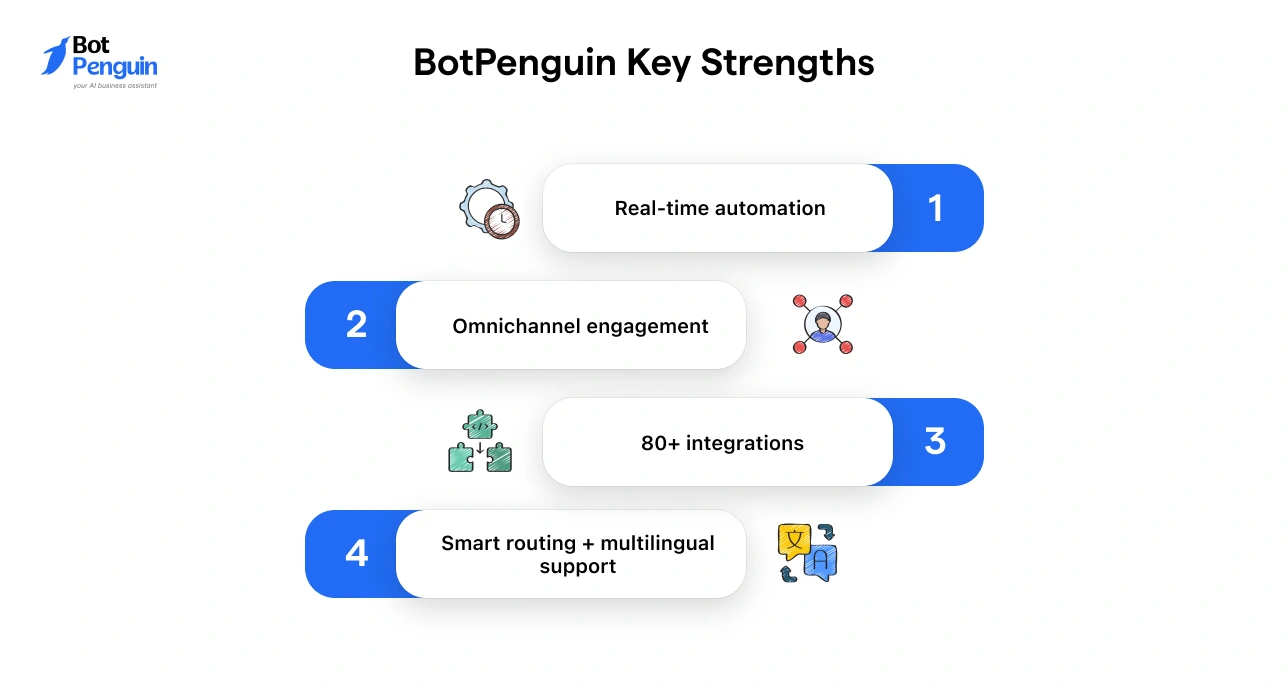
Key Strengths
Pricing Snapshot
Best For: D2C brands looking to combine sales, support, and multi-channel automation
Ada is designed to automate high-volume customer support for ecommerce brands, especially for queries related to orders, returns, and account management.
Key Strengths
Pricing Snapshot
Best For: Large ecommerce teams managing high support volume
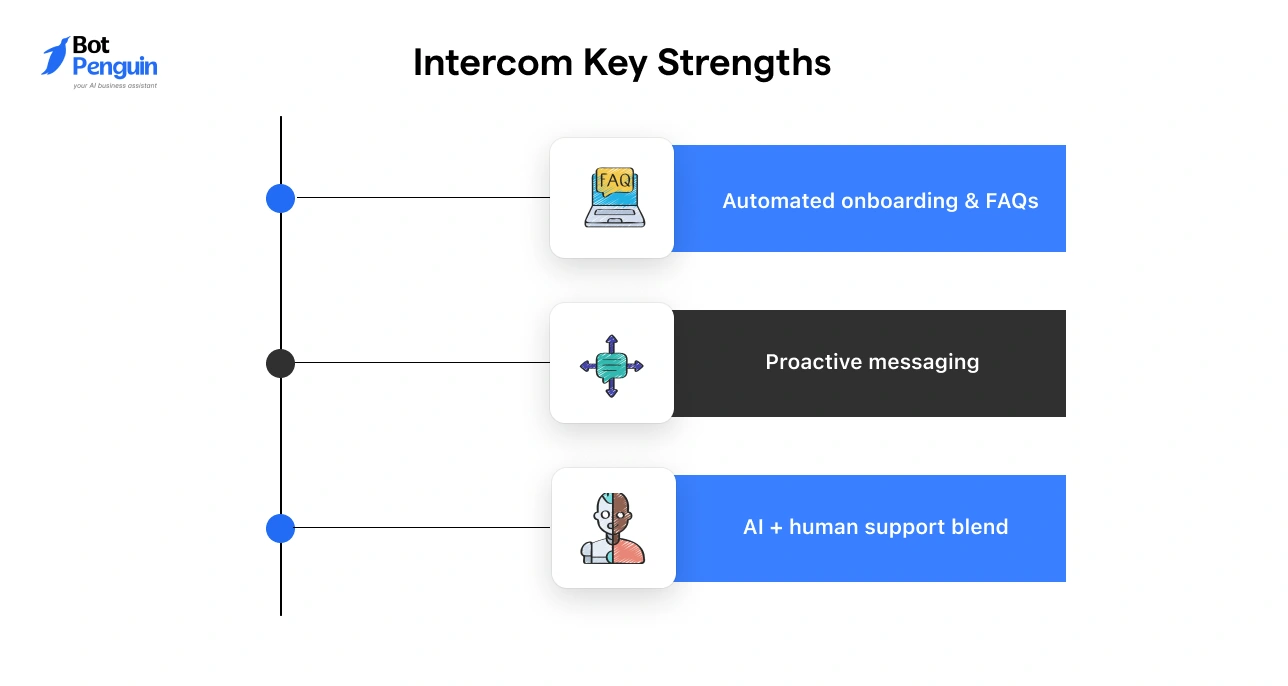
Intercom enables ecommerce teams to manage customer communication across the lifecycle, from onboarding and product discovery to retention and support.
Key Strengths
Pricing Snapshot
Best For: Ecommerce businesses focused on customer experience and lifecycle engagement
This lists the best AI chatbots for ecommerce customer service, focusing on handling high volumes of customer queries, automating repetitive support tasks, and improving response times without increasing the support team's size.
Zendesk is one of the best AI chatbot for ecommerce customer service, helping ecommerce businesses manage customer conversations across channels while automating ticket-handling and resolution workflows.
Key Strengths
Pricing Snapshot
Best For:
Gorgias is built specifically for ecommerce, enabling support teams to manage customer queries directly within store workflows and order data.
Key Strengths
Pricing Snapshot
Best For: Shopify and ecommerce brands needing deep store-level support automation
Freshchat combines live chat with AI-driven automation to help ecommerce businesses manage customer conversations efficiently across web and mobile channels.
Key Strengths
Pricing Snapshot
Best For: Businesses looking for a balance between live chat and support automation
These tools are designed to influence buying decisions in real time. They act as conversion-optimization chatbots, guiding users, capturing leads, and driving engagement throughout the purchase journey.
Drift is built for conversational sales, helping businesses turn website visitors into qualified leads through real-time interactions and automated conversations.
Key Strengths
Pricing Snapshot
Best For: Businesses focused on lead generation and high-intent visitor conversion
Tidio combines live chat with automation to help ecommerce stores engage visitors and convert them into customers through real-time interactions.
Key Strengths
Pricing Snapshot
Best For: Small to mid-sized ecommerce stores looking for simple conversion-focused automation
These website chatbot tools focus on improving on-site interactions through guided conversations, lead capture flows, and better conversational UX to keep visitors engaged and moving toward conversion.
Landbot is a no-code platform designed to create interactive chatbot experiences that guide users through structured conversations on websites.
Key Strengths
Pricing Snapshot
Best For: Businesses focused on lead generation through interactive website experiences
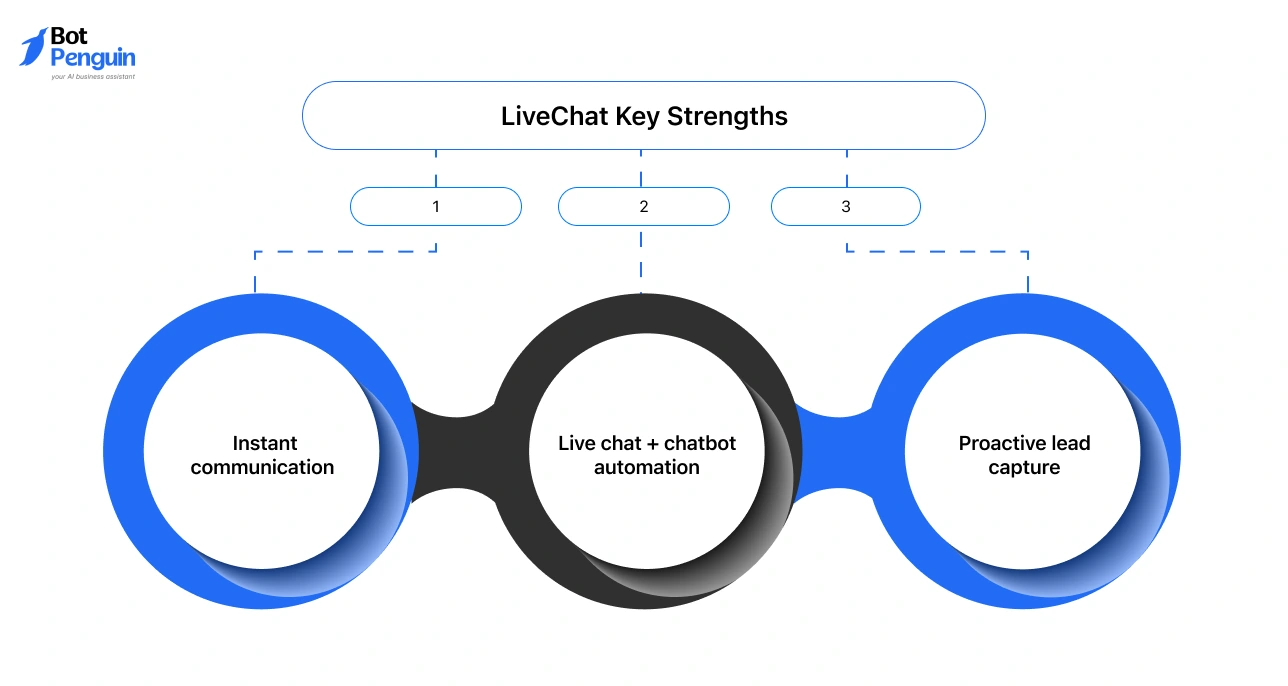
LiveChat focuses on real-time website engagement, helping businesses connect instantly with visitors while supporting chatbot integrations for automation.
Key Strengths
Pricing Snapshot
Best For: Teams prioritizing real-time engagement with optional automation support
These social media chatbot tools are built for platforms like Instagram and Messenger, enabling brands to automate conversations, run campaigns, and drive sales through messaging-first experiences.
ManyChat is a messaging-first platform that automates conversations and campaigns across Instagram, Facebook Messenger, and WhatsApp.
Key Strengths
Pricing Snapshot
Best For: Brands focused on social commerce and Instagram-driven sales
Chatfuel is a no-code platform for building chatbots on Facebook Messenger, Instagram, and WhatsApp with a focus on automated conversations and campaigns.
Key Strengths
Pricing Snapshot
Best For: Businesses looking for easy-to-build messaging automation on Meta platforms
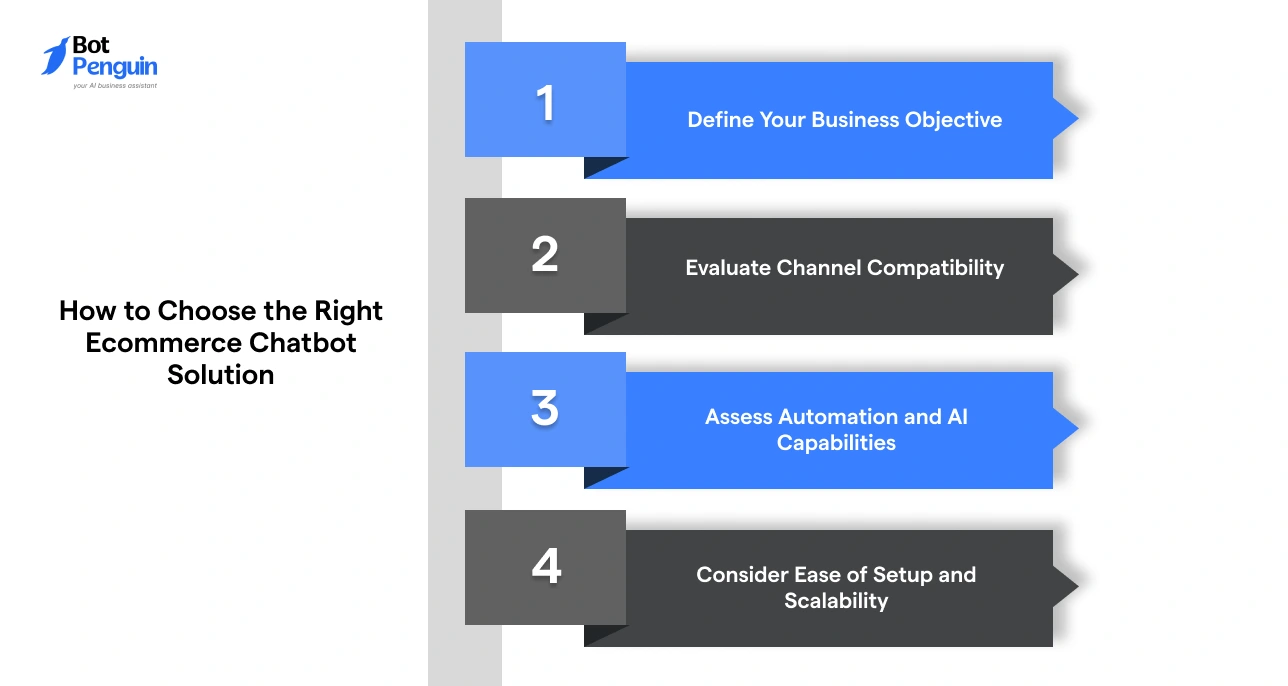
Choosing the best ecommerce chatbot comes down to one thing: fit. Use this framework to align your business needs with the right platform, rather than blindly comparing features.
Start by identifying what matters most to your store right now.
👉 Your primary goal should immediately narrow your options.
Choose based on where your customers already interact.
👉 The wrong channel fit limits impact, even with strong features.
Not all automation is equal; this is where tools differ the most.
👉 Higher automation reduces manual effort and improves scalability.
Think beyond today. Choose where your store is going.
👉 Avoid tools that will need replacing as your business grows.
The right choice becomes clearer once you align your goals, channels, and automation needs. Next, let’s break down the key features that actually define a high-performing ecommerce chatbot platform.
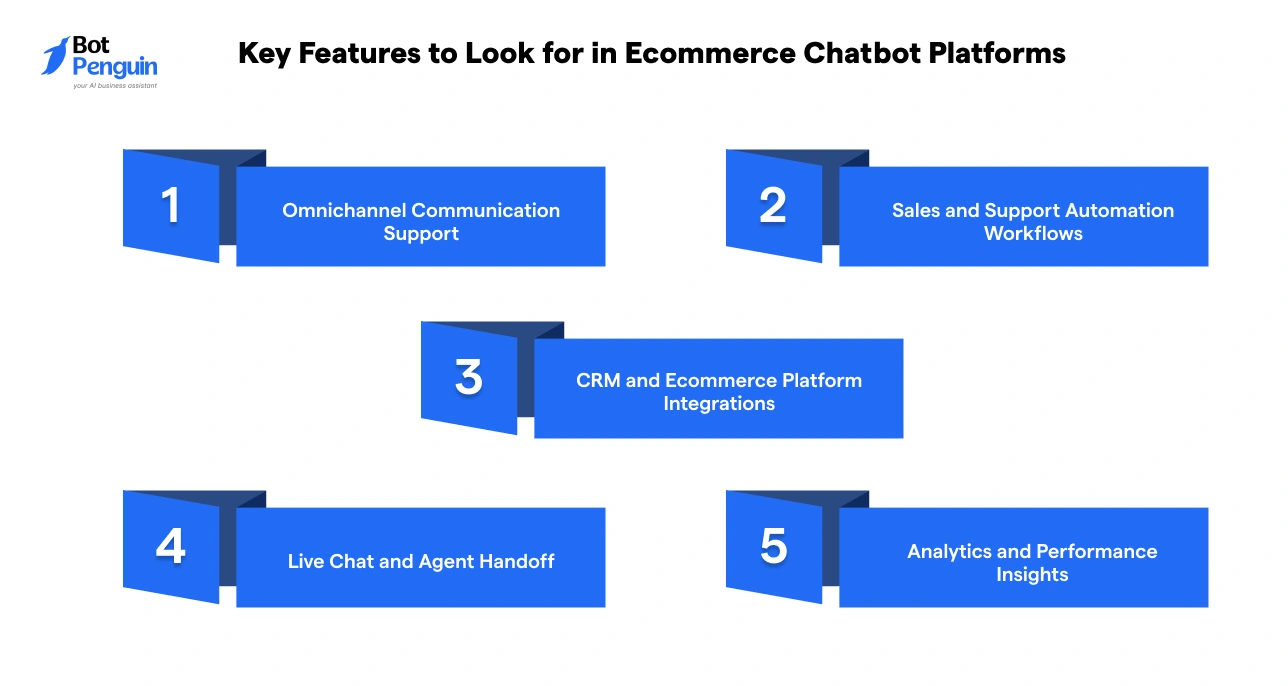
Not every chatbot delivers real business impact. Use this checklist to evaluate whether a platform can actually support your ecommerce operations, improve conversions, and scale with your store.
If a tool checks most of these boxes, it’s worth considering.
Your customers interact across multiple platforms, and your chatbot should meet them wherever they are.
✔ Ensures consistent communication across all customer touchpoints
Automation should handle repetitive tasks across both sales and support without constant manual input.
✔ Reduces manual workload while improving conversions
A chatbot becomes more effective when it can access and use customer and order data.
✔ Enables context-driven interactions and smoother workflows
Not every query can be automated, so smooth human intervention is critical.
✔ Prevents customer frustration when automation falls short
Without visibility, it’s difficult to improve chatbot performance over time.
✔ Helps refine strategy and improve results continuously
If most of your answers are “yes,” you’re looking at a platform that can support both automation and growth effectively.
The right chatbot does more than automate replies. It becomes a layer that connects your sales, support, and engagement efforts into one continuous experience. When chosen well, it helps you respond faster, capture more opportunities, and scale without adding operational complexity.
As ecommerce grows more conversational, having the right system in place is no longer optional. It directly impacts how efficiently you convert, support, and retain customers.
If you’re exploring platforms that combine automation with real ecommerce use cases, solutions like BotPenguin offer a practical starting point to bring everything together.
See how BotPenguin can automate your store’s sales, support, and customer engagement in one place.
An ecommerce chatbot is a tool that automates customer conversations, handling queries, guiding purchases, and supporting users across channels like websites, WhatsApp, and social platforms.
Chatbot for ecommerce engage visitors in real time, recommends products, recovers abandoned carts, and guides users through checkout, improving conversion rates without manual intervention.
The best ecommerce chatbot option depends on your goals. Tools like BotPenguin, Intercom, and Tidio offer robust automation, sales workflows, and support capabilities to meet different business needs.
Yes, modern customer support chatbots can automate FAQs, order tracking, and returns, reducing ticket volume while improving response time and customer experience.
Yes, many platforms support messaging channels like WhatsApp and Instagram, enabling conversational commerce, campaign automation, and real-time customer engagement.
Yes, chatbot tools like BotPenguin offer free or affordable plans, making them accessible for small ecommerce stores looking to automate support and improve conversions.
Define your goal, check channel support, evaluate automation capabilities, and ensure integrations with your ecommerce platform before selecting a chatbot.
Key features to look for in an ecommerce support tool include omnichannel support, automation workflows, CRM integrations, live chat handoff, and analytics to track performance and improve results.
Boost Your Ecommerce Revenue
Automate support, recover carts, and convert visitors with an AI ecommerce chatbot built to streamline conversations and increase conversions.
Explore BotPenguinCheckout our related blogs you will love.
Updated at Oct 7, 2026
12 min to read
Updated at Sep 30, 2026
11 min to read
Updated at Sep 25, 2026
13 min to read
Updated at May 29, 2026
11 min to read
Updated at May 27, 2026
9 min to read
Updated at May 20, 2026
9 min to read
Table of Contents