


How to Connect Your WordPress Chatbot to a CRM, Calendar and Other Tools
Updated at Oct 9, 2026
15 min to read
Nearly 70% of online shopping carts are abandoned before purchase, according to the Baymard Institute. Most of these customers don’t return without timely follow-ups.
This is where ecommerce marketing automation becomes essential.
In this guide, you’ll learn the strategies, workflows, and examples that help turn missed opportunities into consistent revenue.
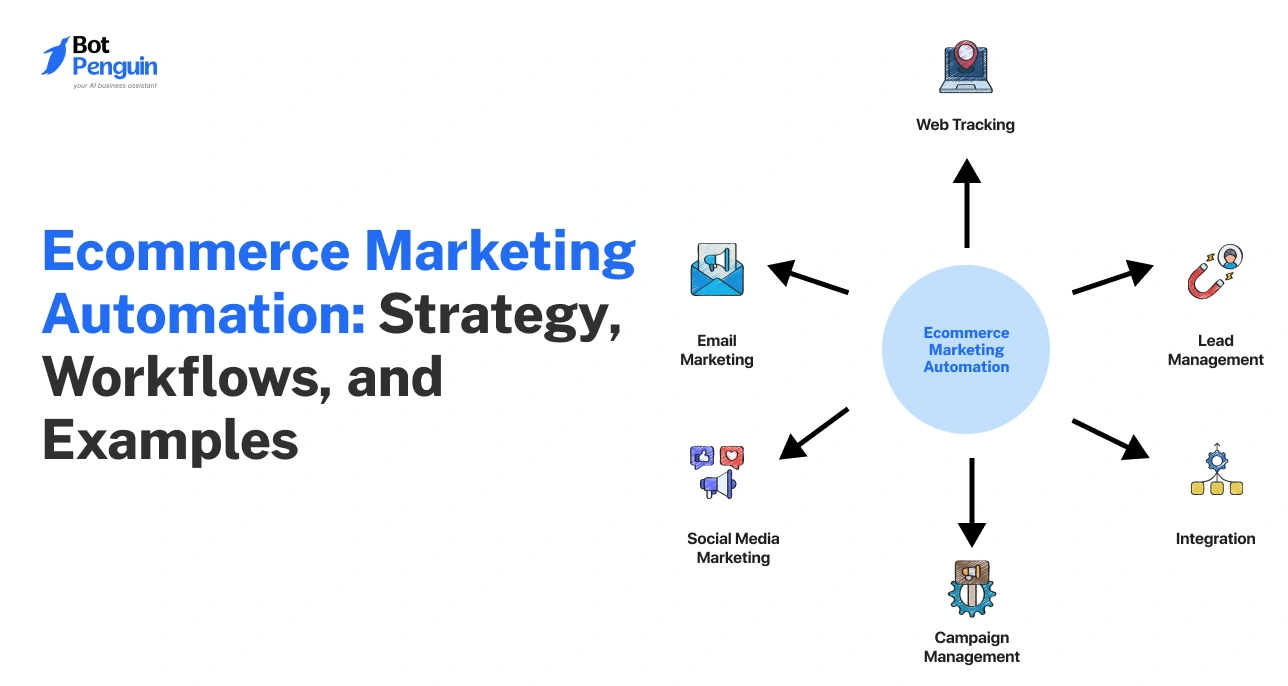
Marketing automation for ecommerce refers to using software and data to automate customer communication across the entire buying journey. It replaces manual campaigns with timely, behavior-based interactions.
At its core, ecommerce automation systems work using three key elements:
When a user takes an action, such as browsing a product or abandoning a cart, the system automatically responds with relevant messaging.
This form of automated ecommerce marketing ensures consistent, personalized engagement without manual effort. By combining data with real-time triggers, businesses can deliver the right message at the right moment, improving conversions and overall customer experience.
Marketing automation ecommerce directly impacts revenue by improving how and when brands engage customers. Instead of relying on manual campaigns, businesses can respond instantly to user behavior with relevant messaging.
This shift leads to measurable growth across key revenue drivers:
Beyond revenue, automation also improves operational efficiency. Through customer lifecycle automation, brands can manage complex customer journeys without increasing manual effort.
By combining speed, personalization, and scale, automation helps businesses increase ecommerce conversions while building sustainable growth.
Ecommerce marketing automation works by connecting user behavior with predefined actions to deliver timely, relevant communication. Instead of sending generic campaigns, systems respond dynamically based on what customers do across your store.
At a high level, it combines data, logic, and messaging to create seamless customer journeys without manual intervention.
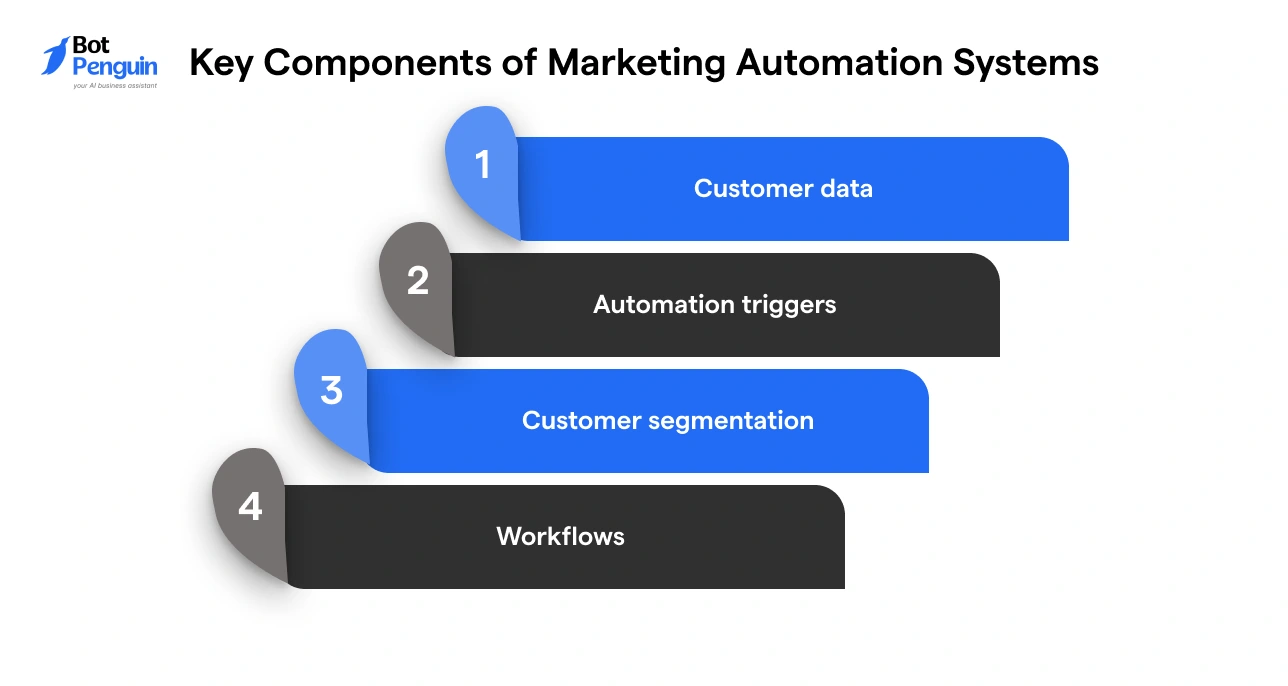
Marketing automation for e-commerce is powered by a few core components that work together to automate engagement:
These elements enable ecommerce workflow automation and behavioral targeting, ensuring users receive personalized communication at the right time.
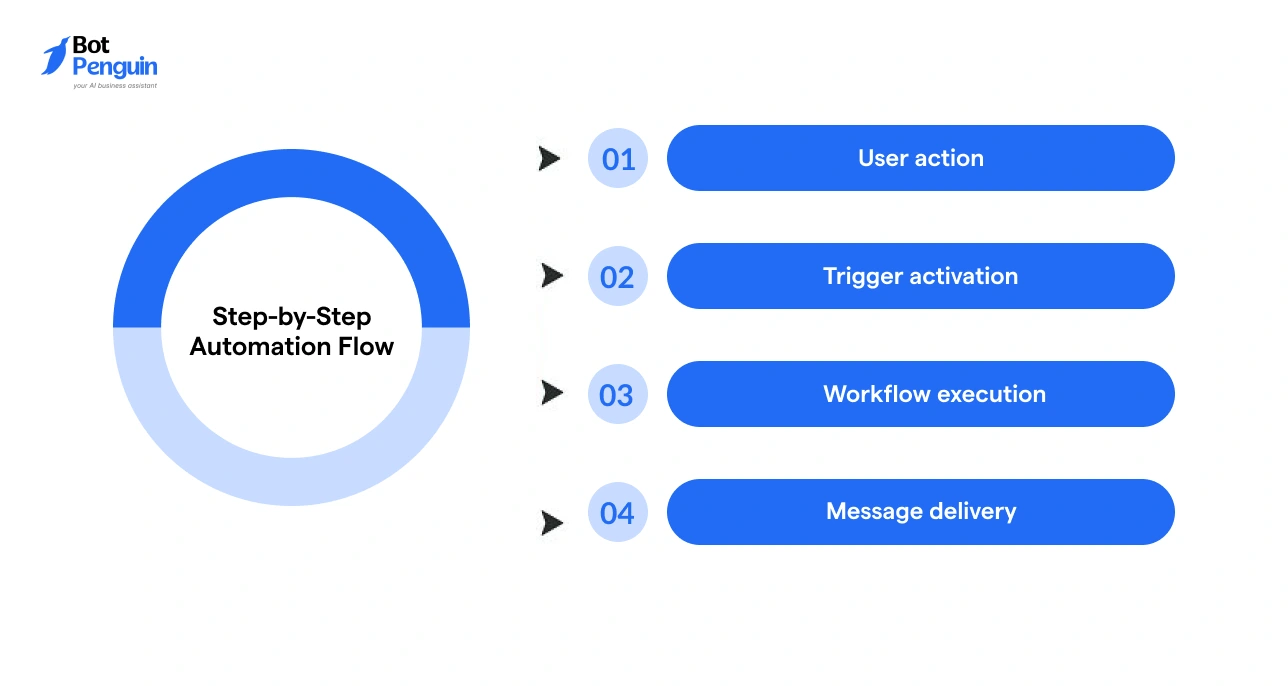
Marketing automation in e-commerce follows a structured flow where each user action initiates a response:
This ecommerce automation flow ensures consistent engagement through triggered messaging, enabling businesses to respond instantly and improve conversion rates.
The real impact of ecommerce marketing automation comes from how workflows are designed and executed. These workflows connect user behavior with timely communication, helping brands convert, retain, and grow customers at scale.
Below are the most effective workflows used across high-performing ecommerce businesses:
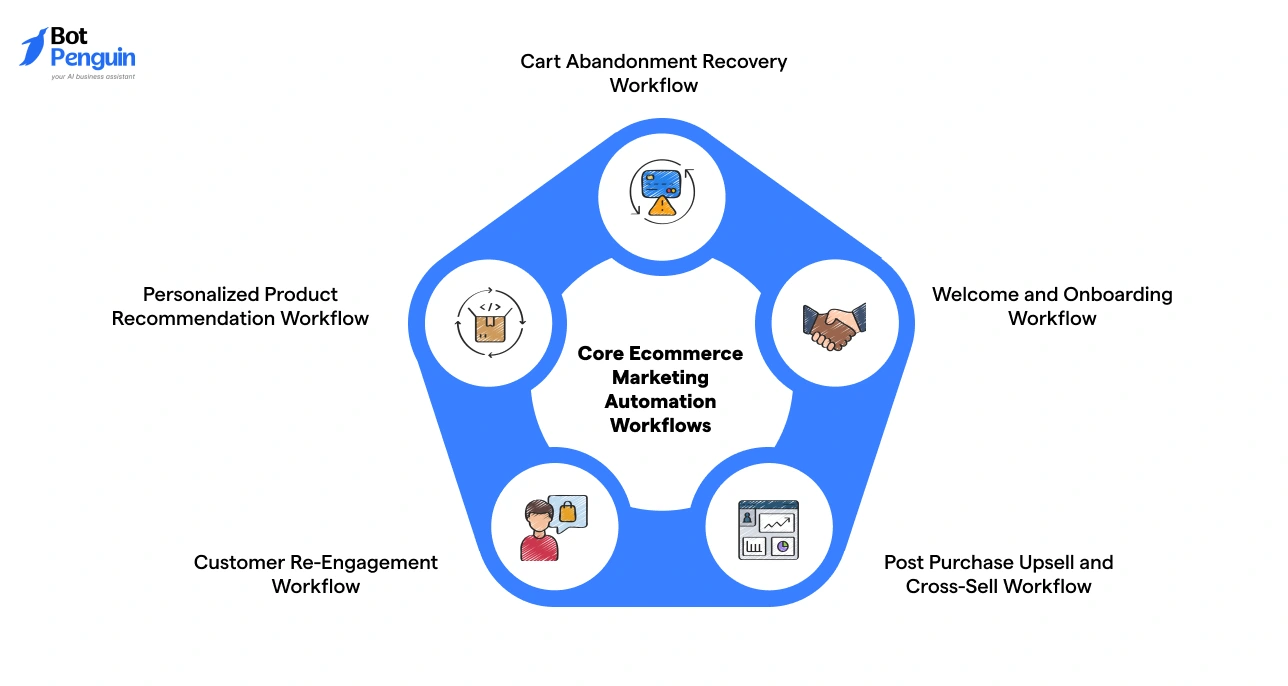
Cart abandonment is one of the biggest revenue leaks in ecommerce.
Marketing automation for ecommerce helps recover these lost opportunities through timely, behavior-based follow-ups.
A typical abandoned cart workflow includes:
These cart abandonment automation strategies use recovery emails or SMS to re-engage users when purchase intent is still high.
When executed well, they significantly improve conversion rates and are among the most effective conversion recovery strategies.
First impressions shape long-term engagement. A strong onboarding sequence ensures new users understand your brand and move toward their first purchase.
With marketing automation ecommerce, onboarding becomes a structured journey instead of a one-time message.
A typical ecommerce onboarding sequence includes:
This welcome email flow builds trust and reduces hesitation during the early stages of the customer journey.
Effective onboarding automation in ecommerce helps convert new users faster while setting the foundation for long-term engagement.
The customer journey doesn’t end after purchase. In fact, this is where long-term value is built.
Using marketing automation for e-commerce, brands can trigger workflows immediately after a transaction to drive repeat purchases.
A typical workflow includes:
These cross-sell workflows and upsell automation strategies encourage customers to explore more products without feeling intrusive. This, in turn, helps ecommerce businesses increase average order value and strengthen lifecycle marketing.
Not all customers stay active. Re-engagement workflows help bring back users who have stopped interacting with your brand.
In e-commerce, marketing automation turns inactivity into a trigger rather than a lost opportunity.
A typical re-engagement flow includes:
These winback campaigns ecommerce rely on customer reactivation automation to reconnect with dormant users.
Targeting the right users with relevant messaging improves retention and reduces churn, making this one of the most important ecommerce retention workflows.
Personalization is a key driver of ecommerce success. Customers are more likely to convert when recommendations match their preferences.
Marketing automation for ecommerce enables this through data-driven workflows powered by browsing behavior and purchase history.
A typical recommendation workflow includes:
These workflows often use a product recommendation engine for ecommerce to deliver accurate suggestions in real time.
With personalization, automation, and AI recommendations, brands can provide highly relevant experiences through dynamic product suggestions, improving both conversions and customer satisfaction.
Ecommerce marketing automation is most effective when applied across multiple channels. Each channel plays a specific role in engaging users at different stages of the customer journey.
By combining these channels, businesses can create a seamless and consistent experience that improves conversions and retention.
Email remains the foundation of ecommerce marketing automation due to its flexibility and reach. It allows brands to deliver personalized messages based on user behavior and lifecycle stage.
Common email workflows include welcome sequences, cart recovery, and post-purchase follow-ups. These are powered by triggered email marketing, ensuring messages are sent at the right moment.
With ecommerce email automation, businesses can run lifecycle email campaigns that nurture users from first interaction to repeat purchase.
SMS and push notifications enable real-time engagement, making them ideal for time-sensitive communication.
Using marketing automation for e-commerce, brands can send instant alerts for abandoned carts, order updates, or limited-time offers.
These ecommerce push notification workflows and SMS marketing automation strategies help capture attention quickly. They are especially effective for mobile engagement automation, where users are more responsive to immediate prompts.
Retargeting ensures that users who leave without converting are brought back through relevant ads.
With marketing automation, e-commerce businesses can trigger ads based on browsing behavior, product views, or past purchases.
These retargeting automation strategies rely on behavioral ad targeting to deliver highly relevant ads across platforms. This makes ecommerce remarketing workflows a key driver of repeat engagement and conversions.
Chatbots add a conversational layer to ecommerce marketing automation, helping brands engage users in real time.
Through ecommerce chatbot automation, businesses can answer queries, recommend products, and guide users through the purchase journey.
This form of conversational marketing in ecommerce supports users across touchpoints, creating a seamless chatbot sales funnel. With AI chat automation, ecommerce brands can scale personalized interactions without manual effort.
Seeing marketing automation ecommerce in action helps connect strategy with real business impact. Below are three credible, workflow-specific examples that show how automation drives measurable results:
Sephora implemented a Facebook Messenger chatbot to help users discover products and book in-store services. The chatbot asked guided questions and recommended relevant products based on user preferences.
This conversational flow reduced friction in product discovery and improved engagement. According to Facebook, Sephora saw an 11% increase in booking rates through this automated experience. (Source: Facebook Business / Sephora Messenger case study)
👉 Takeaway: Chatbot automation works best when it simplifies decision-making, not just answers queries.

Amazon’s recommendation engine powers features like “Customers Also Bought” and “Frequently Bought Together.” These are triggered based on browsing and purchase behavior.
According to McKinsey, such personalization engines contribute to up to 35% of Amazon’s revenue. (Source: McKinsey personalization report)
👉 Takeaway: Product recommendation workflows are not optional; they are a core revenue driver when powered by behavioral data.
ASOS uses lifecycle email automation to re-engage users with personalized product updates, back-in-stock alerts, and style-based recommendations.
These automated flows help bring users back without manual intervention. Campaign Monitor reports that ASOS achieved higher repeat purchase rates through targeted email automation campaigns. (Source: Campaign Monitor ASOS case study)
👉 Takeaway: Lifecycle automation is key to retention; consistent, relevant communication keeps customers coming back.
These real ecommerce use case automation show that the real value comes from aligning workflows with user behavior. Whether through chat, personalization, or lifecycle campaigns, automation works best when it feels relevant and timely.
While marketing automation for e-commerce improves efficiency and scale, poor implementation can reduce its effectiveness. Many brands make avoidable mistakes that impact engagement and conversions.
Here are the most common automation mistakes ecommerce businesses should avoid:
These ecommerce automation errors often result in lower engagement and missed opportunities.
To avoid these campaign optimization mistakes, focus on relevance, timing, and continuous improvement. Well-optimized automation should feel helpful and personalized, not repetitive or intrusive.
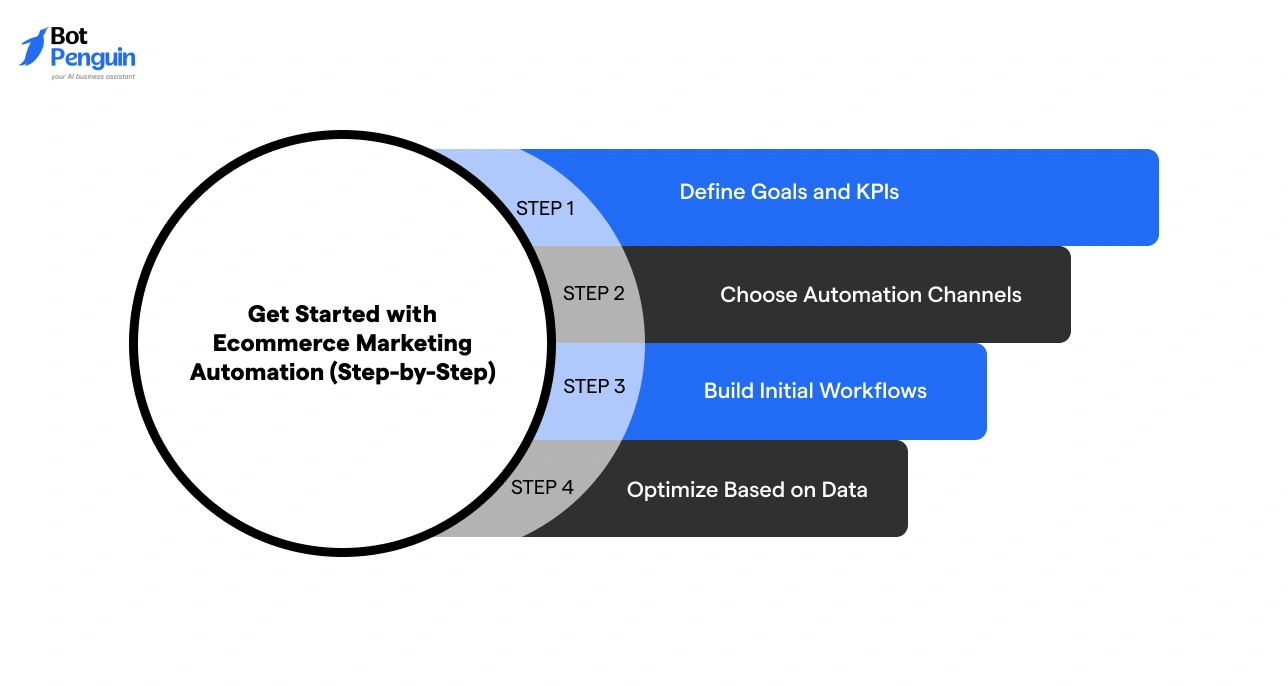
Getting started with ecommerce marketing automation is easier when you follow a clear sequence. Instead of launching multiple campaigns at once, begin with the basics, track performance, and improve over time.
Start by setting clear objectives for your marketing automation e-commerce strategy. Without goals, it becomes difficult to know whether your workflows are actually driving results.
Focus on a few core targets such as increasing conversions, improving retention, or raising average order value. Then connect them with measurable automation performance metrics, such as click-through rate, revenue per flow, repeat purchase rate, and conversion-tracking ecommerce data.
Once goals are clear, decide which channels fit your audience and business model. Effective marketing automation for ecommerce depends on selecting touchpoints that align with user behavior.
This type of channel selection ecommerce helps build a stronger marketing channel strategy and supports omnichannel automation ecommerce.
Now begin with a few simple workflows instead of trying to automate everything. A focused marketing automation setup for ecommerce is easier to launch and optimize.
Start with beginner workflows such as a welcome sequence, cart abandonment reminders, and post-purchase follow-ups. These are usually the fastest wins and form the basis of your ecommerce workflow setup and strategy.
After your workflows go live, track their performance and improve them regularly. Strong e-commerce marketing automation depends on ongoing refinement, not a one-time setup.
This data-driven marketing approach for ecommerce leads to better engagement and stronger long-term performance.
While strategy and workflows drive results, the right tools help execute marketing automation effectively in ecommerce. Below is a quick comparison of widely used ecommerce automation tools based on their core strengths.
Each of these marketing automation platforms for ecommerce businesses serves a different purpose. The right choice depends on your workflows, channels, and growth stage.
For a deeper breakdown of features, pricing, and use cases, explore our detailed guide on the best ecommerce marketing automation tools.
Marketing automation for ecommerce is no longer optional for brands aiming to grow efficiently. It connects data, timing, and personalization to create consistent customer experiences across the journey.
By focusing on the right workflows, channels, and tools, businesses can move beyond manual campaigns and build scalable systems that drive conversions and retention.
Adding conversational automation through platforms like BotPenguin can further enhance engagement by guiding users in real time across key touchpoints.
As ecommerce evolves, the future of ecommerce automation will rely on smarter, more personalized interactions. Brands that invest early in a strong automation strategy for ecommerce will be better positioned for sustainable growth.
Ecommerce marketing automation is the use of software to automate customer communication based on user behavior. It uses triggers, data, and workflows to send personalized messages across channels like email, SMS, and chat.
Top marketing automation workflows in ecommerce include cart abandonment recovery, welcome sequences, post-purchase upsell, re-engagement campaigns, and personalized product recommendations based on user behavior.
Common channels include email, SMS, push notifications, retargeting ads, and chatbots, enabling businesses to engage customers across multiple touchpoints.
Marketing automation for ecommerce increases conversions, improves customer retention, boosts lifetime value, reduces manual effort, and enhances overall ecommerce marketing ROI through personalized, timely communication.
Choose based on your primary channels, required integrations, ease of workflow creation, and support for personalization and scalability.
Yes, small ecommerce businesses can start with basic marketing automation workflows, such as welcome emails and cart recovery, and scale automation as they grow.
Chatbots used for ecommerce marketing provide real-time assistance, recommend products, and guide users through purchase decisions, improving engagement and conversion rates.
Subscribe to Our Newsletter
Get the latest business insights straight into your inbox.
Checkout our related blogs you will love.
Updated at Oct 9, 2026
15 min to read

Updated at Oct 6, 2026
9 min to read

Updated at Oct 6, 2026
5 min to read

Updated at Oct 5, 2026
17 min to read
Updated at Oct 5, 2026
15 min to read
Table of Contents

