


HubSpot AI Agent: How It Works, Use Cases & Integrations
Updated at Oct 6, 2026
9 min to read
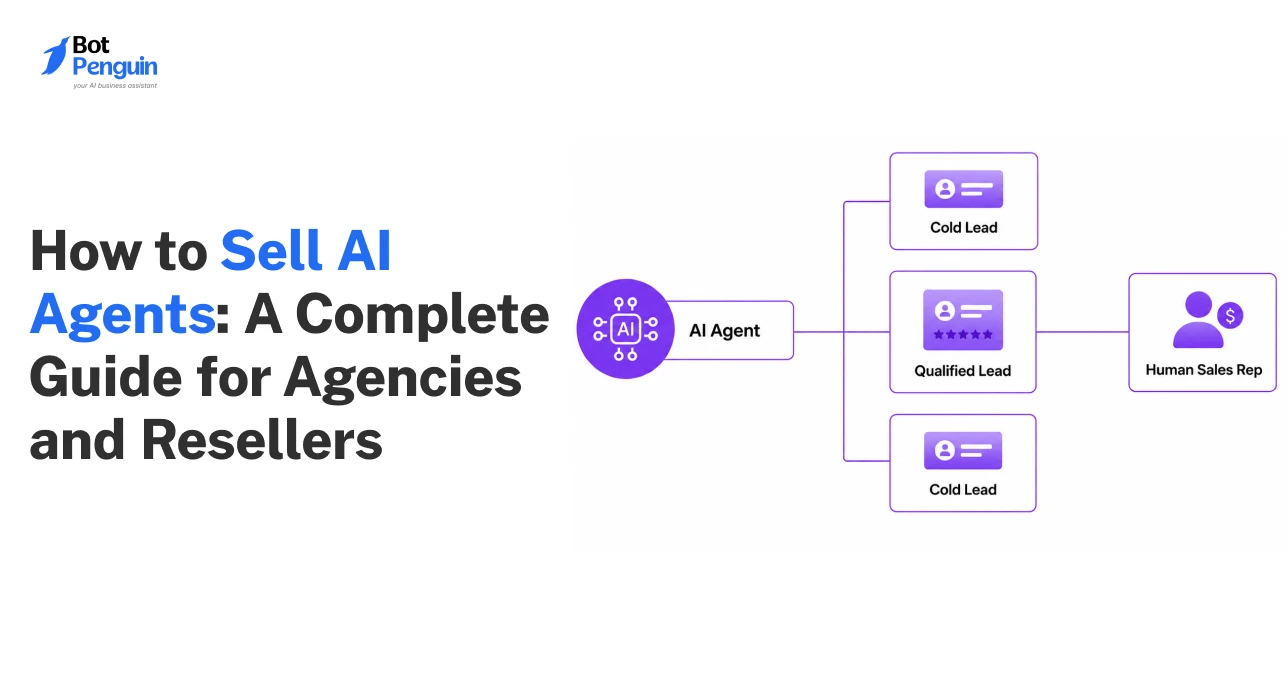
You do not need to build AI agents to profit from the artificial intelligence boom.
Most advice on selling AI agents revolves around building them in-house. But agencies, consultants, and resellers can enter the market without handling the development themselves.
Instead of spending months learning AI frameworks, you can partner with an AI platform, offer their solutions to businesses, and earn recurring revenue from client accounts. The platform manages the technology and infrastructure while you focus on sales and growth.
In this guide, you'll learn how to sell AI agents, identify the right prospects, package your offer, and start closing deals in 2026.
Selling AI agents means helping businesses adopt AI-powered tools that can automate tasks, make decisions, use integrations, and complete workflows.
By 2033, the AI agents market is projected to reach $182.9 billion. Agencies and resellers who move now are positioning themselves at the front of that wave.
You can either build these AI agents yourself or sell access to an existing AI agent platform and earn revenue from the clients you manage.
Demand is growing as businesses seek to scale without expanding teams. Here’s why you should consider adding AI agents to your offerings:
AI agents handle workflows end to end, slashing manual effort across support, sales, and operations.
Thus, the agencies that move now will own the relationships businesses are actively looking to form.
There are mainly two ways to build a business around AI agents, and the one you choose changes everything about how you operate, price, and grow.
For most agencies, reselling wins: Lower barrier, faster revenue, and room to scale without a dev team. Build only if you have a niche that no platform can serve.
Platforms like BotPenguin make the resell path even more accessible, with a ready-to-go AI agent stack and a chatbot reseller program built for agencies. You bring the clients; the platform handles the infrastructure.
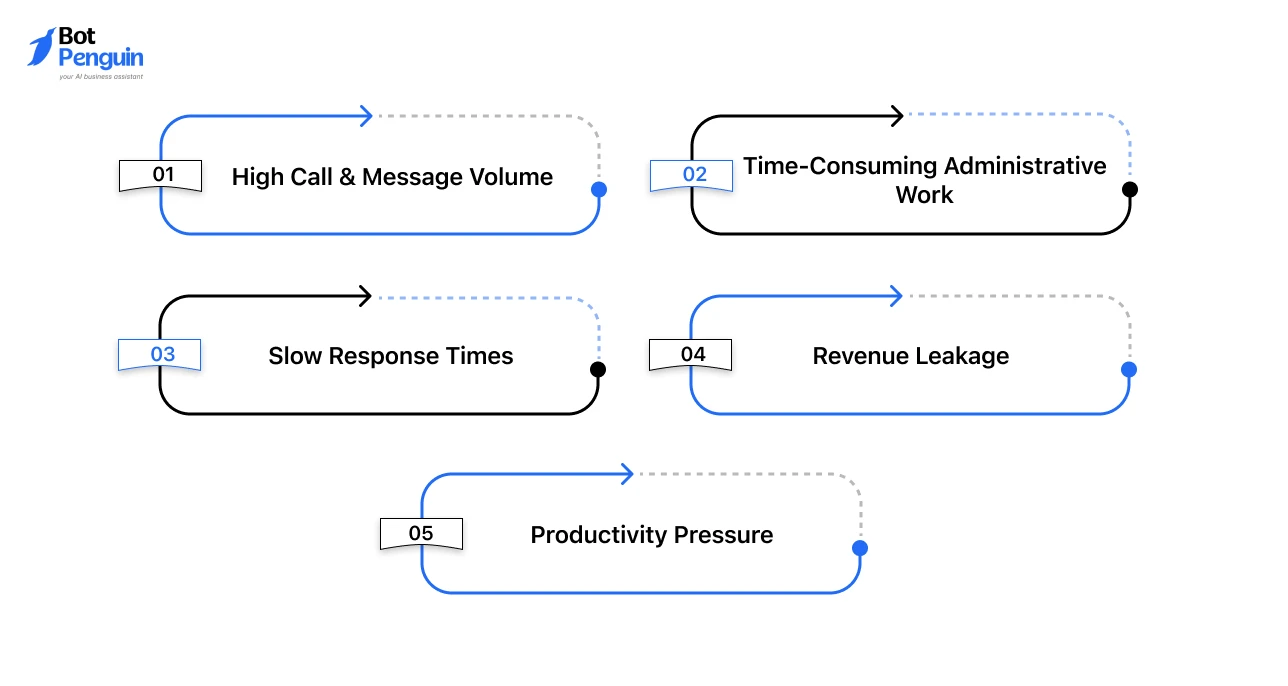
The best prospects for AI agents are organizations drowning in repetitive work, constant inquiries, and fragmented processes.
They are not searching for advanced AI features. They are searching for a way to handle more activity, serve customers faster, and reduce the burden on their teams.
Before reaching out to a company, look for these signals:
These industries consistently show the highest ROI on AI agent deployments and the shortest sales cycles.
When selling AI agents to businesses, remember that buyers are not evaluating AI models, integrations, or technical architecture. They are evaluating business outcomes.
For 61% of CFOs today, AI agent ROI isn't about hours saved. It's about revenue grown and customers retained.
Whether you sell AI automation to a clinic, agency, retailer, or service business, decision-makers want faster response times, fewer manual tasks, better customer experiences, and higher revenue.
Thus, successful AI agent sales focus on measurable results, not technical features.
For a broader view of how to package, position, and sell conversational AI solutions, explore our complete guide to chatbot reseller programs explained.
Many agencies sell AI agents through the reseller model because it offers a faster and lower-risk path to market.
The platform manages the technology, integrations, and maintenance, allowing agencies to focus on acquiring clients, delivering results, and building recurring revenue.
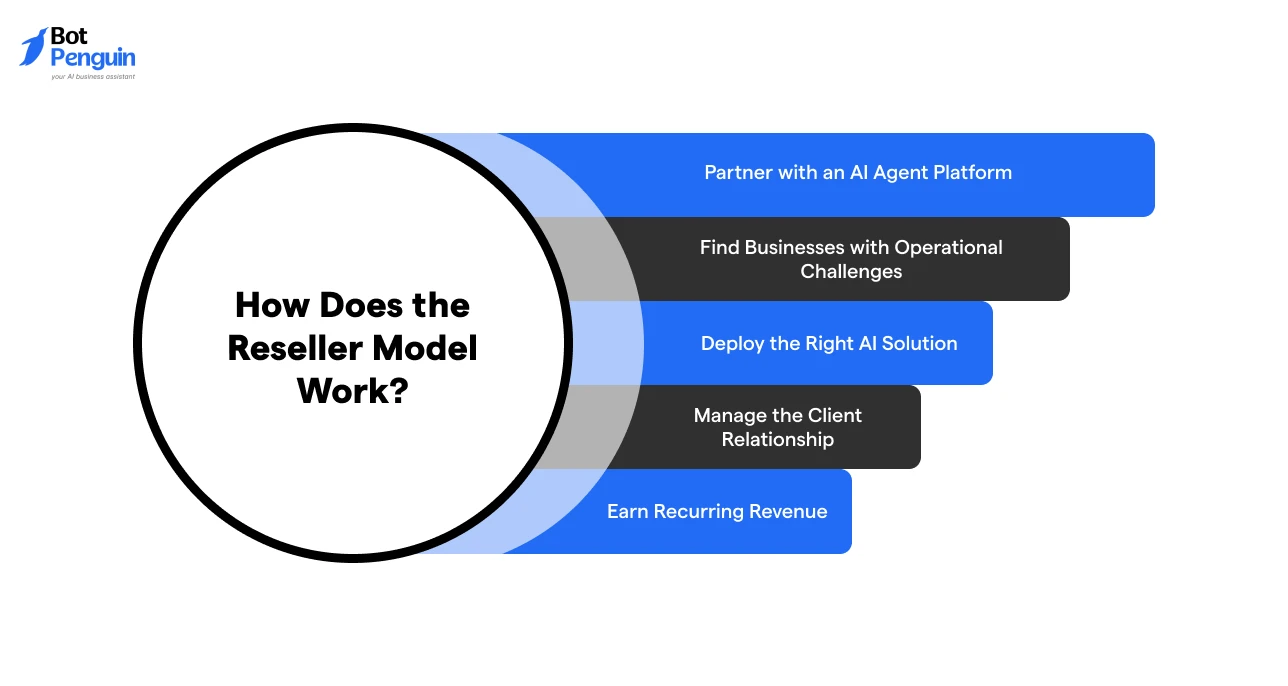
The reseller model is straightforward. Follow these five steps to get started:
Each of these steps carries more depth than it looks. The next section unpacks what actually goes into executing them well, from choosing the right platform to closing your first client and keeping them long-term.
Learn what white label AI agents are, how they work, and how agencies can rebrand them for clients.
Whether you are targeting clinics, real estate agencies, or ecommerce brands, the process follows the same consistent sequence.
Master these five steps, and you have a repeatable reseller’s playbook you can run for every new client:
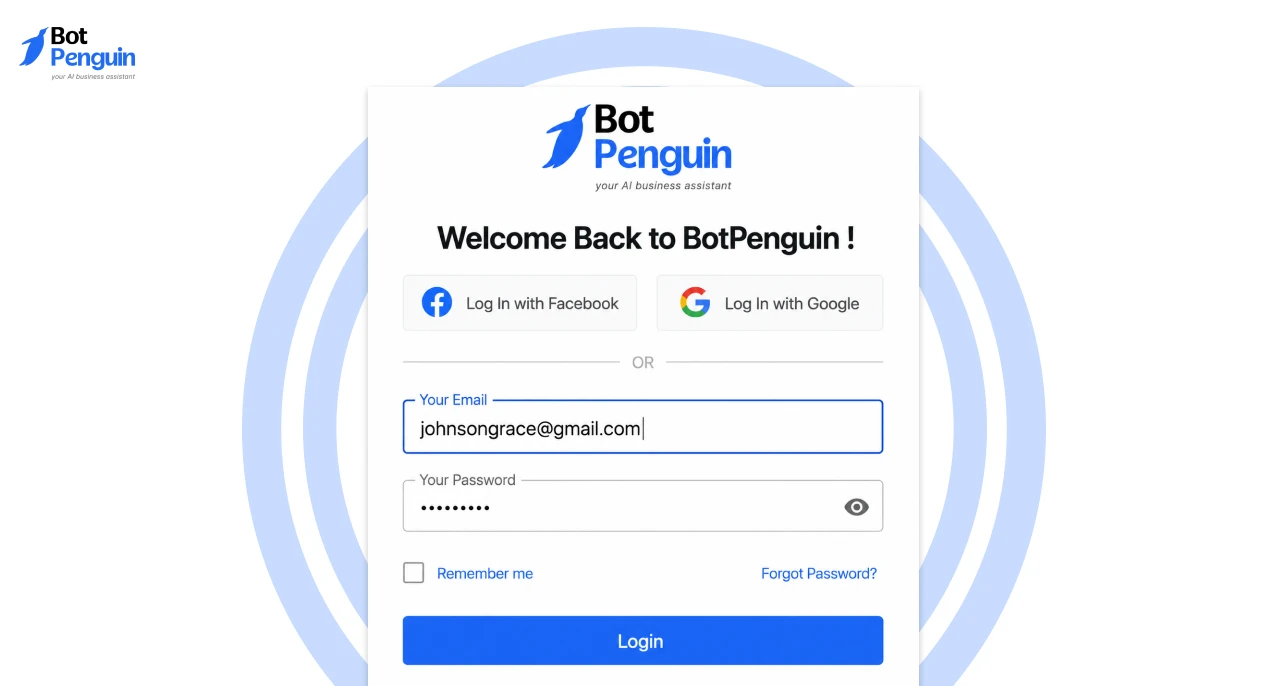
Many first-time resellers evaluate commission rates before product fit. That is often a costly mistake. The best AI agent platform is the one your clients will actually adopt and continue paying for.
Look for strong channel support, reliable onboarding, partner resources, and an easy deployment process.
A slightly lower commission on a platform that retains clients is usually more profitable than a higher commission on a platform that struggles with adoption.
Trying to sell AI agents to every business type makes marketing, demos, and sales conversations harder. Instead, focus on one industry and one problem.
For instance, appointment booking for clinics or lead qualification for real estate agencies.
A focused offer helps you build expertise, create relevant case studies, and generate referrals faster.
Businesses rarely buy AI because it uses advanced technology. They buy solutions to operational problems.
Lead with a clear result: more appointments booked, fewer missed inquiries, faster lead response times, or lower support workload.
When prospects understand the business impact immediately, sales conversations become shorter, and pricing becomes easier to justify.
The easiest AI agent sale is often to someone who already knows your work.
Existing clients, referral partners, and professional contacts require less education and less trust-building than cold prospects.
Position AI agents as a natural extension of services you already provide rather than a completely new offering. Familiarity decreases friction and speeds up decision-making.
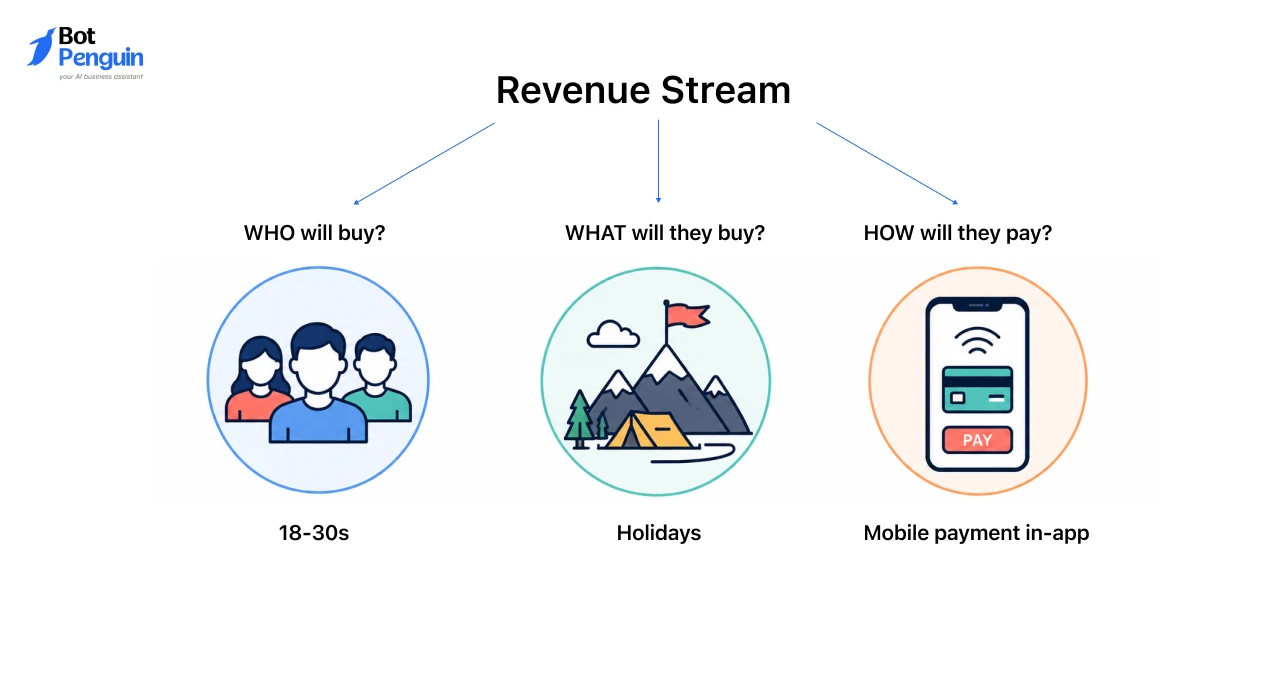
Closing the first sale is only the beginning. Review performance regularly and highlight measurable results such as leads qualified, appointments scheduled, or support requests resolved.
Once clients see value, expand into additional channels or use cases.
A successful web chat deployment can lead to WhatsApp, voice, or customer support automation, increasing account value without finding a new customer.
Every new niche you enter, every new client you onboard, and every account you expand runs through the same sequence. The resellers who build sustainable businesses are the ones who systematize this process early and execute it consistently.
There is no fixed income ceiling for AI agent resellers. Your earnings depend on the number of clients you manage, the services you offer, and how effectively you retain and expand accounts over time.
Unlike one-time projects, AI agent reselling can generate revenue from multiple sources simultaneously:
A client may start with a single AI agent, then expand into additional channels, automations, or services as their needs grow.
Example: With 15 active clients on a $200/month plan and a 30% commission, a reseller earns $900/month in recurring commissions alone. As clients add new channels and services, revenue grows without scaling sales efforts at the same rate.
At the same time, selling AI agents is also about recommending the right solution. The next step is understanding when a business needs an AI agent and when a conventional chatbot is the better choice.
One of the biggest mistakes new resellers make is treating AI agents and chatbots as the same product. While both help businesses automate customer interactions, they solve different problems.
Chatbots are ideal for handling FAQs, capturing leads, and guiding users through predefined flows. AI agents, on the other hand, can make decisions, use integrations, access business systems, and complete multi-step workflows.
Choosing the right solution depends on the client's goals, budget, and operational complexity.
For many businesses, the best approach is not choosing one or the other. A chatbot often serves as the entry point, while AI agents are introduced later as automation requirements become more advanced. This creates a natural upgrade path and additional revenue opportunities for resellers.
If you want a deeper look at positioning, pricing, and selling chatbot solutions, check out our guide on how to sell chatbots to local businesses.
As their client base grows, many resellers look for more control over how they market, package, and deliver AI solutions. This is where the choice between a reseller program and a white-label partnership becomes important.
In the next section, we'll break down how reseller and white-label partnerships differ in branding, pricing control, and growth potential.
When you're exploring how to sell AI agents, you'll typically come across two business models: reseller programs and white-label partnerships.
Both allow you to offer AI agents without building the technology yourself, but they differ in branding, control, and investment requirements.
Many agencies start with the reseller model because it offers a lower-risk way to enter the market. As they gain clients and confidence, some transition to a white-label model to take greater ownership of branding, pricing, and the overall customer experience.
Not sure which model fits for selling chatbots specifically? Read our breakdown of chatbot reseller vs white label to decide.
You do not need to build AI agents from scratch to participate in the growing AI automation market.
By partnering with the right platform, agencies, consultants, and service providers can sell AI agents, solve real business problems, and generate recurring revenue without managing the underlying technology.
The key is to focus on outcomes, choose a niche, and build a repeatable sales process. Start with businesses that already trust you, demonstrate measurable value, and expand from there.
As demand for AI-powered automation continues to grow, agencies that establish expertise today will be well-positioned to capture long-term opportunities in the years ahead.
You can sell AI agents by joining an AI agent reseller program like BotPenguin. The platform handles development, hosting, integrations, and maintenance, while you focus on finding clients, deploying solutions, and managing relationships. Most reseller programs provide no-code tools, onboarding support, and recurring commission opportunities.
Yes. AI agent resellers can earn recurring commissions, setup fees, customization charges, and ongoing support retainers. Because clients typically pay monthly subscriptions, revenue can compound over time. Profitability depends on your niche, pricing strategy, client retention, and the reseller program you choose.
Businesses with repetitive, high-volume workflows are often the strongest buyers. Common examples include healthcare clinics, real estate agencies, ecommerce stores, legal firms, and local service businesses. These organizations use AI agents to automate customer support, lead qualification, scheduling, and operational tasks.
Chatbots follow predefined rules and conversational flows, making them ideal for FAQs and basic lead capture. AI agents are more advanced and can use integrations, access business systems, make decisions, and complete multi-step workflows. AI agents are generally better suited for complex automation.
No. Most AI agent reseller programs are designed for agencies, consultants, and service providers rather than developers. While understanding the product is important, the platform typically handles the technical infrastructure. Sales, communication, and problem-solving skills are often more valuable than coding expertise.
An AI agent reseller program allows you to sell solutions under the platform's brand and earn commissions. A white-label AI agent platform lets you sell under your own brand with greater control over pricing and customer experience. White-label models usually require a higher investment but offer more ownership.
The cost depends on the reseller program. Some platforms offer low-cost entry plans, while others charge monthly partner fees. Beyond program costs, most resellers invest in sales, marketing, and client acquisition rather than software development or technical infrastructure.
The fastest way to get your first AI agent client is to start with existing customers, referrals, or professional contacts. Focus on solving a specific business problem, such as lead qualification or appointment booking, and demonstrate clear ROI rather than pitching AI technology itself.
Start Your AI Agent Reseller Business
Offer AI agents to businesses, earn recurring commissions, and scale your services without managing development, infrastructure, or ongoing product maintenance.
Explore Now!Checkout our related blogs you will love.
Updated at Oct 6, 2026
9 min to read
Updated at Sep 28, 2026
12 min to read
Updated at Sep 21, 2026
11 min to read
Updated at Sep 12, 2026
8 min to read
Table of Contents

