How to Add a Chatbot to Your Website: A Complete Step-by-Step Guide
Updated at Oct 6, 2026
17 min to read
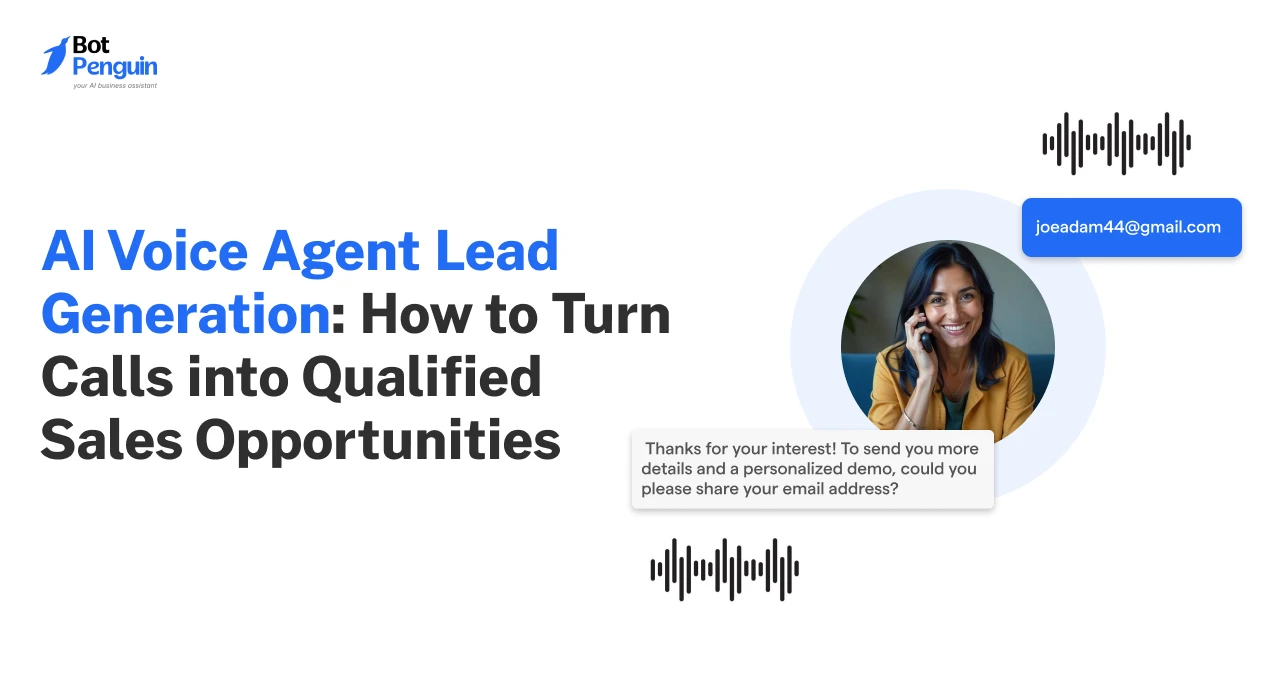
Every missed call can become a missed sales opportunity.
Prospects often reach out when their interest is strongest. But delayed callbacks, weak sales follow-up, and inconsistent responses to inbound leads can push them away before a sales conversation starts.
That is why AI voice agent lead generation is gaining attention among sales and growth teams.
They can reach out to leads, answer calls, capture lead details, qualify interest, and guide prospects toward the next step.
This guide explains what lead generation AI voice agents are, how they help generate leads, common use cases, key benefits, and what businesses should understand before using them.
AI voice agents for lead generation are AI-powered calling systems that speak with prospects, collect lead details, understand intent, and support sales follow-up.
They work like sales voice agents, but their role starts before a human rep enters the conversation.
They help manage early-stage prospect engagement through automated sales conversations.
An AI voice agent can support lead generation by:
This makes lead capture calls more consistent. It also helps sales teams avoid depending only on manual availability during early sales conversations.
If you want to explore the broader role of AI agents in capturing and qualifying leads, go through our complete guide on AI agents for lead generation.
Now, let’s better understand the value of voice-led lead generating AI agents by breaking down how they help generate leads in the next section.
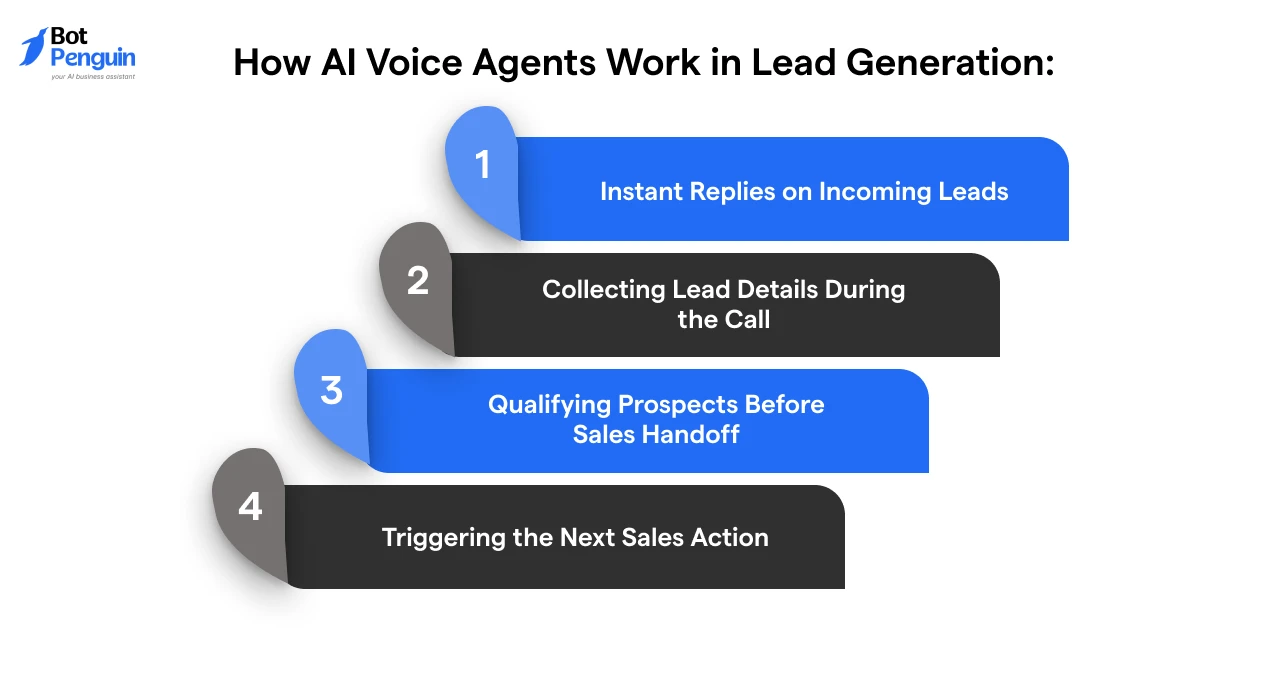
AI voice agents help generate leads by handling the initial steps of a sales conversation before a human rep gets involved. Businesses can also explore White-Label AI Voice Agents to offer branded lead generation voice automation at scale.
They follow a simple flow: respond while interest is active, collect useful lead details, qualify the prospect’s intent, and trigger the next sales action.
The steps below show how this flow turns call-based lead generation into a more structured process across inbound lead handling, outbound follow-up, and prospect qualification.
AI voice agents respond while the prospect has just reached out & still has active intent. They help sales teams act before the lead cools down by:
This is useful when prospects call after seeing an ad, visiting a pricing page, or searching for a service.
AI voice agents collect the basic information sales teams need before follow-up. During lead capture calls, a voice AI agent for lead capture can collect:
This makes lead information collection more structured. It also gives sales teams cleaner prospect details for the next conversation.
AI voice agents qualify prospects by asking simple questions about fit, intent, and readiness. They support AI voice agent lead qualification by identifying:
This helps separate casual inquiries from prospects closer to sales readiness.
AI voice agents move qualified prospects toward a clear next step. Based on the conversation, an AI voice agent can:
This helps businesses generate leads through AI voice agents without letting promising conversations end passively.
Now, the next section looks at common lead-generation use cases where this workflow applies.
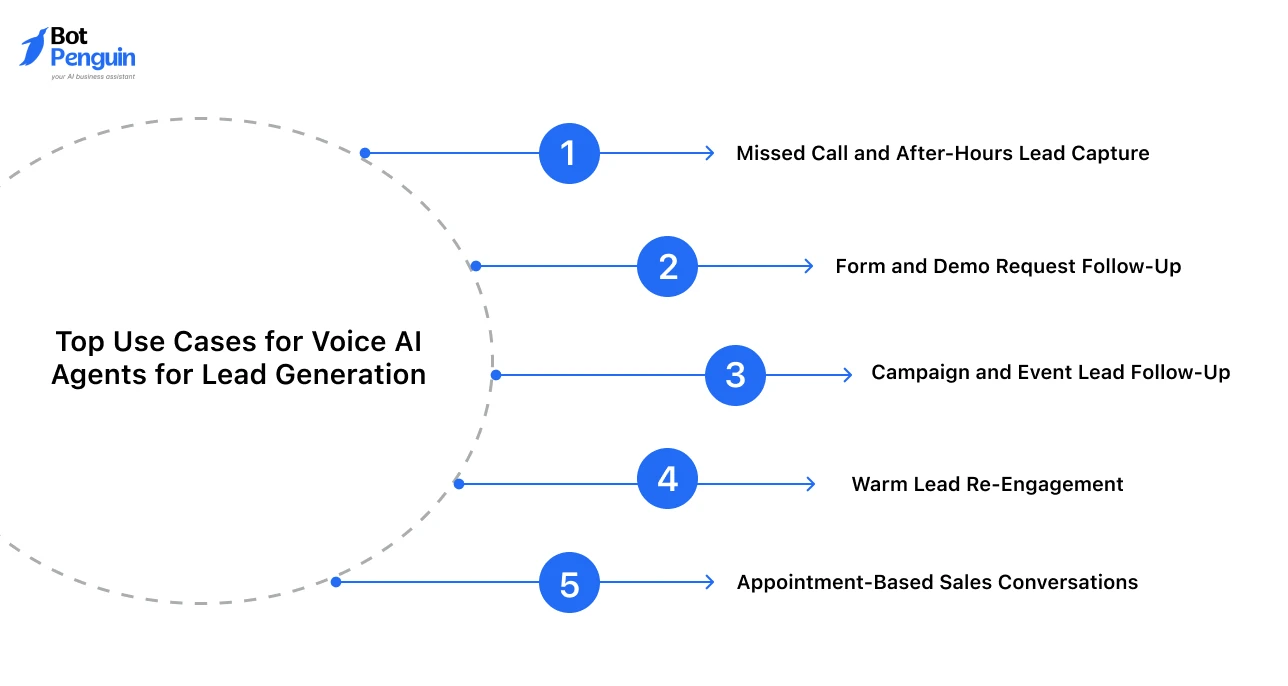
Lead generation AI voice agents are useful wherever prospects need a quick voice response, basic qualification, or a guided next step.
Their use is not limited to missed calls. They can support inbound sales calls, demo request follow-up, campaign outreach, warm lead re-engagement, appointment booking, and qualified lead routing.
The table below gives a quick view of where they fit before each use case is explained.
The text below explains how these use cases work in real lead generation workflows.
The focus is on early sales conversations where AI voice agents support speed, consistency, and follow-up quality.
AI voice agents capture leads when prospects call, but sales teams are unavailable. This fits businesses where inbound calls directly create a pipeline.
Below are the specific ways an AI voice agent supports lead capture:
Example: A home repair company receives a plumbing inquiry at 9 PM.
The AI voice agent responds, identifies the issue, confirms the urgency, and schedules a callback for the next morning.
Voice-led lead generation AI agents follow up with prospects after they submit a form or request a demo.
This connects digital interest with an actual sales conversation.
Here are the ways an AI voice agent helps turn forms and demo requests into qualified follow-up opportunities:
Example: A SaaS buyer fills out a demo form after viewing the pricing page.
The AI voice agent calls back, asks about team size and use case, then routes the lead for a product demo.
AI voice agents contact leads generated from campaigns, webinars, events, or downloads.
This helps sales teams filter large lead lists instead of treating every campaign response equally.
Below are the main ways an AI voice agent supports lead follow-up:
Example: After a webinar, the AI voice agent calls attendees, asks which topic interested them most, and identifies who wants a follow-up sales conversation.
AI voice agents reconnect with older leads that showed interest but went inactive.
This is useful when businesses have past inquiries, old demo requests, or inactive prospects sitting in their CRM.
Here are the ways an AI voice agent re-engages leads:
Example: A real estate agency has old buyer inquiries from three months ago. The AI voice agent calls them, checks if they are still searching, and flags active buyers for agents.
AI voice agents help move inquiry-based leads toward booked appointments.
This fits businesses where sales begin with a scheduled call, demo, estimate, or consultation.
Below are the ways an AI voice agent supports appointment-based lead generation:
Example: A clinic receives inquiries for cosmetic consultations.
The AI voice agent asks about the service of interest, checks preferred timing, and helps move the prospect toward a booked consultation.
AI voice agents route leads based on the prospect's next need. This helps businesses avoid sending every inquiry through the same follow-up path.
Here are the ways an AI voice agent supports lead routing and sales handoff:
Example: A B2B software prospect asks about enterprise pricing and integrations.
The AI voice agent captures the requirement and routes the lead to an enterprise sales rep instead of a general queue.
Across these use cases, the role of a voice-led lead-generating AI agent stays the same: reduce response gaps, capture cleaner lead context, and move interested prospects forward faster.
For example, a platform like BotPenguin helps you build voice AI agents that can handle lead follow-up, qualification, CRM sync, appointment booking, and sales routing through inbound and outbound calling workflows.
It also gives teams transcript visibility and performance tracking for calls, conversions, and drop-offs.
Next, let’s understand what sales and growth teams actually gain from using voice AI agents in their lead generation process.
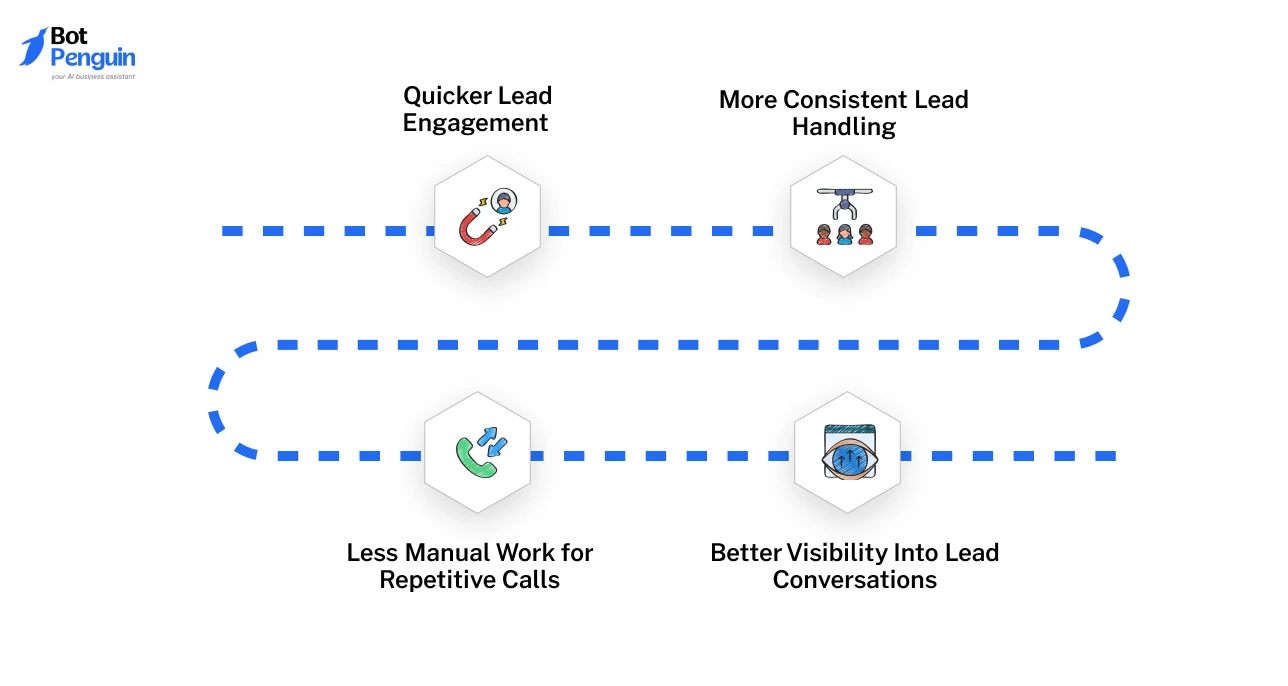
AI voice agents help teams respond faster, handle leads more consistently, reduce repetitive work, and improve visibility into prospect conversations.
These benefits are most useful when teams manage frequent calls, form fills, campaign leads, or appointment requests.
The table below highlights the key operational and sales benefits that businesses can gain from using AI voice agents in lead-generation workflows.
Now, let’s study in detail how each of these benefits improves sales workflows, lead management, and early-stage prospect engagement.
AI voice agents help businesses engage prospects before attention shifts elsewhere.
They can respond to inquiries instantly or continue the conversation with immediate callbacks.
This supports:
AI voice agents help teams handle lead conversations in a more structured and consistent way.
They can ask similar qualification questions across calls, so businesses collect the same important details from every prospect.
This helps sales teams compare lead quality more clearly by capturing:
This consistency supports stronger lead qualification for the sales and growth team.
AI voice agents lower repetitive calling and basic sales admin work.
An AI voice agent for sales automation can handle early-stage tasks that often slow reps down.
This includes:
This improves sales productivity without removing the human role from complex selling.
AI voice agents give sales teams clearer context before human follow-up. They can capture call summaries, lead notes, and prospect intent.
This improves:
Together, these advantages help businesses manage lead generation conversations more efficiently and consistently.
With these benefits clear, the next step is understanding what businesses should prepare before using voice-led lead-generating AI agents.
Businesses should understand that AI voice agents work best when the sales process, qualification rules, call goals, and review systems are clear.
A voice AI agent can support lead generation, but it should not run without structure.
The points below explain what businesses should be prepared with:
AI voice agents need clear qualification rules to identify which prospects are worth sales attention.
So, before using an AI voice agent lead qualification, businesses should define:
Without this clarity, the agent may collect information without helping sales teams prioritize leads better.
AI voice agents work better when each call has one clear purpose. For an AI voice agent for sales calls, the goal could be to:
Clear call objectives make conversation design simpler. They also prevent the agent from trying to handle too many outcomes in one call.
AI voice agents support early sales conversations, but humans still need to handle complex decisions. Sales teams should decide when a human rep should take over, especially for:
This keeps automation useful without removing sales judgment at the moments when it matters most.
AI voice agents should be monitored for consent, accuracy, lead data quality, and call performance. Businesses using voice agents should review:
These checks help teams use AI voice agents for sales automation responsibly.
With the right rules, review process, and call structure, AI voice agents can support lead generation without weakening trust or sales quality.
Still, many teams run into practical deployment issues after implementation.
The next section explores mistakes businesses make when deploying a voice AI agent for lead generation.
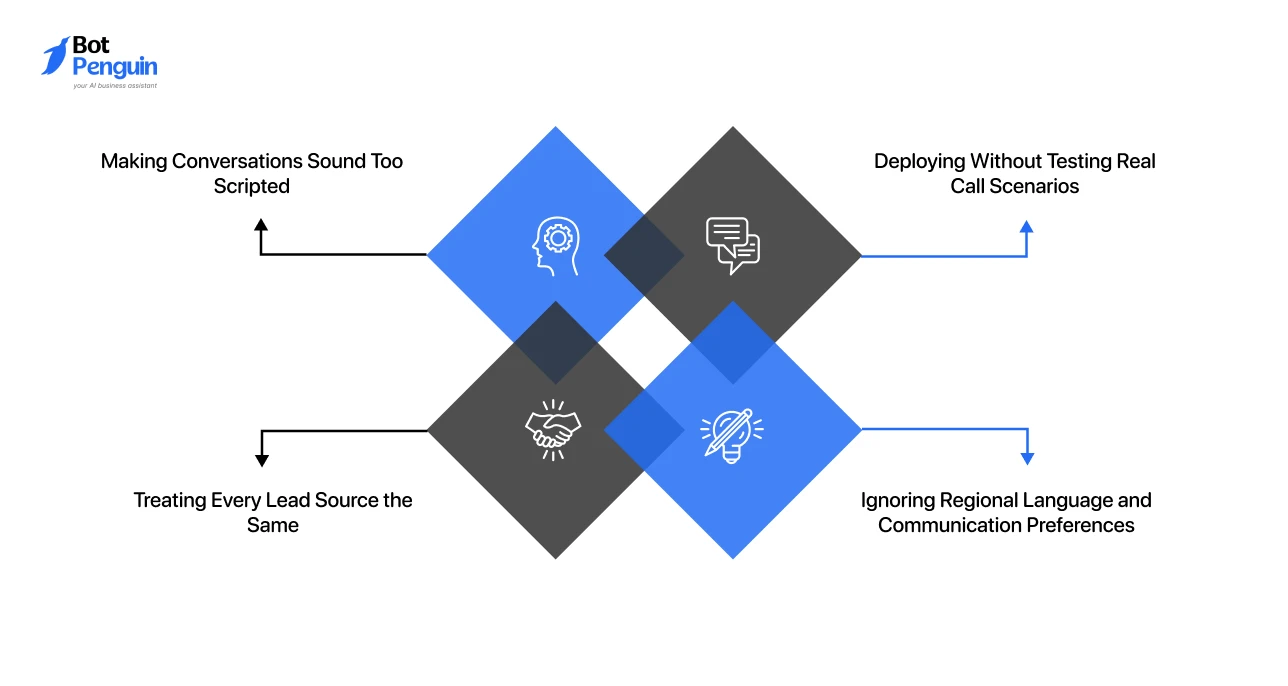
AI voice agents can effectively support lead generation, but deployment issues often arise when businesses focus solely on automation and overlook the conversational experience, workflow alignment, or operational readiness.
Below are some common challenges businesses should avoid during deployment.
AI voice agents can sound overly robotic or rigid during calls. This can make prospects disengage early, especially during sales-related conversations.
Solution: Use conversational call flows with natural pauses, flexible responses, and human-like transitions instead of heavily scripted interactions.
Teams sometimes launch voice AI workflows without testing how prospects respond in real conversations.
This creates friction during unexpected questions or interruptions.
Solution: Test workflows using real inquiry scenarios, objection patterns, and different conversation styles before scaling deployment.
Leads from ads, referrals, inbound calls, and webinars usually behave differently.
Using identical conversations across all sources can reduce the quality of engagement.
Solution: Adjust call flows based on where the lead came from and what level of intent they likely have.
Voice conversations depend heavily on tone, clarity, accents, and familiarity with the language.
Poor localization can affect trust and conversation completion rates.
Solution: Configure voice AI workflows to align with the audience’s preferred language, tone, and communication style.
Most of these deployment mistakes occur when businesses treat voice-led lead-generating AI agents as simple calling tools rather than conversational workflows.
Teams that focus on conversation quality, lead intent, and realistic sales interactions usually achieve stronger lead-generation outcomes.
AI voice agents for lead generation are becoming part of how businesses handle early sales conversations at scale.
Throughout this guide, we explored how they support missed-call recovery, lead follow-up, prospect qualification, appointment booking, and sales routing while helping teams respond faster and handle leads more consistently.
However, their role is not to replace sales reps. It is to reduce repetitive early-stage work and help teams focus more on qualified opportunities.
A lead-generation AI voice agent is an AI-powered system that speaks with prospects, captures lead details, qualifies interest, and supports follow-up via automated voice conversations.
AI voice agents answer calls, follow up with leads, collect prospect details, qualify intent, and guide prospects toward callbacks, demos, appointments, or sales conversations.
Yes. AI voice agents can qualify leads by identifying prospect intent, urgency, fit, and readiness before routing conversations to human sales teams.
No. They also support outbound lead follow-up, campaign outreach, warm lead re-engagement, appointment booking, and sales routing workflows.
No. They support early lead conversations and repetitive tasks, while human reps handle negotiation, relationship-building, pricing discussions, and complex sales decisions.
Businesses with high call volume, appointment-led sales, form-fill leads, or delayed follow-up workflows benefit most from voice AI agents for lead gen and sales.
Yes. Many platforms sync lead details, call summaries, appointment updates, and conversation history with CRM and sales workflows.
They answer inquiries instantly or trigger quick callbacks, helping businesses engage high-intent prospects before interest drops or competitors respond first.
Scale Leads with AI Voice Agents
Increase qualified sales conversations and provide faster follow-ups with BotPenguin's AI voice agent for lead generation.
Start FreeCheckout our related blogs you will love.
Updated at Oct 6, 2026
17 min to read
Updated at Sep 28, 2026
15 min to read
Updated at Sep 28, 2026
19 min to read
Updated at Sep 25, 2026
9 min to read
Updated at Sep 1, 2026
10 min to read
Updated at Jun 24, 2026
10 min to read
Table of Contents