


Chatbot Compliance in Financial Services: A Complete Guide
Updated at Oct 19, 2026
11 min to read
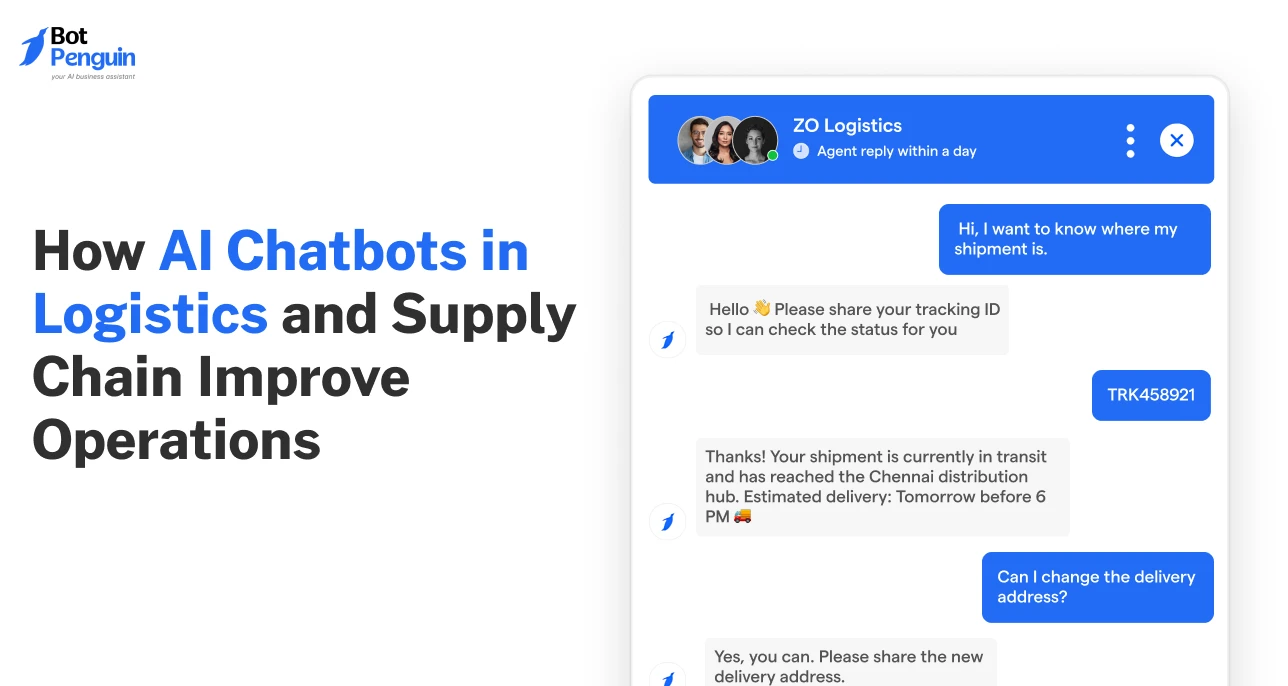
If logistics is the execution, then the supply chain is the system behind it... One miss, and your next critical order doesn’t come through.
Today, customers expect their goods to be delivered on time, yet many companies are falling behind in real-time coordination.
AI chatbots are changing this by bringing real-time answers and automation into everyday logistics work. They can track shipments, handle queries, and connect systems in a single conversation.
In this guide, we look at how AI chatbots in logistics and supply chain improve operations, lower manual effort, and streamline communication.
AI chatbots in logistics and supply chain are conversational tools that help businesses manage operations like shipment tracking, inventory updates, supplier coordination, and customer communication.
The real goal of these chatbots is to eliminate the communication lag that slows down logistics and supply chain operations.
Example: A procurement manager confirms a supplier shipment before a warehouse cut-off - no calls, no system logins. Just ask the chatbot, and it gives you the status, ETA, and flags instantly.
But AI chatbots for supply chain and logistics are not similar. Let’s find out how!
The real difference between an AI chatbot for supply chain and logistics lies in the scope of operations they're built to handle and the stakeholders they serve.
Here’s how to look at it in practice:
In short, think of a logistics chatbot as the last-mile communicator, and a supply chain chatbot as the end-to-end operations coordinator.
Want to build an AI chatbot for your logistics operations? BotPenguin helps you deploy intelligent chatbots that integrate with your TMS, ERP, and WMS - fast.
AI chatbots don't sit in one corner of your logistics operations. They plug into nearly every moving part.
Here's where they're making the biggest impact:
From the warehouse floor to the supplier portal, chatbots in supply chain management and logistics act as the connective tissue that keeps information flowing without delays.
In fact, the AI in the supply chain market is set to grow to USD 50.41 billion by 2032, and chatbots are one of the fastest-moving pieces of that shift. (Source: MarketsandMarkets)
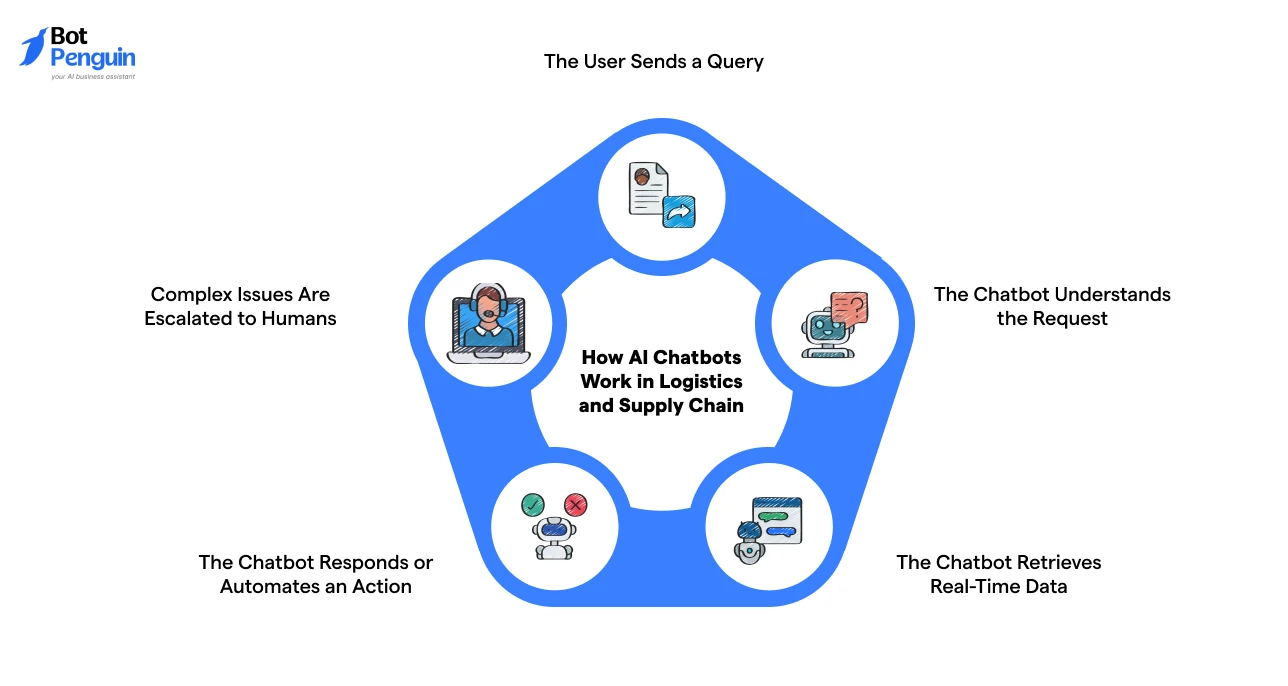
AI chatbots in logistics and supply chain follow a simple workflow. They receive a query, collect operational data, process the request, and either respond automatically or escalate it when needed.
Here’s how the process flow works:
This allows logistics and supply chain teams to improve response speed and keep operations running more smoothly.
AI chatbots support multiple logistics and supply chain workflows, from shipment tracking to supplier communication.
Here are the top use cases of AI chatbots in logistics and supply chain at a glance:
Each of these use cases has been explained hereunder:
AI chatbots provide real-time shipment visibility by sharing delivery status, ETAs, delays, and tracking updates instantly.
FedEx's AI virtual assistant, Nina, has handled Insights AI deploys over 30 AI agents across the shipment lifecycle and has reduced driver hold times by nearly 100%.
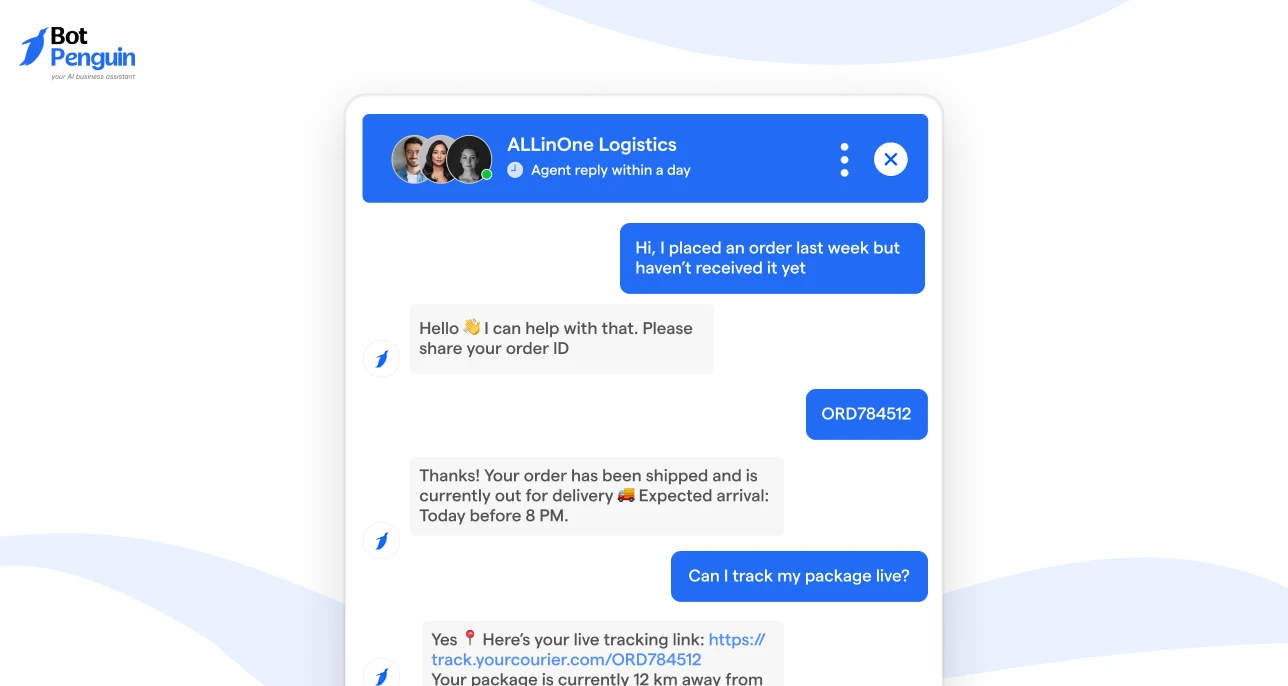
AI chatbots answer common customer questions related to shipping, delivery timelines, order status, and delays.
Think: Where is my order? When will it arrive? Why is my shipment delayed? - answered instantly, without a single support ticket raised.
Chatbots help warehouse teams check stock levels, inventory movement, and storage availability in real time.
AI chatbots improve coordination with drivers and carriers by sharing route updates, delivery instructions, and alerts.
A notable example is Samsara's AI Assistant that answers motor carriers' operations questions and uses AI actions to create training modules and flag critical risks like harsh braking or speeding.
Chatbots automate supplier communication for purchase orders, inventory requests, and procurement updates.
This helps procurement teams cut through the back-and-forth of emails and calls, sending PO confirmations, chasing delivery timelines, and flagging shortages.
AI chatbots help track order processing, fulfillment progress, and inventory availability across systems.
By doing so, these systems ensure that no order falls through the cracks.
Teams across procurement, warehousing, logistics, and support can use chatbots to share updates and coordinate tasks faster.
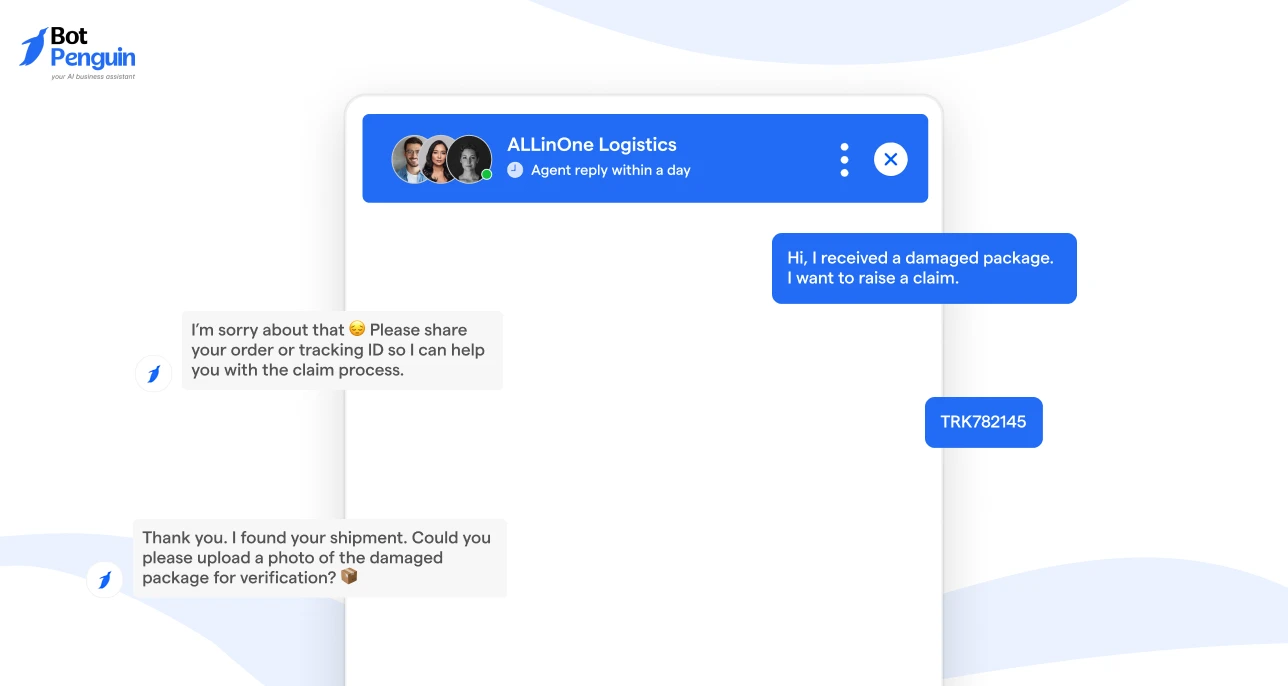
Chatbots simplify return requests, damaged shipment claims, and operational issue reporting through automated workflows.
These use cases don't operate in silos; they compound. The more workflows an AI chatbot touches across your logistics and supply chain operations, the greater the efficiency gains across the board.
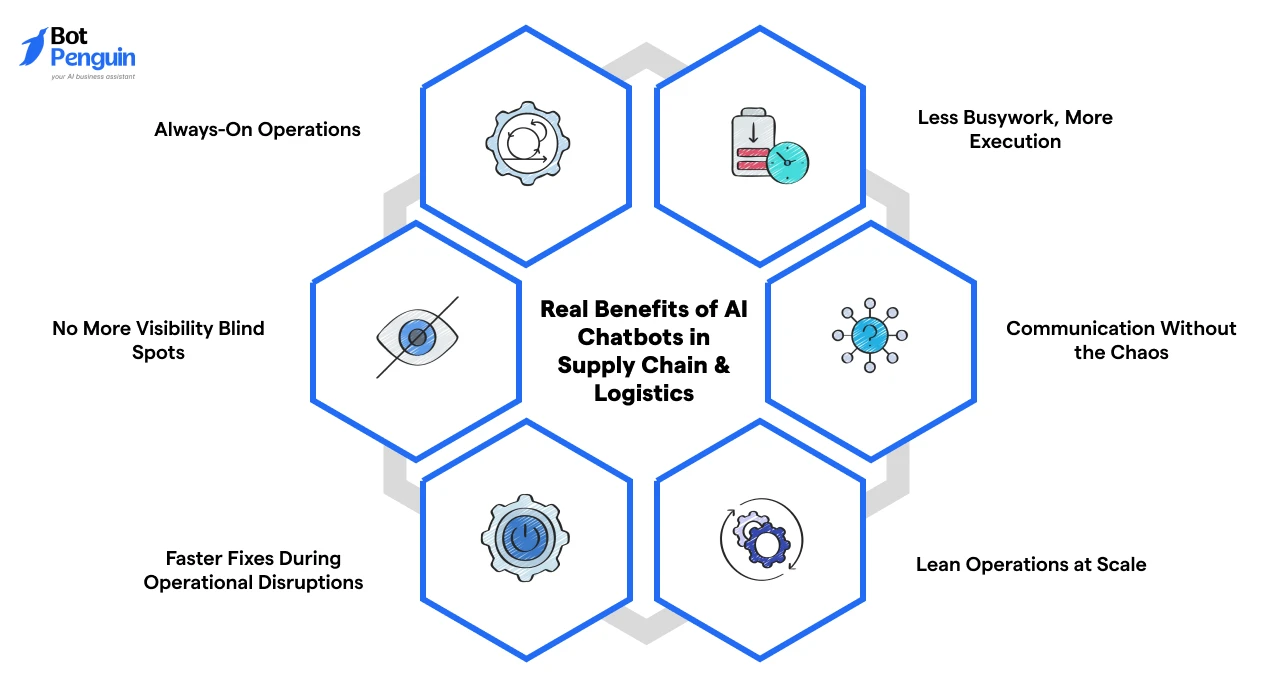
Faster shipments, fewer delays, and happier customers happen when the right information reaches the right person at the right time. That's exactly what AI chatbots are built to do.
Here are some of the biggest advantages businesses gain from using them:
As logistics operations become more complex, AI chatbots help businesses stay faster, more responsive, and easier to manage at scale.
While traditional systems like tracking portals and rule-based bots handle basic workflows, AI chatbots and AI agents support more intelligent and automated supply chain operations.
The table below showcases the distinctions between AI-powered chatbots and traditional systems:
If your team is buried in repetitive queries and your customers are still chasing updates, you don't have a logistics problem. You have a communication problem.
Thus, you should use AI chatbots when:
As logistics operations become more complex and real-time expectations continue to grow, AI chatbots help businesses move beyond static systems toward smarter and more connected operations.
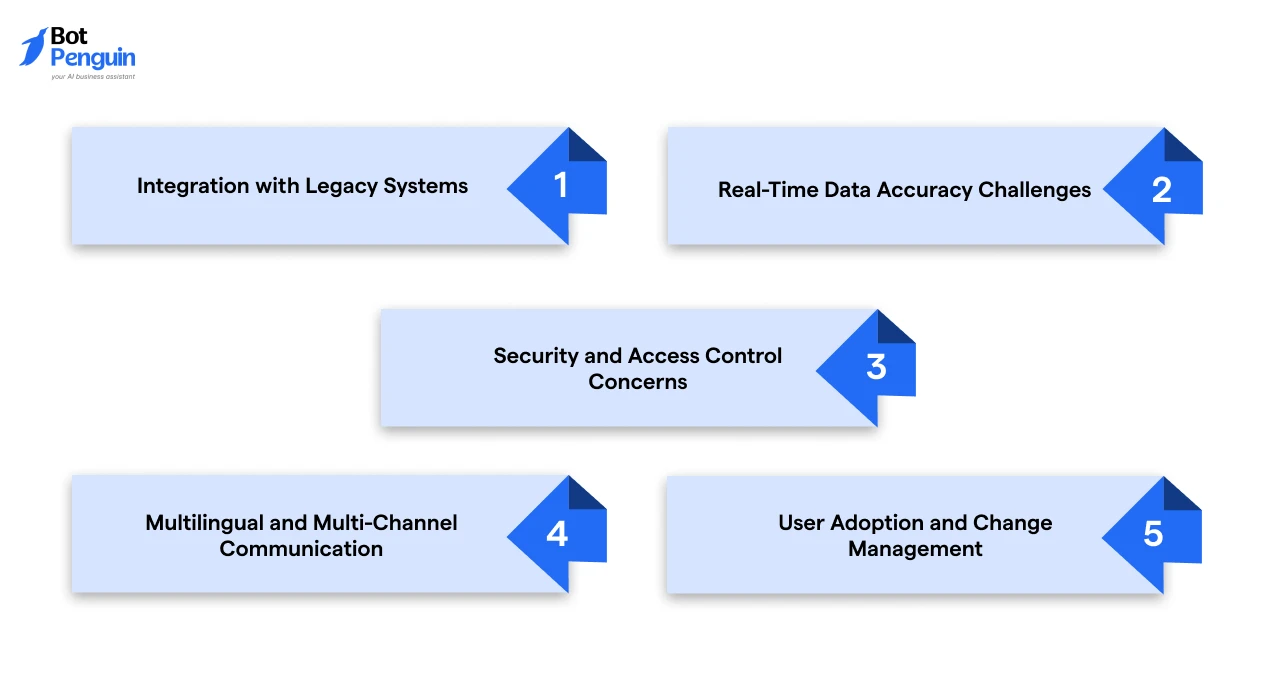
While AI chatbots improve operational efficiency, businesses can still face technical and workflow-related challenges during implementation.
The good news? None of these challenges is a deal breaker. With the right implementation approach, each one is manageable, and the operational gains on the other side far outweigh the friction of getting started.
Worried about implementation challenges? BotPenguin handles the heavy lifting. From legacy system integration to multi-channel deployment, our team builds logistics chatbots that are secure, scalable, and ready to go.
Implementing an AI chatbot in logistics starts with identifying operational gaps and connecting the chatbot to the right systems and workflows.
Here’s a quick implementation roadmap:
A structured rollout helps businesses improve adoption, decrease operational friction, and scale logistics automation more effectively.
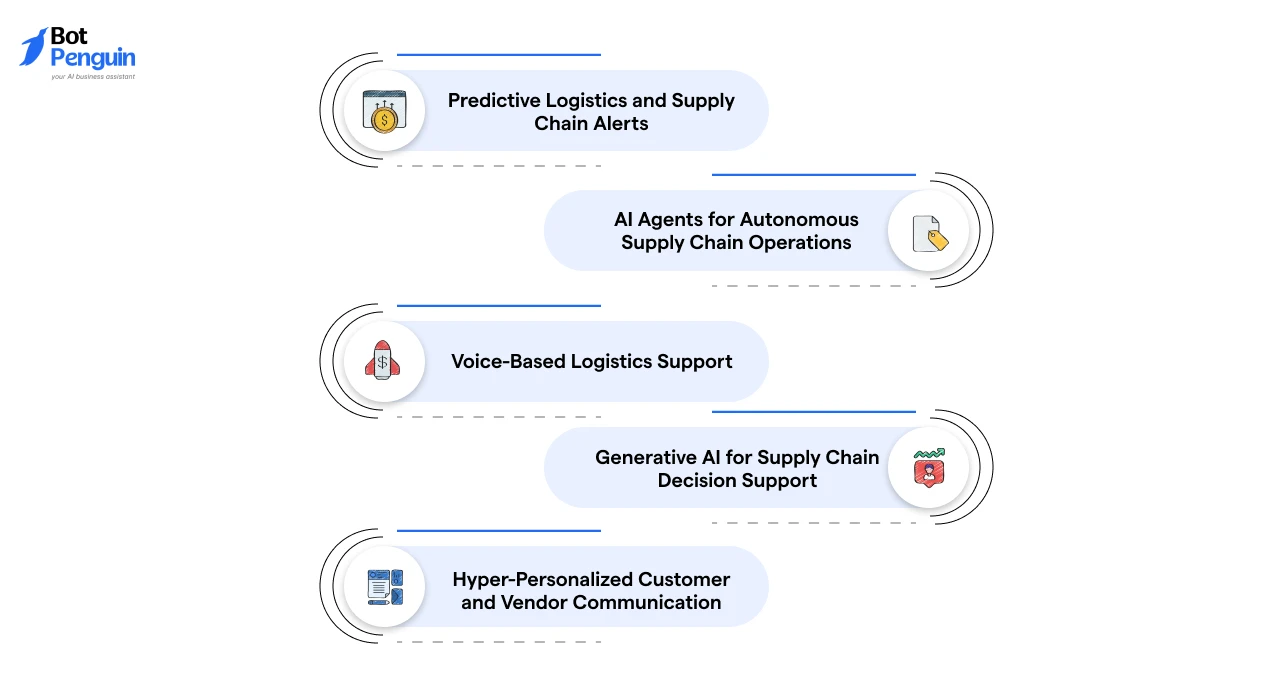
AI chatbots in logistics are evolving into proactive, autonomous systems that will redefine how supply chains operate.
Here’s how the future trends are shaping up:
Future chatbots won't wait for problems to surface. They'll flag delays, inventory shortages, and supplier risks before they impact operations.
In the days ahead, AI agents will independently execute tasks - rescheduling shipments, reordering stock, and reassigning drivers without human intervention.
Drivers, warehouse staff, and field teams will interact with logistics systems entirely through voice - hands-free, real-time, and fully integrated.
From demand forecasting to supplier negotiations, generative AI will surface data-backed recommendations that help logistics teams make faster, smarter decisions.
Every customer update and vendor interaction will be tailored: right tone, right channel, right time, driven entirely by AI.
Logistics moves fast, but manual processes slow everything down. Delayed updates, repetitive queries, and poor coordination create problems across the supply chain.
AI chatbots for logistics help fix this by bringing faster communication, real-time visibility, and automation into daily operations. They can handle shipment updates, support requests, inventory queries, and internal coordination without constant manual effort.
As logistics operations grow more complex, businesses need systems that respond faster and scale easily. AI chatbots are quickly becoming an important part of modern logistics and supply chain management.
AI chatbots in logistics automate shipment updates, delivery communication, support queries, and operational coordination using conversational AI and real-time logistics data.
Logistics chatbots improve response speed, reduce manual coordination, automate repetitive workflows, and provide real-time visibility across shipments, inventory, and operations.
Yes. AI logistics chatbots connect with tracking systems and provide live shipment updates, ETAs, delivery alerts, and delay notifications automatically.
Logistics chatbots focus on transportation and delivery workflows, while supply chain chatbots cover procurement, inventory planning, supplier coordination, and broader operational processes.
Yes. AI chatbots can integrate with ERP, WMS, TMS, CRM, and inventory systems to retrieve and automate operational data in real time.
Yes. Small logistics businesses use AI chatbots to automate support, improve customer communication, reduce manual workload, and scale operations more efficiently.
AI chatbots improve operational visibility, automate repetitive tasks, speed up communication, reduce delays, and help supply chain teams respond faster to issues.
Subscribe to Our Newsletter
Get the latest business insights straight into your inbox.
Checkout our related blogs you will love.
Updated at Oct 19, 2026
11 min to read

Updated at Oct 14, 2026
11 min to read
Updated at Oct 14, 2026
10 min to read
Updated at Oct 14, 2026
10 min to read
Updated at Oct 13, 2026
11 min to read
Updated at Oct 9, 2026
10 min to read
Table of Contents

