Chatbots for Travel and Tourism: Use Cases, Benefits & How They Work
Updated at Oct 14, 2026
11 min to read
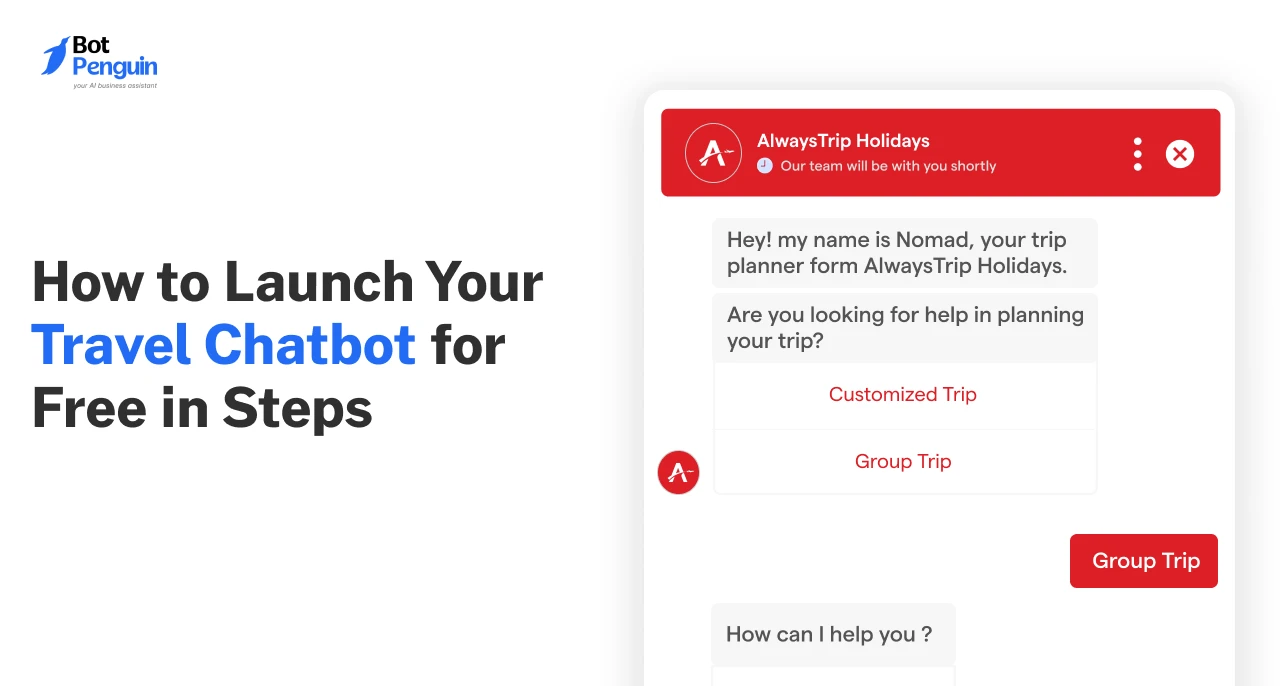
Launching a travel chatbot is straightforward when you follow a clear process. Choose the right platform, define one use case, configure workflows, connect key channels, test booking and support journeys, then go live and improve it using real conversation data.
Most travel businesses don’t lose customers because of poor service. They lose them because they respond too late.
Today’s travelers expect instant replies, quick recommendations, and smooth booking experiences. When that doesn’t happen, they move on to the next option. This is where automation tools like AI chatbots come into play.
Chatbots are no longer just support tools. They handle inquiries, guide users, assist with bookings, and stay available around the clock. For travel businesses, this shift is not optional anymore. It is becoming the standard.
This guide walks you through how to launch a travel chatbot in a practical, step-by-step way, so you can streamline operations and capture more bookings without adding complexity.
If you’re ready to explore a solution, see how travel chatbot software for agencies, hotels, and tour operators supports bookings, lead capture, and traveler support.
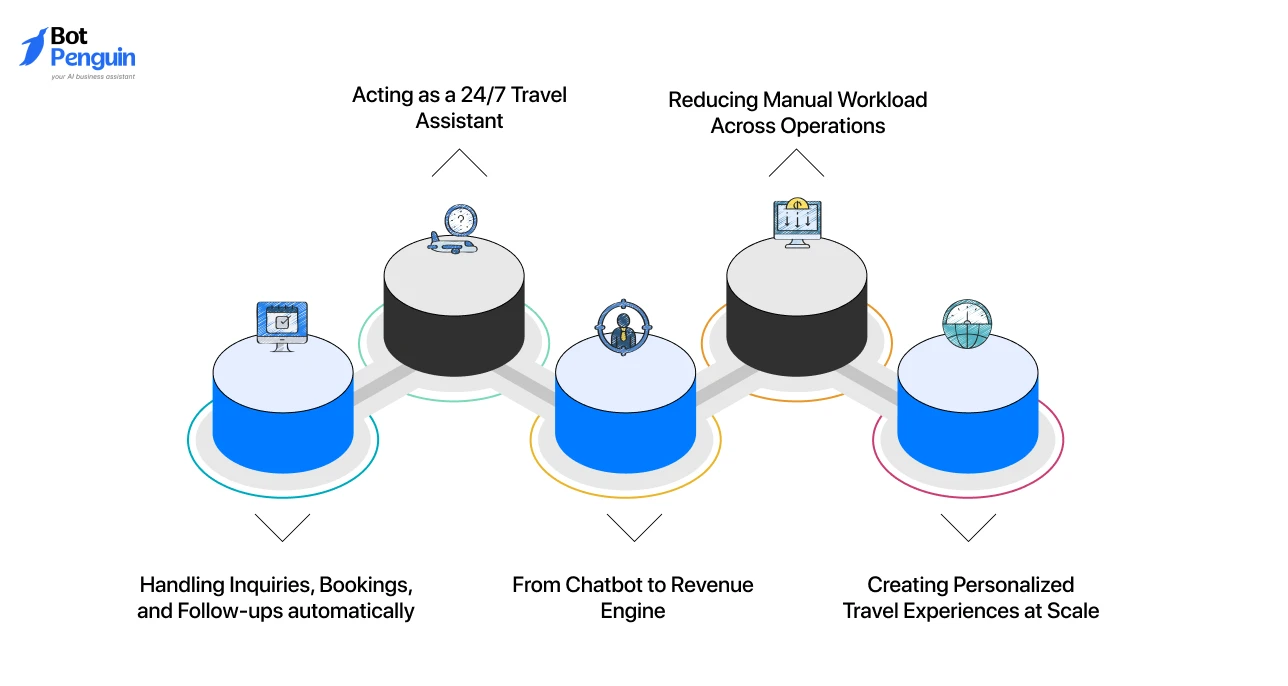
Most travel businesses assume chatbots are just for answering basic queries. In reality, they sit at the center of how modern travel operations run, from first inquiry to final booking and beyond.
Every travel inquiry has an intent behind it. A chatbot captures that instantly, responds within seconds, and guides the user toward the next step without delays.
It can answer destination questions, suggest packages, check availability, and even assist with bookings. After that, it continues with confirmations, reminders, and follow-ups, ensuring no lead goes cold.
For example, a travel agency using a chatbot on its website can convert late-night visitors into confirmed bookings without any human involvement.
Travel decisions don’t follow business hours. Users search, compare, and book at any time, often across different time zones.
A chatbot stays available throughout. It handles queries, shares recommendations, and supports users even when your team is offline.
This constant availability directly impacts conversions. Businesses that respond within minutes are significantly more likely to convert leads compared to those that respond hours later.
A well-designed chatbot does more than assist. It actively drives revenue by guiding users toward decisions.
It can recommend higher-value packages, suggest add-ons like insurance or activities, and re-engage users who didn’t complete a booking.
Think: A travel company offering curated itineraries can use a chatbot to upsell premium experiences based on user preferences, increasing average booking value without manual effort.
Handling repetitive queries takes up a large portion of a travel team’s time. A chatbot removes this burden by automating common interactions.
It filters serious leads, answers frequent questions, and routes only high-intent users to human agents. This makes the team more efficient without increasing headcount.
Agencies that automate early-stage conversations often see faster response times and better resource allocation.
Travel is personal. Users expect recommendations that match their budget, interests, and timeline.
A chatbot can collect preferences through simple conversations and tailor suggestions in real time. It remembers user behavior and improves responses over time.
For example, someone planning a honeymoon receives a very different journey compared to a solo backpacker, even when both start with the same question.
Most travel businesses think setting up a chatbot is complicated. It is not. You can get a working chatbot live faster than setting up a new landing page. This is possible with chatbot building platforms.
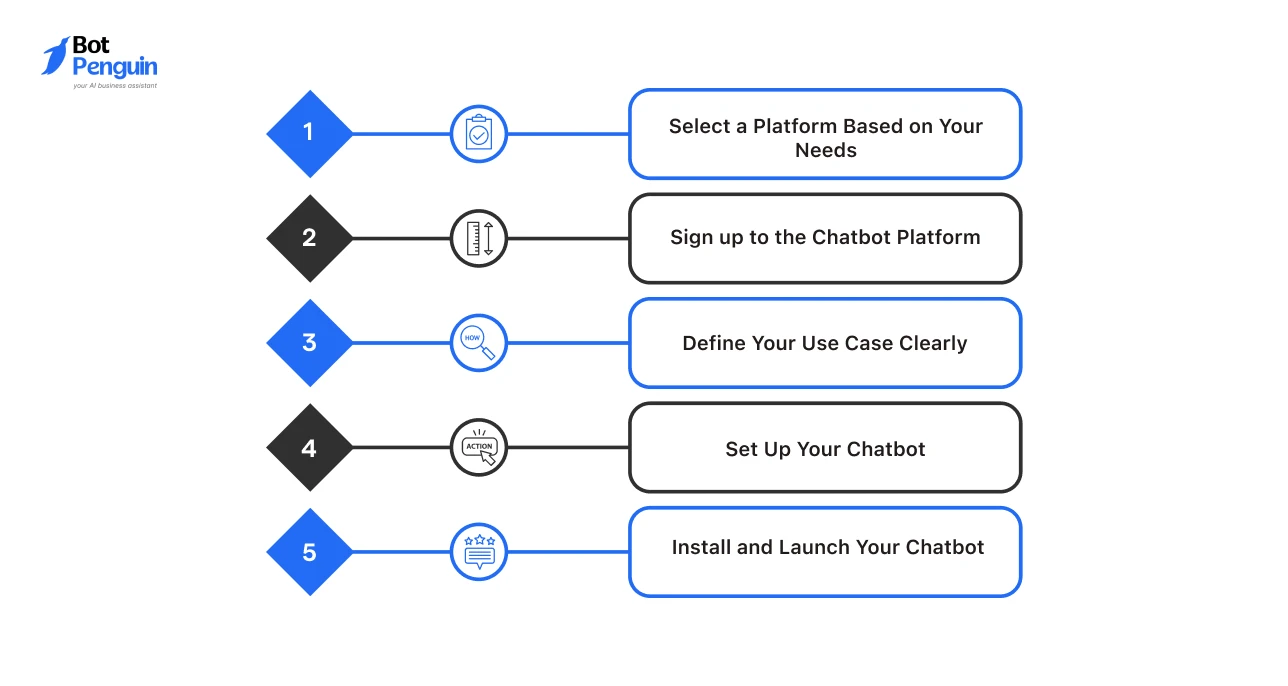
The table below showcases a simple step-by-step process to launch your travel chatbot from scratch without technical complexity.
You do not need to compare dozens of tools. Just pick a platform that already supports travel use cases.
Look for basic features such as website integration, WhatsApp support, and simple automation. If these are covered, you are ready to move ahead with automating a travel business.
Start by creating an account on the selected chatbot platform. It takes a few minutes, and you do not need any technical setup.
Once inside, you get a ready dashboard where you can start building immediately. This is the easiest way to build your own AI travel agency chatbot without writing code.
Do not try to automate everything at once. Start with one simple goal.
This could be answering travel inquiries or helping users choose packages. Clear use cases make launching a travel chatbot faster and more effective.
Most agencies start with handling inquiries and expand later.
Now comes the actual setup, and it is simpler than expected.
Add a few common questions your customers ask. Set responses or use AI to automatically handle them. You can also guide users toward booking options.
Think of it like writing a conversation, not building software.
Once ready, place the chatbot on your website or connect it to WhatsApp or Instagram.
Test it once, make small fixes, and go live. That is it.
This is how to launch your travel chatbot simply. You start small, keep improving, and gradually scale as your business grows.
For a channel-specific setup, see how a WhatsApp chatbot for travel and hospitality can support traveler inquiries, booking updates, and customer communication.
At this point, once your chatbot is live and handling real interactions, the next step is understanding the impact it can create for your travel business.
Most travel businesses lose revenue due to delayed responses and manual processes. Adopting AI chatbots helps improve speed, efficiency, and decision-making across operations.
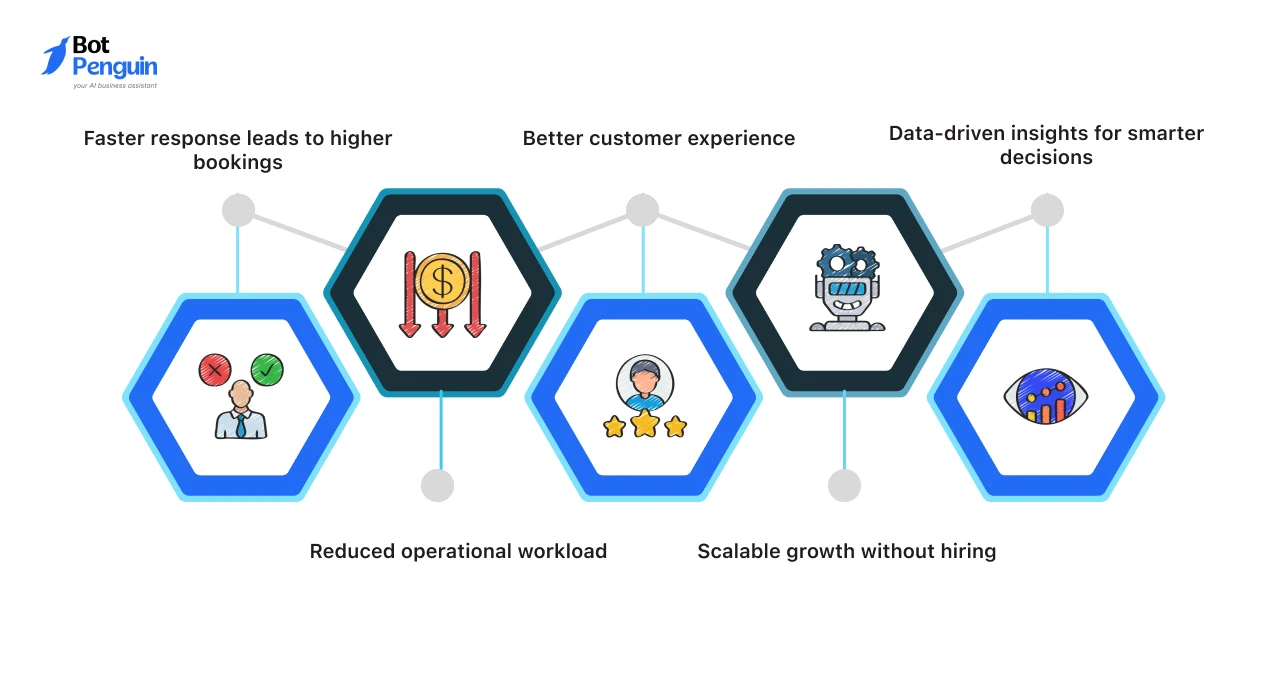
Here are the top benefits you can expect from deploying your own AI chatbots for travel websites and apps:
These benefits make AI chatbots a practical step for travel businesses looking to improve efficiency, increase bookings, and scale operations without adding complexity.
At the same time, even a well-built chatbot can fail to deliver results if common setup mistakes are not addressed early.
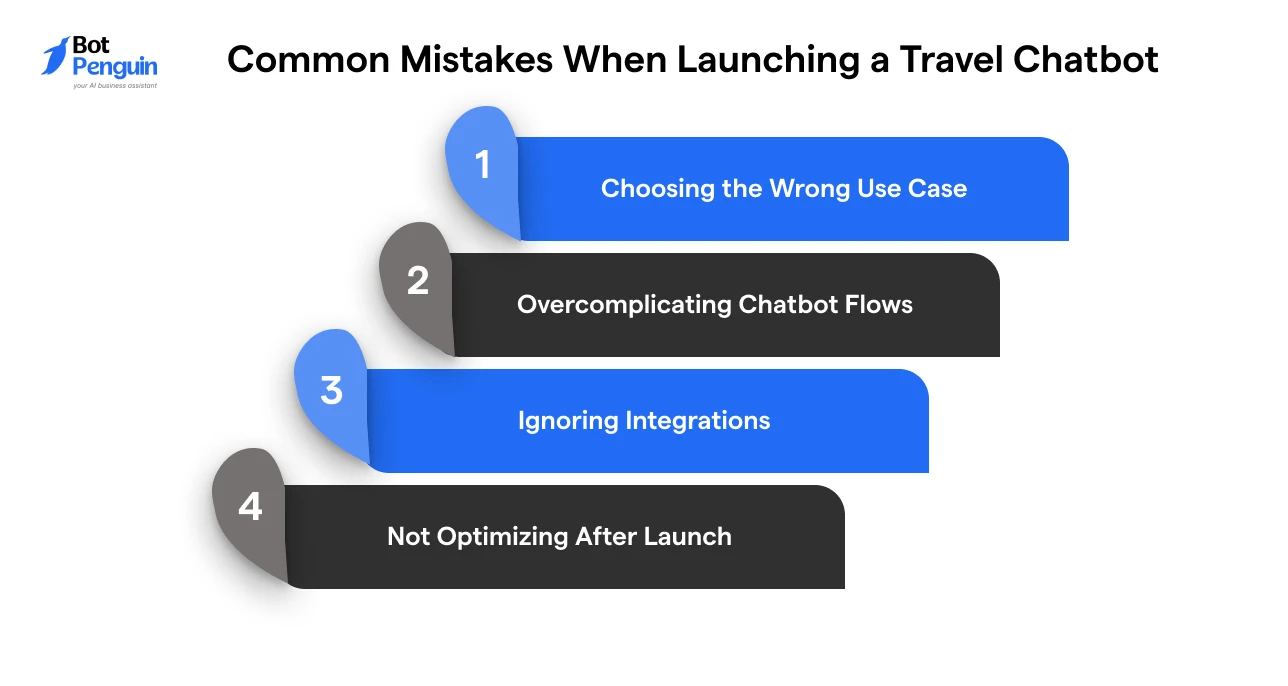
Most travel chatbots fail not because of the tool, but because of poor decisions during setup.
Avoiding the following mistakes can make a direct difference in results when launching a travel chatbot.
Many businesses try to automate everything at once. This leads to confusion and poor performance.
Solution: Start with one clear goal, like handling inquiries or assisting bookings. Focused use cases deliver better results and are easier to manage.
Transforming travel agencies with chatbot systems usually begins with a single high-impact function and expands gradually.
Complex flows make chatbots hard to use. Too many steps or options frustrate users and reduce engagement.
Solution: Keep conversations simple and direct. Let users reach answers or actions quickly without unnecessary steps.
When you build your own AI travel agency chatbot, think of it as a natural conversation, not a complicated system.
A chatbot without integrations works in isolation. It cannot connect with your booking system, CRM, or payment tools.
This limits its ability to convert leads or manage customers effectively. Integrations turn a basic chatbot into a working business tool.
Solution: Connect your chatbot with CRM, booking systems, and payment tools from the start to ensure smooth data flow and complete customer journeys without manual intervention.
In automating a travel business, connecting systems makes the entire process seamless.
Launching the chatbot is only the first step. Many businesses stop there and miss out on opportunities for improvement.
Solution: User behavior shows what is working and what is not. Regular updates help improve responses, flows, and conversions over time.
Companies using AI in the travel business treat chatbots as evolving systems, not one-time setups.
By avoiding these challenges early on, it becomes easier for you to launch a travel chatbot that actually drives bookings, improves customer experience, and scales with your business.
At this stage, it’s also worthwhile to look at the costs and timelines involved in launching a travel chatbot for your business goals and operational scale.
Cost is often the biggest hesitation for travel businesses. Many assume it requires a large budget, but the reality depends on how you choose to build and scale your chatbot.
Based on the different kinds of development involved, here’s what to consider:
No-code platforms are the fastest and most affordable way to get started. You pay a monthly subscription based on the features and usage you select.
Most tools range from $20 to $200 per month, depending on automation, integrations, and AI capabilities. This makes it ideal for businesses starting with automating a travel business without a heavy investment.
A small agency can launch and test a chatbot within days at a very low cost.
Custom-built chatbots require developers, design, and infrastructure. This significantly increases the cost.
Development can range from $3000 to $15000 or more, depending on complexity, integrations, and AI capabilities. It also takes weeks or months to go live.
This option is usually chosen by large companies deeply investing in AI in the travel business for long-term scalability.
The initial setup is not the only expense. Ongoing costs can affect your overall investment.
These include API usage, platform upgrades, maintenance, and integrations with tools like CRM or booking systems. Marketing and optimization efforts also add to the cost over time.
When launching a travel chatbot, planning for these hidden costs ensures you avoid surprises and scale smoothly.
The platform you pick decides how fast you launch and how far you can scale. Choosing the right approach early helps avoid delays and rework later.
Before committing, filter any tool against these five non-negotiable features:
If a platform meets all five, it is enough to launch. Missing even one can slow down performance and limit results.
Your approach depends on your stage and resources.
If you have time to learn and experiment, self-serve tools can help you get started at a low cost. This works well when you are still testing and validating your setup.
If you are running a growing travel business and need a system that works from day one, working with a partner ensures proper setup, integrations, and performance.
A simple rule applies: Build it yourself when validating. Work with a partner when scaling.
If you want a faster way to go live with a fully functional chatbot, platforms like BotPenguin provide ready setups, integrations, and multi-channel deployment designed for real business use cases. This makes it easier to move from setup to results without delays.
Most chatbot tools focus on features. BotPenguin focuses on outcomes.
Here’s how it helps you launch and scale a travel chatbot without complexity:
This combination of features makes it easier to set up, manage, and scale a travel chatbot without adding technical complexity or operational overhead.
Instead of juggling multiple tools or relying on heavy development, you get a streamlined way to launch quickly, test what works, and improve continuously as your business grows.
Travel businesses that respond faster win more bookings. That shift is already happening, and chatbots are becoming a standard part of how modern travel operations run.
If you are planning to improve response time, capture more leads, and streamline bookings, starting with a chatbot is a practical step. The process is no longer complex or expensive, especially with no-code platforms available.
The key is to start simple, focus on one use case, and improve based on real user interactions. This is how most businesses successfully move toward automating a travel business without disrupting existing operations.
You can customize chatbot responses based on business type by training it with specific services, packages, and workflows. This ensures relevant interactions, whether you run tours, hotel bookings, or full-service travel agencies.
Yes, small travel businesses can start automation using lightweight tools and scale gradually. Starting with limited automation use cases helps control costs while still improving efficiency and response times.
A chatbot can handle high volumes of inquiries during peak seasons without delays. This ensures consistent response times and prevents missed opportunities when demand suddenly increases.
Yes, chatbots can be trained for niche segments like adventure travel, luxury trips, or honeymoon planning. This allows businesses to offer highly tailored experiences to specific customer groups.
Chatbots handle real-time conversations and decision-making, unlike traditional tools that focus on backend processes. This makes them more effective for customer-facing interactions and lead conversion.
BotPenguin supports industry-specific workflows and integrations that align with travel operations. This makes it easier to manage inquiries, bookings, and customer interactions within a single system.
Most no-code platforms allow setup within a few hours to a few days, depending on the complexity of use cases and integrations required.
Subscribe to Our Newsletter
Get the latest business insights straight into your inbox.
Checkout our related blogs you will love.
Updated at Oct 14, 2026
11 min to read
Updated at Oct 14, 2026
10 min to read
Updated at Sep 25, 2026
14 min to read
Updated at Oct 19, 2026
11 min to read
Updated at Oct 14, 2026
10 min to read
Updated at Oct 13, 2026
11 min to read
Table of Contents