How to Add a Chatbot to Your Website: A Complete Step-by-Step Guide
Updated at Oct 6, 2026
17 min to read
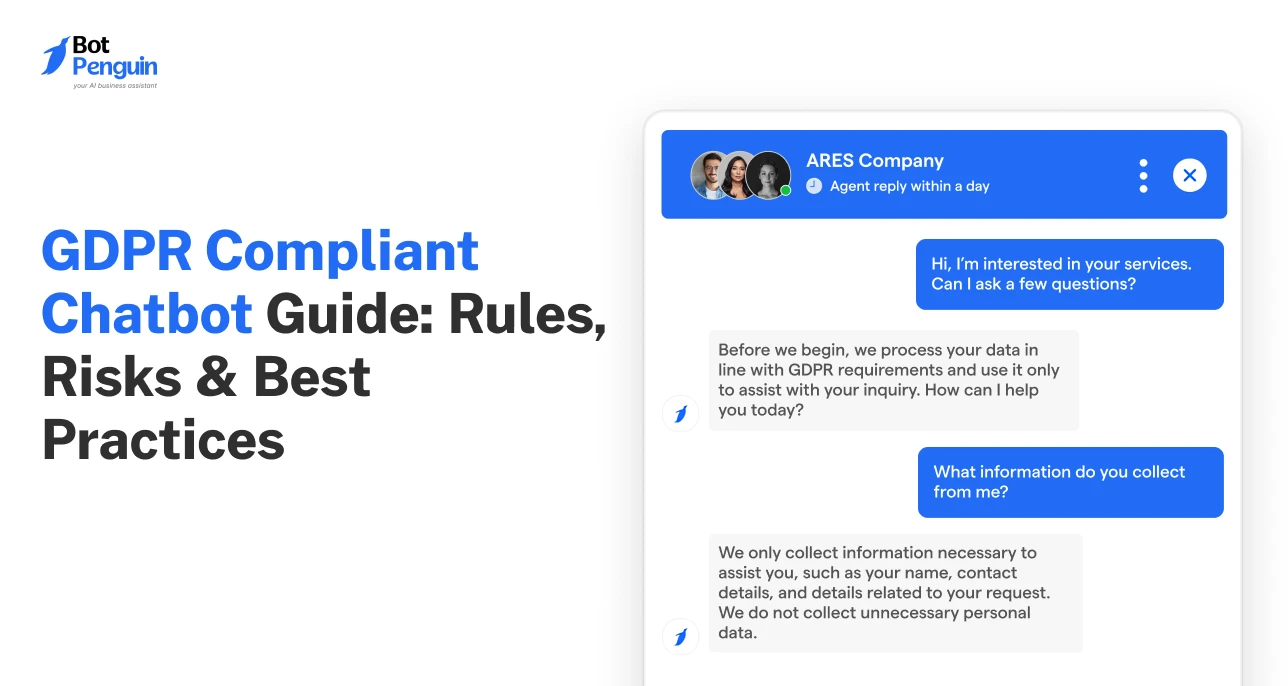
A chatbot can collect personal data faster than a form.
Names, emails, phone numbers, order IDs, support details, IP addresses, and chat transcripts can all become part of a customer conversation.
That makes chatbot GDPR compliance important for any business, especially those serving users in the EU.
A GDPR-compliant chatbot must collect, process, store, and delete user data in accordance with GDPR principles.
These include lawful processing, transparency, data minimization, purpose limitation, security, user rights, and accountability under Article 5 of the GDPR.
This guide explains what a GDPR chatbot is, how GDPR applies to chatbot conversations, what risks to avoid, and which controls matter before you launch or choose chatbot software.
A GDPR-compliant chatbot is a chatbot that handles personal data lawfully, transparently, securely, and only for defined purposes as specified in the General Data Protection Regulation.
It tells users what data is collected, limits unnecessary collection, protects conversations, and supports access, correction, deletion, and consent withdrawal.
In contrast, a non-compliant chatbot may ask for personal details without context, store chat histories indefinitely, send data to third-party tools without proper agreements, or use conversations for AI training without clear disclosure.
A GDPR-compliant chatbot addresses these risks by building privacy controls directly into the conversation flow. For example, it may:
However, compliance also depends on connected systems.
CRM software, helpdesk tools, analytics software, AI model providers, and data storage systems can all affect chatbot GDPR compliance.
Any business that uses chatbots to collect, store, or route personal data from EU or EEA users should ensure GDPR compliance.
This can include companies outside Europe if they offer goods or services to people in the EU/EEA or monitor their behavior online.
Small businesses should not ignore GDPR either. A simple chatbot that collects email addresses for support, demos, newsletters, or WhatsApp follow-up still processes personal data.
The goal is simple: the chatbot should help users without collecting more personal data than needed or using it in unexpected ways.
Chatbot GDPR compliance is important because conversations often include identifiable or sensitive customer data.
If that data is collected without a lawful basis, stored too long, shared without clarity, or exposed through weak controls, the business may face legal, financial, and trust risks.
Example: A support chatbot that collects emails and later adds those users to marketing campaigns without separate consent can create purpose limitation issues.
For serious GDPR violations, penalties can reach up to €20 million or 4% of annual worldwide turnover. (Source: European Commission)
Thus, chatbot GDPR compliance matters because it helps businesses:
This matters most in data-sensitive industries like healthcare, finance, insurance, education, ecommerce, and recruitment, which benefit greatly from compliant, structured workflows.
A platform like BotPenguin can support structured chatbot workflows through no-code flow building, required fields, live chat handoff, lead capture, integrations, unified inbox, and analytics.
These capabilities can help teams keep customer conversations more controlled when paired with clear consent, privacy, vendor, access, and retention policies.
Next, let’s look at the GDPR requirements that apply before chatbot data is collected, stored, processed, or shared.
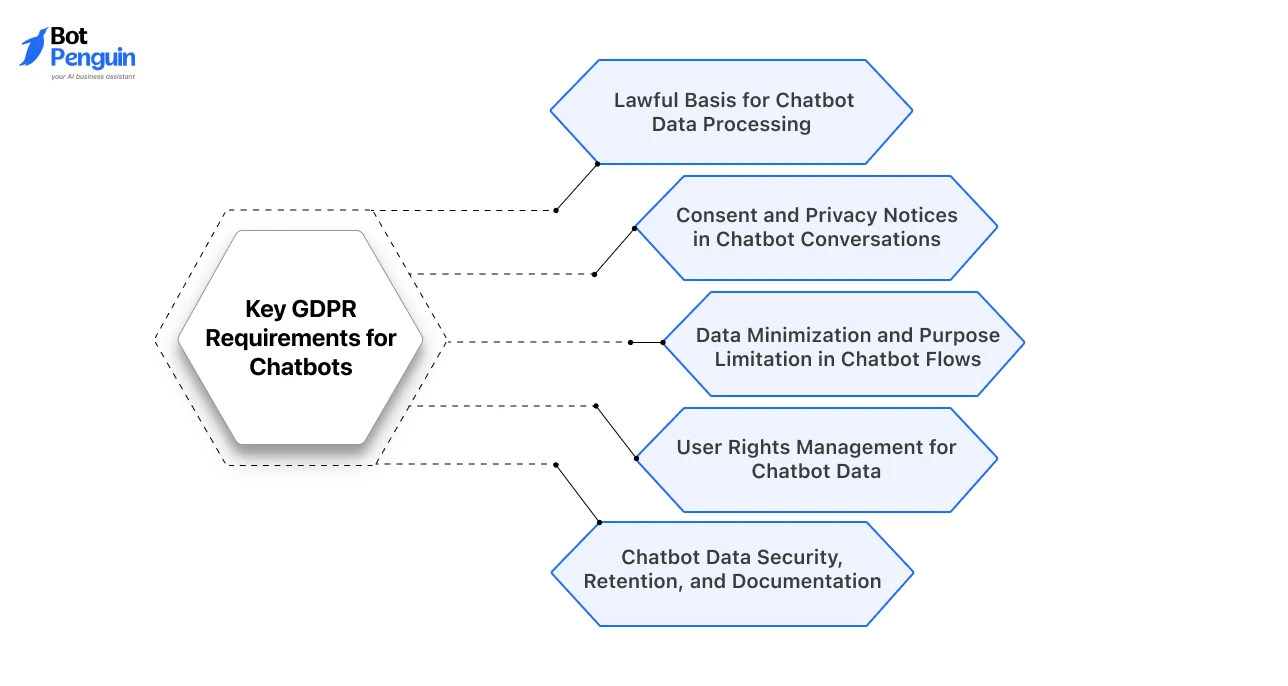
The most important GDPR requirements for chatbots are lawful basis, consent, transparency, data minimization, user rights, security, retention, documentation, and vendor accountability.
Let’s look at each of these one by one:
Every chatbot workflow needs a lawful basis before it processes personal data.
GDPR Article 6 lists lawful bases for processing, including consent, contract, legal obligation, public interest, vital interests, and legitimate interests.
Common chatbot processing scenarios include:
The chosen basis should be documented before launch.
Consent should be specific, informed, and freely given when the chatbot collects data for marketing, profiling, optional cookies, or sensitive workflows.
A short privacy notice should explain what data is collected, why it is collected, how long it is stored, whether it is shared, and how users can exercise their rights.
A simple chatbot notice can say: “We use this chatbot to answer your questions and may process the details you share. Read our Privacy Policy before continuing.”
For AI chatbots, the notice should also explain when users are interacting with automated software instead of a human.
A GDPR compliant chatbot should collect only the data needed for the stated purpose. For instance:
Data collected for one purpose should not automatically be reused for another.
A user who shares an email for support has not automatically agreed to promotional messages.
GDPR gives users rights over their personal data. These include access, correction, deletion, portability, objection, restriction, and withdrawal of consent.
A chatbot GDPR compliance workflow should make these requests easy to start. The chatbot can route privacy requests to legal, support, CRM, or ticketing software.
Chatbot data must be protected against unauthorized access, loss, alteration, and disclosure.
GDPR Article 32 requires appropriate technical and organizational measures, including encryption, disaster recovery, and regular testing for the effectiveness of security controls.
Security controls should include:
Retention also matters. Chat logs, leads, tickets, and consent records should be stored only as long as needed for their purpose.
Documentation should include data maps, lawful basis records, consent logs, retention rules, DPA records, DPIA records where needed, and security controls.
A Data Protection Impact Assessment may be needed when chatbot processing is likely to create high risk, especially for sensitive data, AI profiling, large-scale processing, or automated decisions.
GDPR Article 35 sets out the requirements for DPIA for high-risk processing.
Chatbot widgets may also create issues with cookie consent. If the widget uses non-essential cookies for analytics, personalization, retargeting, or session monitoring, consent may be needed before those cookies load.
The next section turns these requirements into a practical pre-launch review via a GDPR chatbot compliance checklist.
A GDPR-compliant chatbot checklist helps teams review legal, technical, and operational controls before launch. Here’s what you should check in practice:
This checklist works as a launch review. Legal owns the compliance basis, Product owns workflow design, Security owns safeguards, and Marketing or Support owns user-facing communication.
Once the checklist is clear, the next step is to understand the GDPR considerations relevant to AI-powered chatbots.
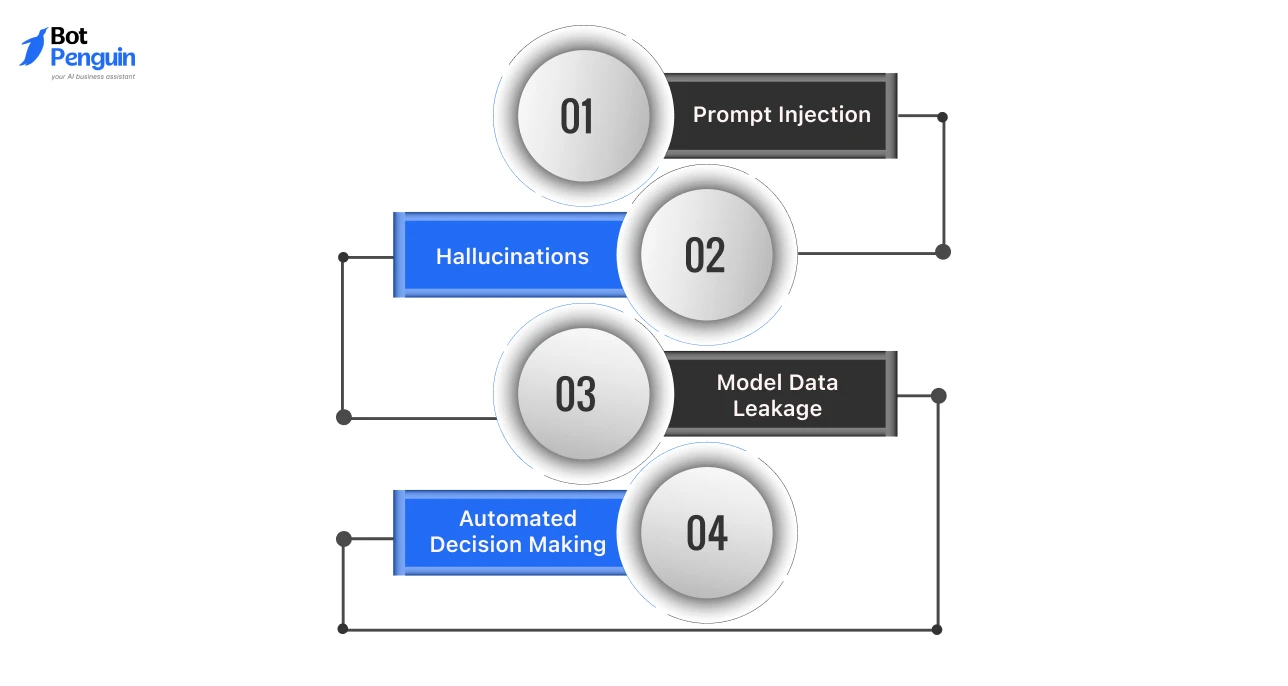
AI chatbots need extra GDPR review because they process free-form text, generate answers, summarize conversations, and may connect to external models.
A GDPR-compliant AI chatbot should control for prompt injection, hallucination, data leakage, and automated decision-making risks.
Prompt injection happens when users try to make an AI chatbot ignore instructions or reveal restricted information.
Reduce risk with input validation, strong system rules, tool access limits, output filtering, adversarial testing, and human approval for sensitive actions.
AI chatbots can produce incorrect answers, especially in finance, healthcare, insurance, legal, and public-sector workflows.
Use approved knowledge sources, confidence rules, and human escalation for sensitive or uncertain queries.
Model data leakage can happen when personal data is sent to external AI models without review.
Check DPA terms, sub-processors, processing locations, training settings, deletion rights, retention terms, and redaction controls.
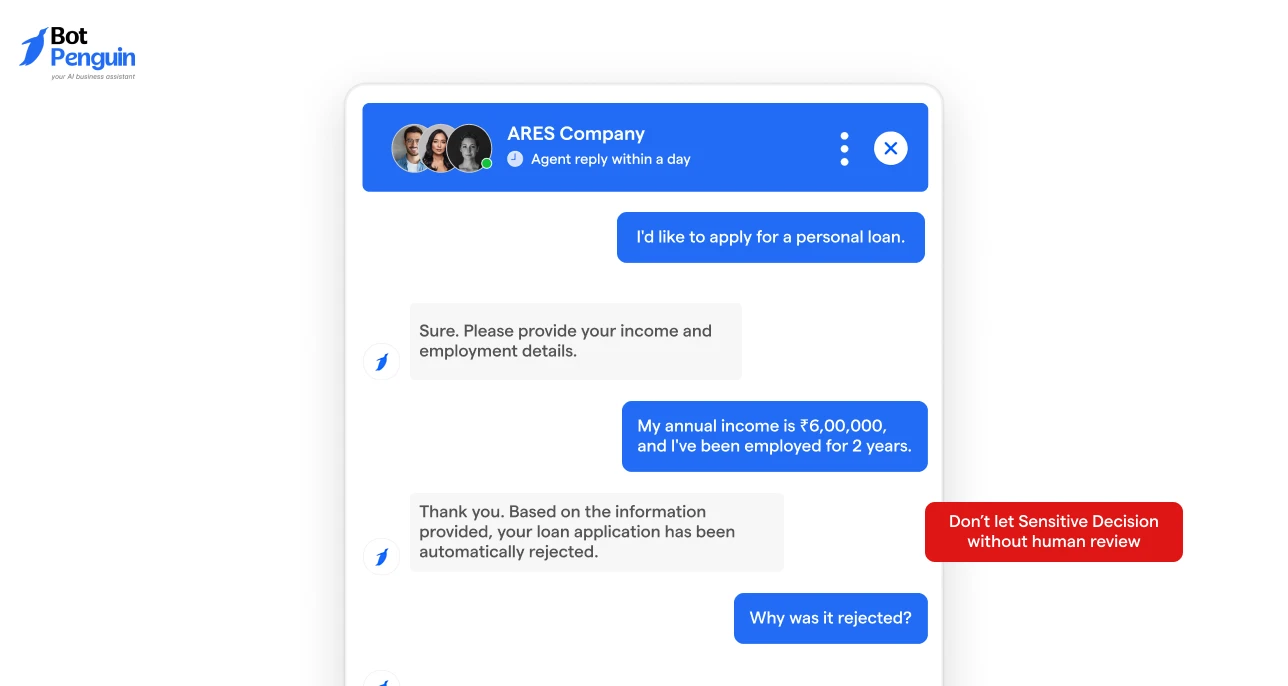
GDPR Article 22 applies when solely automated decisions create legal or similarly significant effects.
Chatbots should not independently approve loans, reject candidates, deny insurance, or make healthcare decisions without safeguards and human review.
At this stage,it’s worthwhile to identify the common GDPR risks associated with chatbots that cause non-compliance issues.
The biggest GDPR chatbot risks come from unclear consent, excessive data collection, weak vendor controls, long retention, and AI data handling.
These risks increase when chatbots connect to CRM, helpdesk, analytics, or external AI model software. Here’s what you should avoid:
A simple FAQ chatbot carries less risk than a chatbot that verifies identity, recommends loans, screens candidates, or handles health information.
The Bottom Line: The chatbot workflow should be structured before it goes live to reduce privacy, security, and compliance risks.
A chatbot becomes GDPR-compliant when its data collection, consent, storage, security, vendor management, and deletion workflows comply with GDPR principles.
Use these steps as a practical baseline:
1. Map chatbot data flows: Identify what data is collected, where it is stored, who can access it, and which tools receive it.
2. Define the lawful basis: Document whether each workflow uses consent, contract, legitimate interest, or another GDPR basis.
3. Add privacy notices: Tell users what data is collected, why it is collected, and how it will be used before they share personal details.
4. Collect only necessary data: Use structured fields, dropdowns, multiple choice replies, validation rules, and restricted file uploads to avoid unnecessary free-text collection.
5. Set retention rules: Decide how long chat logs, leads, tickets, consent records, and support conversations are stored.
6. Enable user rights: Create workflows for access, correction, deletion, export, consent withdrawal, and privacy team escalation.
7. Review vendors: Check the DPA, sub-processors, AI training policy, data location, data retention terms, and deletion support.
8. Secure integrations: Limit access to CRM, helpdesk, analytics, calendar, payment, and AI models to only the data each tool needs.
9. Test before launch: Verify consent capture, privacy notice visibility, deletion workflows, data exports, access control, human handoff, lead routing, and CRM sync accuracy.
Following these steps, businesses in regulated regions can deploy GDPR-aligned chatbot workflows with reduced compliance risk.
GDPR compliance looks different across industries because each chatbot collects different types of personal data.
The stricter the data sensitivity, automation level, and business impact, the stronger the controls should be.
Here’s how to look at it in practice:
The key point is that GDPR compliance should match the chatbot’s actual risk level.
A simple FAQ chatbot may need a lighter review, while healthcare, finance, recruitment, and AI-driven workflows need stricter controls before launch.
A GDPR compliant chatbot provider should support your data protection duties beyond the chat interface.
The provider should offer clear DPA terms, sub-processor details, data hosting information, deletion support, and transparent AI data policies.
Ask these vendor questions before signing:
A DPA, or Data Processing Agreement, should define the processing purpose, duration, data categories, controller rights, processor duties, sub-processor rules, user rights support, breach notice, deletion, return of data, and audit support.
GDPR Article 28 covers processor obligations under data processing agreements.
Data hosting also matters. If chatbot data moves outside the EU or EEA, the business must check whether valid transfer safeguards apply.
GDPR Article 44 sets out the conditions for international transfers designed to prevent EU data protection standards from being undermined.
Platforms like BotPenguin help teams build GDPR-compliant chatbot workflows with required fields, live chat handoff, integrations, and unified inbox controls when paired with clear privacy, access, and retention policies.
GDPR-compliant chatbots will need stronger privacy, security, and AI governance controls as automated conversations become more advanced.
The EU AI Act, entered into force on August 1, 2024, requires stronger governance of AI systems and imposes transparency obligations when users interact with them in certain contexts.
Thus, future-ready chatbot software will need clear AI disclosure, better consent controls, stronger audit logs, and data minimization by default.
It should also support human review, AI risk monitoring, approved knowledge sources, prompt testing, vendor transparency, and clear model training policies.
For businesses, AI chatbot governance should go beyond a privacy notice.
Teams may need escalation rules, audit logs, prompt review, and documentation showing how chatbot risks are monitored over time.
A GDPR-compliant chatbot should make privacy part of the user journey, not an afterthought.
Every conversation should have a clear purpose, limited data collection, secure handling, and a reliable path for users to access, update, or delete their information.
The strongest approach is to keep chatbot GDPR compliance practical.
Map the data, collect only what is needed, show clear notices, review vendors, secure integrations, define retention, and keep humans available for sensitive conversations.
As AI chatbots become more common, privacy-first design will become a stronger business advantage. Businesses can get a compliant website chatbot to support automated conversations while keeping privacy, transparency, and user control at the center.
Users expect fast automated support, but they also want transparency and control over how their information is collected and used.
Therefore, review chatbot flows regularly, update vendor checks, monitor AI risks, and keep privacy controls aligned with real customer conversations.
A GDPR compliant chatbot processes personal data lawfully, transparently, and securely while supporting access, correction, deletion, consent withdrawal, and data portability rights.
Consent is required for marketing, profiling, optional cookies, and the collection of sensitive data. Some support workflows may use contract or legitimate interest.
The biggest risks include unclear consent, excessive data collection, weak retention rules, unsafe integrations, AI data exposure, and automated decisions without review.
It should explain the data collected, the purpose, the lawful basis, the retention period, third-party sharing, AI provider use, user rights, and privacy contact details.
Only with a valid lawful basis, clear disclosure, vendor controls, and purpose review. Many businesses should disable training on customer conversations.
Yes, if the widget uses non-essential cookies for analytics, tracking, personalization, advertising, or behavioral monitoring before the user gives consent.
Build GDPR-Ready Chatbot Workflows With BotPenguin
Add consent steps, privacy notices, required fields, and live chat handoff to customer conversations. Discuss your chatbot use case and get guidance on structuring safer GDPR-aware workflows.
Get Started Now!Checkout our related blogs you will love.
Updated at Oct 6, 2026
17 min to read
Updated at Sep 28, 2026
15 min to read
Updated at Sep 28, 2026
19 min to read
Updated at Sep 25, 2026
9 min to read
Updated at Sep 1, 2026
10 min to read
Updated at Jun 16, 2026
10 min to read
Table of Contents