


Best AI Chatbot Affiliate Programs for High Commissions
Updated at Oct 23, 2026
14 min to read
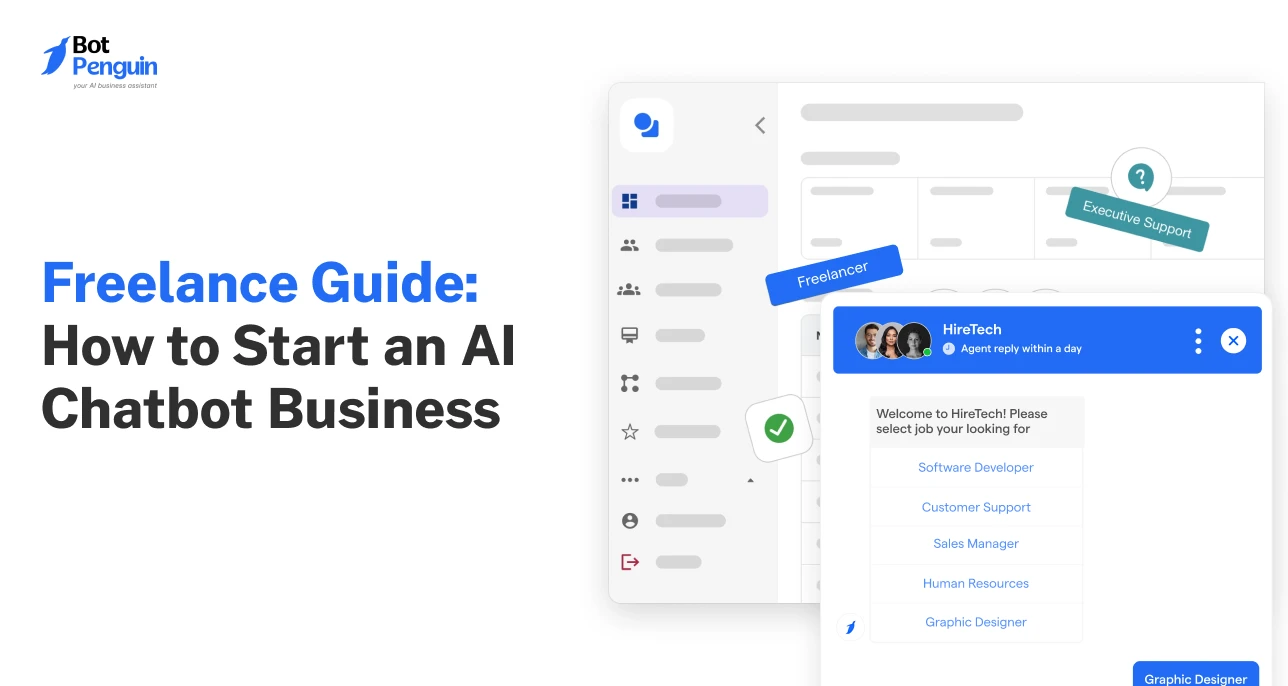
AI chatbot services are becoming one of the fastest-growing freelance AI businesses.
Today, companies and small businesses want automated customer support and are actively looking for AI-powered chatbot solutions for websites, WhatsApp, Instagram, and ecommerce stores.
That creates a huge opportunity for freelancers and agencies selling chatbot services.
In this guide, you’ll learn how to start selling chatbots as a freelancer, price custom chatbot services, get your first clients, and scale into a profitable AI chatbot agency with recurring monthly revenue.
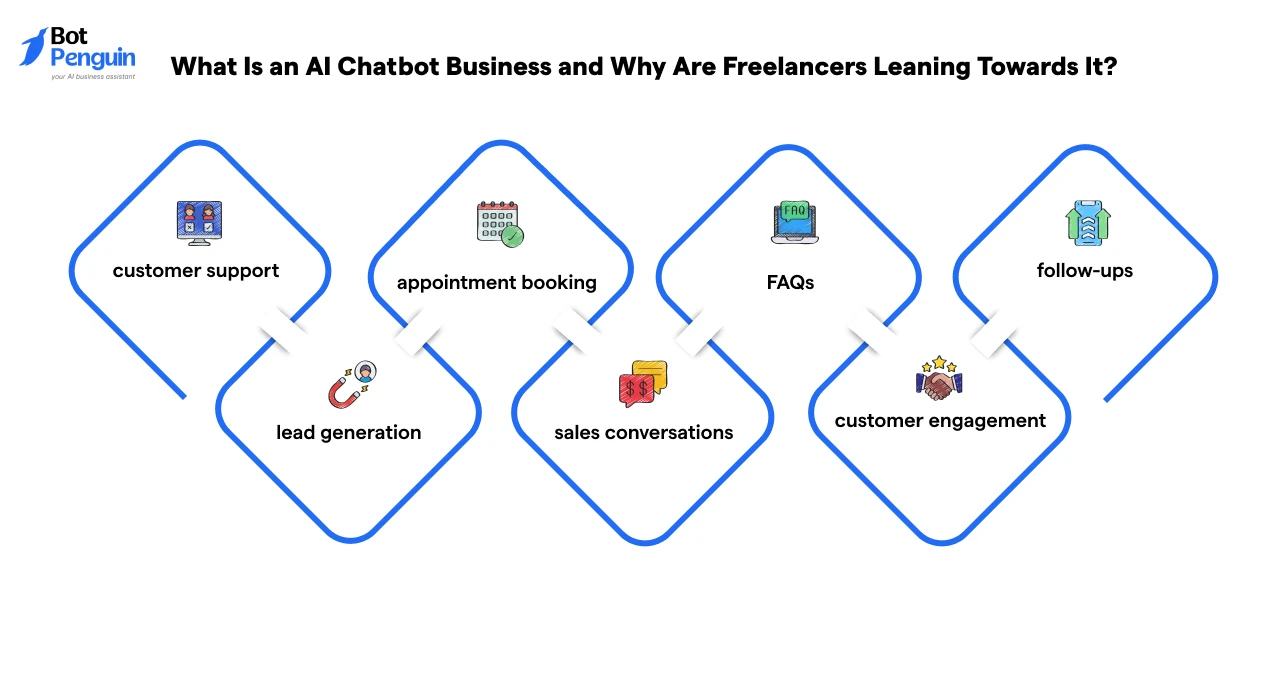
An AI chatbot business is a service-based business where freelancers create, customize, and manage AI-powered chatbots for companies. These chatbots can be used across websites, WhatsApp, Instagram, Messenger, ecommerce stores, and other customer communication channels.
Freelancers are leaning towards this business model because companies increasingly want automation without hiring large support teams or investing in complex software development.
Small businesses especially need faster replies, better lead capture, automated booking, and 24/7 customer support.
Similarly, AI chatbots help businesses automate:
The goal is to help businesses reduce manual work, improve response speed, capture more leads, and increase customer conversions.
Most businesses are not looking for complex AI systems. They want practical chatbot solutions that improve sales, customer support, or lead generation quickly.
Here’s what the freelancers are actually selling:
Platforms like BotPenguin make it easier for freelancers to start and scale an AI chatbot business without building software from scratch.
With white-label chatbot solutions and reseller partner programs, freelancers and agencies can offer AI chatbots, WhatsApp automation, and customer support solutions under their own brand while earning recurring revenue.
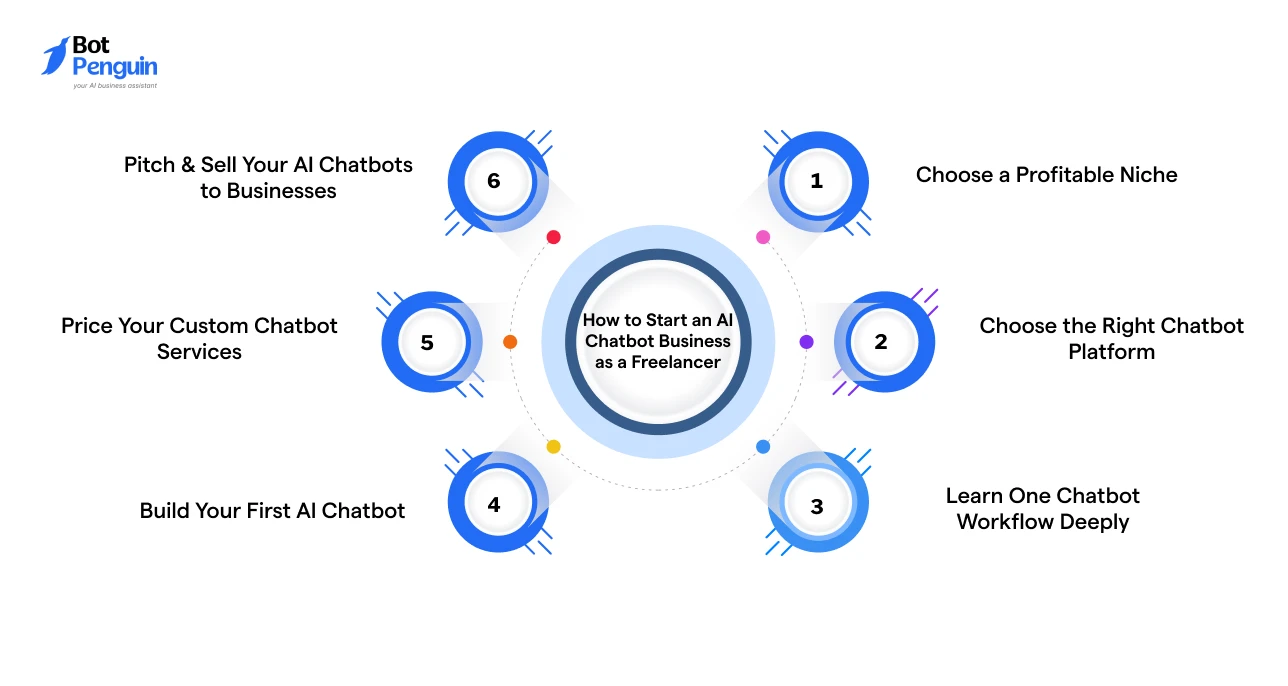
Starting a freelance AI chatbot business involves choosing the right niche, services, tools, and client acquisition strategy.
Follow these given steps to get started:
The fastest-growing chatbot freelancers focus on one niche first. This makes it easier to understand customer problems, create better workflows, and sell chatbot services more confidently.
Some industries adopt chatbot automation faster because they receive repetitive customer inquiries daily. Clinics and dental practices are a strong example, many are replacing manual front-desk workflows with an AI receptionist that handles appointment scheduling, call answering, and patient FAQs around the clock.
Pricing varies based on chatbot complexity, WhatsApp automation, integrations, AI training, number of workflows, and ongoing support needs.
The easiest beginner niches include:
These businesses are easier to approach because chatbot automation solves immediate operational problems like missed calls, delayed replies, and manual booking management.
Your chatbot platform directly affects how fast you can deliver projects, manage clients, and scale your business.
Many beginners struggle because they choose tools that are either too technical, too limited, or difficult to manage across multiple clients.
Here’s how each of these features helps:
Many beginners spend weeks learning development tools before launching their first chatbot. With no-code platforms, that time is easily saved.
WhatsApp chatbot services are growing rapidly because small businesses already communicate with customers through WhatsApp daily.
That makes WhatsApp automation easier to sell than many traditional chatbot solutions.
Businesses commonly use WhatsApp chatbots for:
This is one reason many freelancers focus heavily on selling AI-powered chatbots with WhatsApp automation.
Many chatbot freelancers struggle because every project starts from zero.
Reusable templates help simplify delivery by allowing you to duplicate successful chatbot workflows across multiple businesses.
For example, one restaurant chatbot workflow can often be adapted for:
This improves onboarding speed and makes custom chatbot services more scalable.
Most businesses no longer want chatbot support on just one platform. Many now expect customer conversations across:
Platforms with multi-channel support make it easier to sell chatbot services as higher-value automation solutions.
Freelancers planning to start their AI chatbot agency or launch a chatbot reseller business should also consider white-label features.
White-label platforms help agencies:
This is why many agencies prefer platforms designed for freelancers and service providers instead of developer-focused chatbot tools.
Most beginners trying to start an AI chatbot business make the same mistake: they try to learn every chatbot use case at once.
The faster approach is to master one high-demand chatbot workflow first and repeat it across multiple clients.
This helps you:
A simple chatbot that solves one real business problem usually sells better than a complicated AI system.
Lead generation chatbots are one of the easiest chatbot services to sell because almost every business wants more leads. Industries or entities like real estate, clinics, gyms, coaches, and ecommerce already rely heavily on customer inquiries and follow-ups.
This makes lead generation one of the best workflows for beginners learning how to start selling chatbots.
A typical chatbot workflow looks like this: Visitor → AI Chatbot → Lead Qualification → CRM → Sales Follow-Up.
The chatbot starts the conversation, collects user details, qualifies the lead, and stores the information for follow-up.
For example, a real estate chatbot may ask:
This helps businesses filter serious leads automatically.
Most successful customized chatbots include a few core elements.
These features work well across industries and make chatbot workflows easier to reuse.
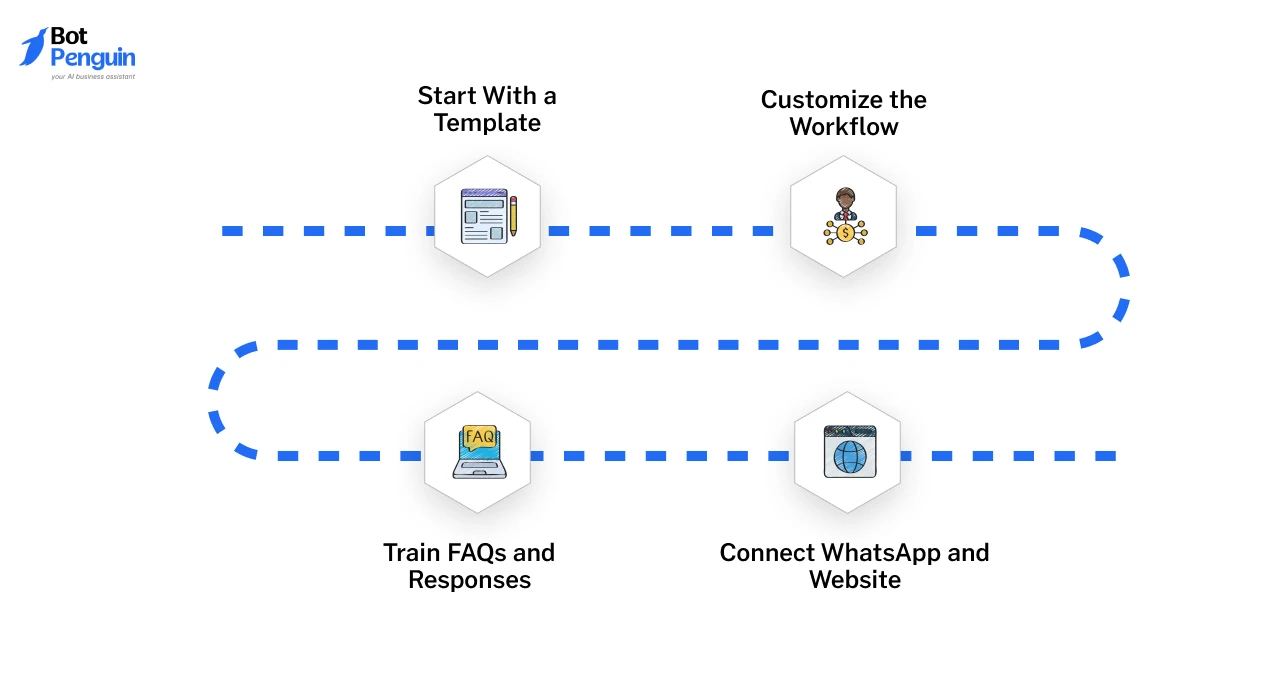
Most beginners delay launching because they think chatbot setup is complicated. In reality, you can create your AI chatbot much faster using templates and reusable workflows.
Starting from scratch slows most beginners down. Platforms like BotPenguin provide templates for:
This makes it easier to launch customized chatbots quickly. Using such platforms, you can customize the workflow instead of building everything manually.
Once the template is selected, adjust it for the client’s business. This usually includes:
Customized chatbots perform better because the conversations feel more relevant to customers.
Most chatbot conversations are repetitive. Businesses repeatedly answer questions about:
Training chatbot responses using FAQs improves customer experience and reduces support workload.
Most businesses want chatbot conversations connected across:
This is why WhatsApp automation has become one of the most valuable chatbot services for freelancers selling AI-powered chatbots.
Before launching, test:
Remember: A broken chatbot creates a poor customer experience and damages trust.
Most beginners struggle more with pricing than with chatbot building. They either charge too little and burn out or overprice without showing clear business value.
If you want to build a profitable AI chatbot agency, your pricing should be simple, outcome-focused, and easy for businesses to understand.
Businesses buy chatbot services because they want:
Keep these end goals in mind while setting prices.
Instead of creating custom pricing for every client, package your services into clear tiers.
This makes it easier to:
Pricing usually increases based on:
A restaurant FAQ chatbot will cost much less than a telecom customer support automation system.
One-time projects help in the beginning, but recurring retainers create long-term stability.
Many freelancers charge monthly fees for:
This is how many freelancers scale from selling one chatbot service into a profitable AI chatbot agency.
The simplest beginner pricing structure is:
This model is easy for businesses to understand and creates recurring revenue without constantly chasing new projects.
The biggest challenge for most beginners is not building chatbots. It is getting clients consistently.
If you want to start your AI chatbot agency successfully, client acquisition matters more than technical perfection. You can begin with the aim to sell AI chatbots to small businesses.
Likewise, the best ways to get chatbot clients include:
Cold outreach is one of the fastest ways to get early clients. Most freelancers start with:
Short, problem-focused messages usually work best.
Example: “Noticed your clinic handles bookings manually. I built a WhatsApp chatbot that automates appointment scheduling and FAQs.”
Local businesses are often the easiest first clients because they already deal with:
Good beginner industries include:
These businesses quickly understand the value of chatbot automation.
Content marketing helps businesses trust your services before contacting you. Most freelancers use:
Demo videos work especially well because businesses can immediately see how customized chatbots work in real situations.
Partnerships are an underrated growth strategy. Good partners include:
These businesses already work with clients who need chatbot automation services.
If you want to start a business building & selling chatbot services seriously, your website should clearly explain:
Simple websites usually convert better than overly technical agency websites.
Use your own tool on your website to build credibility. Use chatbots to:
This acts as both a sales tool and live proof of your chatbot capabilities.
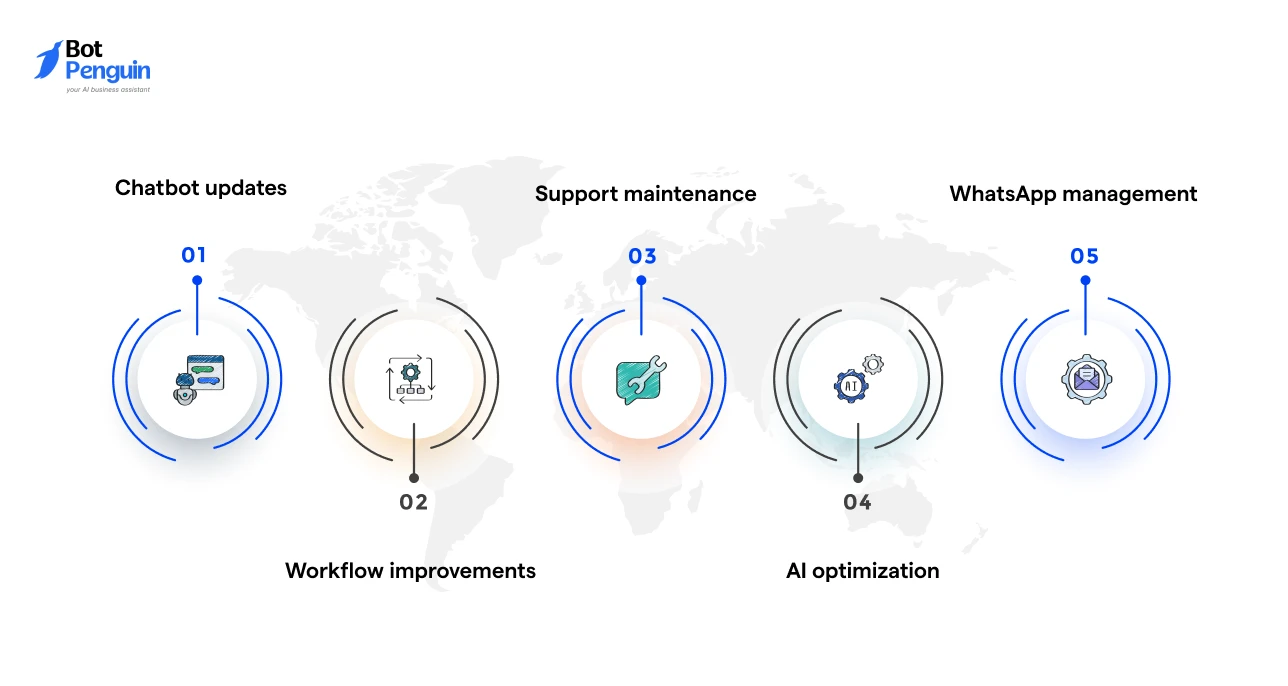
A freelance AI chatbot business can generate high income because it combines high demand, recurring revenue, low operating costs, and scalable delivery.
Unlike one-time freelance work, chatbot services often create ongoing monthly income through:
This makes chatbot businesses easier to scale than many traditional freelance services.
Your income depends on your niche, pricing, client volume, retainers, and delivery systems.
*These numbers are estimates, not guaranteed income. Results depend on how well you sell chatbot services, retain clients, and standardize delivery.
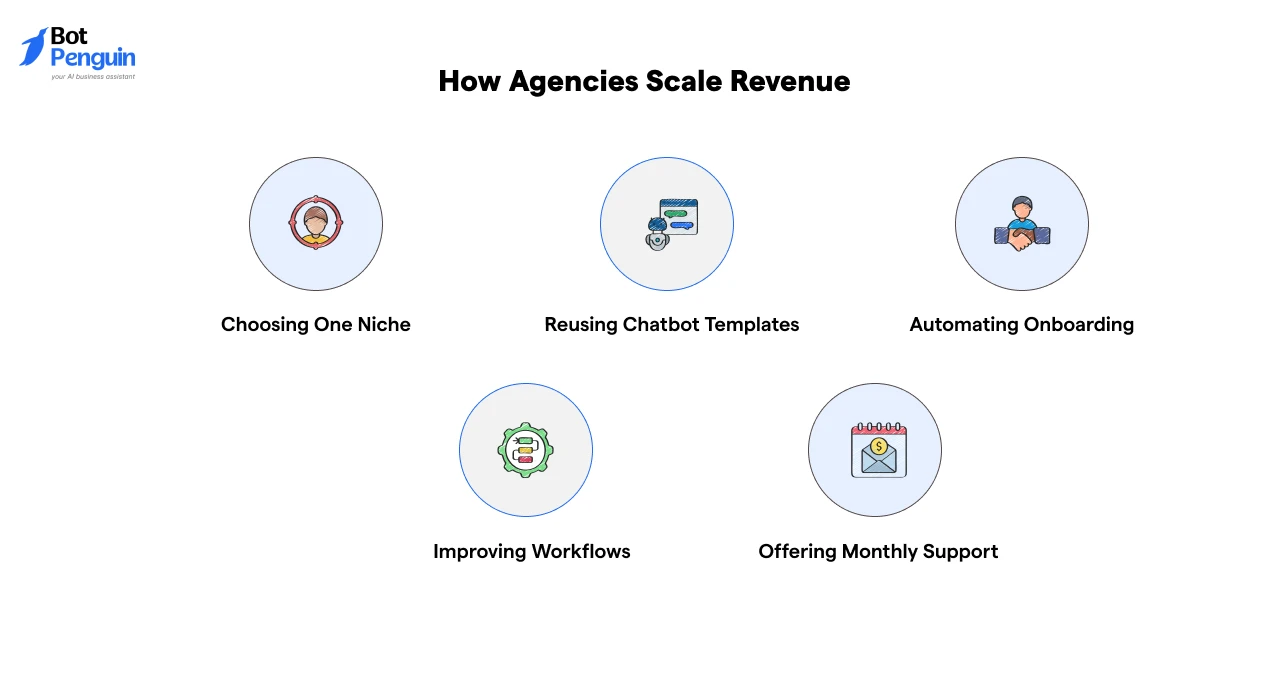
Freelancers usually scale by:
A small agency using reusable workflows and no-code platforms like BotPenguin can manage more clients without building every chatbot from scratch.
The demand for AI chatbot services is growing rapidly because businesses want faster customer support, lead generation, booking automation, and better customer communication without increasing operational costs.
The biggest advantage for beginners is that you no longer need advanced coding skills to start an AI chatbot business. No-code platforms now make it easier to create customized chatbots, automate workflows, and sell chatbot services to small businesses.
The freelancers who scale fastest usually focus on one niche, reuse chatbot workflows, and build recurring revenue through monthly retainers and automation support. If you want to start selling AI-powered chatbots, begin with one simple workflow, solve one clear business problem, and scale gradually using platforms like BotPenguin.
Choose a niche, learn one chatbot workflow, build demo chatbots, use a no-code platform like BotPenguin, and start selling chatbot services to small businesses through outreach and demos.
Yes. Most freelancers use no-code chatbot platforms to create AI-powered chatbots using drag-and-drop workflows, WhatsApp integrations, templates, and automation systems without programming knowledge or backend development skills.
Freelancers can charge $300–$500 for basic bots and $1,000–$2,000+ for advanced workflows, plus monthly retainers for updates, support, and optimization.
Real estate agencies, ecommerce stores, clinics, restaurants, telecom companies, gyms, and coaches need AI chatbots because they handle repetitive customer inquiries, lead generation, bookings, and support conversations daily.
Yes. AI chatbot businesses can become highly profitable through recurring revenue models, including chatbot maintenance, WhatsApp automation, AI optimization, workflow management, and monthly support retainers for clients.
BotPenguin is popular among freelancers because it offers no-code chatbot creation, WhatsApp automation, templates, multi-channel support, white-label features, and faster deployment for chatbot agencies and resellers.
Focus on solving business problems like lead generation, booking automation, and customer support. Use demos, LinkedIn outreach, WhatsApp automation examples, and niche-specific chatbot workflows to attract clients.
Yes. No-code platforms like BotPenguin allow freelancers to create customized chatbots using visual workflows, AI integrations, templates, CRM automation, and multi-channel chatbot deployment systems easily.
Subscribe to Our Newsletter
Get the latest business insights straight into your inbox.
Checkout our related blogs you will love.
Updated at Oct 23, 2026
14 min to read
Updated at Oct 23, 2026
10 min to read
Updated at Oct 21, 2026
11 min to read
Updated at Oct 14, 2026
6 min to read
Updated at Oct 12, 2026
13 min to read
Table of Contents
