


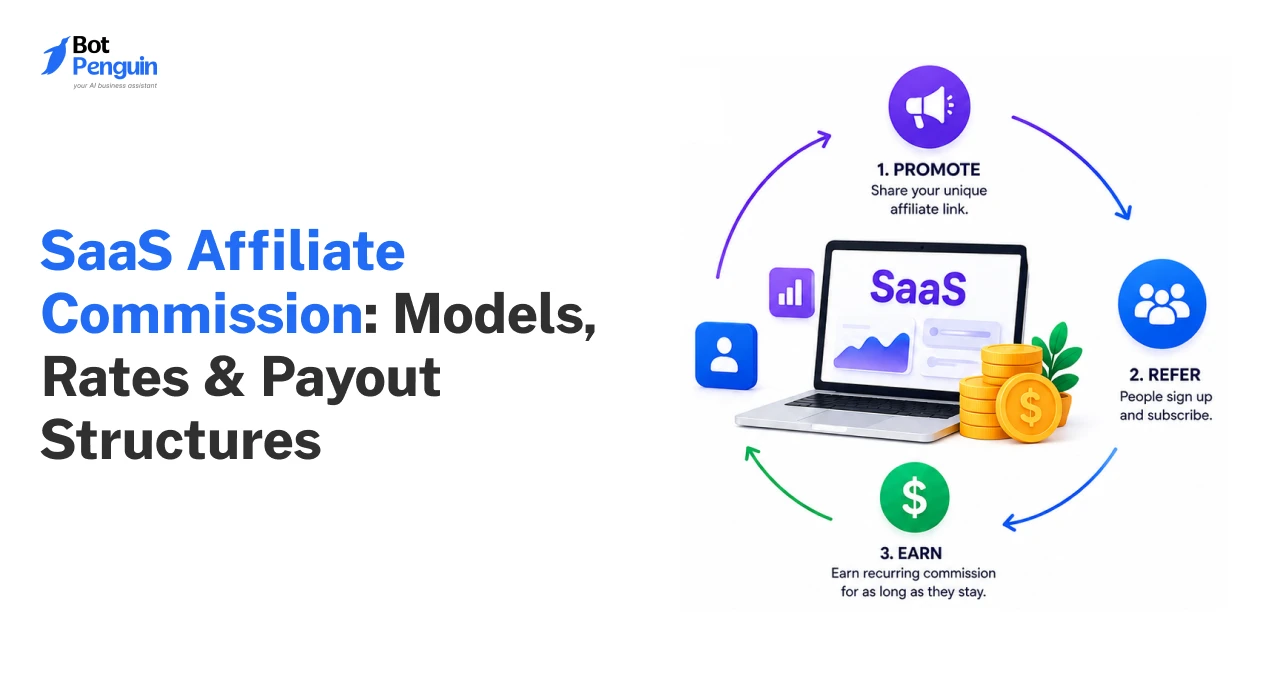
SaaS Affiliate Commission Models: Rates & Payout Structures
Updated at Sep 11, 2026
11 min to read
AI SaaS affiliate programs create an income layer around trusted software recommendations. Instead of relying only on new client work, agencies, consultants, and creators can earn from referred subscriptions over time. The model works best when the product fits the audience and customers remain active.
You are already recommending tools to your clients. Every week, unprompted, you suggest a platform, a plugin, or an automation. They trust you, they act on it, and you earn nothing from it.
SaaS affiliate programs are how that changes.
This is not about slapping links on a blog post and waiting. It is about a business model that rewards exactly what agency owners and freelancers already do well: building trust with small businesses and recommending the right tools. The difference is that right now, most of you are doing that for free.
This guide explores AI SaaS affiliate programs, how the broader SaaS affiliate model works, and which programs are worth considering.
An AI SaaS affiliate program is a partnership where an AI software company pays you when someone you refer becomes a paying customer. Here is the key difference:
That means:
Think of it less like a one-time finder's fee and more like a long-term revenue share, where you continue earning from the relationship you helped create.
You may also see this referred to as software affiliate programs, SaaS affiliate marketing, or affiliate partnerships. Same model, same outcome.
Here is why you should go for a SaaS affiliate program:
If you’re already suggesting automation tools to clients, BotPenguin helps you monetise that influence with recurring commissions, strong retention, and dedicated support designed for long-term growth.
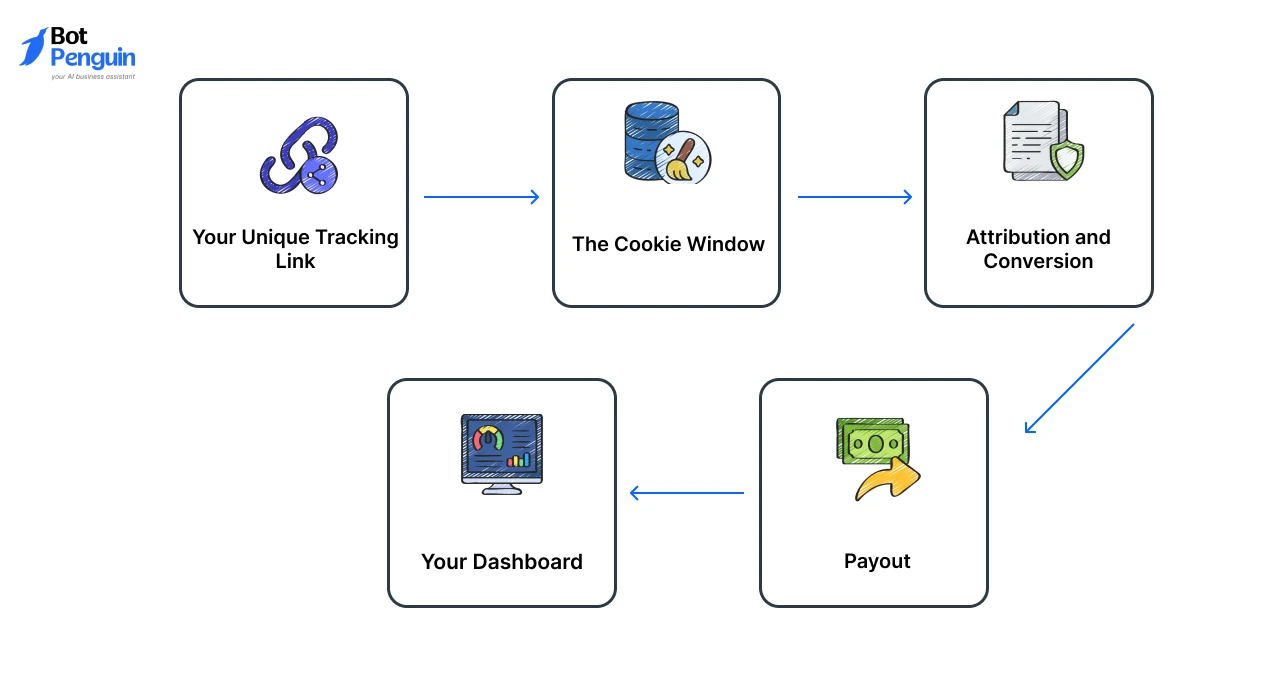
Before choosing a program, understand the mechanics. Most affiliate mistakes happen because people skip this step and focus only on commission rates.
Here’s a quick reference table of common affiliate commission models:
Imagine you refer a business owner to a chatbot platform priced at $99 per month. The business stays subscribed for 18 months. At 20% recurring commission, you earn $19.80 per month from that single referral ($356 over 18 months).
Now imagine 30 referrals like that active at the same time. That is over $10,000 per year from referrals you made across the previous two years, not new sales made this month.
The mechanics are simple. The discipline is in choosing the right programs, tracking performance, and building referrals consistently over time.
Once you've got the mechanics down, the next step is picking programs actually worth that consistency. Here's how the top SaaS picks for 2026 compare.
Here's how the top SaaS picks for 2026 stack up before you choose where to invest your time:
Below is a closer look at the best AI SaaS affiliate programs and related SaaS programs, including who each suits and what its affiliate model offers.
As an AI SaaS affiliate program, BotPenguin rewards creators, agencies, and freelancers for recommending its AI software suite, from chatbots and WhatsApp automation to AI agents and voice agents.
Because the product range spans so many use cases, affiliates aren't limited to one pitch or one type of buyer.
The no-code platform can be used for lead generation, sales, customer support, appointment booking, and workflow automation across multiple channels.
The program is currently paused and reopens on January 1, 2027. Interested affiliates can join the waitlist for early access.
HubSpot’s affiliate program pays creators and marketers for recommending its CRM, marketing, sales, and customer service tools across different business sizes and growth stages.
The program includes multiple affiliate tiers, allowing high-performing affiliates to unlock improved reporting, optimization support, and dedicated account management.
Semrush helps publishers, educators, video creators, communities, and technology partners monetize expertise across SEO, AI search, advertising, content, social media, and local visibility.
Affiliates can promote products such as Semrush One, SEO Toolkit, AI Visibility Toolkit, and Traffic & Market Toolkit.
Its loyalty program rewards consistent sales with higher commissions, bonuses, and stronger promotional support.
Pipedrive’s affiliate program suits publishers, creators, consultants, influencers, venture firms, and business communities promoting CRM software. Affiliates earn by referring new customers through unique tracking links.
The program uses three performance tiers: Rising Affiliate, Growth Affiliate, and Power Affiliate, with higher commissions, stronger support, and additional promotional opportunities as monthly sales increase.
lemlist’s affiliate program is built for sales consultants, agencies, bloggers, YouTubers, SaaS marketplaces, technology reviewers, and community builders promoting outbound sales software.
Affiliates earn by sharing tracked links that lead to paid lemlist licenses.
Beyond commissions, the program provides practical promotional support through a 5,000-member sales community, dedicated partner assistance, ready-to-publish content, and performance-based VIP rewards.
Webflow’s affiliate program is designed for content creators, influencers, bloggers, and educators promoting website-building tools.
It suits audiences interested in web design, development, marketing, entrepreneurship, and no-code technology.
The program uses Base, Pro Affiliate, and Premium Affiliate tiers. Affiliates can unlock renewal commissions, achievement bonuses, co-marketing opportunities, and additional support as their performance grows.
ActiveCampaign’s affiliate program is built for creators, influencers, and publishers promoting email marketing, CRM, automation, SMS, and WhatsApp tools.
Affiliates receive a personalized referral link after approval.
The program provides a PartnerStack-powered portal, ready-to-use promotional resources, dedicated support, product updates, and community access to help affiliates improve their campaigns.
Each of these programs rewards a different audience and content style, so the best fit depends on where your traffic and expertise already lie.
At this stage, it also helps to understand how SaaS affiliate marketing actually differs from the traditional affiliate model most people start out with.
Most affiliate marketing content focuses on B2C: consumer apps, subscription boxes, personal finance tools. B2B SaaS affiliate programs operate differently, and understanding the distinction sets accurate expectations.
The table below breaks down key differences between Traditional Affiliate Marketing and B2B SaaS Affiliate Programs:
The affiliates who earn the most are not the ones who promote the most. They are the ones with a system.
Here is how that system maps to a repeatable workflow:
Apply this system consistently for 12-18 months and the referral base grows without proportionally increasing your workload.
The most successful SaaS affiliates are not mass-market influencers. They are people with trusted relationships in specific business communities, who make recommendations already, just not paid ones.
You already advise clients on tools and technology. 'What chatbot should we use?' is a question you probably answer weekly. Your credibility is built; the affiliate link is simply how you get paid for it.
The Real Driver: SEO and paid advertising have become price-competitive. Affiliate income from tool recommendations creates revenue that does not depend on competing on price.
Freelancers face a hard ceiling: limited hours, limited clients. Affiliate income runs alongside client work, not instead of it. A freelancer managing 10 SMB clients who earns commissions from the tools they recommend adds a growing revenue stream without adding hours.
For instance, a client asks for chatbots or WhatsApp automation. Instead of losing the client, the affiliate model lets you recommend the right tool, earn from it, and stay positioned as the trusted advisor.
Bloggers, LinkedIn writers, and podcast hosts whose audiences actively buy software are naturally positioned here. A single well-ranked article on the right tool can generate passive affiliate income for years.
Accountants, HR consultants, marketing trainers: their audiences are small but specific. Specific audiences convert at far higher rates than general ones. A recommendation from someone who understands your business lands differently than a generic product review.
The global chatbot market was valued at USD 9,560.7 million in 2025 and is projected to reach USD 41,244.2 million by 2033 (CAGR of 19.6%). (Source: Grand View Research) Small and medium businesses are actively searching for AI automation tools right now.
This makes AI SaaS affiliate programs particularly relevant for affiliates looking beyond mature categories such as web hosting, VPNs, and email marketing, where competition is already fierce.
The AI chatbot category has real search volume and significantly less competition. The window is open. It will not stay that way.
The affiliate landscape for this category is still developing, giving affiliates more room to explore the best chatbot affiliate programs before competition increases.
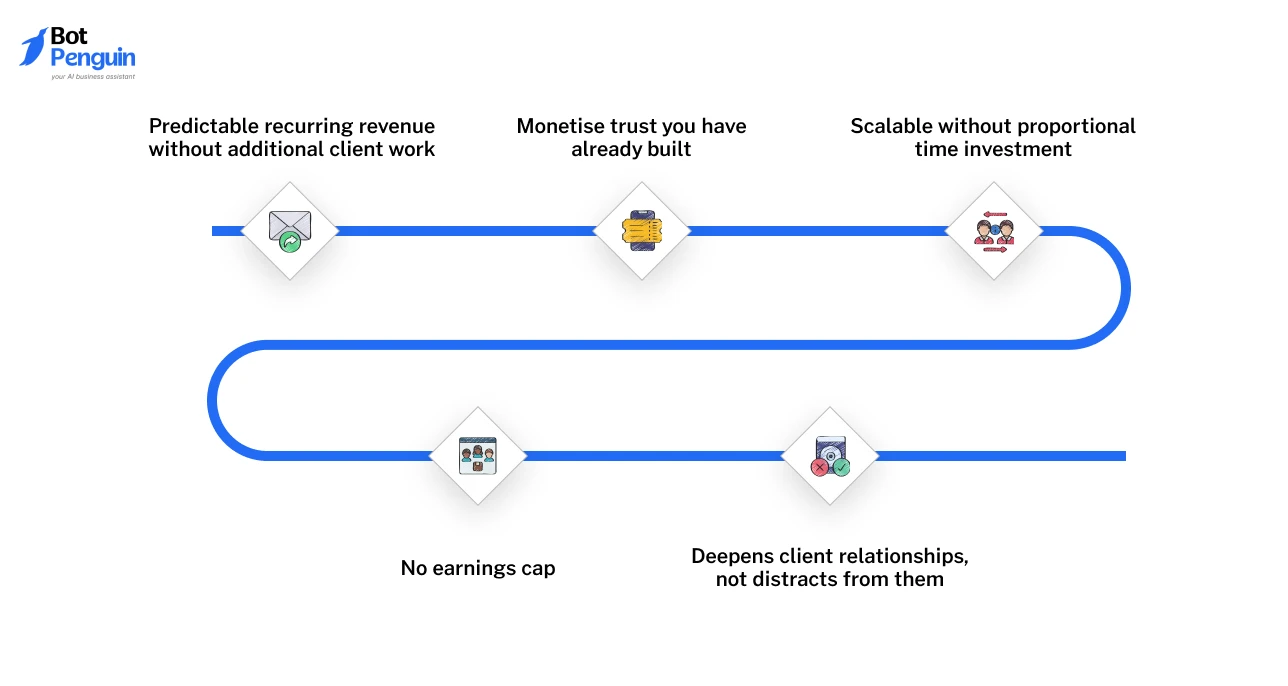
Here is what makes this model structurally different from any other income stream available to agency owners and consultants today:
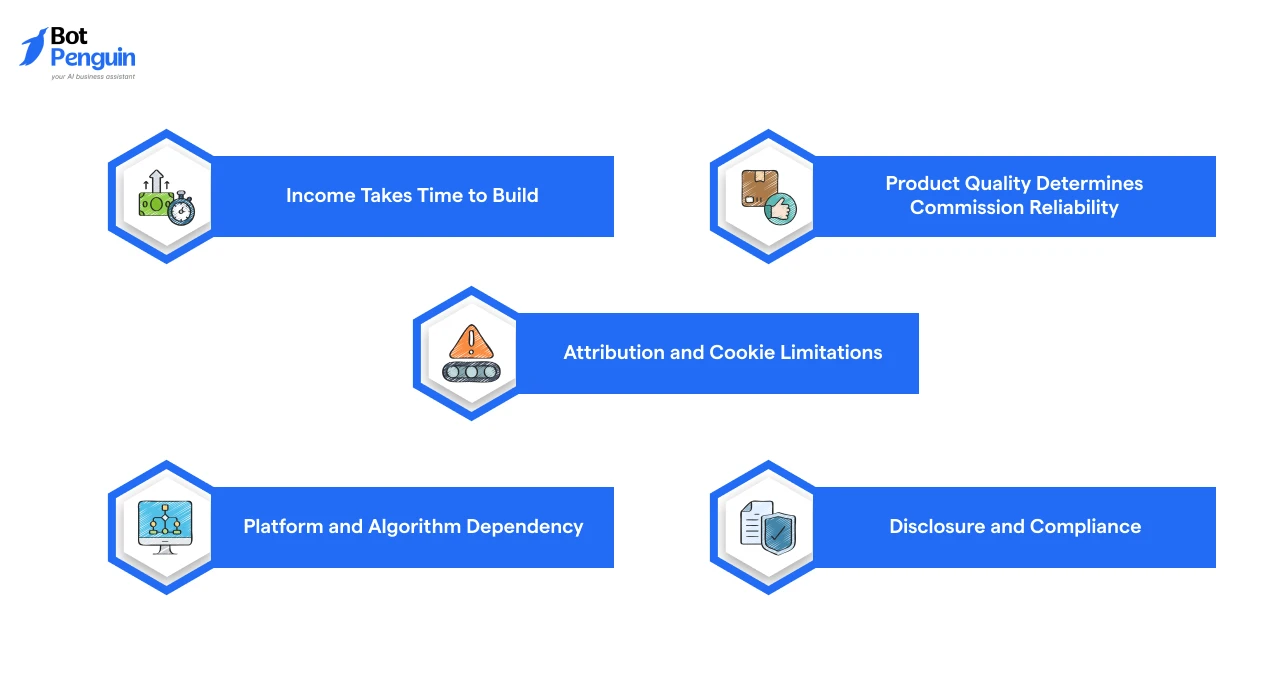
Every income model has real constraints. Knowing them upfront prevents the mistakes that limit most new affiliates.
The compounding model is powerful over 12–24 months. In the first 60–90 days, income will be modest.
Solution: Treat this as a business investment, not a campaign; build content consistently before evaluating results.
A high commission rate on a product customers cancel after 60 days earns less than a modest rate on a high-retention product.
Solution: Research independently: G2, Capterra, recent user feedback, product trials. Your commissions stop when customers churn.
B2B buyers research for 2-4 weeks before purchasing. A 7-day cookie misses significant conversions.
Solution: Prioritise programs with 30–90 day cookies. Understanding multi-stakeholder decisions may affect attribution.
Search rankings shift. Social reach changes. This creates unpredictable traffic and income fluctuations.
Solution: Build an email list from your affiliate content, a direct channel no platform can take away, and a warm audience for future recommendations.
Most jurisdictions require affiliate disclosures. It means you must clearly inform readers about your affiliate relationships.
Solution: Build disclosure into every piece of content as a default. It is legally required and builds trust rather than eroding it.
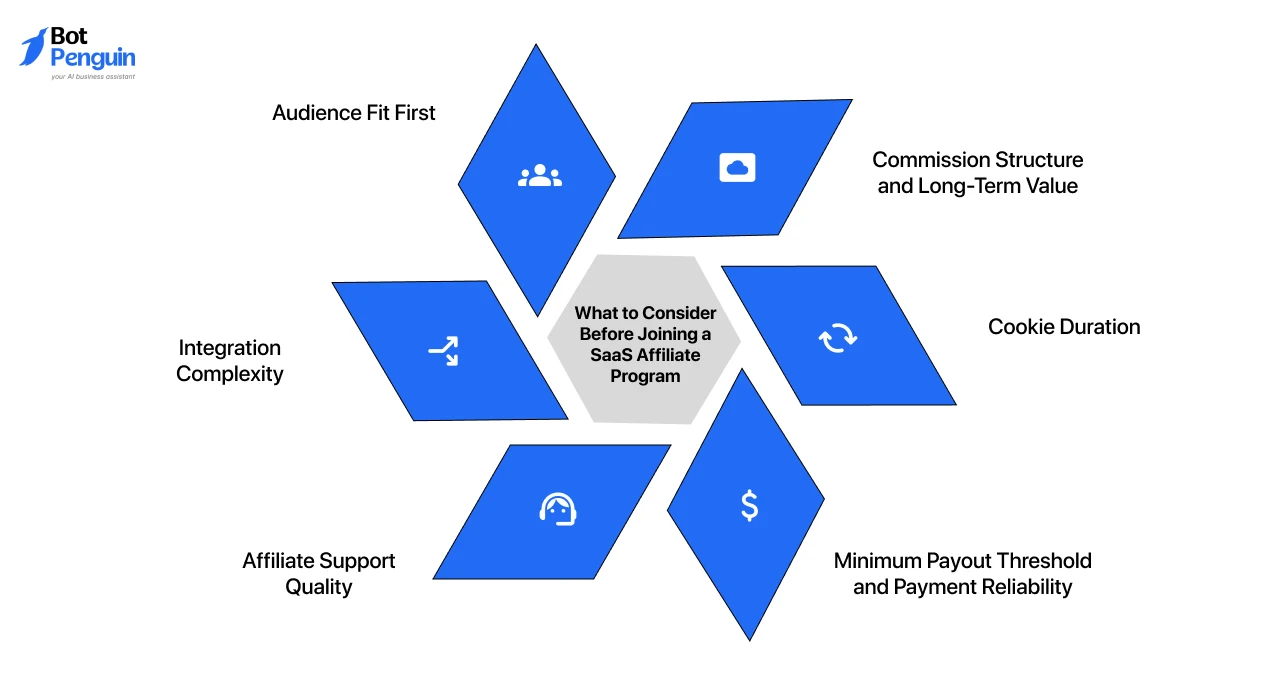
Not every program deserves your effort. Evaluate each against these criteria before committing time and content.
The highest commission rate on the wrong product generates zero income. Does this product solve a problem your specific audience has right now? Match product to audience before evaluating anything else.
Recurring almost always beats one-time. A 20% recurring rate on a $150/month product generates $360 per referred customer per year. A 50% one-time payment on the same product generates $75 once. Recurring wins within three months.
B2B buyers take weeks to decide. Look for 30 days minimum; 60 or 90 is better for complex software decisions.
A $500 threshold is unreachable when starting out. Check the threshold, ensure it is achievable within your first few months, and research payment reliability in affiliate communities before signing up.
Promotional materials, dedicated affiliate managers, co-marketing opportunities; companies that invest here tend to have better products and better retention, meaning more reliable commissions.
A product you have used and can speak to honestly requires far less content effort than one you are promoting cold. Factor your time investment into the evaluation.
Thus, carefully evaluate each program across audience fit, commission structure, cookie duration, support, and integration complexity before committing your time and content.
You can turn your everyday client recommendations into recurring revenue with BotPenguin. Built for agencies and freelancers, it rewards the trust you’ve already earned without changing how you work.
Here are the core five metrics that actually tell you whether your affiliate strategy is working, and what to do when it is not.
Review these five metrics monthly. They tell you more than the commission rate ever will.
Presently, three trends are defining where the SaaS affiliate model goes in the next three to five years.
The tools that solve real operational problems for small businesses (chatbots, automation platforms, AI agents) are still in early adoption. Affiliates who establish authority in these categories now will hold a compounding advantage as adoption accelerates across the SMB market.
As affiliate marketing matures, the advantage shifts decisively toward affiliates with specific, trusted audiences. An agency owner with 300 clients who trust their recommendations is structurally more valuable, and will earn more, than a content publisher with 50,000 unqualified subscribers.
Expect more tiered, performance-based, and co-marketing arrangements as SaaS companies compete for quality affiliates. Affiliates who build track records of high-retention referrals will have real negotiating leverage for better rates and dedicated support.
SaaS affiliate programs are not a side hustle strategy. They are a structural change to how agency owners and freelancers earn, converting trusted relationships and unpaid advisory work into a compounding income stream.
The income is real. The model is proven. The audience you need is already in your network. The only question is whether you formalise the recommendations you are already making.
For affiliates focused on emerging software categories, AI SaaS affiliate programs add another opportunity as businesses invest more heavily in AI automation.
BotPenguin's affiliate program was built for agency owners and freelancers, not mass-market content creators. Recurring commissions. No earnings cap. Dedicated partner support. A product small businesses genuinely need and keep using.
An AI SaaS affiliate program is a partnership where an AI software company pays you a commission for referring customers who subscribe to its software.
Earnings vary by commission rate and retention. At 20% on a $99/month product, one referral held 18 months generates $356. Thirty active referrals can exceed $10,000/year.
B2B SaaS customers stay subscribed 14-33 months versus 4-6 months for B2C. Longer retention means more commission per referral and a stronger compounding effect.
You share a unique link. When someone signs up via that link, you earn a commission (typically 15-30%) every month they remain a paying customer.
Programs with 20%+ recurring rates, strong product retention, 60-90 day cookies, and $50-$200/month pricing. Commission rate alone is not the right metric; retention is.
BotPenguin offers recurring commissions, no earnings cap, and dedicated partner support, built specifically for agency owners and freelancers recommending AI tools to small businesses.
Monetise Client Recommendations With SaaS Affiliate Programs
Earn recurring commissions by recommending tools your clients already need. Turn everyday suggestions into predictable revenue with high-retention SaaS products and long-term income potential.
Explore the Affiliate ProgramCheckout our related blogs you will love.
Updated at Sep 11, 2026
11 min to read
Updated at Sep 11, 2026
14 min to read

Updated at Sep 3, 2026
15 min to read

Updated at Aug 4, 2026
11 min to read
Updated at Jul 28, 2026
8 min to read
Updated at Jul 27, 2026
12 min to read
Table of Contents
