


The demand for ready-to-sell software is rising fast. 73% of businesses now prefer pre-built solutions over custom development to reduce costs and time (Source: Gartner).
This shift creates a clear opportunity. You can enter the software market without building a product from scratch by launching a branded white label chatbot platform or deploying more complex, autonomous white label AI agents tailored to specific B2B operations.
But if you’re wondering how to start a white-label software business from scratch and actually make it work in a competitive market, you’re not alone. Navigating the selection process between a standard white label partner program or joining a high-ticket AI agent reseller program requires a tactical approach.
This guide breaks down everything you need to get started, from launching the white-label software business and positioning it effectively to building a go-to-market strategy that attracts the right customers. By the end, you will have a clear roadmap for launching and growing a sustainable software reselling business.
Why a White Label Software Business Is a High-Margin Opportunity
A white-label software business is high-margin because it avoids product development costs while retaining control over pricing and customer relationships.
Building software requires time, capital, and technical teams. Reselling through white label removes all three. You focus only on branding, positioning, and sales.
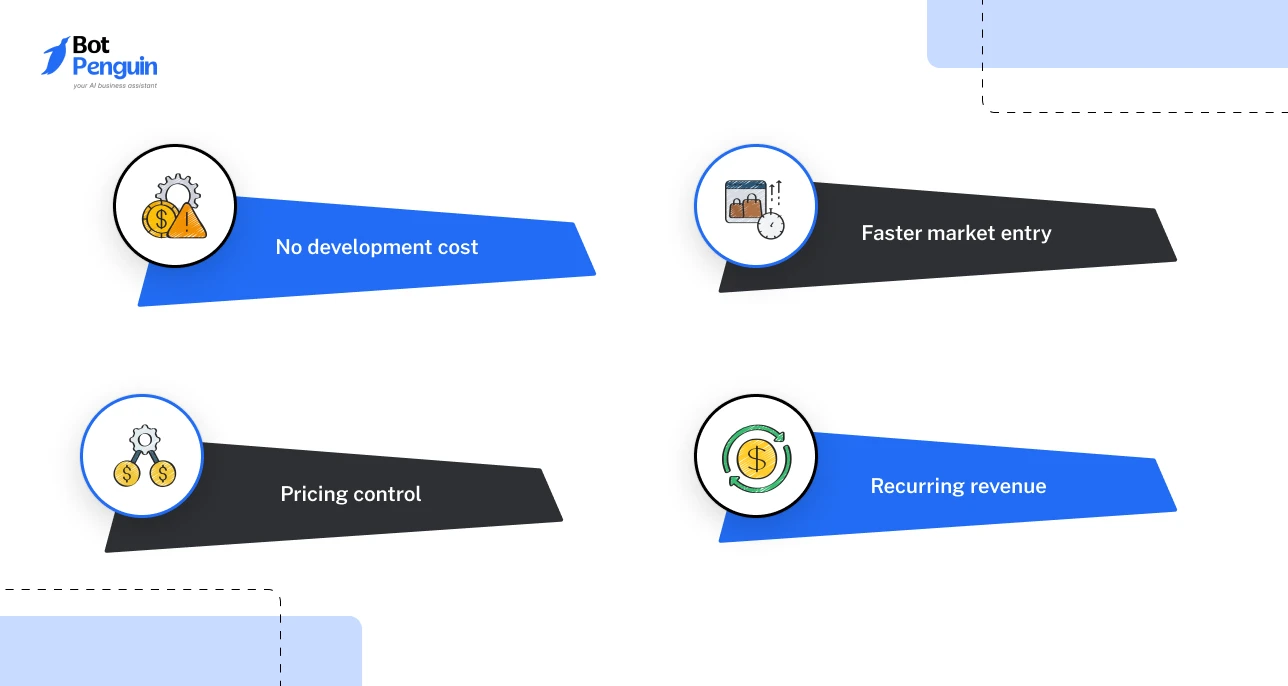
Key reasons this model is profitable:
- No development cost: No engineers, no product build, no maintenance overhead
- Faster market entry: Launch in weeks instead of months.
- Pricing control: Set your own margins based on value, not cost.
- Recurring revenue: Charge monthly or yearly for consistent income.
This model also scales efficiently. You can sell the same software to multiple clients without increasing complexity.
For agencies and consultants, this becomes even more valuable. You can bundle software with services and increase revenue per client.
In simple terms, you sell once and earn continuously. But profitability depends on execution. You need to understand exactly what your role is in running this business.
Curious about what white-label software is and how this model actually works in practice? Read our detailed guide on What Is White Label Software? How It Works and Benefits.
What You Actually Do in a White Label Software Business
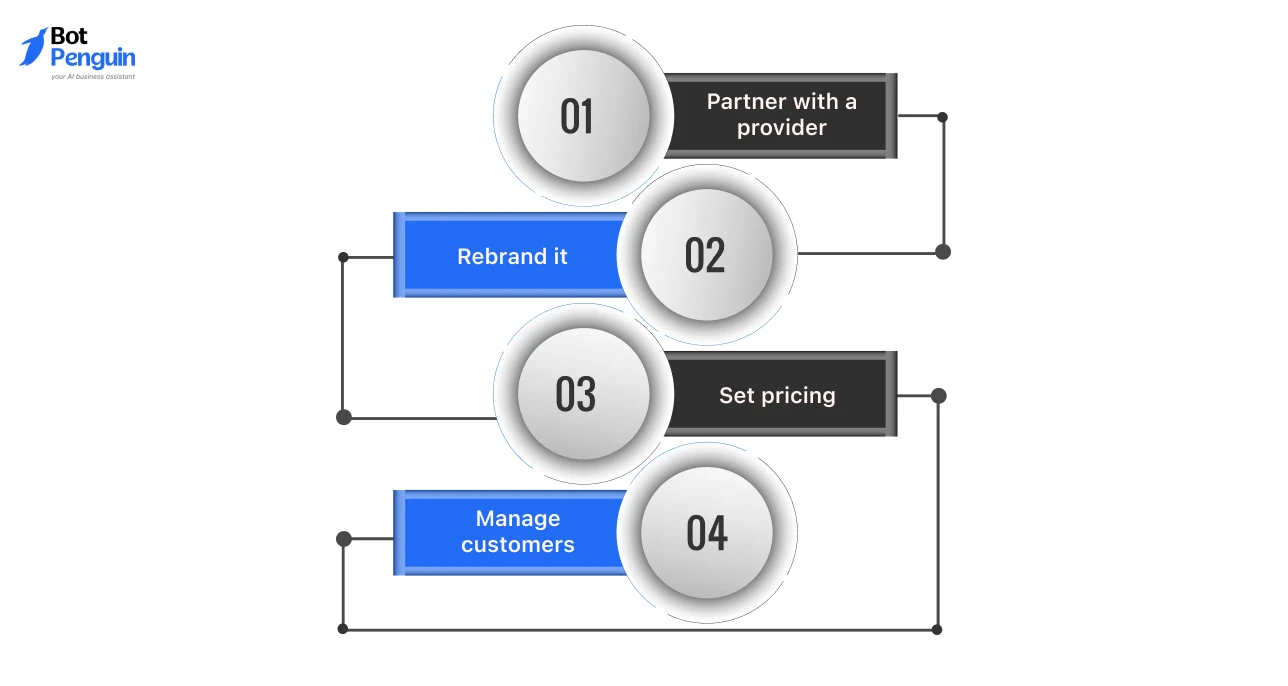
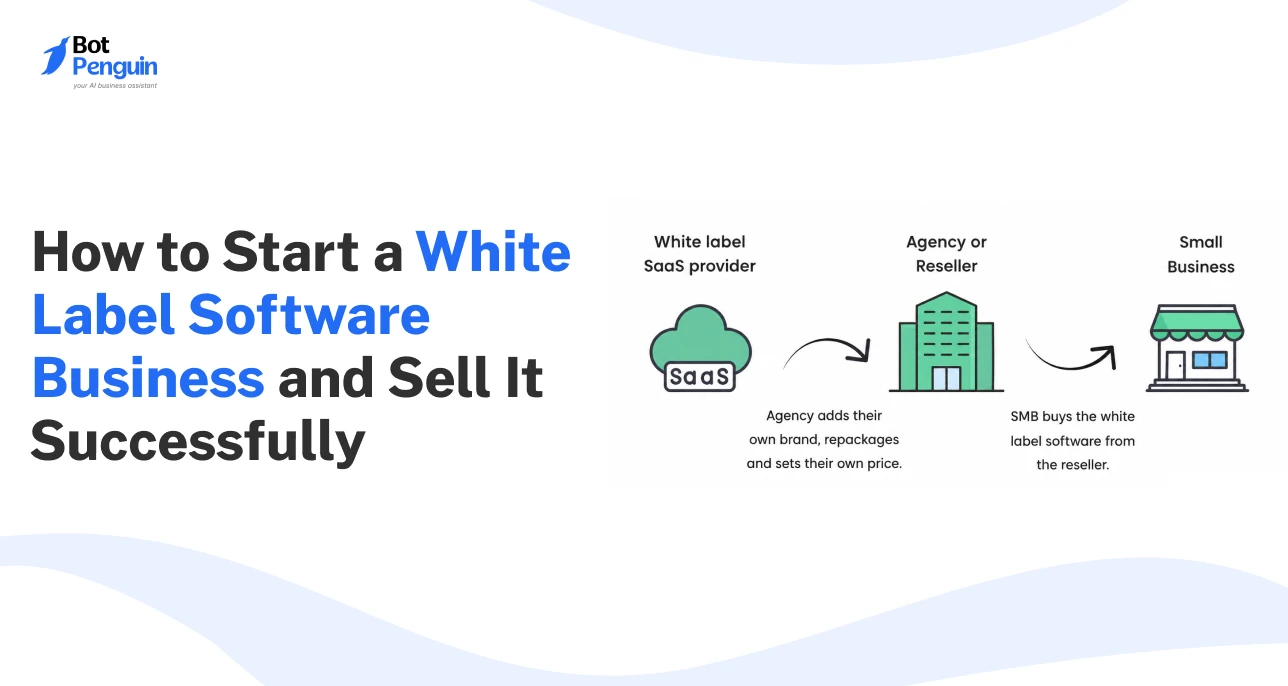
In a white label software business, your role is to sell and manage the solution, not build it. The vendor handles the product. You focus on turning it into a revenue-generating offering.
In practice, this is what you do:
- Partner with a provider: Get access to ready software.
- Rebrand it: Add your identity and positioning.
- Set pricing: Define plans and margins.
- Manage customers: Handle onboarding, billing, and support.
This makes your role closer to that of a business operator than to a product builder.
Success depends on how well you package and sell the solution. So, let’s walk through the exact steps to set up your business.
Step-by-Step Guide to Starting a White Label Software Business
To start a white label software business, you need to choose a niche, select the right software, package it as a solution, and launch it with a clear sales strategy.
This is not a technical process. It is a business execution process focused on how you position and sell.
Each step builds on the previous one. Getting this sequence right improves your chances of early traction and long-term growth.
Each of these steps has been explained in detail below:
Step 1: Choose a Profitable Niche
You should start by selecting a niche with a clear demand for digital tools. A focused niche improves positioning and makes your offer easier to sell.
Look for industries with repetitive, time-consuming processes. These are easier to solve with software.
Strong niche indicators:
- Existing spend on tools or services
- Clear operational pain points
- Need for automation or customer management
Examples include real estate, healthcare, and ecommerce.
Step 2: Select the Right Software to Sell
You need software that fits your niche and supports how your customers work. The right choice directly affects adoption and retention.
Focus on usability and relevance rather than feature volume. Software should solve a clear problem with minimal friction.
Evaluate based on:
- Core features your audience actually uses
- Ease of onboarding for non-technical users
- Compatibility with existing tools
Also consider how easily you can sell white label software based on outcomes, not features.
Avoid choosing software just because it looks powerful. Poor fit leads to low usage and higher churn.
Step 3: Build Your Brand and Offering
You should package the software as a solution with a clear outcome. Customers are not buying tools. They are buying results.
Position your offering around a specific use case. This makes it easier to explain and increases perceived value.
Focus on:
- A defined audience and use case
- Outcome-driven messaging
- Simple and clear positioning
You can strengthen your offer by adding onboarding support or ready-to-use workflows.
Step 4: Set Pricing and Revenue Structure
You need a pricing model that reflects value and supports growth. Pricing should make sense for both you and your customer.
Start with a simple structure and refine it based on feedback. Complexity can slow down early sales.
Common approaches include:
- Tiered pricing based on features or usage
- Per-user or per-client pricing
- Bundled pricing with added services
Think in terms of long-term revenue, not just initial sales. Avoid underpricing to win deals. It attracts low-value customers and limits future growth.
Step 5: Launch and Acquire First Customers
You should focus on getting early customers quickly. This validates your positioning and helps you improve faster.
Start with channels where you already have access or credibility. Speed matters more than scale at this stage.
Prioritize:
- Direct outreach to your network
- Partnerships with relevant service providers
- Simple landing pages explaining your offer
Use early conversations to refine messaging and identify objections.
Avoid waiting for everything to be perfect. Early execution gives you real feedback, which is more valuable than assumptions.
Once your setup is complete, the next challenge is turning interest into revenue.
White label programs from platforms like BotPenguin can make this easier. You can fully rebrand the platform with your own logo, domain, and interface while offering your clients the latest AI agents, chatbot automation, and integrations.
Next, you need to choose how you will structure this business. Let’s look at the models you can use.
Business Models You Can Use to Build a White Label Software Business
A white label software business can be structured in three primary ways based on how you sell and deliver value. Each model changes how you price, acquire customers, and scale.
Choosing the right structure early helps you avoid repositioning later. It also determines whether you operate like a service provider or a product seller.
Your model defines what kind of software you need to succeed. So, let’s look at how to choose the right one next.
What to Look for When Choosing White Label Software
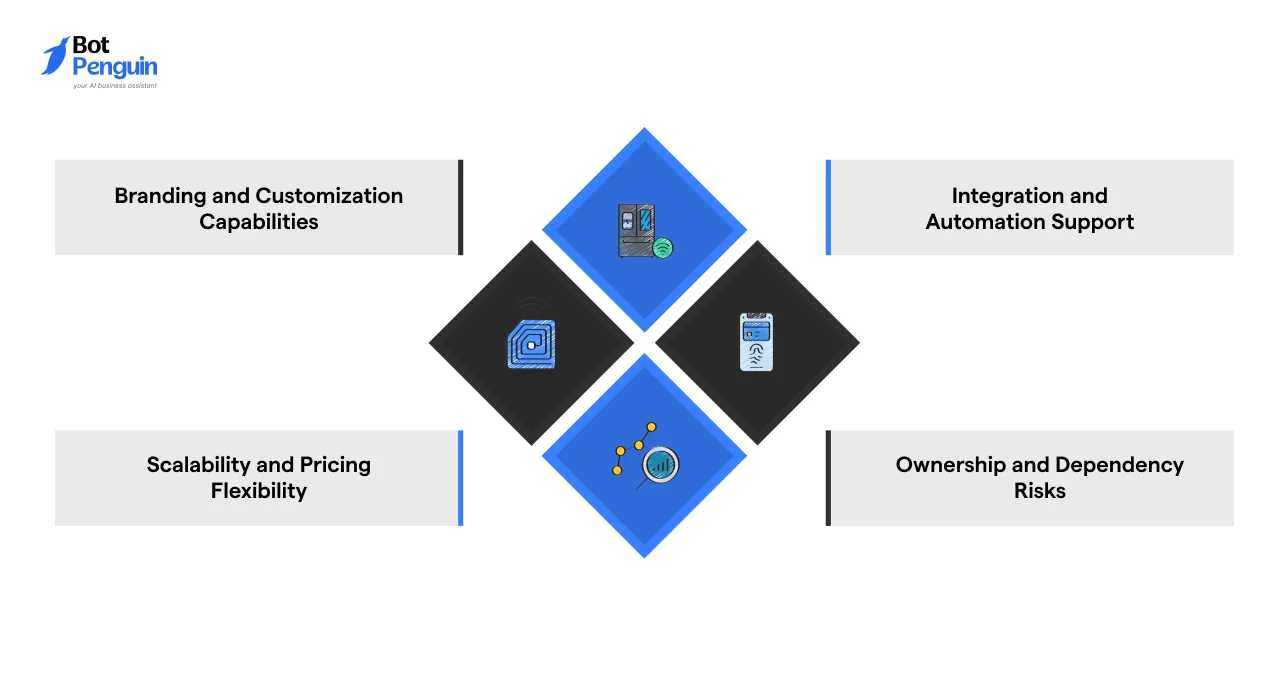
You should choose white label software based on how well it supports your ability to brand, sell, and scale. The right choice improves margins and reduces long-term risk.
Focus on these few critical factors before committing. These directly affect how easily you can sell white-label software and grow your business.
The goal is to select software that aligns with your business model and supports long-term growth.
Branding and Customization Capabilities
You should be able to fully present the software as your own.
Check for:
- Custom domain and login experience
- Logo, colors, and interface customization
- Branded emails and notifications
Avoid platforms that restrict branding or force vendor visibility. This can weaken your credibility and limit differentiation.
Integration and Automation Support
The software should integrate easily with tools your customers already use. This improves usability and expands your offering.
Look for:
- CRM integrations
- Marketing and automation tools
- API or webhook support
Avoid tools with limited integrations or no API access. This creates manual work and reduces the value of your offering.
Scalability and Pricing Flexibility
The platform should support growth without forcing migration later. Switching tools can disrupt customers and revenue.
Evaluate:
- Ability to scale users and accounts
- Flexible pricing structures
- Feature expansion options
Avoid platforms with rigid pricing or user limits. These can restrict growth and reduce your margins over time.
Ownership and Dependency Risks
You depend on the vendor for the product. This creates risks that need to be managed early.
Be aware of:
- Limited control over product updates
- Vendor-driven pricing changes
- Risk of service disruption
Avoid providers with unclear support or unstable operations. Heavy dependency without safeguards can put your business at risk.
The software you choose sets the foundation, but it is only the starting point. Real results come from how you put it into action. So, let’s learn how to position and sell your offering effectively in the market next.
How to Sell White Label Software Successfully
Selling white label software successfully comes down to one thing. You must make it easy for the buyer to understand, trust, and act.
Most failures happen not because of the product, but because of poor positioning and unclear value.
To get this right, focus on how you present, distribute, and expand your offering.
Package the Software as a Solution
You win deals when you sell a clear outcome. You lose deals when you sell features.
Instead of explaining what the software does, show what it solves. Tie it to a specific use case and audience. For example, a generic CRM is hard to sell. A “lead management system for real estate agents” is easier to buy.
When packaging your offer:
- Define one problem and one outcome.
- Add light services like setup or onboarding.
- Keep the messaging simple and specific.
This approach improves clarity and pricing power.
Choose the Right Sales Channels
You do not need more channels. You need the right ones. Think in terms of reach and intent:
Pick one or two channels and go deep. Trying everything at once leads to slow results and scattered learning.
Build Retention and Upsell Systems
Revenue does not come from the first sale. It comes from keeping and growing customers.
Retention starts the moment a customer signs up. If they do not see value quickly, they will leave. Focus on the early experience:
- Make onboarding simple and guided.
- Help users achieve one quick win.
- Stay involved in the first few interactions.
Once usage is stable, expand the relationship.
Upsell works best when it feels like a natural extension, not a forced sale. Add features, services, or higher tiers based on actual usage.
Ignoring retention creates a constant need for new customers. That slows growth and increases cost.
Many platforms also support partners beyond just the product. For example, BotPenguin’s white-label program provides ready-to-use marketing materials, sales assets, and onboarding resources to help you attract, convert, and retain clients more efficiently.
This reduces the effort needed to build your sales process from scratch.
Once your sales approach is in place, the next step is to avoid common mistakes that can slow growth or limit results.
Common Mistakes When Starting a White Label Software Business
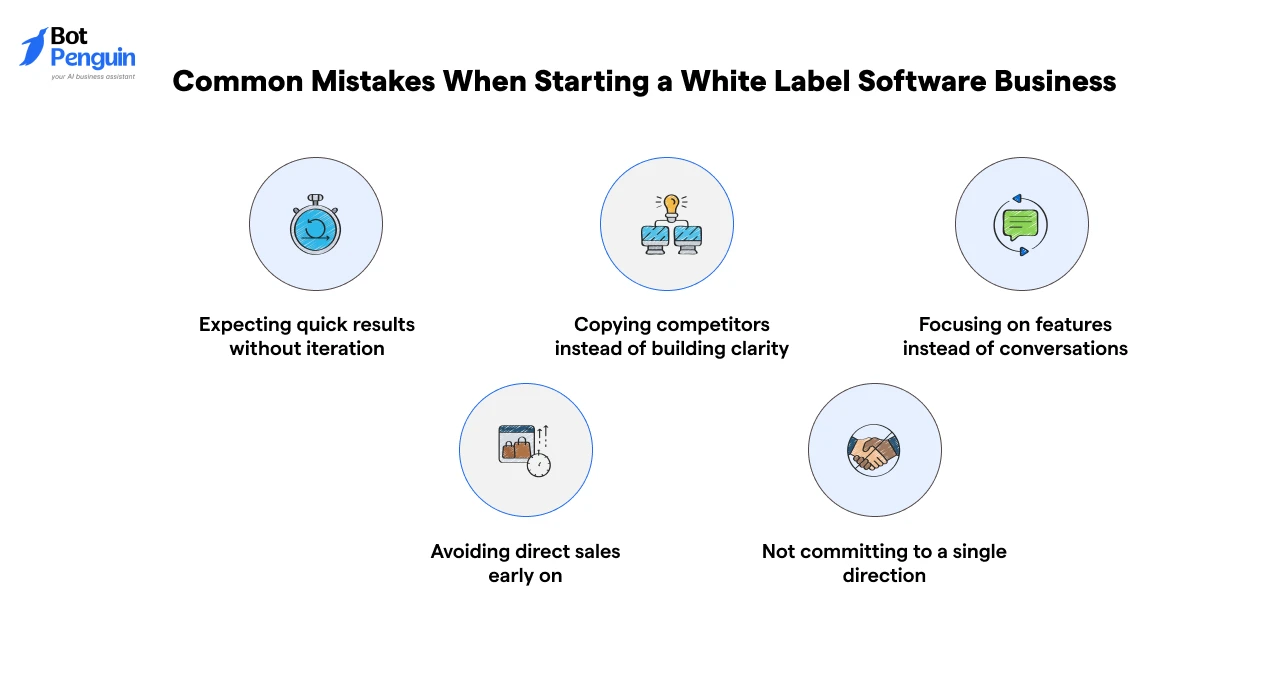
Most mistakes in a white label software business stem from misjudging how the business actually works in real-world scenarios.
These are not obvious at first, but they show up once you start selling.
- Expecting quick results without iteration: Many assume the first offer will work. In reality, you need multiple iterations to find what resonates.
- Copying competitors instead of building clarity: Following what others do creates a generic offering. What works for them may not work for your audience.
- Focusing on features instead of conversations: Early growth comes from talking to customers, not refining the product. Feedback matters more than assumptions.
- Avoiding direct sales early on: Relying only on passive channels slows learning. Direct outreach gives faster insights and results.
- Not committing to a single direction: Constantly switching niches, offers, or models breaks momentum. Consistency is required to see results.
Avoiding these mistakes helps you move faster and build clarity. That is what turns effort into actual progress.
Finally, let’s look at whether this business model is the right fit for you based on your goals, skills, and resources.
Is White Label Software Business Right for You?
This business model is right for you if you prefer selling and building relationships over creating products. Your success depends more on execution than on technical skills.
It works best for people who already understand a market or audience. Existing networks or industry knowledge give you a strong advantage.
This model fits you if you:
- Have experience in sales, marketing, or consulting
- Understand a specific industry or niche
- Prefer recurring revenue over one-time projects
- Want to start without a heavy technical investment
It may not be ideal if you want full product control or prefer building from scratch. Before moving forward, be clear about your strengths and how you plan to sell.
If you are looking for a ready-to-use solution, platforms like BotPenguin can help you launch faster while maintaining complete control over branding and pricing.
A Recap
A white label software business works when you focus on execution, not product development. You choose a niche, pick the right software, and package it into a clear, outcome-driven solution.
From there, success depends on how you sell and scale. Positioning, pricing, and customer acquisition drive your growth.
You also need to avoid early mistakes and stay consistent with your direction.
If you follow the steps in this guide, you have a clear path from idea to launch and revenue.
And if you are ready to get started, our white-label software program can help you launch in days. You can book a demo call to explore your opportunities today!
Frequently Asked Questions (FAQs)
How do I choose the right niche for my white label software business?
Pick a niche with clear demand, repetitive workflows, and existing spend on tools. A focused audience improves positioning and makes selling easier.
What should I look for in white label software before choosing it?
Focus on branding control, integrations, scalability, and vendor reliability. These factors directly impact how easily you can sell and grow.
How do I package white label software to make it easier to sell?
Position it as a solution to a specific problem. Define one use case, highlight outcomes, and simplify messaging for faster understanding and conversion.
Which sales channels work best for selling white label software?
Start with direct outreach, partnerships, or simple inbound content. Choose channels based on where your audience already spends time.
How do I get my first customers for my white label software business?
Use your network, targeted outreach, or partnerships. Focus on quick conversations and feedback rather than scaling too early.
How do I scale a white label software business after initial sales?
Improve onboarding, retain customers, and upsell based on usage. Growth comes from retention and expanding existing accounts.