





Insurance AI Chatbots: Types, AI vs Rule-Based, and How to Choose
Updated at Oct 7, 2026
13 min to read
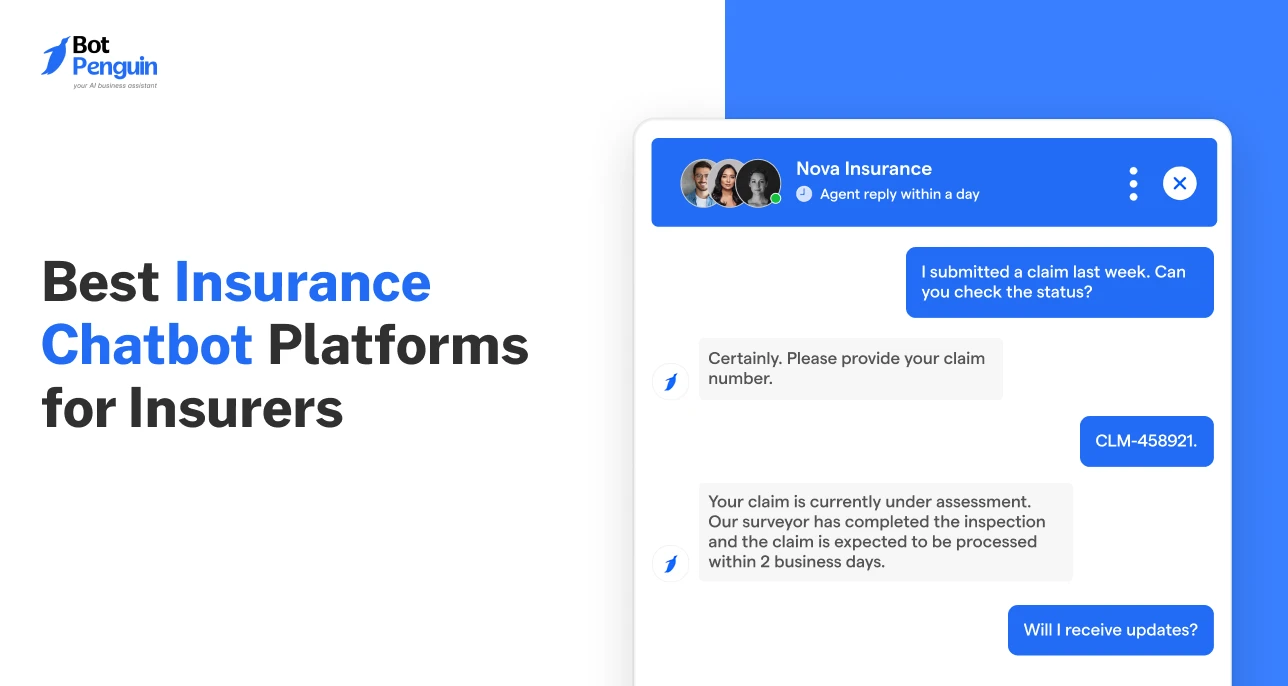
No single insurance chatbot platform is best for every insurer. The right choice depends on claims workflows, channels, integrations, compliance, pricing, and team size. Floatbot.AI suits claims-heavy operations, while enterprise platforms offer deeper automation. BotPenguin fits teams seeking no-code, multichannel customer automation.
Choosing the right insurance chatbot platform is difficult when many tools promise automation, faster support, and better lead handling.
Insurers, brokers, and agencies need to know which platforms fit their workflows, channels, compliance needs, and team size before deciding.
An AI chatbot for insurance can support claims intake, policy questions, quote qualification, renewals, and customer service across digital channels. But the best choice depends on whether you need a no-code setup, enterprise automation, omnichannel messaging, or deeper system integrations.
This article compares top insurance chatbot platforms, their key features, use cases, pricing models, limitations, and selection points.
An insurance chatbot platform helps insurers manage high-volume customer conversations without adding manual workload. It does that by automating everyday queries, capturing customer details, and routing complex cases to the right human agent.
For insurance teams, the need is simple: customers expect faster replies, but agents cannot spend all day handling the same requests around quotes, claims, or policy details.
Here’s how the insurance sector gains from AI chatbots:
Market stats also reflect the urgency.
The insurance chatbot market is on a steep climb and is expected to reach a projected $1.21 billion in 2026, growing at a 25.9% CAGR.
The goal isn't to replace agents, but to reduce repetitive work, speed up customer responses, and let insurance teams focus on high-value conversations.
We evaluated each insurance chatbot platform based on how well it supports real insurance operations, not just general chatbot features.
The comparison focused on platforms that insurers, agencies, brokers, TPAs, and insurtech teams can use across claims, policy servicing, renewals, sales, and customer support.
Each platform was reviewed across several practical factors:
These criteria provide a consistent basis for the insurance chatbot comparison below.
The best insurance chatbot platform depends on your workflows, channels, compliance requirements, and team size. Claims-heavy insurers may need specialized enterprise automation, while agencies may prioritize faster no-code setup.
Here’s a quick insurance chatbot comparison of the platforms covered in this guide.
Disclaimer: Pricing, platform capabilities, and compliance coverage are based on publicly available vendor information reviewed in September 2026 and may change. Verify current requirements with each provider before purchasing.
The strongest platform is the one that matches your operational load, not the one with the longest feature list. Use this section to compare each option by workflow, features, pros, cons, pricing, and best-fit buyer.
(Note: The platforms below are compared by their best-fit use cases rather than assuming one solution is best for every insurer.)
BotPenguin is an AI-led insurance chatbot platform for agencies, brokers, and growing insurance teams that need faster customer conversations without building from scratch.
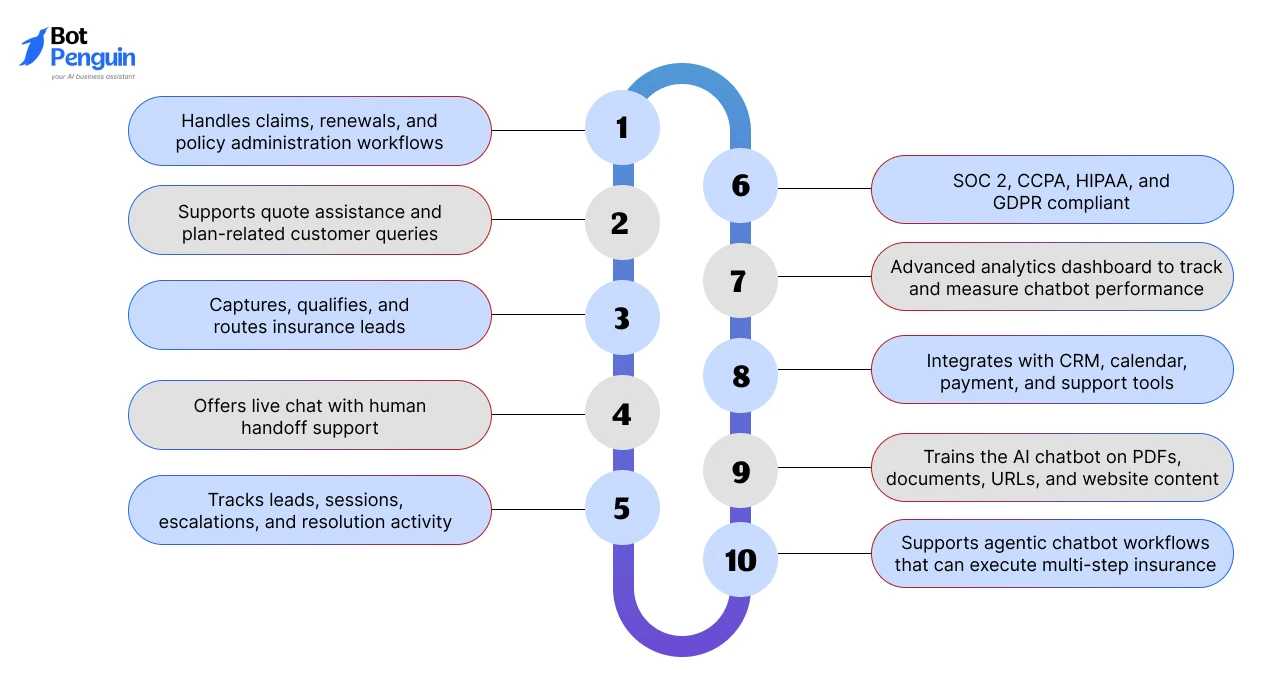
Its insurance AI chatbots support claims, policy administration, renewals, customer care, quote assistance, lead capture, and support workflows across websites, WhatsApp, Instagram, Facebook, and other channels.
Best for: Agencies, brokers, and insurtech teams handling high volumes of quote requests, renewal reminders, policy FAQs, claim-intake queries, and lead follow-ups
Features:
Pros:
Cons:
Pricing: Free forever plan, Little at $29/month, King at $99/month, and custom Emperor plans for larger requirements.
Want to know more? See how BotPenguin helped Home Loan Whiz automate customer queries and improve support efficiency.
Floatbot.AI provides insurance-focused conversational AI for automating claims intake, policy servicing, billing queries, underwriting support, and customer communication across voice, chat, SMS, and email.
Its platform is positioned for insurers handling high-volume operational workflows, especially FNOL, claims updates, renewals, endorsements, and agent-assist use cases.
Best for: Claims-heavy insurers that need FNOL automation, claim status updates, policy service, and omnichannel customer support
Features:
Pros:
Cons:
Pricing: Floatbot.AI currently lists Lite, Essential, Growth, and Enterprise plans with pricing available through Contact Sales.
LivePerson’s unified insurance chatbot platform uses conversational AI to simplify claims, provide policy and payment updates, and automate insurance conversations across web, text, and messaging channels.
Designed for high-volume insurers, it connects claimants and policyholders with AI chatbots for insurance across web, SMS, WhatsApp, and social channels, while freeing agents to handle complex cases.
Best for: Large insurers seeking omnichannel AI chatbots for insurance to automate claims, policy updates, and payment reminders with minimal call-center disruption
Features:
Pros:
Cons:
Pricing: LivePerson offers Bronze, Silver, and Gold plans with custom quote-based pricing; official pages emphasize simple pricing and few add-on fees.
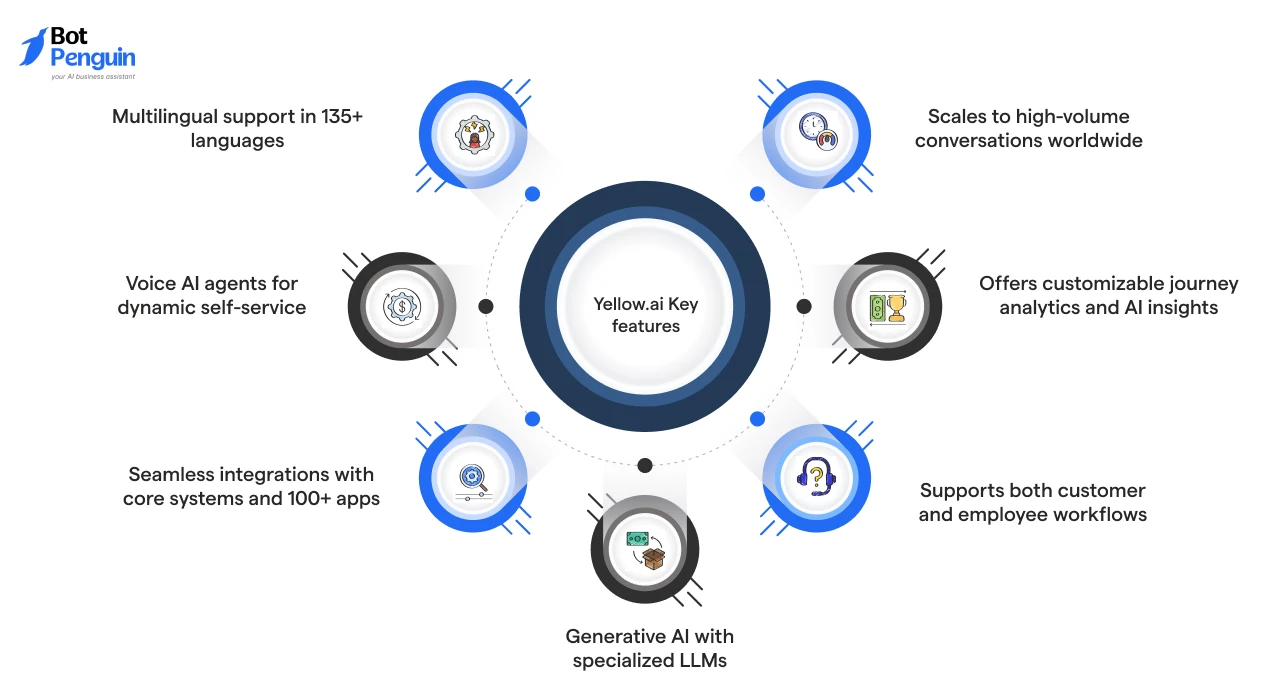
Yellow.ai is an enterprise AI chatbot for insurance that automates customer and employee interactions across 135+ languages, with dynamic voice agents, omnichannel messaging, and generative AI.
This versatile AI-powered chatbot for the insurance sector offers multilingual chatbots, voice AI, and 100+ integrations to streamline claims, underwriting, renewals, and employee workflows.
Best for: Global insurers needing multilingual AI chatbots for insurance with omnichannel reach, powerful analytics, and simultaneous automation for customers and employees
Features:
Pros:
Cons:
Pricing: Yellow.ai offers a Free plan with 500 chat sessions, then $0.99 per resolution, plus an Enterprise plan requiring a custom quote.
Cognigy's (NiCE Cognigy) automation-first insurance chatbot platform provides pre-trained AI-rich bots for identity verification, first notice of loss, claims processing, product recommendations, document collection, e-signatures, and policy underwriting.
Designed for large insurers, Cognigy uses hybrid NLU and LLM orchestration to deliver multilingual chatbots, voice bots, and digital assistants across web, mobile, IVR, and messaging.
Best for: Enterprises needing secure, multilingual AI chatbots for insurance and complex self-service automation with disaster-ready scalability
Features:
Pros:
Cons:
Pricing: Cognigy does not publish standard pricing. Enterprise pricing is provided based on deployment and business requirements.
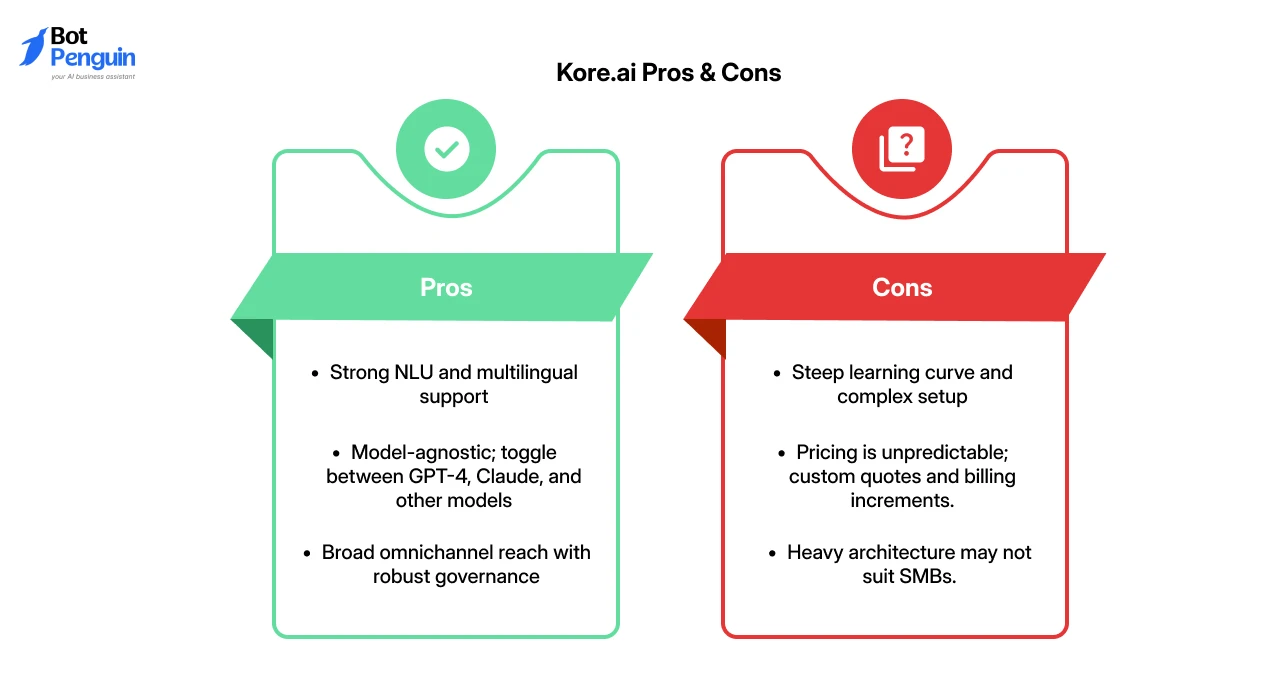
Kore.ai’s insurance chatbot acts as a digital insurance agent, providing 24/7 service, streamlining claims, offering personalized product recommendations, and boosting ROI.
The platform delivers AI-powered digital agents with strong natural-language understanding, multilingual support, and enterprise governance, with deployment across web, IVR, WhatsApp, and other channels.
Best for: Large insurers needing model-agnostic AI chatbots for insurance and omnichannel digital agents with enterprise-grade governance
Features:
Pros:
Cons:
Pricing: Kore.ai offers custom-based pricing across all its plans, so you'll need to contact their team directly for a quote.
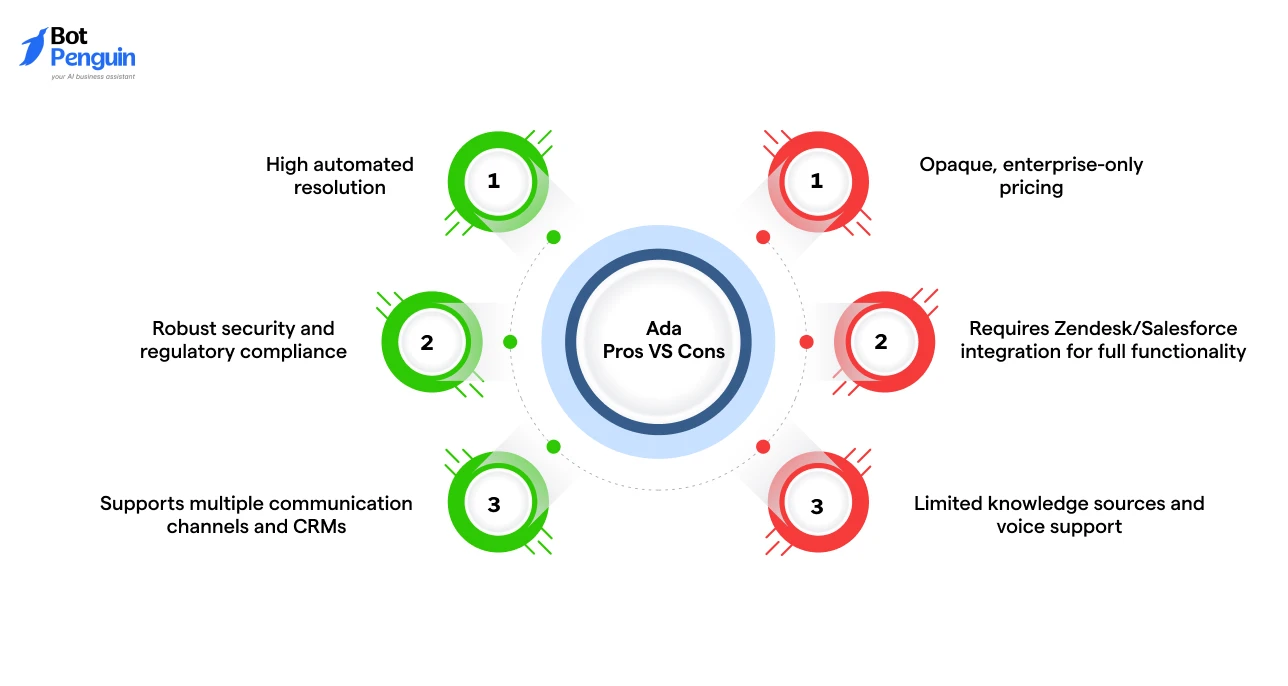
Ada is an enterprise AI-powered chatbot for the insurance sector that uses a multi-LLM Reasoning Engine across chat, email, voice, and SMS.
Built for large insurers, Ada combines generative AI with a multi-agent architecture to handle claims, policy questions, and customer service across channels while integrating with CRM systems like Zendesk and Salesforce.
Best for: Enterprises seeking secure, high-resolution AI chatbots for insurance across chat, email, voice, and SMS with large-scale pricing budgets
Features:
Pros:
Cons:
Pricing: Ada primarily uses conversation-based pricing, with resolution-based pricing available for enterprises with specific requirements. Exact pricing depends on deployment needs.
Intercom Fin is an AI agent for customer service that works with Intercom's helpdesk, knowledge sources, workflows, and human support tools.
It plugs into Intercom’s helpdesk to provide automated chat support for insurance teams, with customizable tone, conversation summaries, and per-resolution pricing.
Best for: Startups and insurers needing a quick, knowledge-base-driven AI-powered chatbot for the insurance sector with flexible per-conversation pricing
Features:
Pros:
Cons:
Pricing: Fin starts at $0.99 per outcome. Intercom's annual seat pricing starts at $29/month for Essential, $85/month for Advanced, and $132/month for Expert.
Tidio’s Lyro is an AI chatbot for insurers with agentic capabilities. It answers routine questions using existing help-center content, improves support efficiency, and hands off to live agents when needed.
Tidio combines live chat, chatbot flows, and AI automation into one insurance chatbot platform, making it suitable for smaller insurance teams seeking quick deployment.
Best for: Small-to-mid-sized insurers needing easy, low-maintenance AI chatbots for insurance for website and messaging support with minimal setup
Features:
Pros:
Cons:
Pricing: Free plan; Starter at $24.17/month; Growth from $49.17/month; Plus from $300/month plus usage; Premium pricing is available through sales.
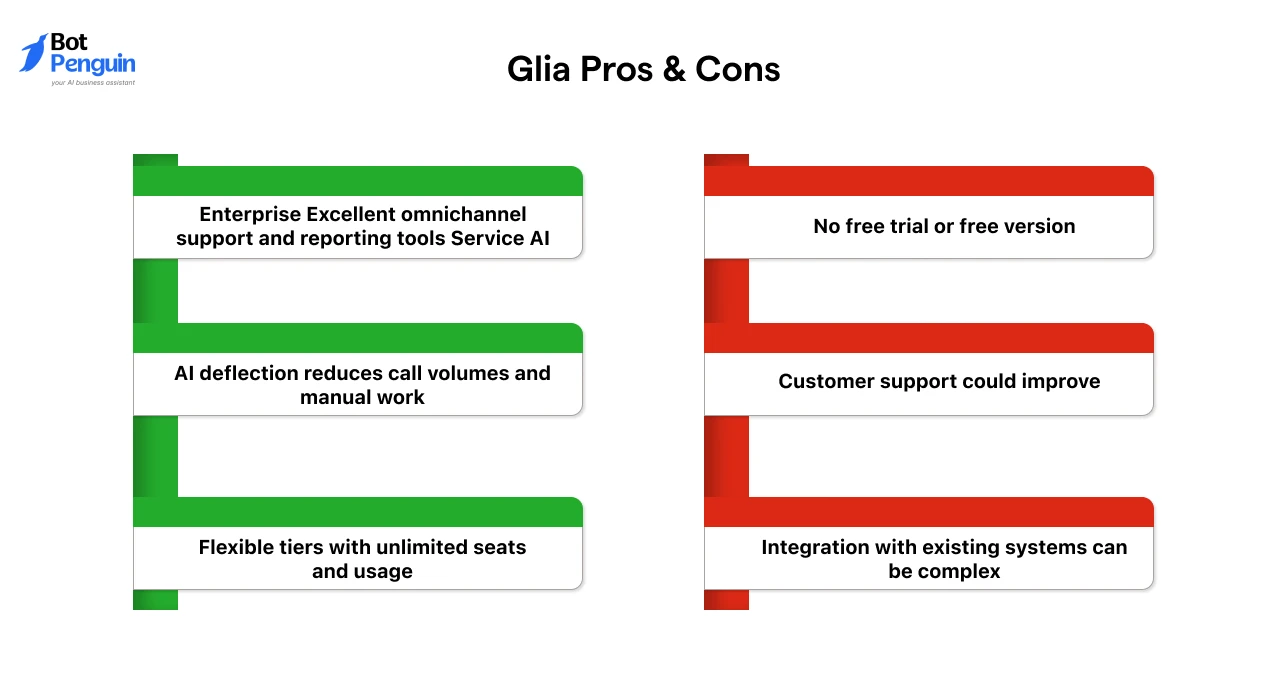
Glia delivers a unified digital engagement and voice AI insurance chatbot platform that automates interactions like FNOL, claim status updates, and self-service tasks.
Built for financial institutions and insurers, Glia provides AI-powered chat, voice, and co-browse tools with real-time agent assist, unlimited usage, and built-in AI.
Best for: Insurers wanting omnichannel digital engagement, agent assist, and AI-powered chatbots for the insurance sector, with unlimited seats and usage
Features:
Pros:
Cons:
Pricing: Glia uses custom fixed-price tiers based on organizational needs, with unlimited seats, usage, and built-in AI.
These 10 platforms prove that modern insurance chatbots have moved well past scripted replies. Today, they handle intake, qualify leads, process claims, and keep customers informed throughout.
Insurance chatbot pricing varies by platform, automation depth, conversation volume, and business size. Some platforms offer free or fixed monthly plans, while enterprise solutions use usage-based or custom pricing.
Common pricing models include:
For this insurance chatbot comparison, treat published prices as starting points. Final costs may change with channels, AI usage, integrations, conversation volume, and enterprise requirements.
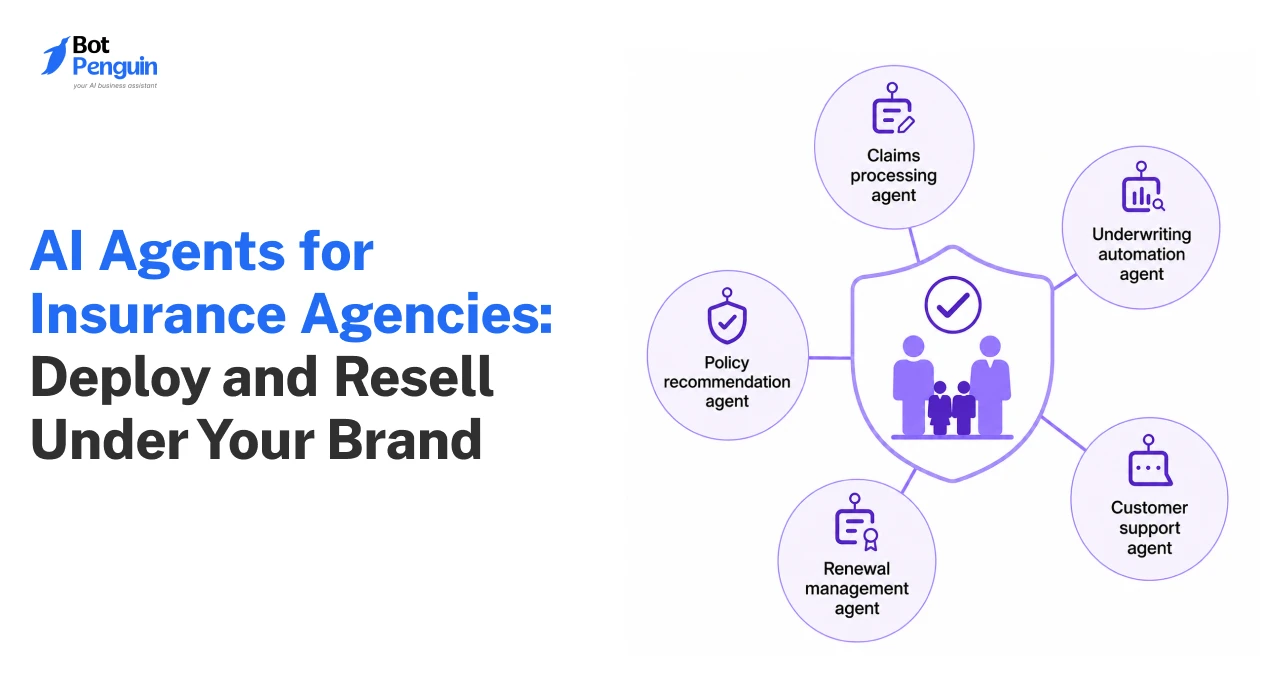
Want to see where these capabilities fit into real insurance workflows? Explore how AI agents for insurance agencies can support lead qualification, policy servicing, claims assistance, renewals, and customer support.
The platforms above differ in automation depth, architecture, channels, and insurance specialization. If you are still comparing AI vs rule-based insurance chatbots and how to choose, see our insurance AI chatbot guide.
The best insurance chatbot platforms fit how an insurer actually works. Enterprise teams may need deeper claims automation, governance, voice AI, and omnichannel service controls.
Agencies, brokers, and growing insurtech teams may look for faster deployment, AI-led lead qualification, customer support automation, WhatsApp and website chat, live handoff, and usable reporting.
What matters is matching the platform to the workflow, not the other way around. The right chatbot thus moves conversations forward, keeps customers informed, and gives your team back the time they actually need.
The best insurance chatbot platform depends on the insurer’s requirements. BotPenguin suits agencies needing no-code multichannel automation, while Floatbot.AI is more claims-focused. Enterprise teams may also consider platforms such as Cognigy, Kore.ai, Ada, or LivePerson.
Insurance chatbot pricing ranges from free plans and monthly subscriptions to usage-based and custom enterprise pricing. BotPenguin and Tidio offer lower-cost entry plans, while platforms such as Cognigy, Kore.ai, Floatbot.AI, and Glia typically require custom pricing.
BotPenguin and Tidio Lyro are suitable options for smaller agencies and brokers. BotPenguin supports multichannel automation, lead qualification, and human handoff, while Tidio offers a simpler setup for website-based customer support and routine conversations.
Floatbot.AI is designed around insurance-specific workflows such as FNOL, claim intake, claim-status updates, and policy servicing. Larger insurers can also evaluate Cognigy, Kore.ai, Glia, and other enterprise platforms depending on their claims systems and automation requirements.
Most leading platforms support multiple customer channels. BotPenguin, LivePerson, Yellow.ai, Cognigy, Kore.ai, Ada, Intercom Fin, and Glia support different combinations of website chat, messaging apps, voice, email, social channels, and live-agent handoff.
Insurance teams should review data protection, access controls, audit capabilities, and relevant compliance credentials. Depending on the platform, these may include GDPR, HIPAA, SOC 2, ISO certifications, PCI DSS, and other security or privacy standards.
Automate Insurance Support Across Every Channel
Resolve policy queries, qualify leads, route claims, and support renewals through AI chatbots built for insurance workflows.
Book a DemoCheckout our related blogs you will love.
Updated at Oct 7, 2026
13 min to read
Updated at Sep 21, 2026
10 min to read
Updated at Sep 21, 2026
11 min to read
Updated at Oct 19, 2026
11 min to read
Updated at Oct 14, 2026
11 min to read
Updated at Oct 14, 2026
10 min to read
Table of Contents