


Chatbot Compliance in Financial Services: A Complete Guide
Updated at Oct 19, 2026
11 min to read
Financial institutions are drowning in customer queries. Wait times are long. Operational costs keep rising. Compliance pressure never stops.
On the bright side, leading AI chatbot platforms for financial services fix all three problems.
They handle routine inquiries instantly. They run all day long without added headcount. They operate within regulatory guardrails by design.
However, a wrong choice can result in compliance gaps, poor integrations, and frustrated customers.
This guide compares the 8 best financial chatbot platforms for 2026, covering features, ideal use cases, strengths, and limitations, so you can find the right fit fast.
A financial chatbot platform helps fintechs, lenders, insurers, and wealth firms automate repetitive conversations without slowing down customer support.
Financial customers expect quick answers for account queries, loan details, payment updates, document requirements, appointment booking, and fraud concerns. Manual support teams cannot handle this volume efficiently across every channel.
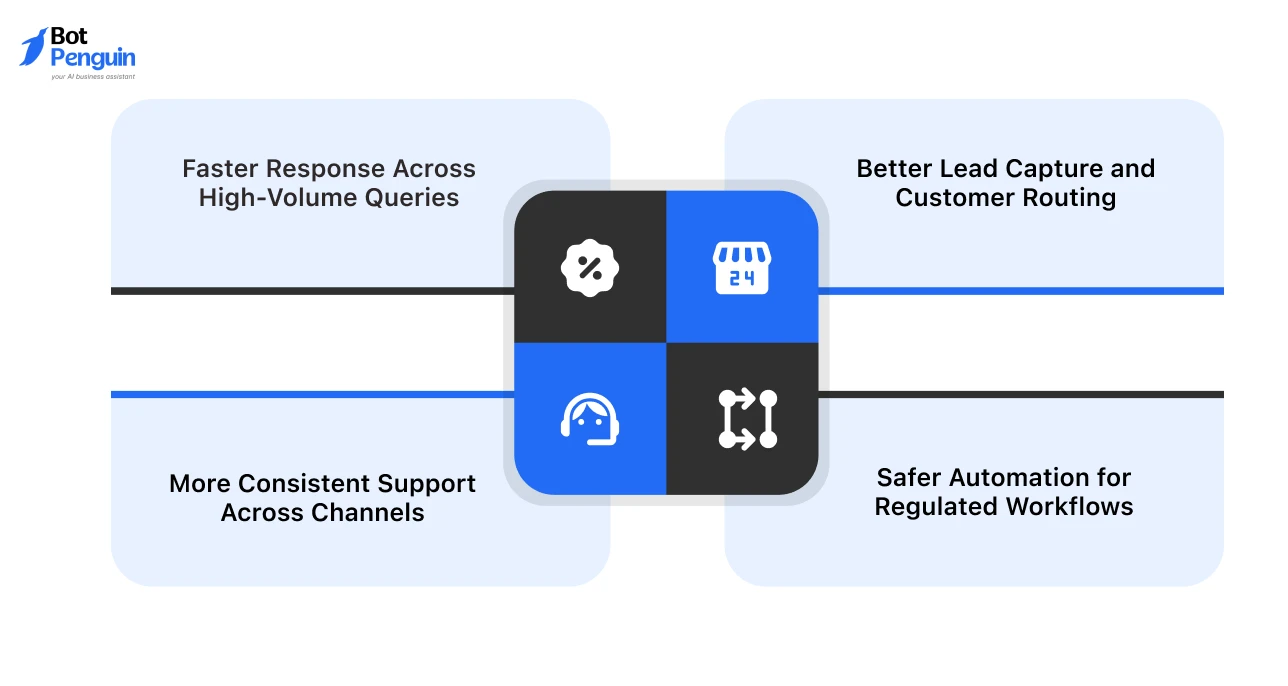
Here’s why financial firms are investing in AI-powered chatbot platforms:
A financial services chatbot platform can answer recurring questions instantly. This lowers wait time and keeps support teams focused on complex cases.
They are especially useful for handling loan eligibility, account access, billing queries, insurance updates, appointment bookings, and automated lead qualification.
Financial businesses lose leads when prospects wait too long for replies. A chatbot can collect details, identify intent, and route the conversation to sales, support, or a human advisor.
This helps financial teams manage both customer service and revenue workflows in a single system.
Customers may contact a financial business through the website, WhatsApp, SMS, mobile app, email, or voice. A robust financial chatbot platform maintains consistent conversations across channels.
That consistency matters more in finance because customers expect accuracy, privacy, and clear next steps.
Financial services cannot rely on generic automation alone. A financial services chatbot platform should support compliance controls, secure data handling, escalation rules, and integration with approved business systems.
With the investment reasons clear, the next step is understanding the evaluation logic behind each financial chatbot platform included here. Let’s explore that in the subsequent section.
We evaluated each financial chatbot platform based on how well it fits real financial service workflows, not just feature volume.
The focus was on use case fit, compliance support, integrations, customer channels, human handoff, and total cost visibility.
A financial services chatbot platform must work differently for a fintech startup, lender, insurer, wealth firm, or bank. So, each tool was reviewed against the type of financial conversation it can realistically support.
We checked whether each chatbot platform supports common financial workflows, including lead qualification, loan inquiries, account support, appointment booking, insurance updates, policy servicing, and voice-led assistance.
Platforms built for website lead capture were evaluated differently from tools designed for core banking, contact centers, or voice automation.
This helped separate a lightweight chatbot platform for websites from enterprise-grade options built for regulated operations.
We reviewed each financial chatbot platform for visible compliance signals, data security controls, and suitability for sensitive customer interactions.
Priority was given to platforms that mention standards or controls such as GDPR, HIPAA, CCPA, SOC 2, ISO 27001, PCI DSS, auditability, role-based access, secure handoff, and data protection.
In finance, compliance support can decide whether an AI-powered chatbot platform is usable at all.
We evaluated how well each platform connects with the systems financial teams already use.
Basic tools were checked for CRM, calendar, payment, helpdesk, and live chat integrations.
Enterprise platforms were assessed for deeper connectivity with core banking systems, account databases, fraud tools, contact center platforms, and workflow automation systems.
We reviewed whether each financial services chatbot platform supports the channels its target customers are likely to use.
For fintechs and SMB financial firms, website chat, WhatsApp, SMS, and social channels matter most. For banks, insurers, and larger institutions, mobile, email, voice, contact center, and omnichannel continuity carry more weight.
We checked whether each platform allows smooth escalation from automation to a human agent.
This is critical for failed payments, fraud concerns, loan disputes, policy clarifications, account issues, and high-value advisory conversations.
A strong financial chatbot platform should automate routine questions while keeping complex cases accessible to support, sales, or advisory teams.
We compared pricing based on public plan details, free plan availability, trial access, quote-based pricing, AI usage, seat limits, and likely implementation effort.
Some AI chatbot platforms look affordable on the base plan, but become expensive with volume, additional channels, advanced workflows, or enterprise support.
So, pricing clarity was treated as a practical evaluation factor, not just a number.
Based on these criteria, the table below compares each platform on fit, compliance depth, pricing clarity, and use cases for finance.
The table below provides a quick overview of the leading AI chatbot platforms for financial services based on best use case, compliance fit, and pricing.
Use it to briefly understand each financial chatbot platform before reading the detailed breakdown.
Note: Pricing details are based on publicly available data at the time of publishing and may change. Always check the official pricing page or contact the sales team before making a purchase decision.
Now, let’s review each financial services chatbot platform in detail to see where it fits, where it falls short, and which financial teams should consider it.
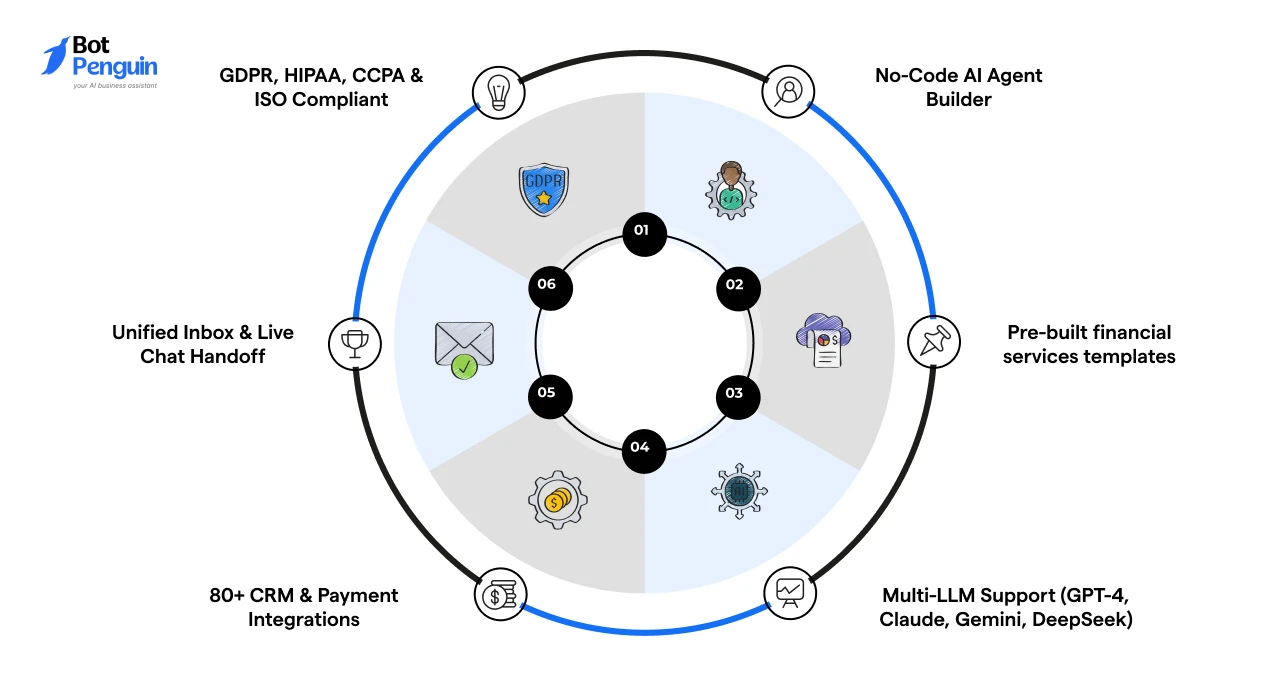
BotPenguin is a no-code financial chatbot platform for SMBs, fintech startups, lenders, advisors, and service providers that need fast deployment across websites, WhatsApp, Instagram, Facebook, Telegram, MS Teams, and voice without relying on developers.
It is especially useful for lead capture, customer support, appointments, and handoff workflows.
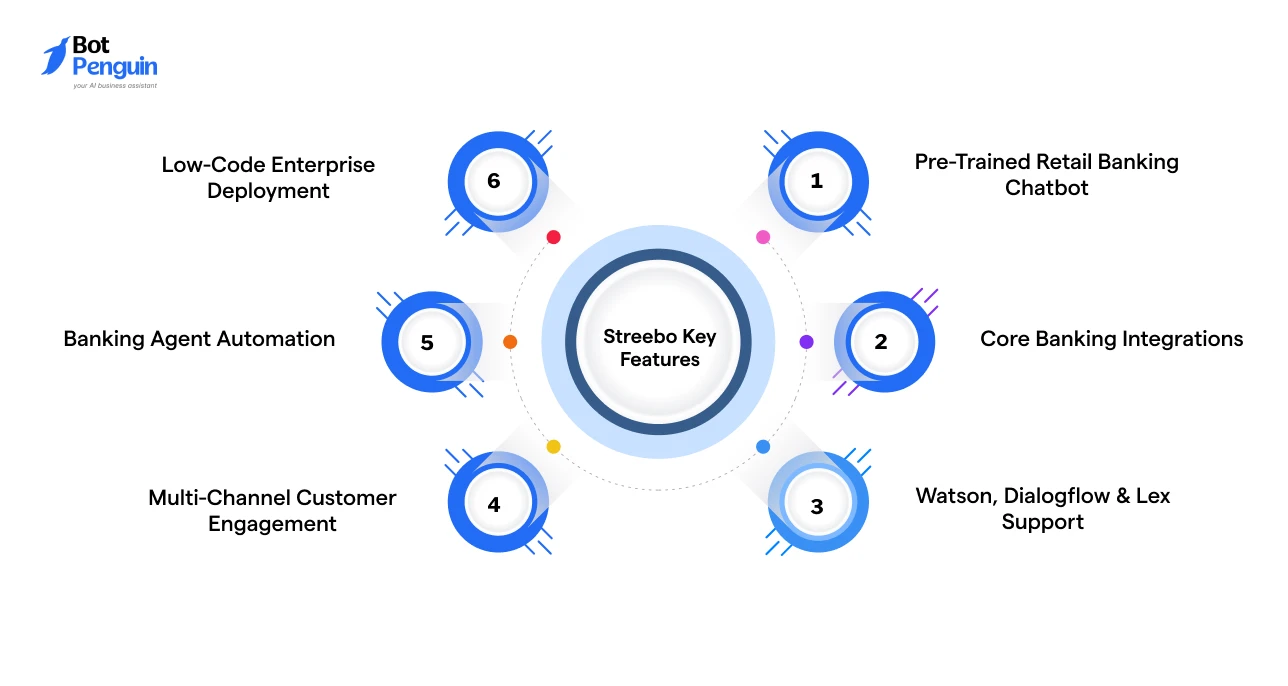
Streebo is a financial services chatbot platform built for banks and financial enterprises that need chatbot automation connected to existing infrastructure.
Its retail banking chatbot is positioned around pre-trained banking use cases and integrations with core banking systems such as Finacle, Oracle FLEXCUBE, and SAP Core Banking.
Picky Assist is a financial chatbot platform for teams that manage customer conversations through multiple channels like WhatsApp, Instagram, Messenger, and email.
It is useful for financial service providers that need conversational CRM, smart replies, broadcasts, funnels, and shared inbox workflows without building everything from scratch.
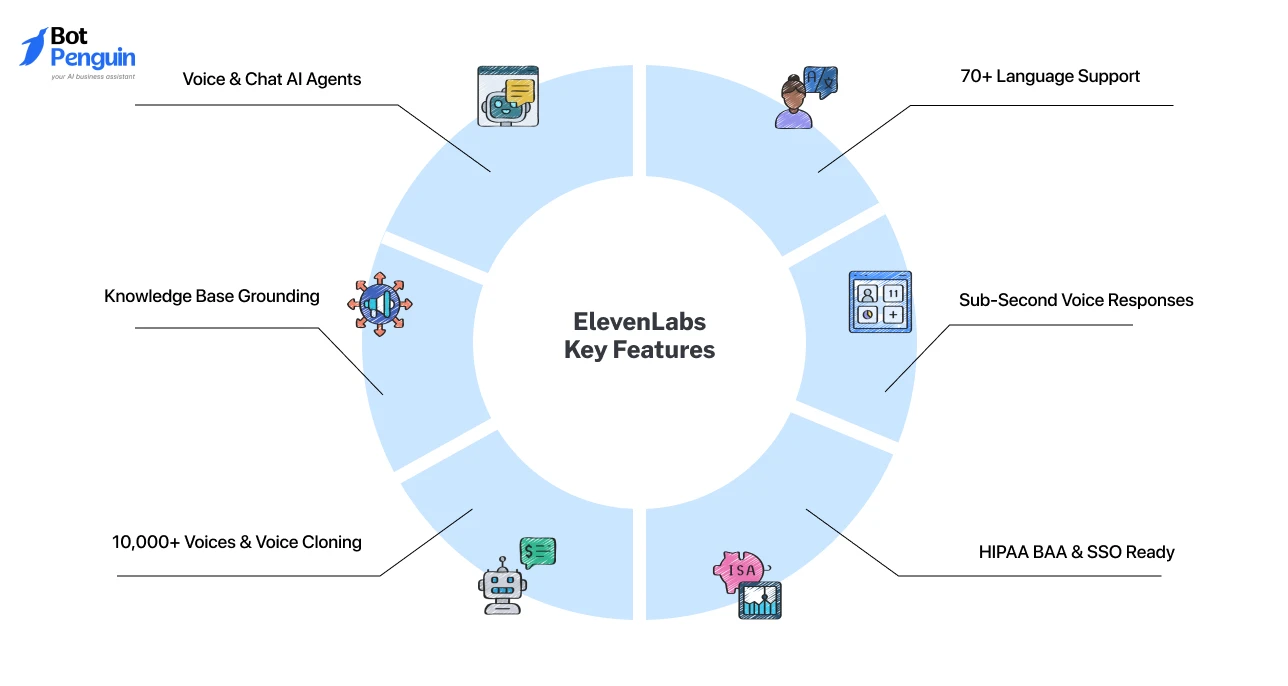
ElevenLabs is best suited for financial services teams exploring voice-led automation.
It is not a traditional financial chatbot platform, but its conversational AI supports low-latency voice and chat agents, multilingual conversations, knowledge grounding, workflows, and escalation paths for sensitive customer interactions.
Banks, lenders, and fintechs testing voice support, fraud calls, payment reminders, or phone-based service automation
Tidio is a customer support and lead generation platform that works well for smaller financial businesses focused on website conversions.
Its Lyro AI Agent answers customer questions from support content, creates tickets when needed, and supports live chat, flows, ticketing, and lead capture.
Voiceflow is a conversational AI design platform for teams building both chat and voice agents.
It fits financial services teams that want more control over conversation design, testing, deployment, and observability before launching customer-facing AI agents across support or voice banking workflows.
Financial institutions designing voice banking, chatbot prototypes, or custom AI support experiences
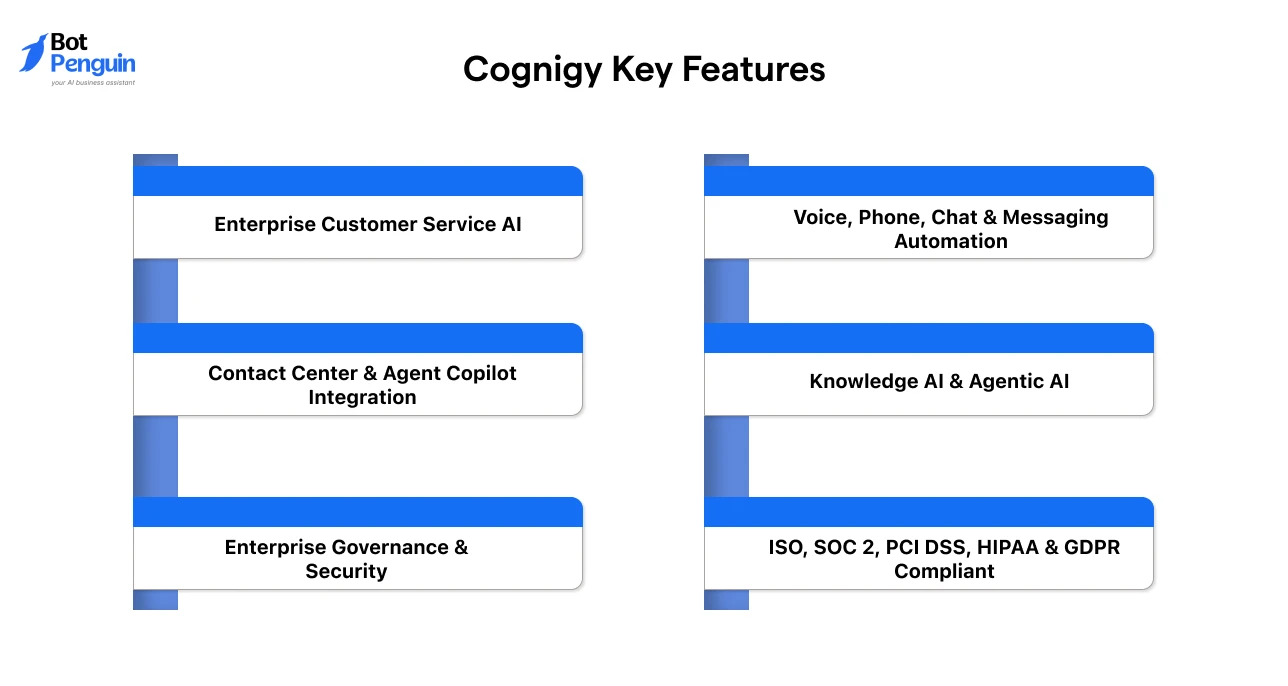
Cognigy is an enterprise-grade financial services chatbot platform for banks, insurers, and global service teams that need secure, multilingual, high-volume automation.
It supports AI agents, phone and voice, chat and messaging, agent copilot, contact center integrations, and enterprise governance.
Ada is an enterprise AI customer service platform for companies that need automated, omnichannel support at scale.
For financial services, it is better suited to high-volume service teams than to small fintechs because it focuses on AI agents, workflow extensions, multilingual support, analytics, and continuous performance improvement.
After reviewing these leading AI chatbot platforms for financial services, it’s worthwhile to explore the common mistakes organizations make when selecting a chatbot platform and how to avoid them.
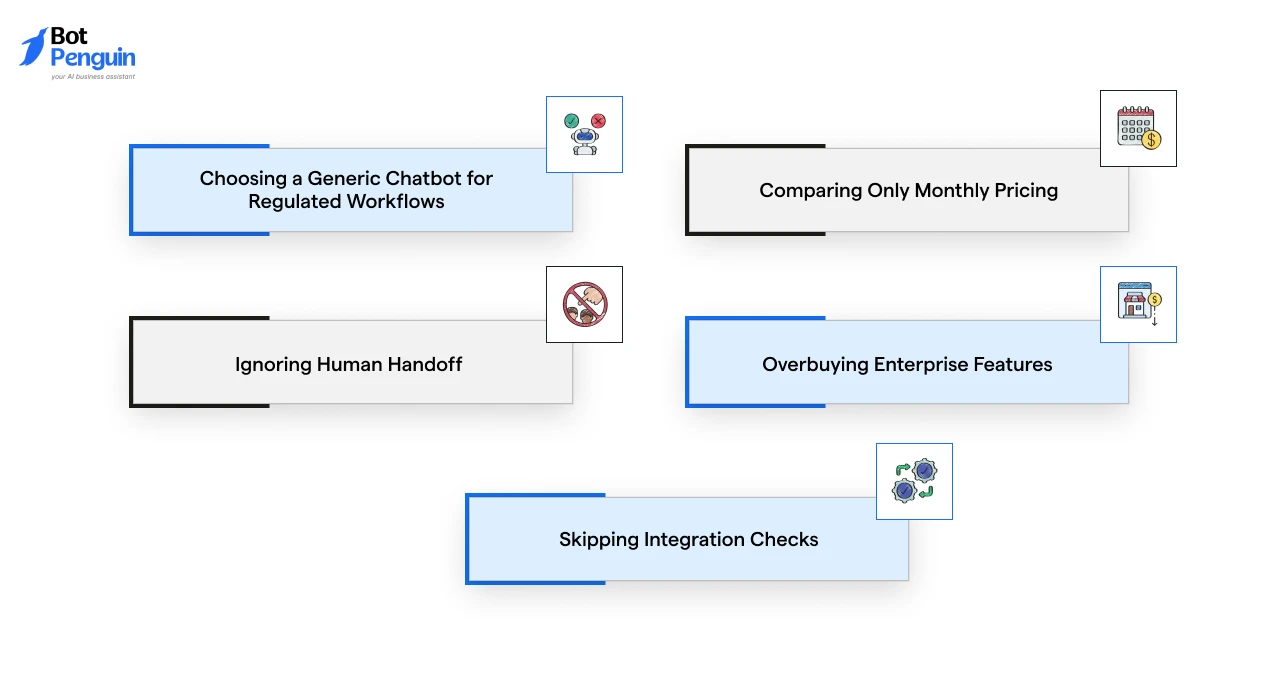
Avoiding the wrong financial chatbot platform is as important as choosing the right one. These mistakes often lead to poor adoption, weak automation, weak customer experience, or compliance gaps.
Here’s a breakdown of the common mistakes to avoid:
A generic chatbot may answer FAQs, but finance needs stronger control over data, escalation, compliance, and customer intent.
Low monthly pricing can hide usage limits, AI charges, channel fees, implementation costs, extra seats, and support costs.
Financial conversations often need human review. Fraud concerns, failed payments, loan disputes, and sensitive account issues should not stay trapped inside automation.
Not every financial business needs enterprise-grade complexity. SMBs, fintech startups, lenders, and insurance teams may need faster deployment over heavy infrastructure.
A chatbot that cannot connect with CRM, payment, helpdesk, calendar, or backend systems will stay limited to surface-level conversations.
To avoid these mistakes, BotPenguin gives financial teams a no-code AI financial chatbot platform with compliance support, integrations, omnichannel deployment, live handoff, and pricing clarity, helping them automate without overbuying enterprise complexity or sacrificing workflow control.
Choosing the best financial chatbot platform depends on how your financial business serves customers.
Insurers, lenders, fintechs, and wealth firms need different levels of compliance, integration, automation, and human handoff. For large enterprises with complex infrastructure, platforms like Cognigy, Streebo, Ada, and Voiceflow offer stronger depth for scale, voice, and backend workflows.
For SMBs and growing fintechs, BotPenguin is a practical fit because it combines no-code setup, omnichannel deployment, compliance support, integrations, and live chat handoff without heavy implementation work.
The right decision is not the platform with the most features. It is the one that helps your team respond faster, protect customer data, and launch reliable financial service conversations at a sustainable cost as your customer base grows.
The best financial chatbot platforms include BotPenguin, Picky Assist, Streebo, ElevenLabs, Tidio, Voiceflow, Cognigy, and Ada. Choose based on compliance, integrations, budget, and deployment speed.
A financial services chatbot platform should include secure automation, compliance controls, CRM integrations, fraud-alert support, multi-channel deployment, live-chat handoff, analytics, and workflow customization.
Choose a financial chatbot platform by checking use case, compliance needs, integration depth, customer channels, deployment speed, handoff options, and total cost.
Many financial chatbot platforms support GDPR, HIPAA, CCPA, SOC 2, ISO 27001, or PCI DSS. Compliance still depends on setup, plan, and data handling.
A no-code financial services chatbot platform can go live in days. Enterprise deployments with banking integrations, custom workflows, and compliance reviews may take weeks or months.
Yes, financial chatbot platforms can support fraud detection when connected to transaction monitoring systems. They can trigger alerts, collect verification details, and escalate urgent cases.
Automate Your Finance Workflow End-to-End With BotPenguin
Autopilot loan inquiries, account queries, and compliance workflows, with an AI-powered chatbot trained on your data.
Get Started FreeCheckout our related blogs you will love.
Updated at Oct 19, 2026
11 min to read
Updated at Oct 7, 2026
9 min to read

Updated at Oct 6, 2026
9 min to read

Updated at Oct 14, 2026
11 min to read
Updated at Oct 14, 2026
10 min to read
Updated at Oct 14, 2026
10 min to read
Table of Contents