


What Is a White Label Partnership? Models, Programs & How It Works
Updated at Oct 9, 2026
8 min to read
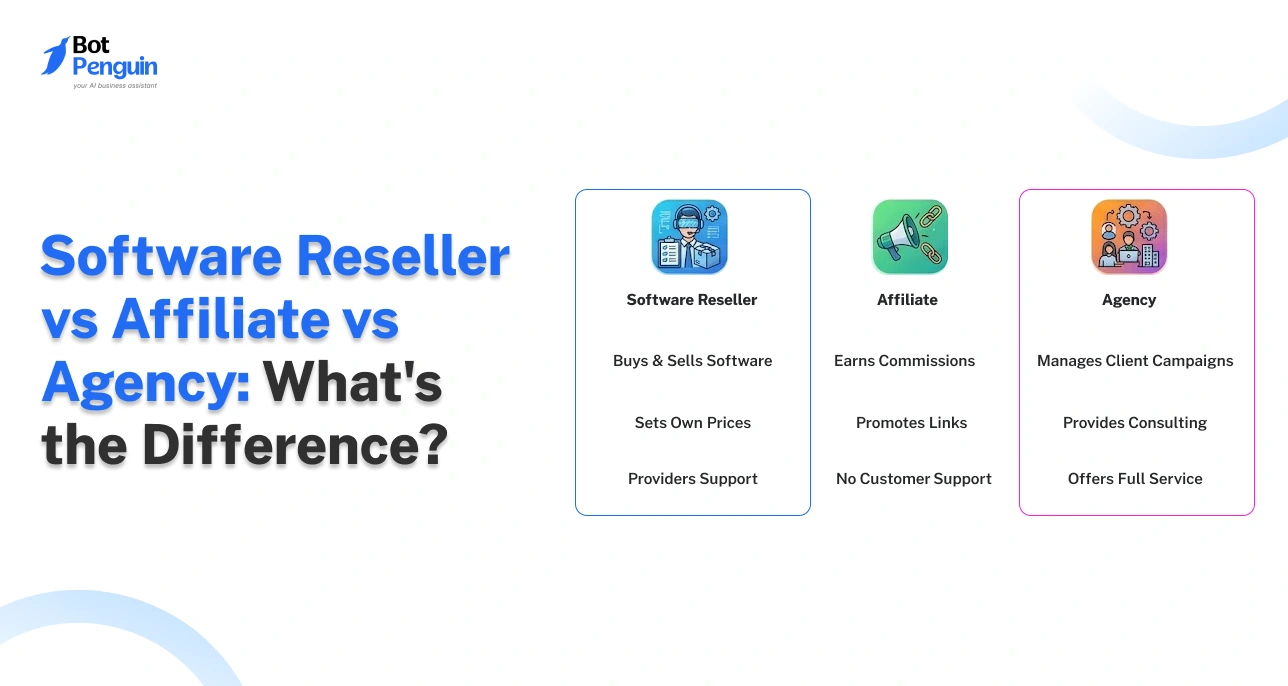
In a reseller vs affiliate vs agency comparison, resellers earn margins by selling software and managing customer relationships, while affiliates earn commissions by promoting products without controlling pricing or customers. Agencies use software to deliver services for fees or retainers. Control rises from affiliate to reseller to agency.
Getting into affiliate or reselling can look easy at first.
It feels like a quick way to earn: promote a product, sell it, and make money. But most people don’t stop to understand what these models actually involve. That’s where things go wrong.
At the same time, starting an agency sounds more serious and complex. But it’s not always the uphill battle it seems.
The truth is, each model works very differently.
In this guide, we’ll break down software reseller vs affiliate vs agency so you can clearly see what each one means, and which one is right for you.
Software reselling is a business model where you buy or partner with a software provider and sell their product to customers under your own terms.
Instead of building software from scratch, you act as the middle layer between the provider and the end user.
A prominent example of this is Microsoft’s partner network, where thousands of businesses resell Microsoft 365 and Azure services to their own clients.
A reseller model generally involves the following steps, from onboarding to ongoing delivery:
In short, you focus on selling and relationships; the provider handles everything happening under the hood.
Businesses seeking full branding and pricing control can also explore a white label partnership instead of traditional reselling.
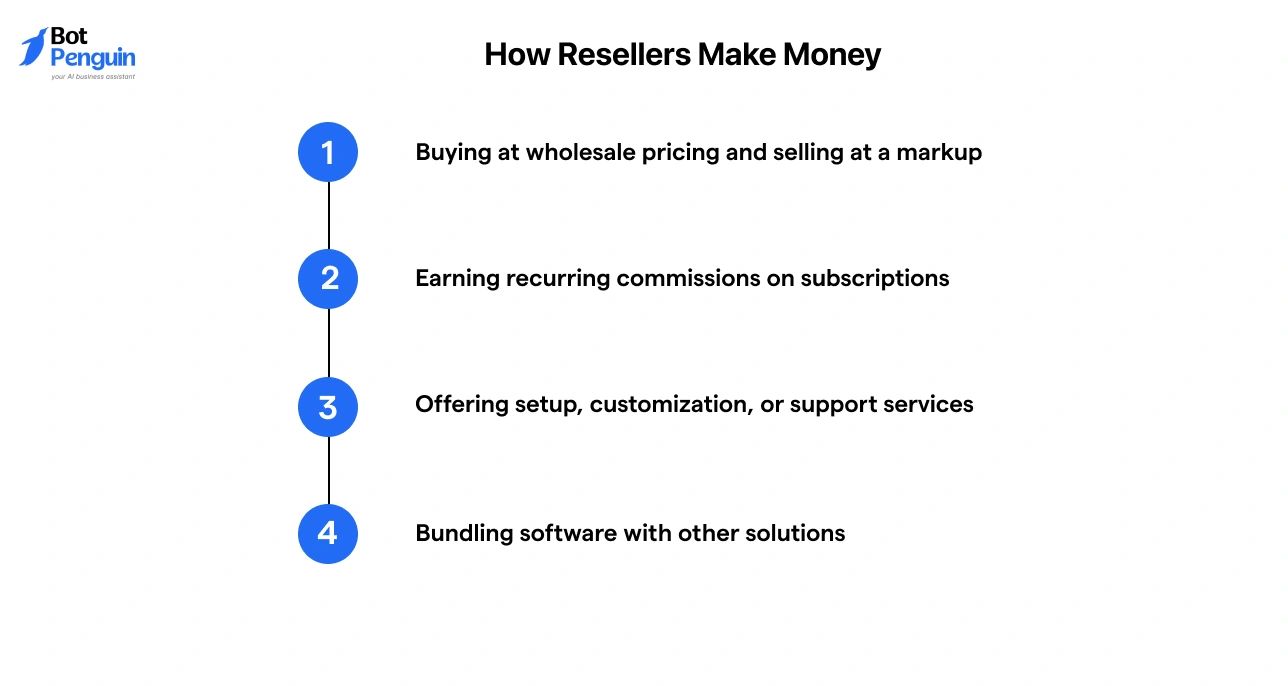
Now comes the most important question: How does a reselling business actually make you money?
We’ve broken down 4 common ways for ease of understanding:
On the whole, the reselling path is a solid low-risk entry into building a sustainable, margin-driven business.
Platforms like BotPenguin make this model more accessible by helping you become a chatbot reseller without building the technology or managing heavy technical setup.
With ready-to-use automation, multi-channel support, and flexible pricing, it becomes easier to focus on acquiring clients while the platform handles the underlying technology.
Let’s now dive into what an affiliate business actually looks like in practice.
An affiliate is someone who promotes a company’s software and earns a commission for every sale or action they drive.
So you get paid for sending the right people through the door. Nothing more, nothing less.
Example: If you promote a chatbot platform like BotPenguin through your YouTube channel and someone signs up using your link, you earn a 20% recurring commission on each sale.
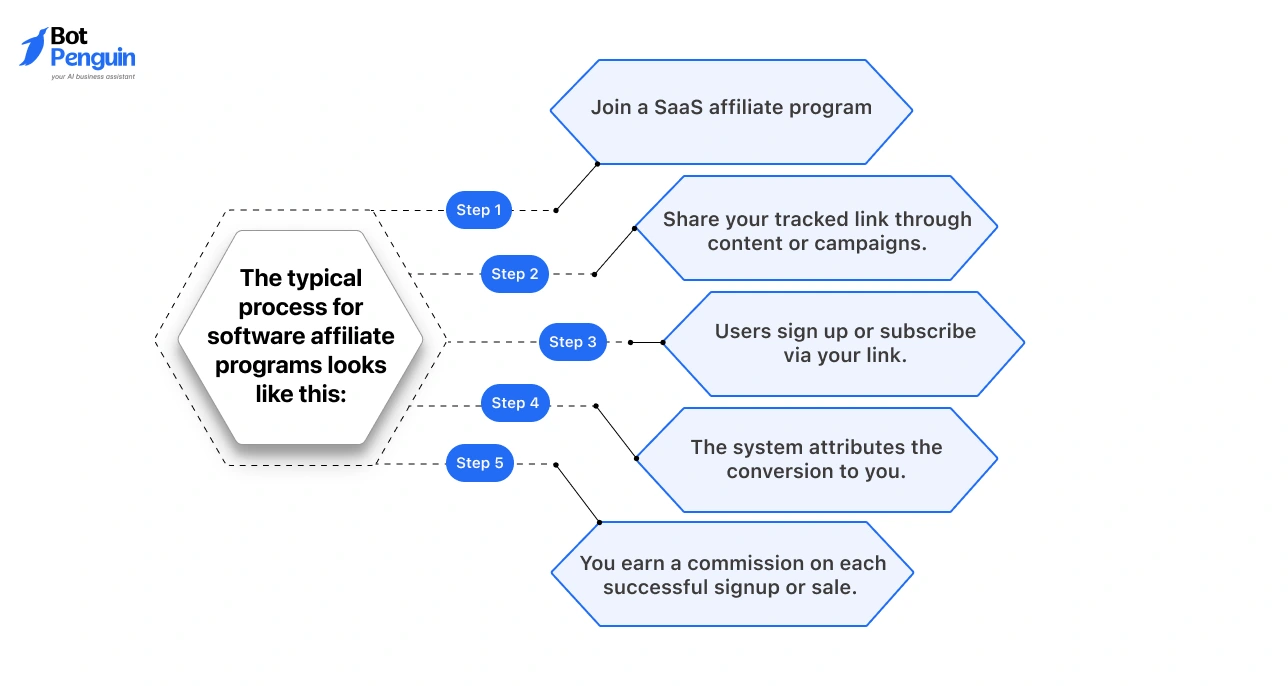
The typical process for software affiliate programs looks like this:
Comparing different chatbot affiliate program options can help you evaluate commissions, support, tracking, and payment terms before joining.
Affiliates usually earn through commissions, which can be one-time or recurring depending on the SaaS product.
Some programs also offer bonuses for high-volume referrals.
And although affiliate marketing is a simple way to monetize software, it comes with limited control over pricing, customers, and long-term revenue.
An agency in software does not sell the product directly. Instead, it uses software to deliver services to clients.
Think of it this way → The software is the tool. The agency is the one doing the work.
For instance, an agency might use a chatbot platform, CRM, or automation tool to help businesses generate leads, manage conversations, or improve operations.
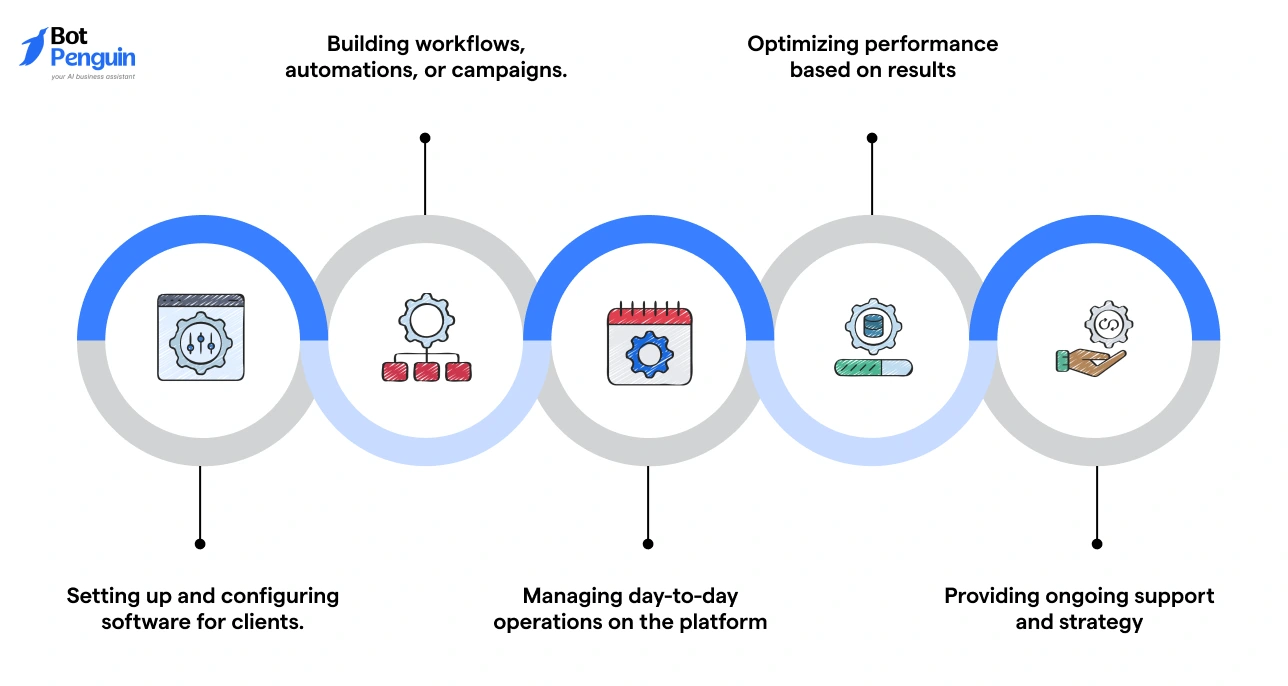
Agencies combine software with execution. They do not just recommend tools. They set them up, manage them, and optimize them.
Typical services include:
In most cases, the client never interacts deeply with the software. The agency handles everything.
In short, an agency partner program can provide the technology, training, and support needed to deliver these services efficiently.
Agencies earn by charging for their time, expertise, and results.
Common revenue models include:
Unlike affiliates or resellers, agencies are not limited to commissions or margins. Their earning potential depends on the value they deliver.
While the three models may seem similar, their differences appear in ownership, effort, and long-term potential.
Understanding these distinctions helps you avoid costly mistakes and choose a model aligned with your goals.
In both affiliate vs reseller and agency vs reseller comparisons, customer ownership, pricing control, revenue models, and operational effort are the biggest differences.
With these three prominent models, there’s another player worth understanding, viz., referral marketing, that often gets confused with affiliate marketing but works very differently.
The next section will break down how referral marketing differs from affiliate marketing and where each fits.
Affiliate vs referral marketing may look similar, but each model uses different promoters, incentives, and customer relationships.
Affiliate marketing relies on creators and marketers with established audiences. Referral marketing uses recommendations from customers who already trust the software.
The table below explains the difference between referral and affiliate marketing:
Affiliate programs are built for reach; you’re essentially paying for introductions at scale. Referral programs, on the other hand, are built on earned trust. A friend recommending a tool carries ten times the weight of a banner ad.
Key Insight: So in a comparison between affiliate program vs referral program, always remember: Affiliates grow your top of the funnel. Referrals grow your trust circle.
Each business model comes with clear advantages and trade-offs. Understanding both sides helps you choose what fits your goals and resources.
Let's first look at how reseller models stack up:
The reseller model works best when you want predictable recurring revenue with direct customer relationships. Now let’s look at how the other two models compare.
Affiliating reflects a high-volume, low-touch approach to earning, best suited for those with an existing audience.
Much like the other two, the agency model is not for everyone. It specifically appeals to those with the right skills and appetite for client work.
At the same time, it remains the highest-ceiling, highest-effort path of the three.
Selecting the right model comes down to an honest evaluation of your capabilities, goals, and bandwidth.
Here's a clear breakdown for informed, confident decision-making:
The Bottom Line: The right model isn't the most lucrative one; it's the one most aligned with your resources and long-term goals.
If you’re already exploring reseller or affiliate paths, BotPenguin’s partner program offers flexible ways to get started without a heavy upfront investment.
Businesses looking for a chatbot reseller program can resell chatbot solutions to their clients and build recurring revenue, while those with an existing audience can promote the platform as affiliates and earn commissions.
You can either resell chatbot solutions to your clients and build recurring revenue, or promote the platform as an affiliate and earn commissions through your audience.
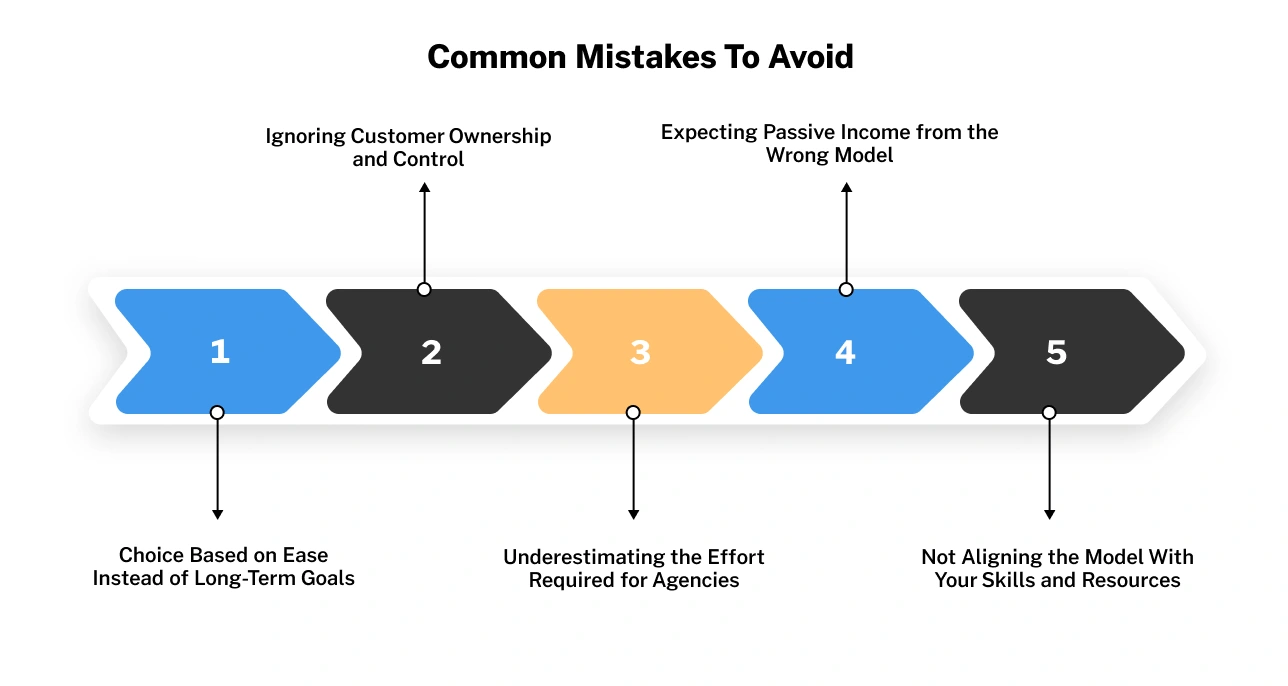
Picking the wrong business model can cost you months of effort and revenue.
Here are the most common mistakes to avoid before you commit:
Many people choose affiliate or reselling simply because it looks easier to start. This often leads to low returns or misaligned expectations over time.
The Right Approach: Choose a model based on your long-term goals, not just how easy it is to begin.
Overlooking who owns the customer relationship can limit your ability to build a sustainable business.
Affiliates, for example, don’t retain customer control. Similarly, agencies own their client relationships entirely, but that also means full accountability for delivery, outcomes, and retention.
The Right Approach: Prioritize models that align with how much ownership and control you want over customers and revenue.
Agencies are often seen as high-reward, but they demand consistent delivery, client management, and operational effort. Many underestimate this commitment.
The Right Approach: Be realistic about the time, skills, and systems required to run an agency successfully.
Not all models offer passive income. Agencies and resellers often require active involvement, especially in the early stages.
If you’re expecting to set things up once and watch the revenue roll in, the affiliate model is your only realistic starting point, and even that requires upfront content or traffic investment.
The Right Approach: Match your expectations with the nature of the model; choose an affiliate if passive income is your priority.
Choosing a model without considering your strengths, experience, or available resources often leads to slow progress or failure.
The Right Approach: Select a model that fits your existing skills or one you’re ready to invest time in developing.
The path you choose is only as good as the clarity you bring to the decision. Avoid these mistakes early, and you'll save yourself significant time, money, and frustration down the road.
Choosing between reseller, affiliate, and agency models comes down to what you want to build. Each model works. But they work differently.
Affiliates are simple and low effort. Resellers offer more control and recurring revenue. Agencies bring the highest earning potential, but require the most work.
There’s no single best option. The right choice depends on your goals, skills, and how involved you want to be.
Take a step back. Think long term. Then pick a model you can commit to and scale over time.
Ready to become a partner? Explore BotPenguin partner program to find the right path for your business.
A reseller sells software directly, an affiliate promotes and earns commissions, and an agency uses software to deliver services and charge clients for outcomes.
It depends on your goals. Affiliates suit beginners, resellers offer recurring revenue, and agencies generate higher income but require more effort and client management.
Yes, many businesses start as affiliates to generate leads and later transition into reselling for better margins, control, and long-term customer relationships.
No, affiliates do not own customers. The software company retains ownership, limiting long-term revenue opportunities and direct relationship building with users.
Agencies can be more profitable per client due to service fees and retainers, but they require higher effort, expertise, and ongoing delivery compared to affiliates or resellers.
Affiliate marketing involves external promoters earning commissions, while referral marketing relies on existing customers recommending products, usually in exchange for rewards or incentives.
Affiliate marketing is best for beginners due to low entry barriers, minimal operational effort, and no need to manage customers, support, or product delivery.
Subscribe to Our Newsletter
Get the latest business insights straight into your inbox.
Checkout our related blogs you will love.
Updated at Oct 9, 2026
8 min to read

Updated at Oct 9, 2026
12 min to read
Updated at Oct 8, 2026
10 min to read
Updated at Oct 7, 2026
15 min to read

Updated at Oct 6, 2026
9 min to read
Updated at Oct 6, 2026
9 min to read
Table of Contents
