White Label AI Agents for Insurance: Resell Under Your Brand
Updated at Sep 21, 2026
10 min to read
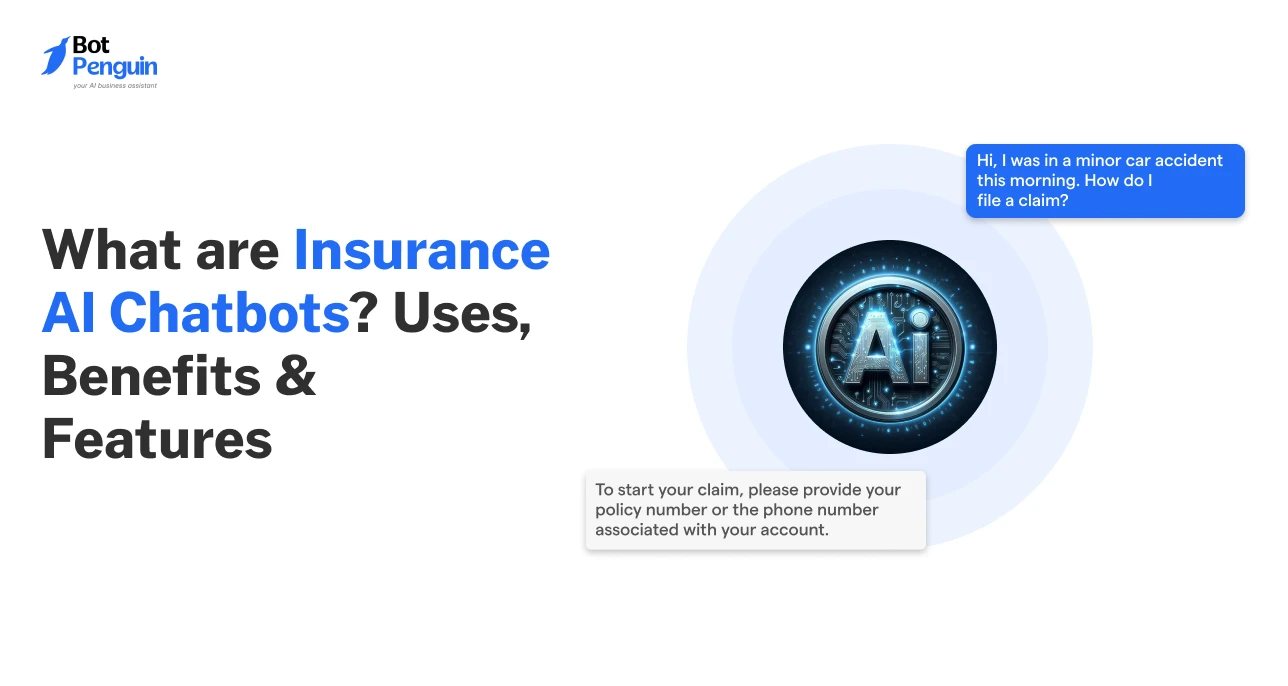
An insurance AI chatbot is an AI-powered assistant that understands natural-language questions about policies, quotes, claims, and renewals. Unlike rule-based bots that follow fixed scripts, it can interpret varied customer requests. The right choice depends on query complexity, required integrations, accuracy controls, human handoff, and compliance needs for insurers today.
Choosing the right chatbot for insurance is harder than it looks.
Some tools follow fixed rules. Others use AI to understand natural language. Many combine both, making it difficult to know which approach fits your business.
That is why insurance AI chatbots need closer evaluation. The best option depends on conversation complexity, integrations, security, human handoff, maintenance, and cost.
This guide will help you compare AI and rule-based approaches, understand the main chatbot types, and evaluate what matters before choosing one.
First, it helps to understand what makes an AI-powered chatbot different from conventional rule-based automation.
An insurance AI chatbot is a conversational system built for insurance interactions. It understands questions written naturally instead of relying only on preset commands.
For example, customers may phrase the same policy question in different ways. AI can identify the underlying intent and respond using approved insurance knowledge. That knowledge may include policy documents, FAQs, claims guidance, or internal resources.
A traditional insurance chatbot may instead follow predefined menus, buttons, or conversation paths. These flows work well when questions and responses remain predictable.
AI becomes more useful when conversations vary or require greater context. However, not every workflow needs that flexibility. Structured tasks may work better with rule-based automation.
Many insurers therefore evaluate AI, rule-based, and hybrid approaches together. Understanding where each works best clarifies the next decision: whether AI or rule-based automation better fits a specific insurance workflow.
Neither AI nor rule-based automation is universally better for insurance. The right approach depends on conversation complexity and predictability. Risk, required controls, and operational needs also matter.
Rule-based bots offer tighter control over structured conversations. AI-based bots provide more flexibility when customer language varies.
Rule-based chatbots work best when conversations follow predictable paths. Their main limitations include:
Fixed paths: Users must stay within predefined conversation flows.
Limited language flexibility: Unexpected phrasing can break the flow.
Higher maintenance: More scenarios require more rules and testing.
They still work well for structured processes with clearly defined responses. This makes them useful where control matters more than flexibility.
AI chatbots handle conversations more flexibly because they understand natural language.
Key strengths include:
Natural-language understanding: They interpret varied customer phrasing.
Knowledge-based responses: They answer from approved insurance information.
Context retention: They can follow longer, connected conversations.
Greater flexibility: They handle less predictable customer questions.
This makes AI chatbots in insurance useful when conversations vary significantly.
However, flexibility needs strong controls. Insurers should use approved knowledge sources, regular testing, and clear escalation rules. Sensitive or uncertain situations should move to authorized human agents.
Many insurers do not need to choose only one approach.
A hybrid model can use structured flows for predictable processes. AI can handle flexible questions that require natural-language understanding.
Human agents can then manage exceptions and higher-risk conversations. This creates clear boundaries between automation and human judgment.
The right architecture therefore depends on what each conversation requires. Once that is clear, insurers can evaluate the different types of insurance chatbots and where each fits.
The main types of insurance chatbots differ by the conversations they handle. Some focus on service, while others support claims, sales, or renewals.
Understanding these categories helps insurers match automation to specific operational needs.
Customer support chatbots handle common policy and account questions. They can also guide customers through routine service requests.
These chatbots work best when connected to accurate, approved knowledge. Complex or sensitive questions should still move to human support.
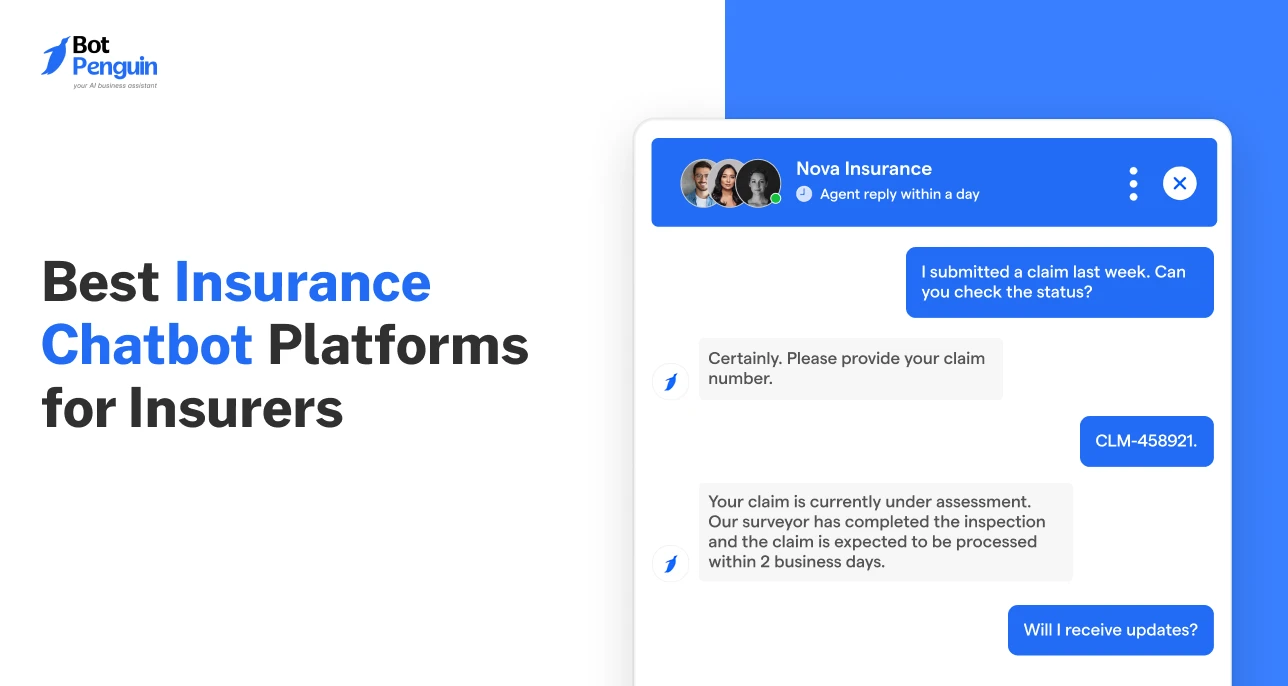
Claims chatbots support First Notice of Loss (FNOL) and early claim interactions. They can collect initial information and explain document requirements.
They may also share available status information when connected to claims systems.
However, chatbot assistance should not approve, reject, or decide claims. Authorized insurance teams must retain those responsibilities.
Quote and sales chatbots support early buying conversations. They can answer basic product questions and collect prospect details.
They may also gather information needed to continue a quote journey. The collected context can then be passed to the appropriate sales team.
These chatbots support routine policy servicing after a purchase.
They can handle renewal questions, premium-related queries, and common account requests. Structured flows may also guide customers through defined servicing steps.
The same functional chatbot can operate across several customer channels.
Common options include:
Websites
Mobile apps
Customer portals
Other Social messaging channels
The channel changes where the conversation happens, not necessarily its core function. Insurers should therefore choose channels based on customer behavior and workflow requirements.
For more detailed scenarios, see chatbot for insurance agents use cases.
Once you know the right chatbot type, the next step is to evaluate which platform can deliver it accurately, securely, and at the required scale.
Choosing the right platform starts with knowing what your insurance workflows require. The strongest option is not the one with the longest feature list. Instead, compare platforms based on accuracy, integrations, human handoff, maintenance, security, and scalability.
These criteria make choosing an insurance AI chatbot more practical and focused.
Accuracy should come before conversational polish.
Important insurance chatbot features include:
Using approved policy, claims, and product sources.
Staying grounded in insurer-provided information.
Flagging uncertainty instead of guessing.
Escalating when the chatbot cannot answer confidently.
Also test how easily teams can update knowledge. Insurance information changes, so outdated answers create unnecessary risk.
Ask vendors how they test responses before launch. Review whether teams can inspect sources, correct answers, and restrict unsupported responses.
Integrations should support the intended workflow.
Check whether the chatbot connects with:
CRM systems.
Helpdesks.
Customer records.
Policy or claims systems.
Other internal tools used by service teams.
Don't choose a platform just because it lists many integrations. Focus on whether those connections move data where it needs to go.
For example, a chatbot may collect a claim reference. That information should reach the correct system without manual re-entry.
Also check whether integrations support secure authentication and controlled data access.
A chatbot should know when to stop automating.
Evaluate whether it can:
Trigger escalation based on clear rules.
Transfer the full conversation history.
Pass customer context to the receiving agent.
Route chats to the correct team.
Handle sensitive or complicated conversations safely.
A weak handoff can undo the speed gained through automation. Test escalation with unclear, emotional, and high-risk queries before launch.
Insurance teams should not need developers for every small update.
Check whether business users can change knowledge, adjust flows, and review results. Routine improvements should be manageable without technical dependency.
Also review permissions for editing and publishing changes. Sensitive workflows may require approval before updates go live.
For implementation guidance, see how to build an insurance chatbot.
Insurance conversations may involve personal, financial, or health information. That makes security controls a core evaluation factor.
Check how the platform manages:
Data access and user permissions.
Sensitive customer information.
Data storage and retention.
Secure integrations.
Regulatory and industry requirements.
Also verify whether vendor certifications and compliance controls match your specific obligations. A platform’s compliance status does not automatically make every workflow compliant.
Pricing should reflect both current use and future growth.
Evaluate:
Conversation volume.
Number of channels.
Required integrations.
AI usage.
Team size and access.
Expected future scale.
Look beyond entry pricing. Costs may change as usage, channels, or automation requirements expand.
Ask whether pricing changes with AI consumption, seats, channels, or integrations. This prevents surprises after adoption grows.
For a broader vendor comparison, review best insurance chatbot platforms. Shortlist platforms against these criteria first. Then test them using representative insurance queries and realistic escalation scenarios.
That gives insurers a clearer basis for assessing whether a platform fits their operating model in practice.
The evaluation criteria above become more useful when applied to a real platform.
BotPenguin lets insurers build no-code chatbots using AI and structured flows. Teams can train them on business data, connect CRM or policy systems, and transfer complex conversations to live agents with context.
It supports multiple messaging channels and 80+ integrations.
BotPenguin is GDPR, HIPAA, and CCPA compliant, ISO certified, SOC 2 attested, and VAPT-assessed by a CERT-In-impanelled auditor.
The platform is used by 80,000+ businesses across 193 countries.
An insurance AI chatbot is a conversational system that understands natural-language questions and answers using approved insurance information. Unlike scripted bots that follow fixed paths, it can interpret varied phrasing, maintain context, and respond more flexibly while escalating uncertain or sensitive conversations to human agents.
AI chatbots understand natural language and can interpret different ways of asking the same question. Rule-based chatbots follow predefined paths and work best for predictable interactions. AI suits varied conversations, while rule-based automation fits structured processes that require tighter control and consistent responses by design.
Insurance chatbots generally fall into customer support, claims and FNOL, quote and sales, renewal and policy-service, and channel-based categories. The same chatbot may serve several functions across websites, WhatsApp, mobile apps, customer portals, or social messaging channels, depending on the insurer’s workflow and customer needs.
Choose a platform by matching its capabilities to your actual insurance workflows. Evaluate response accuracy, knowledge controls, integrations, human handoff, no-code management, security, compliance, pricing, and scalability. Then test shortlisted options with representative customer questions and realistic escalation scenarios before deciding on deployment.
Insurance AI chatbots can be secure and compliant when configured with appropriate data controls, permissions, storage practices, and integrations. However, compliance depends on the insurer’s specific workflows and obligations. Using a compliant vendor does not automatically make every chatbot deployment or insurance process compliant itself.
No. Insurance AI chatbots are better suited to repetitive, structured, and information-based conversations. Human agents remain essential when situations require judgment, authorization, empathy, negotiation, or complex decisions. A strong model uses automation for routine interactions while appropriately escalating higher-risk or sensitive cases to qualified people.
Choosing between rule-based and insurance AI chatbots depends on how each workflow operates.
Rule-based automation works well when conversations follow predictable paths. AI is better suited to varied questions that require natural-language understanding and greater context. For many insurers, a hybrid model offers the strongest balance.
The chatbot type should also match the operational need.
Before choosing a platform, evaluate accuracy, integrations, security, human escalation, maintenance, and long-term cost. A clear decision framework helps insurers avoid unnecessary complexity.
The goal is not to choose the most advanced chatbot, but the one that fits the required workflow, risk level, and customer experience.
Start with a platform like the BotPenguin insurance chatbot that lets you test that fit in practice.
Choose Smarter Insurance Chatbots
Compare AI, rule-based, and hybrid options, then build the right insurance chatbot for your workflows with BotPenguin more confidently.
Get Started for FreeCheckout our related blogs you will love.
Updated at Sep 21, 2026
10 min to read
Updated at Sep 21, 2026
11 min to read
Updated at Sep 21, 2026
15 min to read
Updated at Oct 19, 2026
11 min to read

Updated at Oct 14, 2026
11 min to read
Updated at Oct 14, 2026
10 min to read
Table of Contents