


White label software allows businesses to rebrand and sell existing solutions under their own brand without building them from scratch.
From white label SaaS platforms, CRM software, and the evolution of the standard white label chatbot platform into fully autonomous white label AI agents, to marketing automation tools, client portals, and marketplace software, these solutions help companies launch faster and generate recurring revenue. For agencies looking to maximize these margins, entering an enterprise-grade AI agent reseller program has become the fastest way to scale a high-ticket, automated service delivery model.
This guide compares the best white label software platforms in 2026 based on features, branding flexibility, pricing, scalability, and business use cases.
#Quick Comparison of the Best White Label Software Platforms
Choosing the wrong tool slows growth. The right one helps you launch faster and sell more.
This quick comparison of the best white-label software gives you a clear starting point based on your business model.
This table simplifies how different white-label software platforms fit specific needs.
The key is alignment. The best white-label software is not the one with the most features, but the one that fits what you plan to sell.
Now lets understand all these in detail.
Best White Label Software Platforms and Tools
Most businesses don’t need more tools. They need the right one they can sell.
The best white-label software is not defined by features alone. It is defined by how well it fits your business model. Some platforms help you sell AI automation, others help you manage clients, while some focus on reporting or marketplaces.
The white-label software platforms below are selected based on real use cases like automation, client management, and scaling services.
1. BotPenguin (Best White Label Software Platform for Conversation and Workflow Automation)
BotPenguin is a white-label marketing automation software platform built for agencies and sellers that want to sell AI-powered services under their own brand. It goes beyond basic chatbot tools by offering a full ecosystem for automation, customer engagement, and partner-led resale.
It supports multiple communication channels, including website chat, WhatsApp, Instagram, Facebook, and Telegram. This allows businesses to manage conversations and automate interactions across platforms from one system.
Best for
- Marketing agencies offering AI automation
- SaaS vendors building recurring revenue
- Chatbot consultants managing multiple clients
- Businesses automating lead generation and support
Features
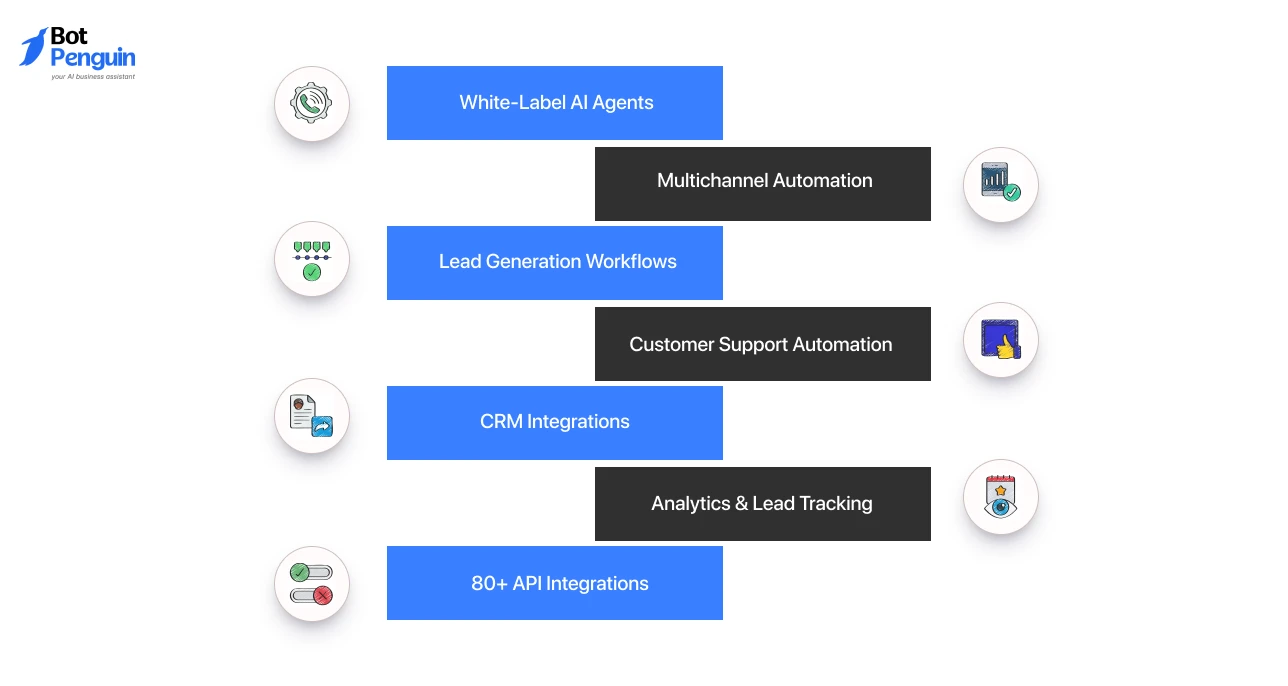
- White-label AI agents with custom branding and domain
- Multichannel automation across chat and social platforms
- Lead generation, qualification, and booking workflows
- Customer support automation with live chat fallback
- CRM integrations, including Zoho, Bitrix24, and others
- Analytics dashboard for tracking conversations and leads
- 80+ integrations via APIs and automation tools
Pros
- Strong multichannel automation capabilities
- Full white label control for branding and sale
- Built for recurring revenue models
- Covers both marketing and support use cases
Cons
- Not a full traditional CRM platform
- Requires clear positioning to sell effectively
Summary
BotPenguin is one of the strongest options for agencies entering AI automation. It combines branding, automation, and integrations, making it ideal for selling AI-driven services without building infrastructure.
2. GoHighLevel (Best White Label Software Platform for Marketing Agencies)
GoHighLevel is a comprehensive white-label CRM software designed for agencies that want to manage leads, campaigns, and communication under one branded platform. It replaces multiple tools with a single system focused on client management and automation.
It allows agencies to rebrand the platform completely and sell it as their own SaaS offering.
Best for
- Marketing agencies managing leads and pipelines
- Businesses offering CRM as a service
- Agencies running campaigns and follow-ups
- Teams needing centralized communication
Features
- CRM pipelines and contact management
- Email, SMS, and workflow automation
- Funnel and landing page builder
- Appointment scheduling with reminders
- White-label dashboard and mobile app
- SaaS resale model with recurring billing
Pros
- All-in-one CRM and automation system
- Strong white label resale capabilities
- Reduces the need for multiple tools
- Supports recurring revenue models
Cons
- Setup can be complex initially.
- Advanced features require higher plans.
Summary
GoHighLevel is ideal for agencies that want to sell CRM and automation as a product. It works best when lead management and campaign execution are central to your business.
3. Vendasta (Best White Label Software Platform for Digital Agencies)
Vendasta is a large-scale white-label marketing software platform built for agencies that want to sell multiple services and tools under one brand. It functions as a marketplace combined with CRM and billing infrastructure.
It is designed for agencies that want to scale offerings without managing individual vendors.
Best for
- Digital agencies offering multiple services
- SaaS vendors building bundled solutions
- Consultants managing client portfolios
- Businesses focused on recurring revenue
Features
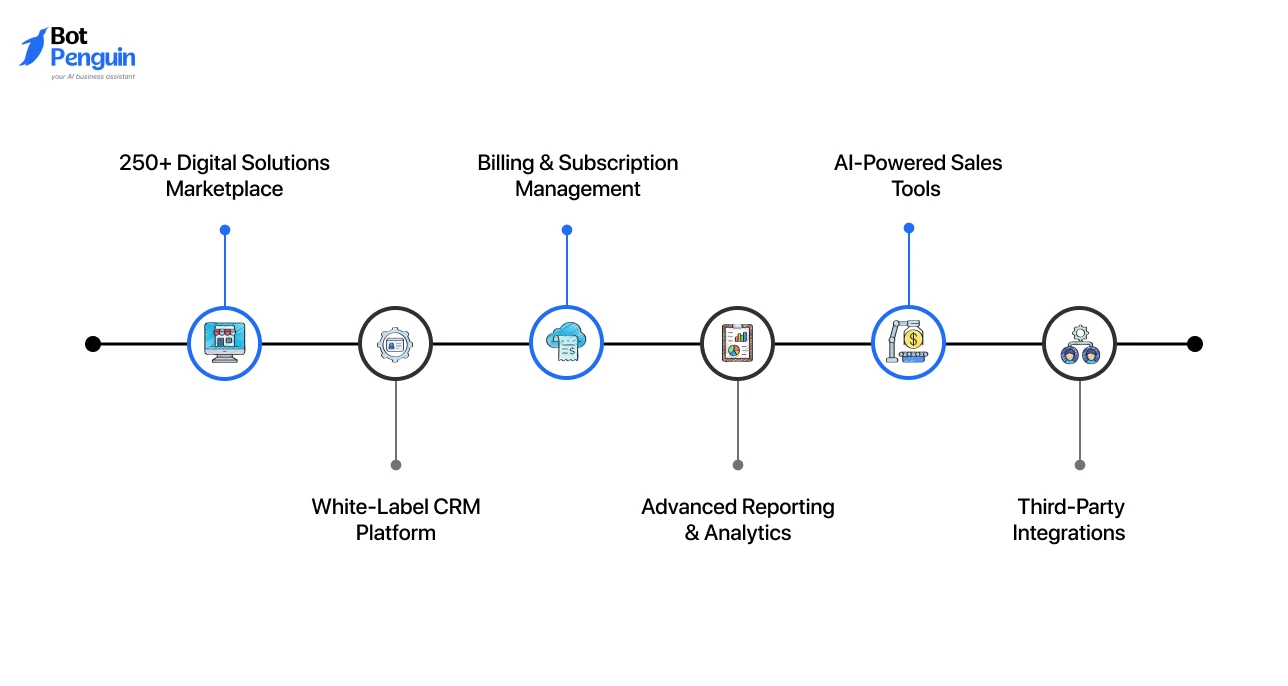
- Marketplace with 250+ digital solutions
- White-label CRM and client management
- Billing and subscription management
- Reporting dashboards and analytics
- AI-powered sales tools
- Integration with third-party services
Pros
- Wide range of services in one platform
- Strong partner ecosystem
- Built-in billing and CRM
- Scalable for multi-service agencies
Cons
- Dependent on external service providers
- Less control over individual tools
Summary
Vendasta is best for agencies that want to sell multiple marketing services. It simplifies operations by combining tools, billing, and fulfillment in one system.
4. DashClicks (Best White Label Software Platform for SEO and PPC Agencies)
DashClicks is a white-label marketing software platform that combines software tools with fulfillment services. It helps agencies manage leads, reporting, and marketing delivery in one place.
It is built for agencies that want both execution and reporting without building internal teams.
Best for
- SEO and PPC agencies
- Agencies outsourcing fulfillment
- Businesses focused on reporting and delivery
- Teams handling client acquisition and retention
Features
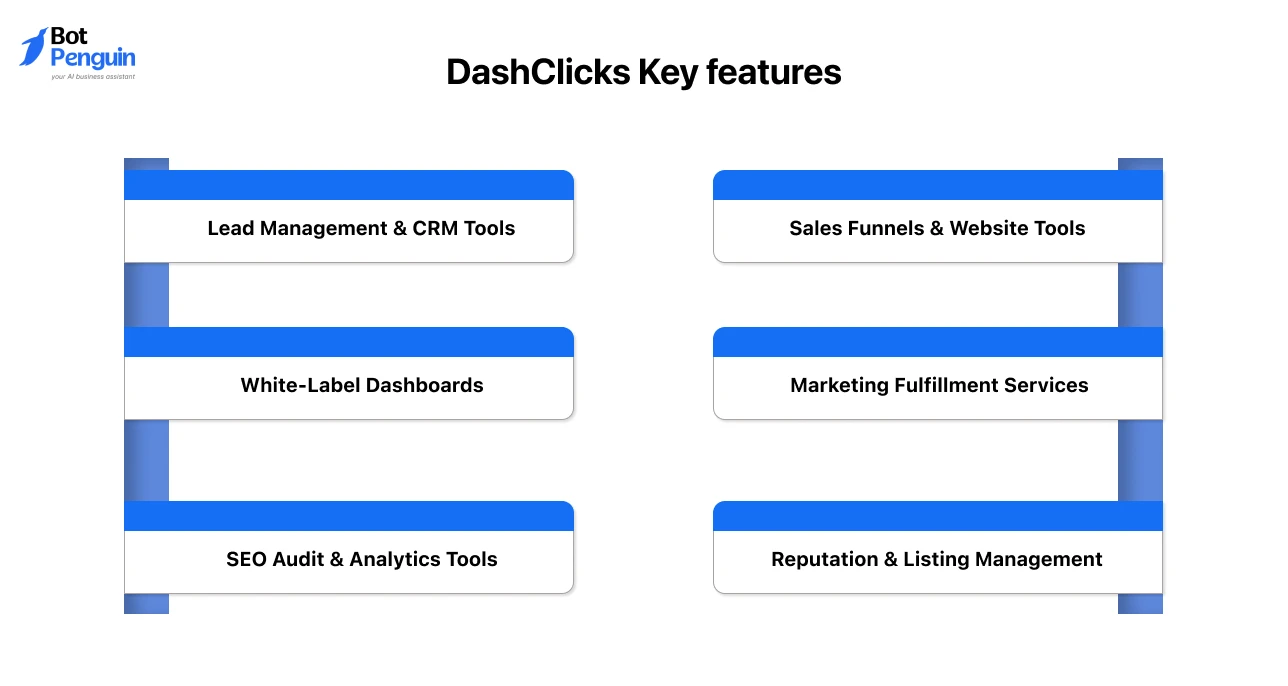
- Lead management and CRM tools
- White-label dashboards and reporting
- SEO audits and analytics tools
- Sales funnels and website tools
- Fulfillment services for ads, SEO, and content
- Reputation and listing management
Pros
- Combines software and fulfillment
- Strong reporting capabilities
- Useful for agencies without in-house teams
- Supports multiple marketing services
Cons
- Some features are plan-dependent.
- Less flexible for custom product building
Summary
DashClicks is ideal for agencies focused on marketing results. It combines delivery, reporting, and lead management into one practical platform.
5. AgencyAnalytics (Best White Label Software Platform for Client Reporting)
AgencyAnalytics is a focused white-label dashboard software built for agencies that need to present performance clearly to clients. It aggregates data from multiple platforms into a single branded reporting interface.
Unlike all-in-one tools, it is designed specifically for reporting and analytics rather than execution or CRM workflows.
Best for
- Marketing agencies focused on reporting
- SEO and PPC service providers
- Agencies managing multiple client accounts
- Businesses needing branded analytics dashboards
Features
- Fully white-labeled dashboards and reports
- Custom domain and branded client portals
- Drag-and-drop report builder
- Automated report scheduling
- Integration with 85+ data sources
- Custom metrics and widgets
Pros
- Strong reporting and visualization capabilities
- Easy to scale across multiple clients
- Clean and professional dashboards
- Fast onboarding and setup
Cons
- No CRM or automation features
- Not designed for campaign execution
- Needs pairing with other tools
Summary
AgencyAnalytics is best for agencies that sell performance visibility. It works as a reporting layer that improves client communication and retention.
6. SE Ranking (Best White Label Dashboard Software Platform for SEO Reporting)
SE Ranking is a specialized white-label dashboard software designed for SEO agencies. It combines optimization tools with branded reporting, making it useful for both execution and client visibility.
It is built around search performance tracking and analysis.
Best for
- SEO agencies and consultants
- Businesses offering search optimization
- Agencies focused on organic growth
- Teams managing keyword tracking
Features
- Keyword rank tracking and monitoring
- Website audit and technical analysis
- Backlink tracking and competitor research
- White label reports and dashboards
- Lead generation widgets
- Client login access
Pros
- Combines SEO tools and reporting
- Strong keyword tracking accuracy
- Useful for lead generation
- Custom branding options
Cons
- Limited outside SEO workflows
- Not a full marketing or CRM platform
- Less flexible for multi-service agencies
Summary
SE Ranking is ideal for SEO-focused agencies. It provides both insights and reporting in one platform, making it efficient for search-driven businesses.
7. Simvoly (Best White Label Software Platform for Websites and Funnels)
Simvoly is an all-in-one white-label software platform that allows agencies to sell websites, funnels, and ecommerce solutions under their own brand. It removes the need for multiple tools by combining core business features.
It is designed for agencies offering digital presence as a product.
Best for
- Website and funnel agencies
- Ecommerce businesses
- Consultants building digital products
- Agencies offering subscription services
Features
- Website and funnel builder
- Ecommerce and product management
- Built-in CRM and automation
- White label branding and domain control
- Membership and subscription tools
- Templates and reusable designs
Pros
- Full white-label experience
- Combines multiple tools in one system
- Supports recurring revenue models
- Easy to scale across clients
Cons
- Limited third-party integrations
- Not focused on analytics or reporting
- Less suitable for CRM-heavy use cases
Summary
Simvoly is best for agencies selling websites and funnels. It simplifies delivery by combining multiple capabilities into one branded platform.
8. Canva (Best White Label Software Platform for Branded Creative Workflows)
Canva fits into white-label software platforms as a design and workflow tool rather than a full SaaS resale solution. It helps teams maintain consistent branding across content creation.
It is widely used for marketing and creative production.
Best for
- Creative teams and agencies
- Content marketing teams
- Businesses managing multiple brands
- Teams needing design consistency
Features
- Brand kits for logos, fonts, and colors
- Template-based design workflows
- Collaboration and approvals
- Multi-brand management
- API integrations for embedding design
- Asset management system
Pros
- Easy for non-designers
- Strong brand consistency tools
- Scalable for teams
- Supports collaboration
Cons
- Limited white-label selling capabilities
- No full SaaS branding control
- Not built for client billing or resale
Summary
Canva is best for internal creative workflows. It is not a full white-label SaaS platform, but it helps maintain consistent branded content.
9. SEOReseller (Best White Label Software Platform for SEO Service Resale)
SEOReseller is a fulfillment-first white-label marketing software designed for agencies that want to sell SEO and marketing services without building internal teams.
It combines service delivery with reporting tools.
Best for
- Agencies selling SEO services
- Businesses outsourcing fulfillment
- Marketing consultants
- Agencies scaling services quickly
Features
- SEO, PPC, and content services
- White-label dashboards and reports
- Proposal and audit tools
- Campaign tracking
- CRM integration
- Client portals
Pros
- No need for an in-house team
- Ready-to-sell services
- Simplifies delivery
- Supports multiple offerings
Cons
- Limited control over execution
- Dependent on external teams
- Less flexible than SaaS platforms
Summary
SEOReseller is best for agencies that want to sell services fast. It focuses on delivery rather than building a custom product.
10. Yo!Kart (Best White Label Software Platform for Ecommerce Marketplaces)
Yo! Kart is a powerful white-label marketplace software built for multi-vendor ecommerce platforms. It allows full branding and control over marketplace operations.
It is designed for product-based marketplaces.
Best for
- Ecommerce marketplace founders
- Multi-vendor businesses
- Retail platforms
- Entrepreneurs building marketplaces
Features
- Multi-vendor marketplace setup
- Product and inventory management
- Payment gateway integrations
- Order and shipping management
- Admin and vendor dashboards
- Custom branding and themes
Pros
- Strong ecommerce functionality
- Full white-label control
- Scalable architecture
- One-time license option
Cons
- Requires technical setup
- Not ideal for service marketplaces
- Limited flexibility for custom UX
Summary
Yo! Kart is ideal for ecommerce marketplaces. It provides full control over vendors, products, and transactions.
11. Sharetribe (Best White Label Software Platform for Service Marketplaces)
Sharetribe is a flexible white-label marketplace software platform designed for service, rental, and booking platforms. It supports both no-code setup and developer-level customization.
It is widely used for testing marketplace ideas.
Best for
- Service marketplace startups
- Rental and booking platforms
- Founders validating ideas
- Businesses needing flexibility
Features
- No-code marketplace builder
- Payment integration with Stripe
- Messaging and reviews
- API-first architecture
- Admin tools and user management
- Custom domain support
Pros
- Fast setup
- Flexible for multiple models
- Scalable with APIs
- Supports service-based platforms
Cons
- Limited branding depth initially, as branding flexibility and white-label customization depend on the subscription plan and platform configuration
- Customization requires development.
- Less suited for product marketplaces
Summary
Sharetribe is best for service marketplaces. It offers flexibility and scalability for startups and growing platforms.
12. Clinked (Best White Label Software Platform for Client Portals)
Clinked is a secure white-label dashboard software focused on client portals and collaboration. It helps businesses manage client interactions through branded workspaces.
It is designed for structured communication and document sharing.
Best for
- Consultants and agencies
- Legal and finance firms
- Service businesses
- Teams managing client workflows
Features
- Branded client portals
- File sharing and document management
- Task and project tracking
- User permissions and access control
- Messaging and notifications
- Integration with productivity tools
Pros
- Strong collaboration features
- Secure and compliant
- Fully branded workspace
- Works across industries
Cons
- Limited marketing features
- No CRM or automation
- Needs integration with other tools
Summary
Clinked is best for client collaboration. It focuses on secure communication and structured workflows rather than marketing or automation.
The tools above cover different business models, so pick the one that aligns with how you plan to sell, deliver, and scale your services.
White Label Software Pricing Models
White label software providers use different pricing models depending on the type of platform, target market, and reseller program. Understanding these pricing structures can help agencies, SaaS resellers, and businesses choose a solution that aligns with their budget, profit margins, and growth strategy.
| Pricing Model | Best For | How It Works |
|---|---|---|
| Monthly Subscription | SaaS businesses, AI software, marketing automation platforms | Pay a fixed monthly fee to access and resell the software under your own brand. |
| Revenue Sharing | Agencies, white label resellers, partner programs | Revenue generated from clients is shared between the software provider and reseller. |
| Per User Pricing | CRM software, help desk software, client portal platforms | Pricing scales based on the number of users, agents, or client accounts. |
| One-Time License | Marketplace software, ecommerce platforms, enterprise deployments | A single upfront payment provides ownership or long-term access to the software. |
| Hybrid Pricing | Enterprise software, custom SaaS solutions, large agencies | Combines subscription fees with usage-based charges, setup fees, or revenue-sharing components. |
The best pricing model depends on your business goals. Agencies often prefer revenue-sharing or subscription-based white label software, while SaaS resellers benefit from predictable monthly pricing.
Businesses building ecommerce marketplaces or custom platforms may find one-time licensing more cost-effective over the long term.
Why More Agencies Are Choosing White Label Software Solutions
Agencies are choosing white-label software because it helps them grow faster without building products from scratch.
Here are the top reasons marking that shift:
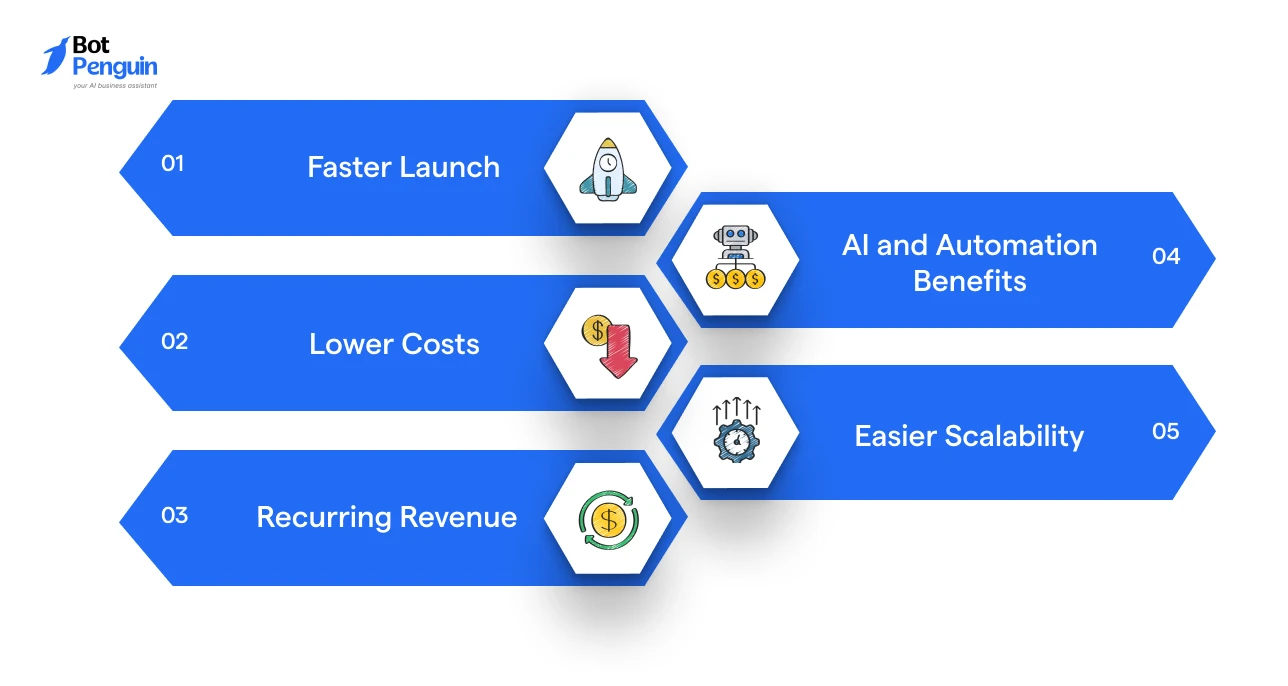
Faster Launch
White-label software platforms enable businesses to launch services quickly by rebranding ready-made tools rather than building software internally.
Lower Costs
Businesses can reduce development costs by 60–80% while avoiding expenses related to engineering, hosting, and maintenance.
Recurring Revenue
Agencies can sell subscriptions, automation services, and client solutions under their own brand to create long-term recurring revenue.
AI and Automation Benefits
Many modern platforms include AI chatbots and automation tools that can handle up to 80% of customer queries.
Easier Scalability
More than 65% of agencies now use white-label tools for CRM, marketing automation, reporting, and client management because they simplify scaling and service delivery.
As demand for scalable and cost-effective solutions grows, white-label software platforms are becoming the preferred choice for agencies looking to expand services and revenue faster.
How We Evaluated the Best White Label Software Platforms
To identify the best white label software platforms, we evaluated each solution using the criteria that matter most to agencies, SaaS resellers, consultants, and businesses looking to launch branded software products.
| Evaluation Factor | What We Looked For | Why It Matters |
|---|---|---|
| Branding Control | Custom logo, domain, dashboard, client portal, and white label customization | Helps businesses deliver a fully branded white label SaaS experience. |
| Integrations | CRM integrations, payment gateways, marketing automation tools, APIs, and third-party apps | Ensures the platform connects seamlessly with existing business systems. |
| Scalability | Multi-client management, user limits, subscription handling, and automation capabilities | Supports long-term growth without requiring a platform migration. |
| Pricing & Reseller Value | Subscription costs, reseller programs, white label plans, and profit margins | Determines profitability for agencies and SaaS resellers. |
| Customer Support | Onboarding assistance, documentation, training resources, and technical support | Reduces setup challenges and improves client success. |
| Ease of Setup | Deployment speed, no-code features, templates, and implementation requirements | Helps businesses launch white label software faster. |
| Automation & AI Features | AI agents, chatbot software, workflow automation, lead generation, and customer engagement tools | Increases operational efficiency and recurring revenue opportunities. |
| Industry Use Cases | Support for CRM software, marketing software, chatbot platforms, client portals, and marketplace software | Ensures the platform aligns with specific business models and industries. |
We prioritized platforms that offer strong branding flexibility, reliable integrations, scalable infrastructure, competitive pricing, and proven business value.
The goal was to identify white label software solutions that help businesses launch faster, reduce development costs, and build recurring revenue through branded SaaS, automation, CRM, marketing, and marketplace offerings.
Which White Label Software Platform Should You Choose?
Most businesses don’t fail because of the tool. They fail because they choose the wrong type of tool.
The best white-label software depends on what you plan to sell, how you deliver value, and how your clients interact with your service. This quick breakdown maps real business needs to the right category of white-label software platforms.
This table simplifies decision-making, but the real clarity comes from understanding how each category fits your business model.
AI automation is a fast-growing category. Businesses are now offering chatbots, lead qualification, and customer engagement as services.
This is where white-label marketing automation software, such as BotPenguin, fits. It allows you to sell AI-driven automation across channels like WhatsApp, website chat, and social platforms without building the technology yourself.
The decision becomes clear when you define your offer.
Choose CRM-focused tools if you manage pipelines. Choose marketing tools if you deliver campaigns. Choose dashboards if reporting is your core value. Choose marketplace platforms if you are building a network business. And choose AI automation platforms if you want to sell scalable, recurring services.
The right platform aligns with how you make money, not just what features it offers.
Final Thoughts
White label software is no longer just a shortcut for launching products faster. It has become a scalable business model for agencies, consultants, SaaS resellers, and marketplace founders that want to grow recurring revenue without building technology from scratch.
Whether you are evaluating white label SaaS platforms, CRM software, AI chatbot software, marketing automation tools, client portals, or marketplace software, the best choice depends on your business model and long-term growth goals.
Focus on branding flexibility, integrations, scalability, pricing, and recurring revenue potential instead of choosing a platform based on features alone.
Frequently Asked Questions (FAQs)
What is the best white-label software for agencies?
The best white-label software for agencies depends on the services offered. BotPenguin works well for AI automation, GoHighLevel for CRM and pipelines, while Vendasta and DashClicks support marketing delivery, reporting, and client management under one branded system.
What is white-label marketing software used for?
White-label marketing software is used to deliver services like SEO, PPC, social media, and reporting under your own brand. Agencies use it to manage campaigns, automate workflows, and present results without building internal tools.
Which white-label marketing automation software is best for lead generation?
BotPenguin is effective for AI-driven lead capture and conversations across channels, while GoHighLevel supports structured funnels, follow-ups, and lifecycle automation. The right choice depends on whether you prioritize conversational AI or campaign workflows.
What is the best white-label CRM software for agencies?
GoHighLevel is widely used for CRM pipelines and automation. Vendasta and DashClicks also provide CRM features with marketing integration. The best option depends on whether your focus is lead tracking, campaign execution, or multi-service management.
Which white-label dashboard software is best for client reporting?
AgencyAnalytics is a strong choice for pure reporting. SE Ranking works well for SEO-focused insights, while Clinked supports client portals and collaboration. The right tool depends on whether you need analytics, SEO visibility, or secure client interaction.
What is the best white-label marketplace software for startups?
Yo! Kart is ideal for ecommerce marketplaces with product listings and vendor management. Sharetribe is better for service, rental, or booking platforms. The decision depends on whether your marketplace revolves around products or services.
Can I sell white-label software under my own brand?
Yes, white-label software allows you to rebrand the platform with your logo, domain, and interface. You can sell it as your own product or service, set pricing, and build recurring revenue without developing the technology yourself.
What should businesses look for in White Label Chat Software?
Businesses should choose White Label Chat Software that offers full branding control, multichannel support, automation workflows, CRM integrations, analytics, and easy client management. The right platform should let you deliver branded chat solutions without building or maintaining the technology from scratch.
How does White Label Chat Software help agencies grow revenue?
White Label Chat Software helps agencies grow revenue by allowing them to sell branded chatbots, live chat, and AI automation services to multiple clients. Agencies can package these solutions as monthly subscriptions, improve customer engagement for clients, and create recurring income under their own brand.
What is the difference between white label software and private label software?
White label software is rebranded and sold by multiple businesses, while private label software is customized for a single brand. White label SaaS platforms are typically faster and more cost-effective to launch.
Is white label SaaS profitable?
Yes. White label SaaS helps agencies and resellers generate recurring revenue through subscriptions, CRM software, chatbot software, and business automation services without developing their own technology.
How much does white label software cost?
White label software pricing varies by platform, features, and customization. Common models include monthly subscriptions, revenue sharing, per-user pricing, and one-time licensing.
What are the best white label software platforms for agencies?
Popular options include BotPenguin for AI automation, GoHighLevel for CRM software, Vendasta for marketing services, and AgencyAnalytics for reporting and client dashboards.
