


Einstein Bots vs Agentforce: Salesforce's Chatbot Options Compared (2026)
Updated at Oct 13, 2026
13 min to read
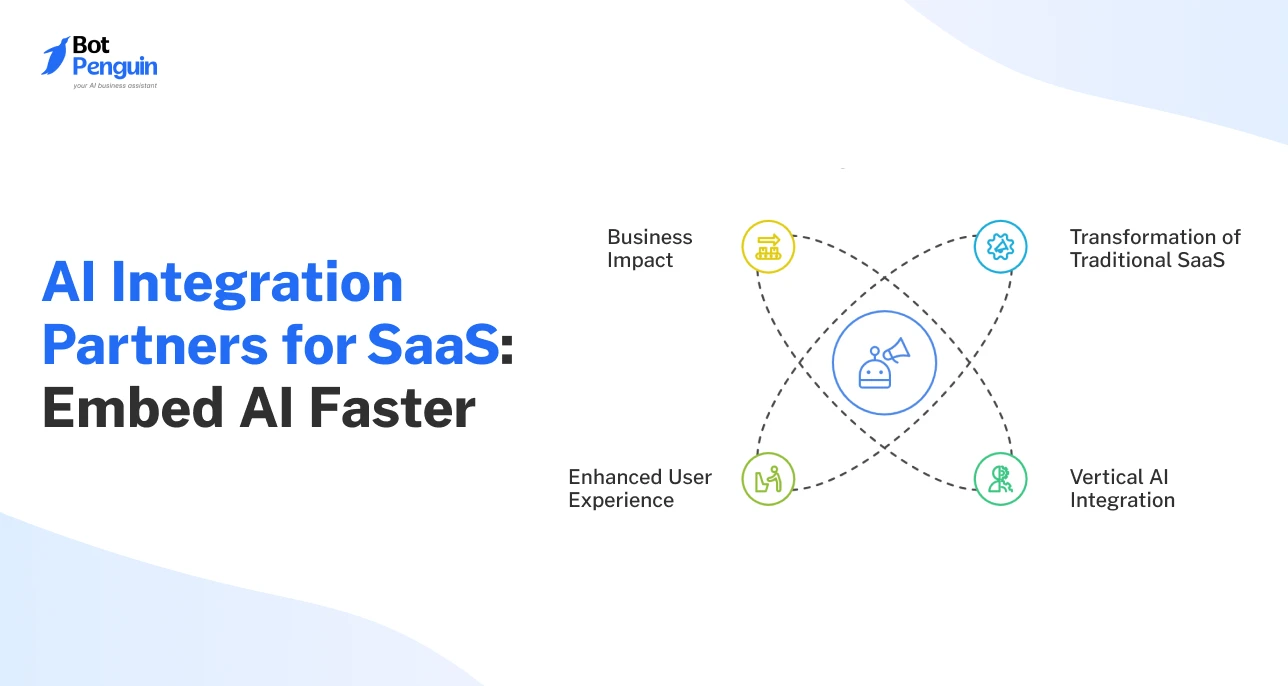
You have built a solid SaaS product. But now every conversation circles back to one thing: artificial intelligence!
Customers expect smarter features, faster responses, and automation built right in. Suddenly, what worked yesterday feels incomplete today.
The problem is not intent. It is execution. Building AI in-house is expensive, slow, and resource-heavy. Most teams cannot justify the time or cost it takes to get it right.
This is where AI integration for SaaS changes the equation. Instead of building from scratch, companies are partnering to embed AI directly into their products.
In this guide, you will learn how that model works, and how AI integration for SaaS helps you ship AI features faster.
AI integration partners in SaaS are third-party platforms or providers that help companies embed AI capabilities into their products without building them from scratch.
Example: HubSpot integrates OpenAI's API to power its AI writing assistant; no in-house LLMs, no GPU infrastructure.
Thus, SaaS teams integrate ready-made AI solutions through APIs, SDKs, or white-label systems, achieving faster deployment, lower costs, and immediate access to proven AI features like chatbots and analytics.
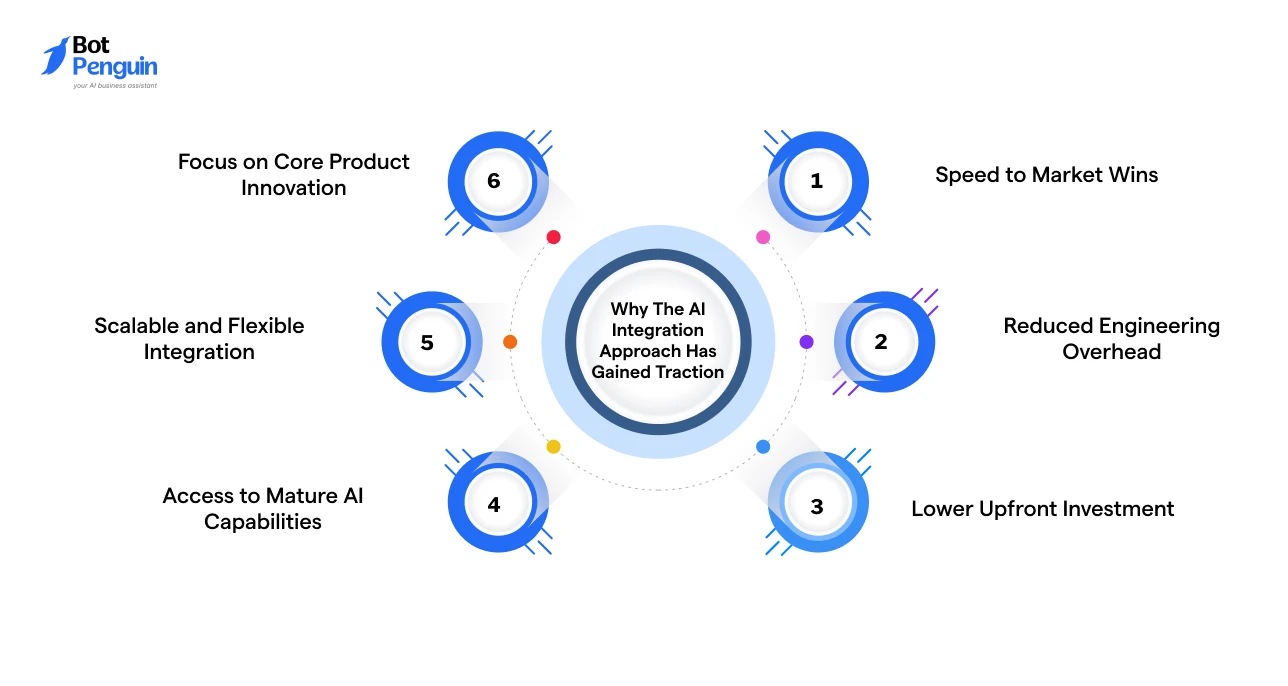
Besides the speed it brings to the table, it’s also for the cost efficiency that the AI integration approach has gained popularity among software companies.
Here’s a breakdown of why this path works:
In practice, this is where AI chatbot platforms like BotPenguin fit in. Instead of building AI layers from scratch, SaaS teams can embed chatbots, automation, and multi-channel communication directly into their products with minimal engineering effort.
Embedding AI into your SaaS product doesn't have to be a guessing game.
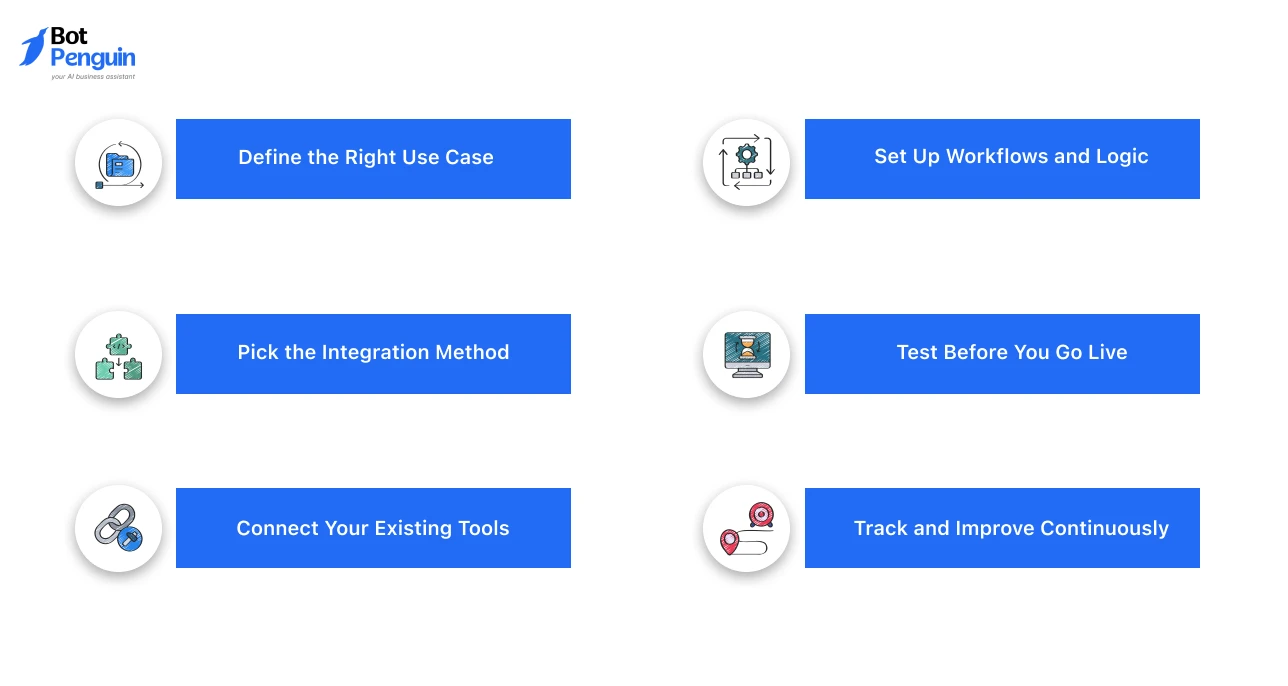
A good integration partner follows a structured, repeatable process; moving you from identifying the right use case to a fully optimized, live AI feature.
Here’s a closer look on the above steps:
The SaaS provider starts with one clear problem.
Focus on areas like support, onboarding, or lead capture. Avoid trying to automate everything at once.
For instance, a person looking to streamline appointment booking can work with chatbot partners like BotPenguin to deploy a ready-made booking bot directly into their platform.
Choose how you want to embed AI. Meaning: what are you expecting your AI implementation partner to deliver?
While APIs give flexibility, widgets are faster. White-label works best if you want full branding control.
Integrate with your CRM, database, or workflows. This ensures the AI has the context it needs to respond accurately.
A prominent example of this is Salesforce integrating Einstein AI directly into its CRM workflows, giving the AI full customer context to generate accurate responses.
Tell your partner how you expect the AI should behave. Define triggers, responses, and fallback options. Keep it simple at first.
It’s important to run real scenarios for artificial intelligence integrations. The partner must check accuracy, speed, and edge cases. Fix issues early to avoid poor user experience.
Once live, monitor key metrics like response accuracy, resolution rate, and drop-off points. Use that data to refine workflows, update responses, and expand AI coverage as confidence grows.
At its core, an AI integration partnership is not complex. It follows a structured, repeatable process that focuses on speed and clarity. Instead of long development cycles, you move from idea to implementation in defined steps.
Should you partner with an AI provider or build a solution in-house? That's where you usually start with.
In this section, let's look at how both approaches compare across the factors that matter most: cost, speed, expertise, and risk.
Key Points to Remember
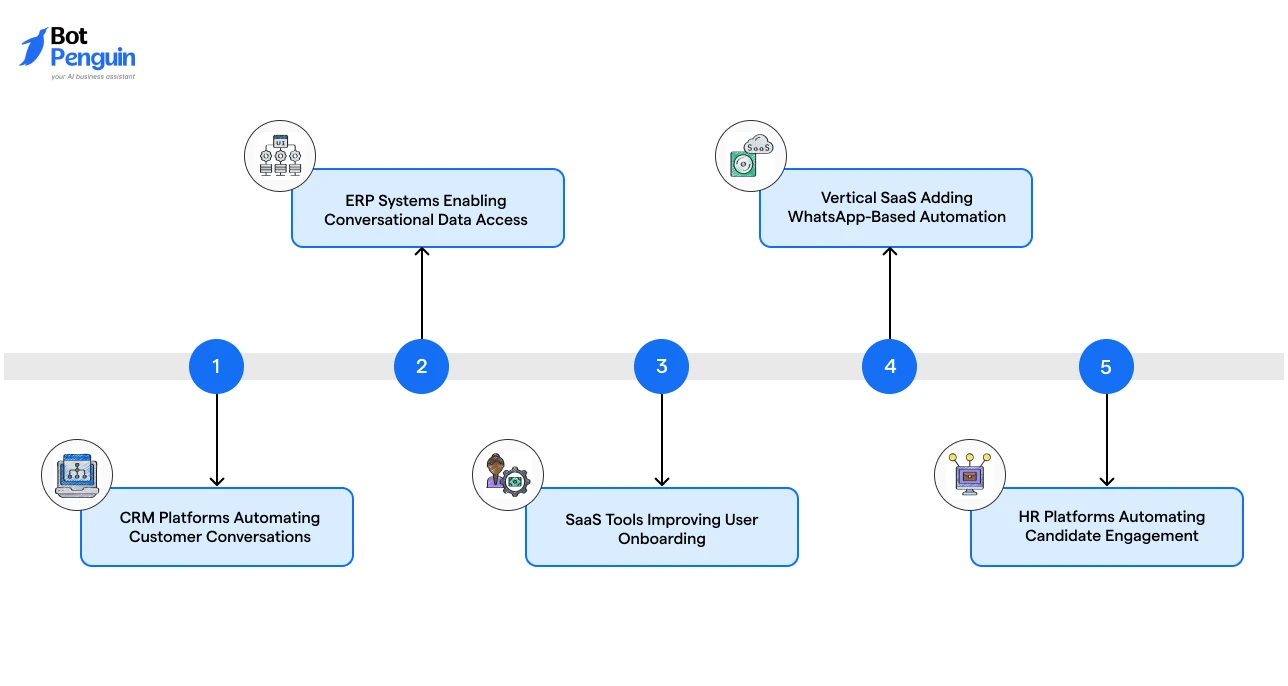
AI integration is not limited to one category. It is already being used across different types of software products to solve real operational problems.
CRMs handle large volumes of repetitive queries.
By embedding AI chatbots, companies automate responses, bookings, and updates directly within the platform, reducing response time and support load.
In fact, Gartner predicts agentic AI will autonomously resolve 80% of common customer service issues without human intervention by 2029, cutting operational costs by 30%.
ERP tools store complex data but are hard to query.
AI integration allows users to ask questions in plain language and get instant answers without navigating reports.
Onboarding is a major drop-off point. AI assistants guide users through setup, answer questions in real time, and reduce early-stage friction without manual intervention.
In many markets, WhatsApp is the primary channel.
Integration partners enable SaaS products to offer messaging automation without handling API approvals or compliance independently.
For instance, BotPenguin helped BVK Biryani automate 2,000+ WhatsApp orders every month, cutting manual processing by 50% and delivering instant payment confirmations without changing their existing workflow.
Recruitment workflows involve repeated follow-ups. AI helps automate communication, schedule interviews, and reduce drop-offs while freeing recruiters for high-value tasks.
Across all these use cases, SaaS companies bring the product and users, while integration partners provide the AI layer that makes these features possible without building them from scratch.
Not every SaaS product needs the same setup. The right AI integration model depends on your team's technical capacity, go-to-market strategy, and how fast you need to move.
The table below showcases the five most common integration models, how each one works, and which type of SaaS team it fits best.
Each model solves a different need. Most SaaS companies start simple (usually API or widget-based) then layer in white-label or hybrid approaches as usage and requirements grow. The key is picking a model that fits where you are today without limiting where you're headed.
The case for the integration partner model comes down to what it consistently delivers across companies that have gone through the process.
Here's what you actually gain:
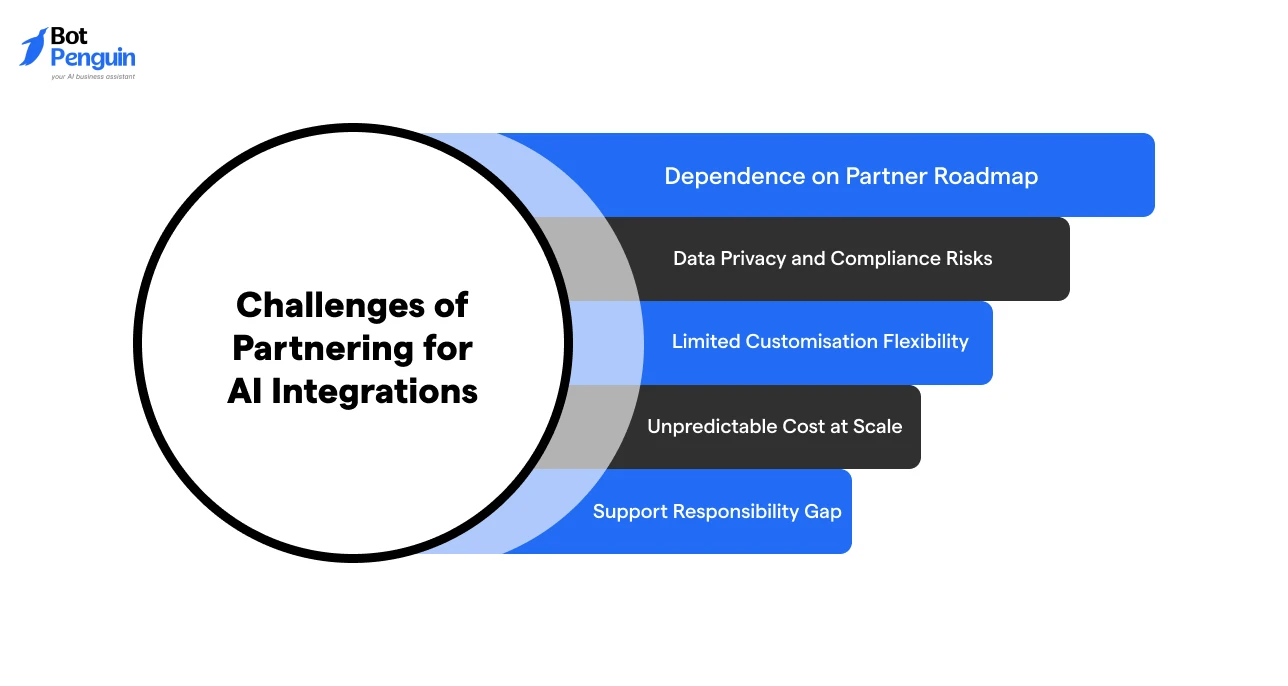
The integration partner model works well, but it comes with a few trade-offs. Planning ahead keeps these from becoming real issues.
Your AI capabilities rely on the partner’s updates and changes. If the AI partner is slow to ship updates or shifts their product direction, your features stagnate with them.
Solution: Secure API versioning, SLAs, and update commitments upfront.
Customer data passes through external systems, raising compliance concerns. For regulations like GDPR or HIPAA (in healthcare), it’s critical you verify that your partner meets the same compliance standards your product is held to.
Solution: Validate data handling, storage, and regulatory alignment before deployment.
Pre-built systems may not support highly specific workflows. Your partner should offer configuration options beyond the default setup, or provide clear documentation on what can and cannot be modified.
Solution: Test edge cases early and confirm customization limits in advance.
Usage-based pricing can increase quickly with growth. Think: with every new user, conversation, or API call, your costs compound!
Solution: Negotiate tiered or capped pricing for better cost control.
End users report issues to you, not the partner. Now that's your problem to manage, even when the root cause sits entirely on the partner's side.
Solution: Set clear escalation paths and ensure internal team readiness.
These are manageable constraints. With the right setup, they remain controlled trade-offs rather than blockers.
The impact of these challenges depends on the partner you choose. Platforms like BotPenguin are designed to address these areas early, with stable APIs, compliance-ready systems, flexible chatbot configurations, and structured support.
Before you enter a partner conversation, there are six areas worth pressure-testing against your current situation.
Each of the following criteria has a clear decision signal so you know whether to proceed or pause:
The above checks act as decision filters. If most answers are clear and favorable, you can move forward confidently. If not, address the gaps first or consider a phased rollout instead of a full deployment.
AI is no longer optional for SaaS products. The question is how you add it without slowing down your roadmap. Building in-house works for a few, but for most, it adds cost, delay, and risk.
Integration partners offer a practical path. You get proven AI features, faster rollout, and less operational burden. At the same time, you stay focused on your core product.
The key is to choose the right use case, partner, and model. Start small, validate results, and expand from there. Done right, AI becomes a growth driver, not a bottleneck.
An AI integration partner is a third-party provider that enables SaaS companies to embed AI features like chatbots and automation without building them internally.
SaaS companies integrate AI using APIs, white-label platforms, or embedded tools that connect existing systems with AI capabilities for automation and enhanced user experience.
Using a partner is faster and more cost-effective for most SaaS companies, while in-house development offers control but requires significant time, expertise, and investment.
AI integration improves automation, reduces manual work, enhances customer experience, and helps SaaS products scale efficiently without increasing operational complexity.
Common use cases include customer support chatbots, onboarding assistants, data retrieval, lead capture, and automated communication across channels like WhatsApp and web.
Costs vary based on usage and model, but integration partners typically offer subscription or usage-based pricing, avoiding large upfront development expenses.
Evaluate use case fit, data readiness, compliance, integration complexity, pricing structure, and support model to ensure the partner aligns with your product and growth plans.
Subscribe to Our Newsletter
Get the latest business insights straight into your inbox.
Checkout our related blogs you will love.
Updated at Oct 13, 2026
13 min to read
Updated at Oct 12, 2026
12 min to read
Updated at Oct 7, 2026
10 min to read
Updated at Oct 6, 2026
10 min to read
Updated at Oct 1, 2026
28 min to read
Updated at Oct 1, 2026
7 min to read
Table of Contents