10 Best Dental Chatbots & AI Receptionists in 2026
Updated at Sep 28, 2026
11 min to read
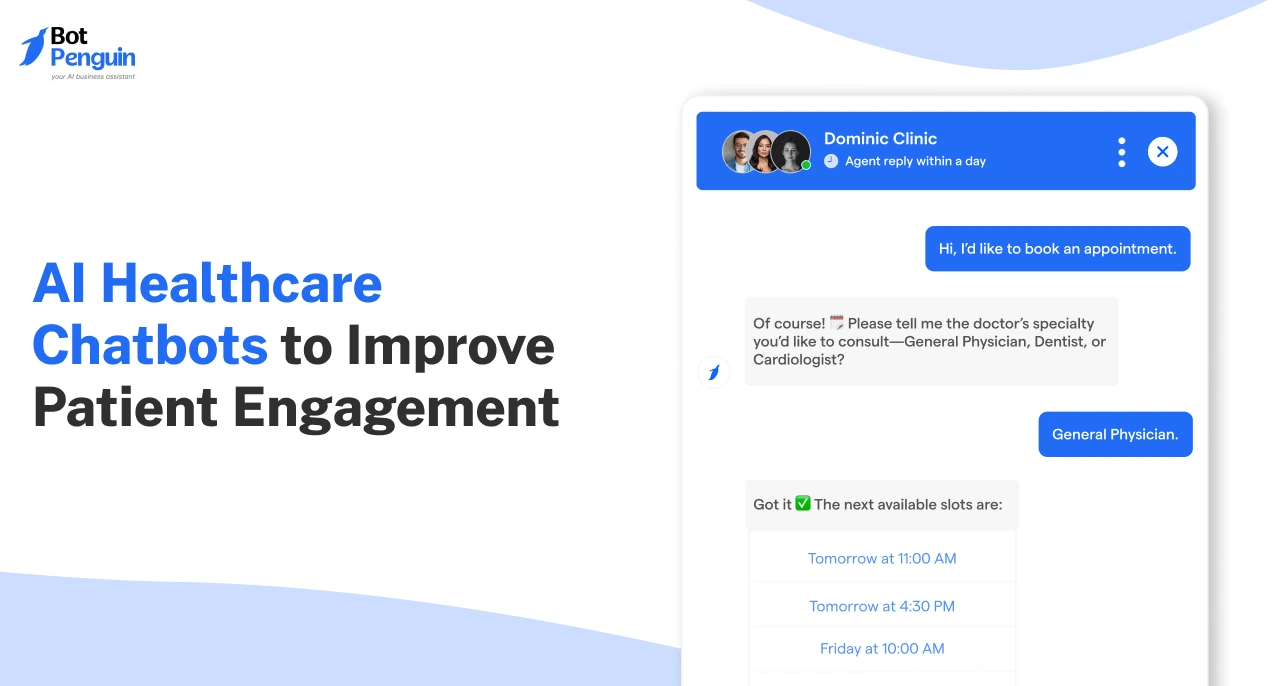
A doctor’s advice is only as good as what the patient does with it. And most of the time? They do nothing. Not out of negligence, but because no one followed up.
Missed appointments, skipped medications, and unanswered questions are more common than hospitals admit. This isn’t just inconvenient. It can cost lives.
Luckily, AI healthcare chatbots are changing that. They guide patients before, during, and after visits, delivering personalized support and timely reminders without overwhelming your staff.
In this guide, you’ll learn what healthcare chatbots for patient engagement really are and how AI-powered chatbots transform care delivery for better patient outcomes and more efficient healthcare workflows.
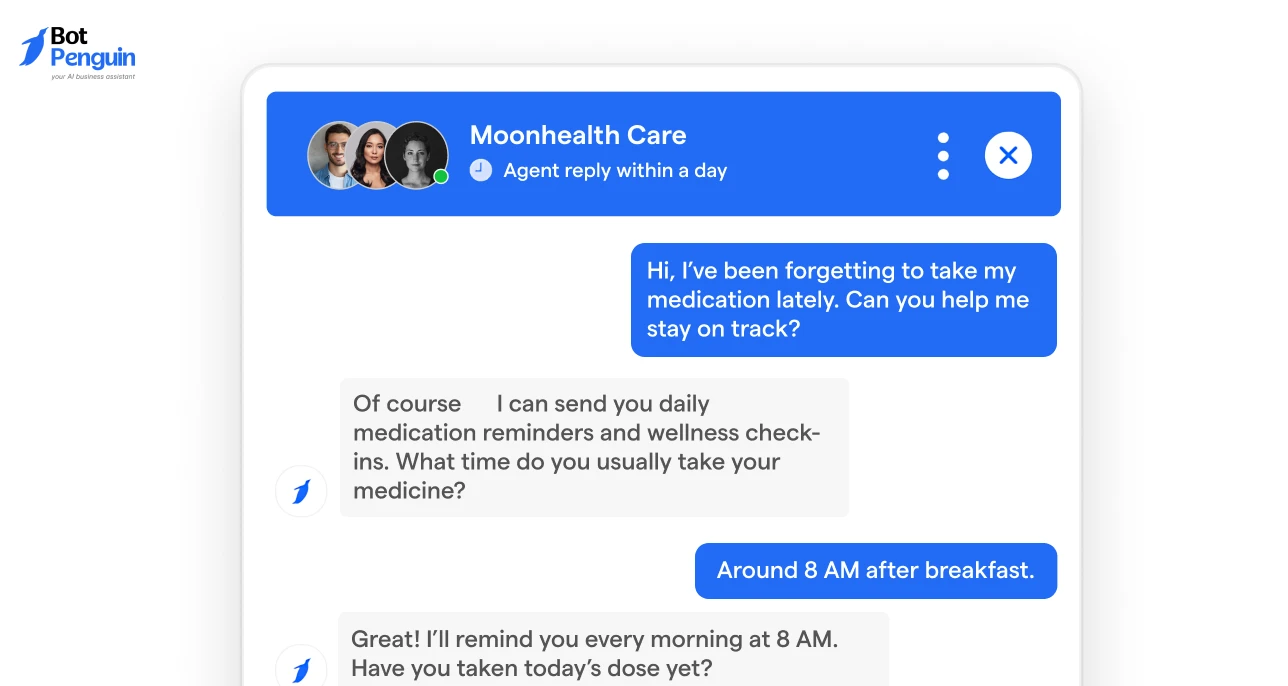
A healthcare chatbot for patient engagement is a digital tool that interacts with patients to provide information, reminders, and support across their care journey.
These chatbots help hospitals and clinics maintain consistent communication, answer common questions, and keep patients involved in their own health beyond the four walls of a clinic.
Taking this a step further, AI-powered healthcare chatbots adapt to patient behavior, personalize interactions, and ensure no critical step in the care journey is missed.
For example, a patient recovering from surgery might receive daily check-ins, medication reminders, and a direct way to flag concerns, all through a simple chat interface on their phone.
The main goal of chatbot technology in healthcare is to reduce the communication gap between providers and patients, ensuring no one falls through the cracks between visits.
Here's a breakdown of what that looks like in practice:
When applied to patient engagement, a healthcare chatbot acts as a continuous communication layer that keeps patients informed, responsive, and connected.
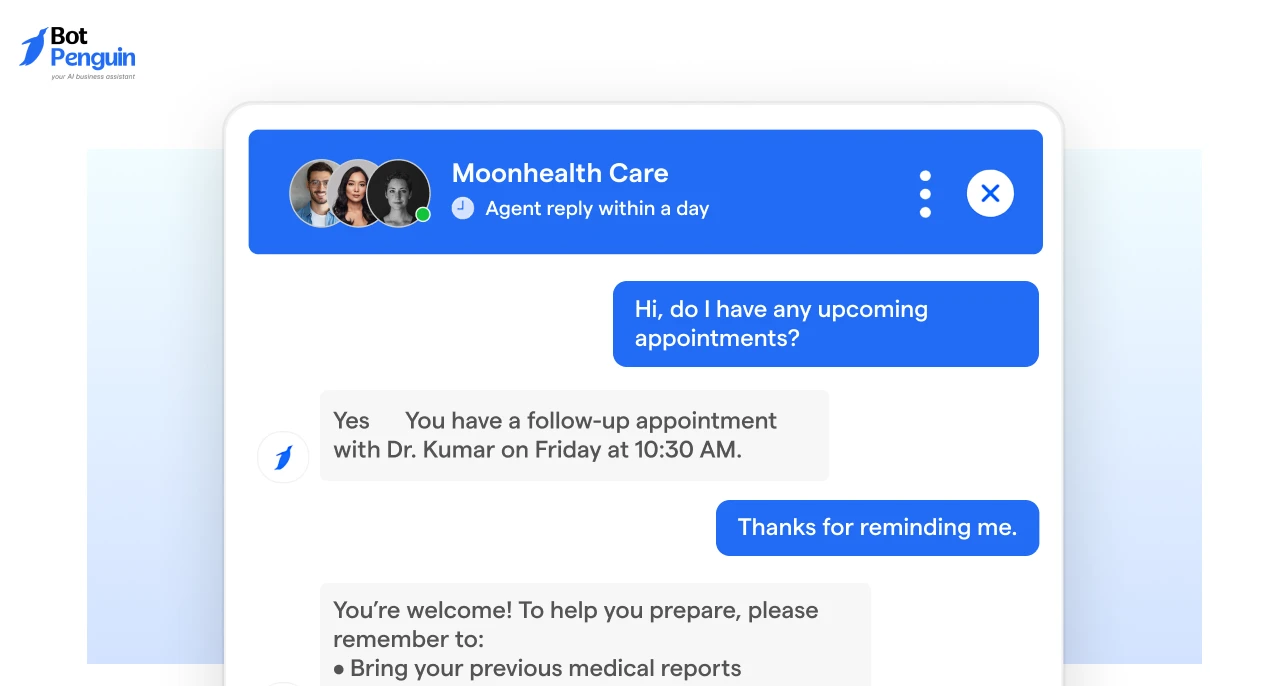
The following examples reflect some of the most common ways chatbots keep patients connected and on track:
In short, a healthcare chatbot for patient engagement acts as an always-on communication layer. One that keeps patients informed, supported, and connected without adding load to your clinical team.
But to understand why this matters, you first need to see how deep the patient engagement problems really run and how chatbots address them.
If you’re looking to build a healthcare chatbot that fits into existing workflows and communication channels, platforms like BotPenguin make it easier to deploy AI chatbots across WhatsApp, web, and mobile, ensuring patients stay involved at every stage of care.
Keeping patients actively involved in their care is one of the biggest challenges healthcare providers face.
Many patients forget appointments, skip medications, or fail to follow care instructions. At the same time, hospitals struggle to maintain consistent communication and provide personalized support at scale.
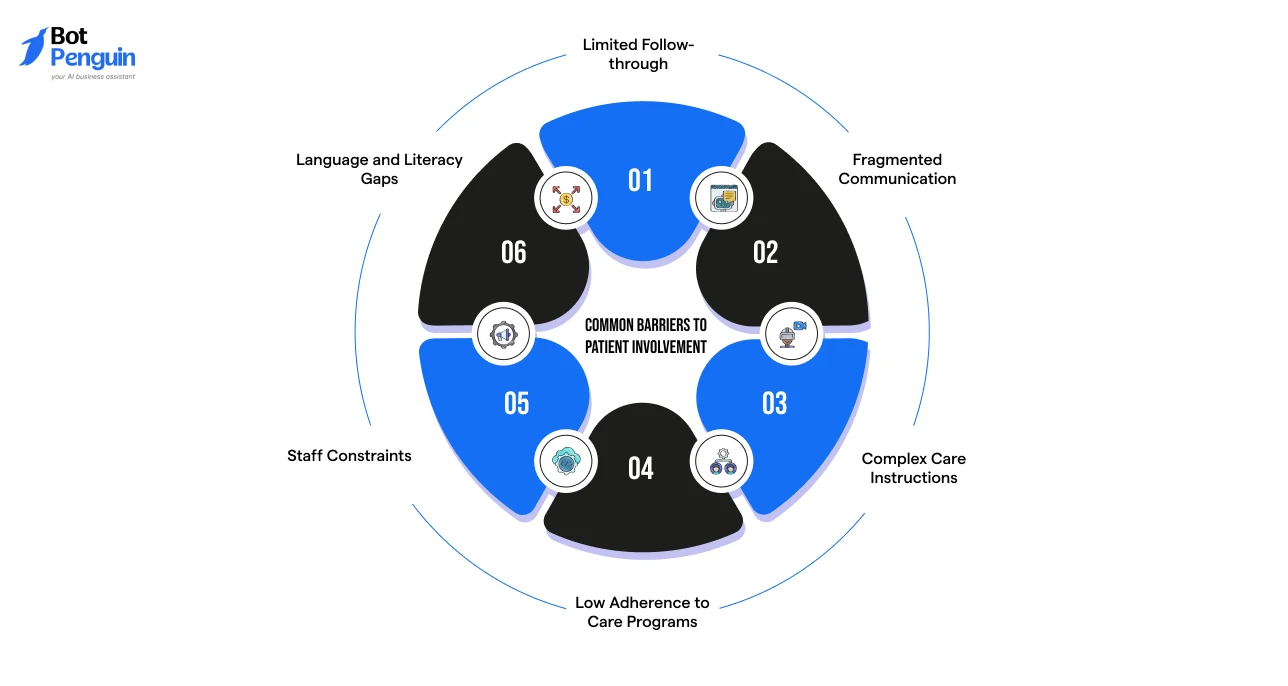
Some common challenges that arise across healthcare settings include:
These obstacles make it difficult to keep patients involved, informed, and motivated to stay on track when no one is watching.
Now, we'll explore how healthcare chatbots directly address each of these barriers, and what that looks like in practice.
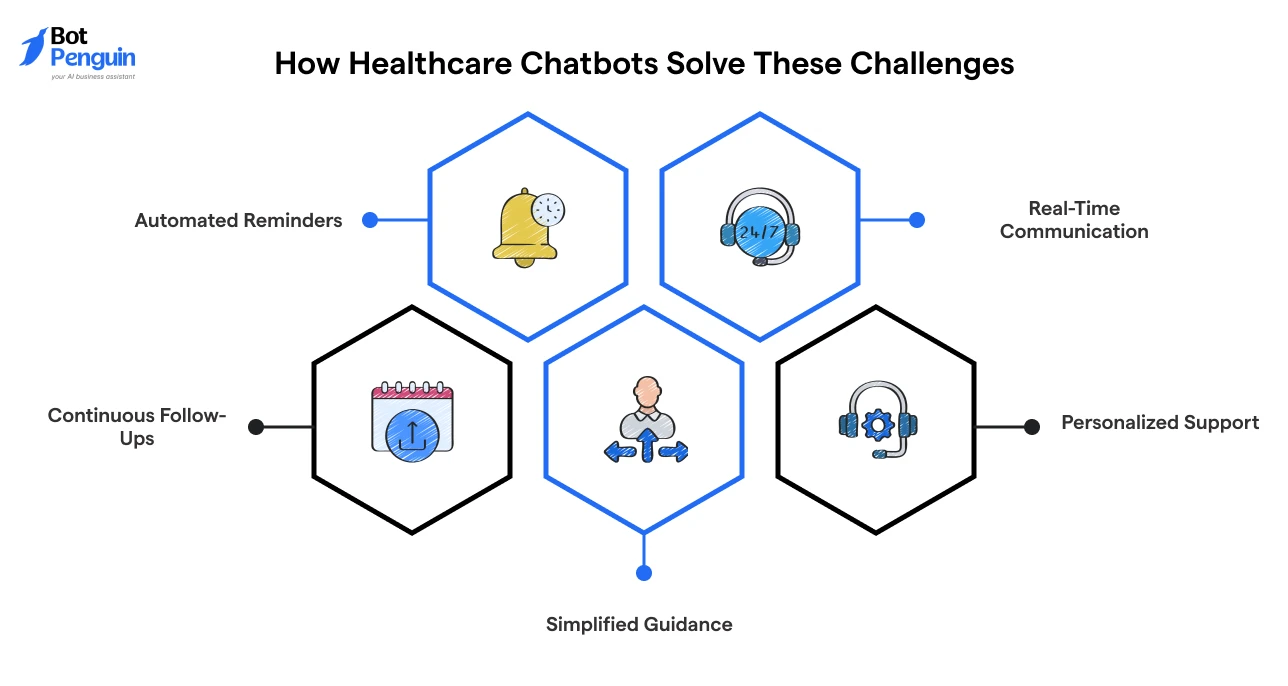
Basic healthcare chatbots help patients stay informed and engaged throughout their care journey. Core capabilities include:
These foundational chatbots handle repetitive tasks and routine communication efficiently, but they can only go so far. While they showcase benefits of chatbots in healthcare, they still fall short when patients need more than a scheduled reminder.
That’s where AI healthcare chatbots come in. They build on this foundation by understanding patient intent, adapting to behavior, and delivering personalized, context-aware interactions, making AI for patient engagement more effective in real-world care.
Curious how they work in practice? Read our complete guide on AI-powered healthcare chatbots.
Basic (rule-based) chatbots handle structured tasks, like responding to predefined queries and following scripted conversation paths.
AI healthcare chatbots go further by understanding context, adapting to patient behavior, and delivering more meaningful, personalized interactions across the patient journey.
The table below breaks down how the two compare across the areas that matter most:
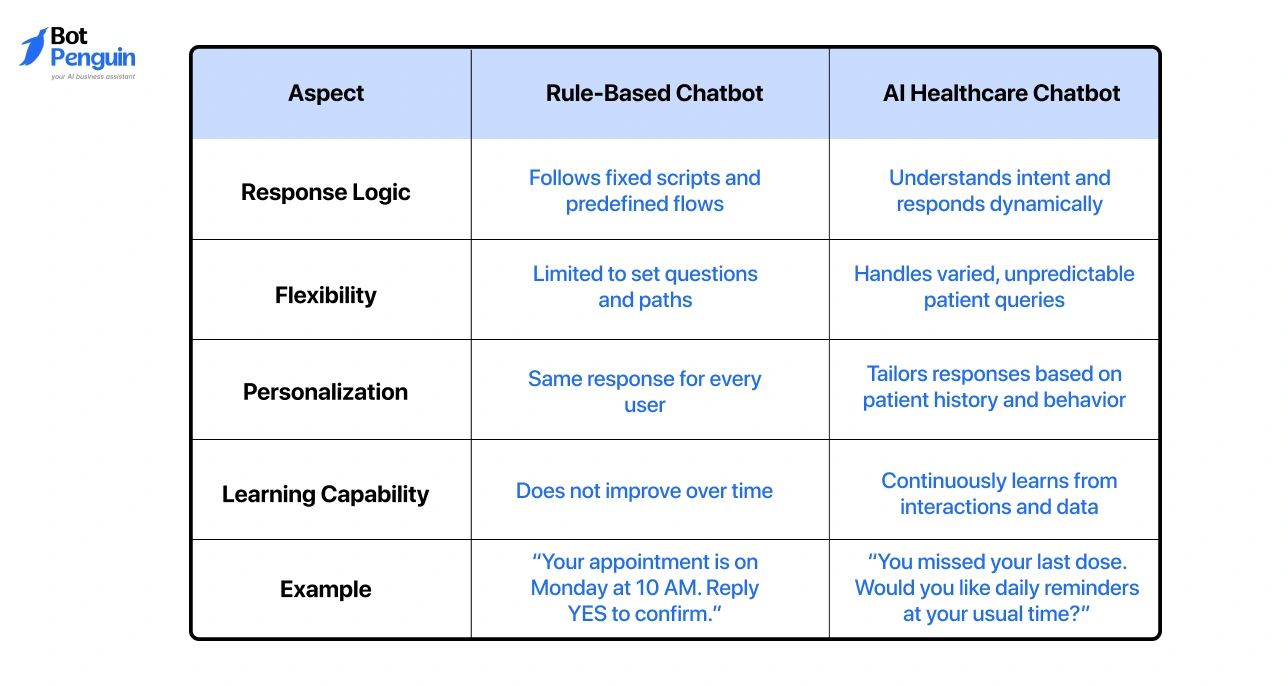
AI healthcare chatbots clearly offer a more adaptive, patient-centered experience, making them the stronger choice for providers serious about long-term engagement.
Yet, it’s also crucial to know when to rely on automation and when to hand it off to a human.
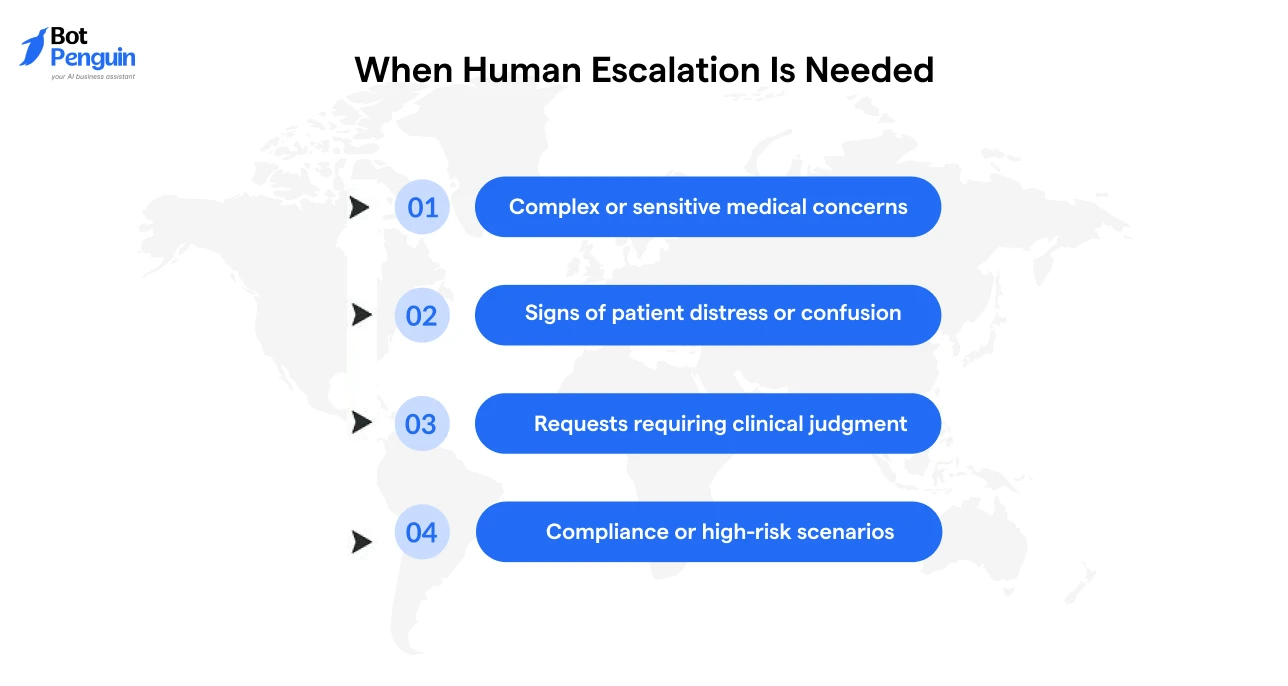
The following situations should always trigger a handoff to a qualified care professional:
AI enhances efficiency, but human oversight ensures safe, empathetic care. With the right balance in place, let's look at exactly how AI healthcare chatbots improve patient engagement across the full care journey.
Patient engagement doesn't begin at the appointment, and it certainly doesn't end there. It's a continuous process that spans every interaction a patient has with their provider.
Here's how AI-driven chatbots add value at each stage:
Besides the stage-specific impact that AI chatbots deliver, here are the underlying capabilities that make this level of engagement possible:
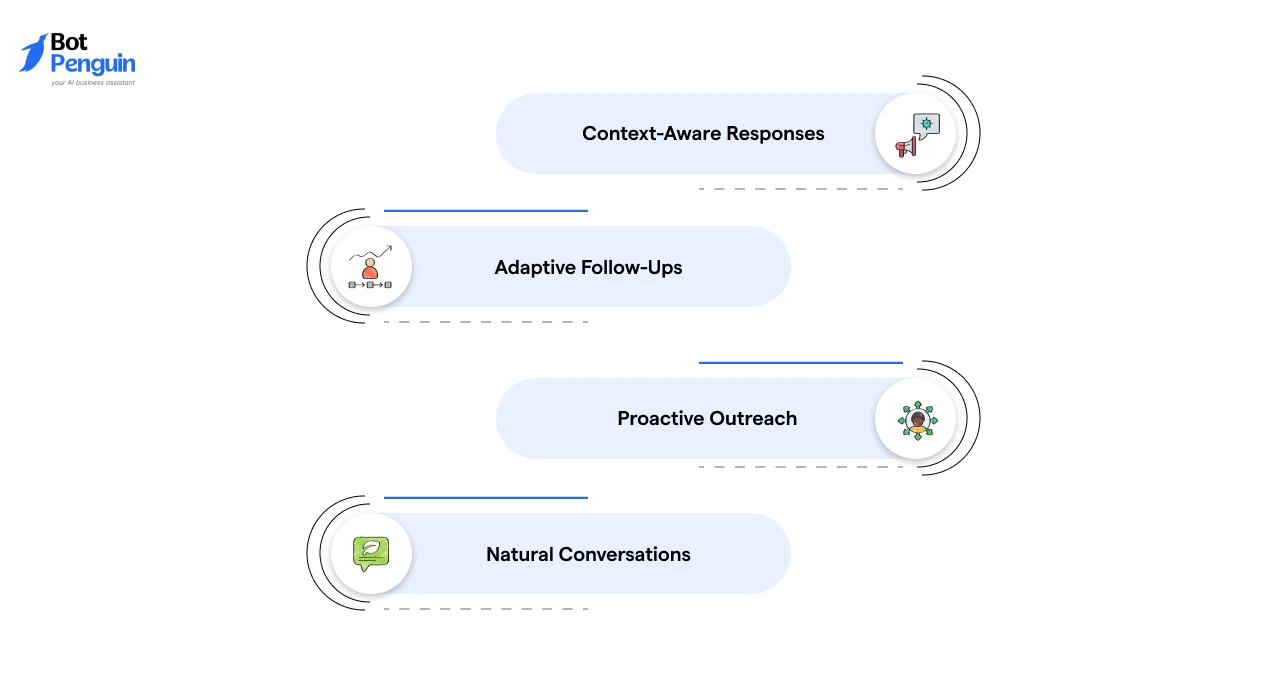
That's the difference between a chatbot that checks a box and one that genuinely moves patient outcomes forward.
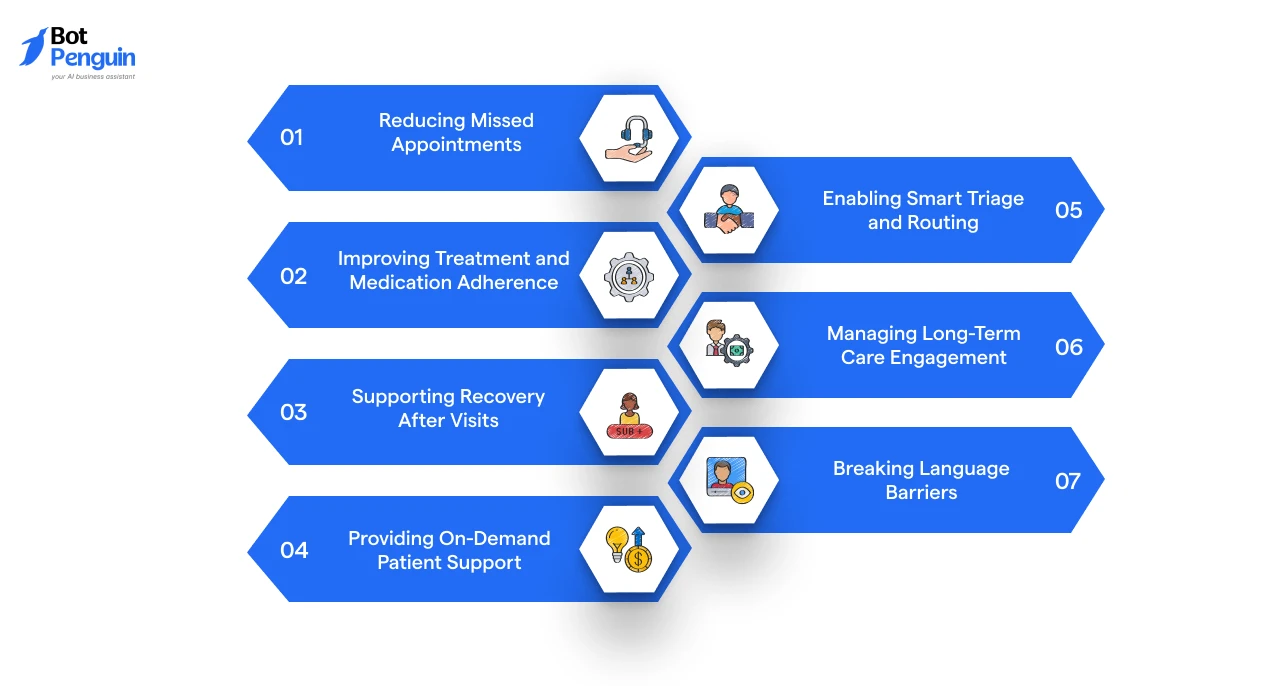
From reducing no-shows to supporting chronic care, here’s where AI healthcare chatbots deliver the most measurable impact on patient engagement.
Smart reminders are sent at the right time, not just on a fixed schedule. These systems adjust based on patient responses, helping reduce no-shows and last-minute cancellations.
Consider a patient who consistently misses Monday morning appointments. An AI chatbot notices the pattern and automatically shifts reminder timing, increasing the chance they actually show up.
Instead of generic alerts, AI chatbots deliver tailored nudges. They track responses and adjust follow-ups to keep patients on track with their care plans.
For patients managing multiple medications daily, this could be the difference between a controlled condition and a preventable hospital readmission.
Patients often feel uncertain after discharge. Chatbots check in regularly, share simple recovery steps, and flag risks early when something feels off.
For instance, a post-surgical patient reporting unusual swelling through a chatbot check-in could be triaged and redirected to their care team before the situation escalates.
Patients don’t want to wait for answers. AI chatbots provide instant, accurate responses and guide patients to the right resources without friction.
This reduces dependency on support staff while improving patient satisfaction.
AI chatbots can understand patient intent and urgency, directing users to the right department or next step without delays.
Tools like Ada Health and BotPenguin already use this approach to streamline patient routing and reduce confusion.
For chronic conditions, consistency matters. Chatbots maintain regular check-ins, helping patients stay connected and committed over time.
Imagine a diabetes patient receiving weekly glucose tracking nudges, lifestyle tips, and appointment reminders - without ever burdening a care coordinator.
AI enables natural, multilingual conversations, making care more accessible and easier to understand for diverse populations.
Thus, whether you're serving a Spanish-speaking community in Texas or a multilingual urban clinic in New York, AI ensures no patient is left behind due to a language gap.
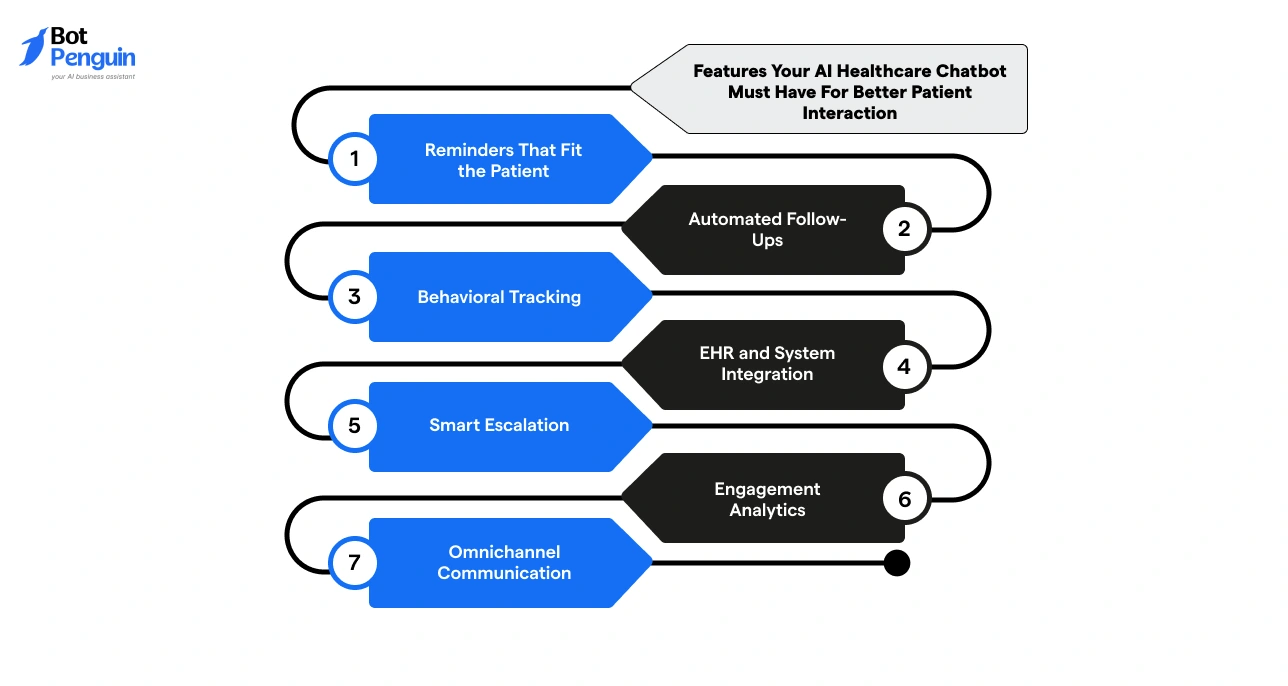
Not all AI chatbots deliver the same value. The right features mean the difference between a tool that sends messages and one that actually moves patient outcomes.
Together, these features turn a basic messaging tool into a structured, data-driven engagement system; one that keeps patients informed, supported, and consistently involved in their care.
Tracking the right metrics for your healthcare chatbot helps you understand what’s working and where to improve. Focus on a few high-impact indicators that reflect both interaction quality and care outcomes.
Pro Tip: Don’t track everything at once. Start with 2 or 3 core metrics (like response rate, no-shows, and adherence), then expand as your system matures.
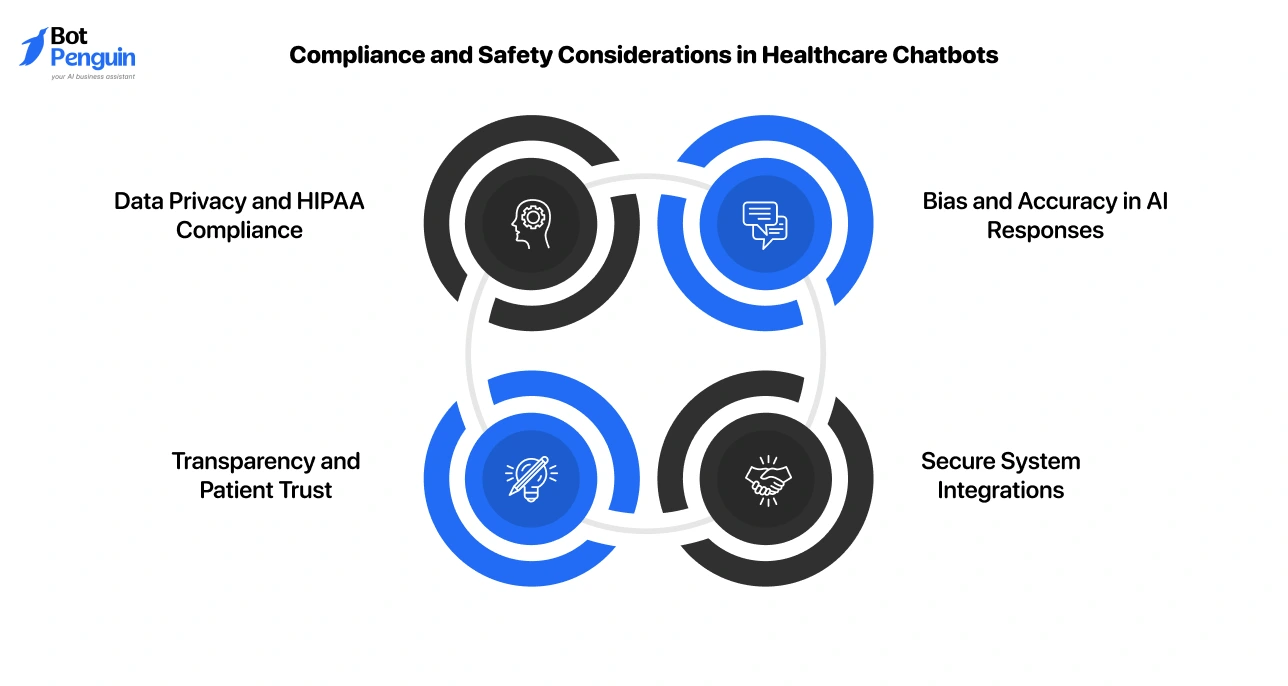
AI chatbots in healthcare must do more than engage patients. They must protect data, ensure accuracy, and operate within strict regulatory standards.
Without the right safeguards, even small gaps in AI-driven patient engagement can lead to serious risks.
Patient data must be handled with strict security controls. This includes encryption, access management, and secure data storage.
Chatbots should follow HIPAA and other regional regulations to ensure sensitive information is protected at all times.
Curious if your chatbot is truly compliant? Here's a complete HIPAA compliance checklist for SaaS healthcare products.
Patients should know when they are interacting with a chatbot. Clear disclosures, simple language, and easy opt-outs build trust and improve adoption.
Transparency also reduces confusion in critical situations.
Example: A patient describing chest pain should immediately see a message like - “I’m an AI assistant. For urgent concerns, please call your care team or dial 911.” That one line can prevent a dangerous delay in care.
AI systems can produce incorrect or biased outputs if not monitored.
Regular audits, validation checks, and controlled training data help ensure responses remain accurate, safe, and clinically appropriate.
Take medication guidance, for instance. When a chatbot is trained on incomplete dosage data, it may suggest the same instruction regardless of a patient’s age, weight, or existing conditions, a risk no healthcare provider can afford to ignore.
Chatbots often connect with EHRs and other systems. These integrations must be secure, with controlled access and data sharing.
Strong APIs and authentication protocols help prevent unauthorized access and data breaches.
For healthcare teams that need to connect EHRs, CRMs, scheduling tools, and patient communication systems without building every integration from scratch, a HIPAA-compliant healthcare automation platform like Keragon can help automate patient intake, reminders, follow-ups, and backend data handoffs in a controlled environment.
Overall, compliance isn't a feature you add at the end; it's a foundation you build from the start. Every integration, every data exchange, and every patient interaction should be designed with security and accountability in mind.
A structured approach helps you launch chatbot technology in healthcare faster and see results sooner. Focus on clear, practical steps that align with your workflows and patient needs.
Here's a step-by-step guide that takes you from identifying the right starting point to building a chatbot that continuously improves with every patient interaction:
Remember: Implementation is just the starting line. The real value compounds as your chatbot learns, adapts, and becomes a natural part of the care experience.
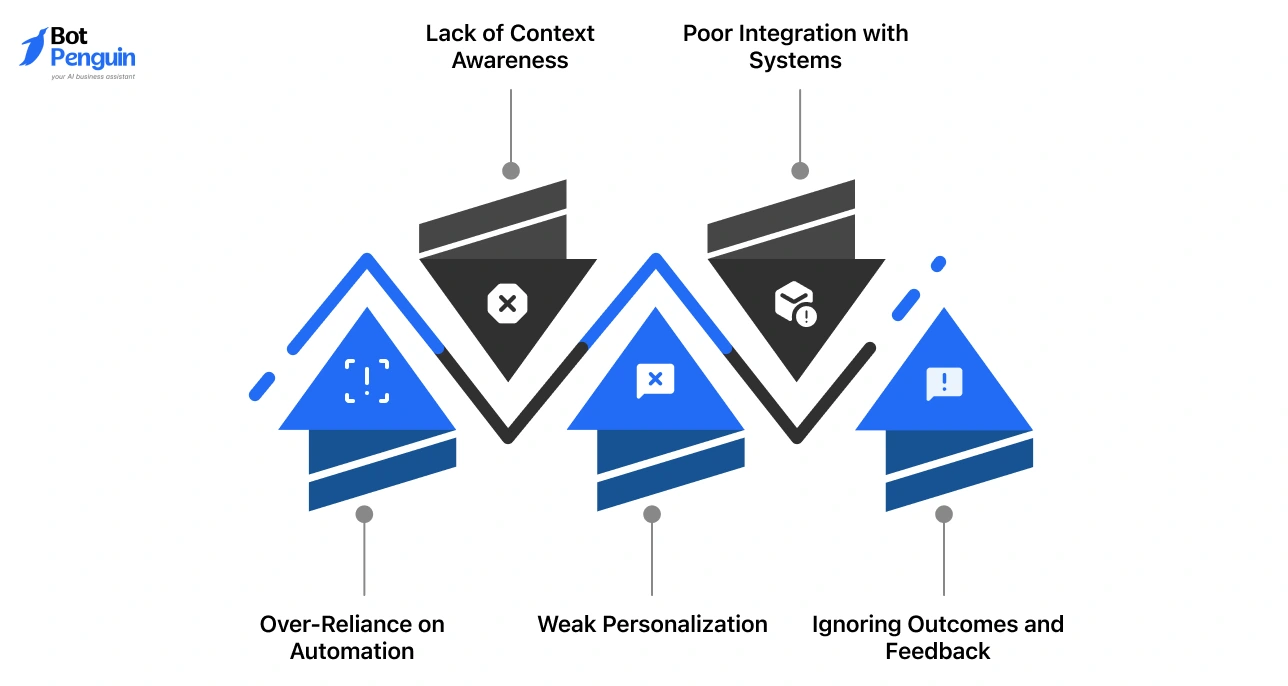
Even advanced AI chatbots can fall short if they are not designed and implemented correctly.
It’s important to avoid the following common mistakes to ensure consistent, meaningful interaction and rewarding outcomes.
When you avoid these pitfalls early, your chatbot doesn’t just function but makes a measurable difference in patient care.
To avoid these challenges, businesses actively leverage platforms like BotPenguin that enable healthcare teams to design custom AI chatbots that integrate with existing systems, support human escalation, and deliver context-aware interactions across channels.
Care doesn’t stop when a patient leaves the clinic. Most of what matters happens after. When patients stay informed and supported, they’re more likely to follow through. That’s what leads to better outcomes.
AI healthcare chatbots for patient engagement make this easier. They send reminders, answer questions, and stay in touch without adding more work for your team.
But the results depend on how well you build and use them. Start small. Focus on what actually helps patients. Improve as you go.
When done right, these chatbots don’t just send messages. They help patients stay on track and feel supported throughout their care.
A healthcare chatbot is a digital tool that interacts with patients to send reminders, answer queries, and support care journeys across different stages of interaction.
AI chatbots improve patient experience by providing real-time responses, personalized reminders, and continuous follow-ups that help patients stay informed and involved in their care.
Healthcare chatbots can be HIPAA compliant if they use encryption, secure data handling, access controls, and follow regulatory standards to protect sensitive patient health information.
AI chatbots reduce no-shows, improve medication adherence, enhance communication, lower staff workload, and provide continuous support, leading to better outcomes and higher patient satisfaction.
AI chatbots cannot replace healthcare professionals. They support routine interaction and communication, while complex, sensitive, or clinical decisions always require human expertise and oversight.
AI chatbots can reduce appointment no-shows by 20-40% by sending timely reminders, follow-ups, and behavior-based nudges that improve patient attendance and follow-through.
A healthcare chatbot should include personalized reminders, follow-up automation, EHR integration, behavior tracking, escalation support, and analytics to ensure efficient and meaningful patient interaction.
Automate Healthcare Reminders With Chatbots
Send automated appointment reminders, follow-ups, and medication alerts to patients. Reduce no-shows, improve engagement, and keep care on track with AI chatbots.
Get Started NowCheckout our related blogs you will love.
Updated at Sep 28, 2026
11 min to read
Updated at Sep 25, 2026
12 min to read
Updated at Sep 24, 2026
11 min to read
Updated at Sep 24, 2026
14 min to read
Updated at Sep 24, 2026
11 min to read
Updated at Sep 18, 2026
8 min to read
Table of Contents