


Chatbot Compliance in Financial Services: A Complete Guide
Updated at Oct 19, 2026
11 min to read
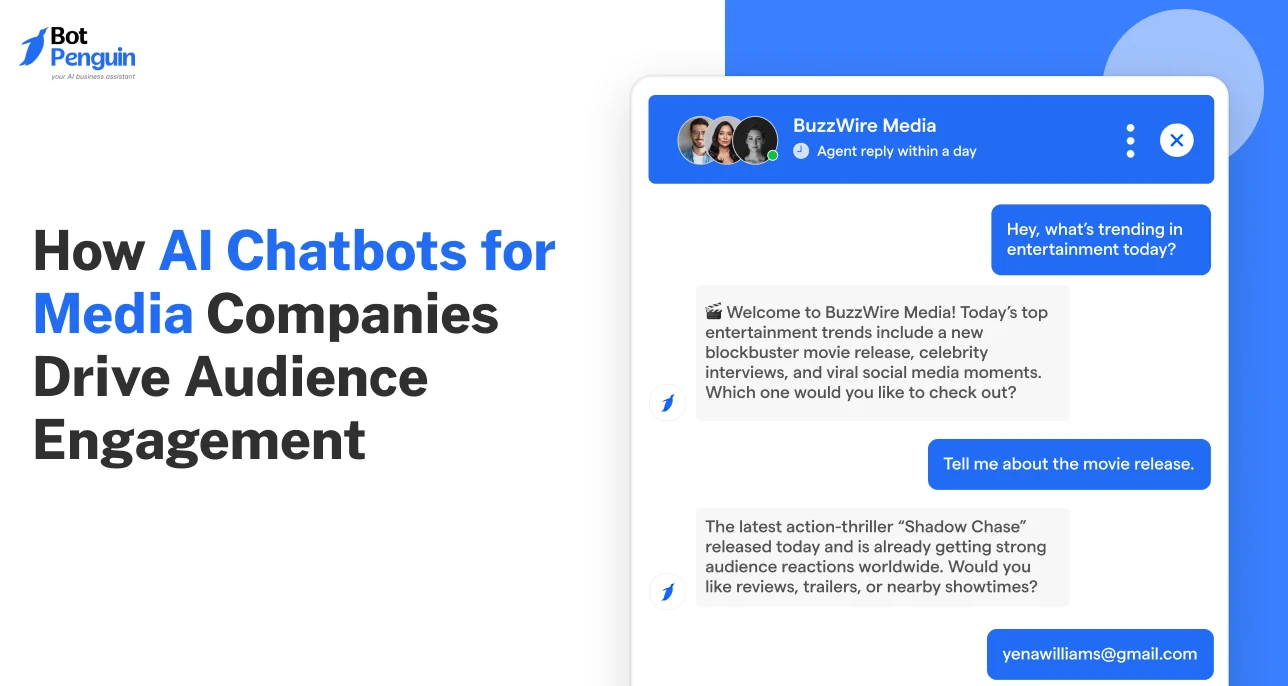
Media companies aren’t competing with each other anymore… They’re competing with audiences’ shrinking attention spans.
People today expect instant answers, personalized content, and real-time engagement across every platform. If they do not get it, they scroll away.
That shift is pushing publishers, streaming platforms, and entertainment brands toward AI chatbots. From content discovery to live event engagement, conversational AI is becoming part of the modern media experience.
This guide breaks down how AI chatbots for media companies work, key use cases, benefits, features, challenges, and where conversational AI in media is heading next.
An AI chatbot for media companies is a conversational tool that helps audiences discover content, get updates, manage subscriptions, and interact with media platforms in real time.
For example, Forbes, a leading global business and financial media brand, launched "Adelaide” that turns viewers’ news discovery into a dynamic conversation, delivering tailored insights based on user queries.
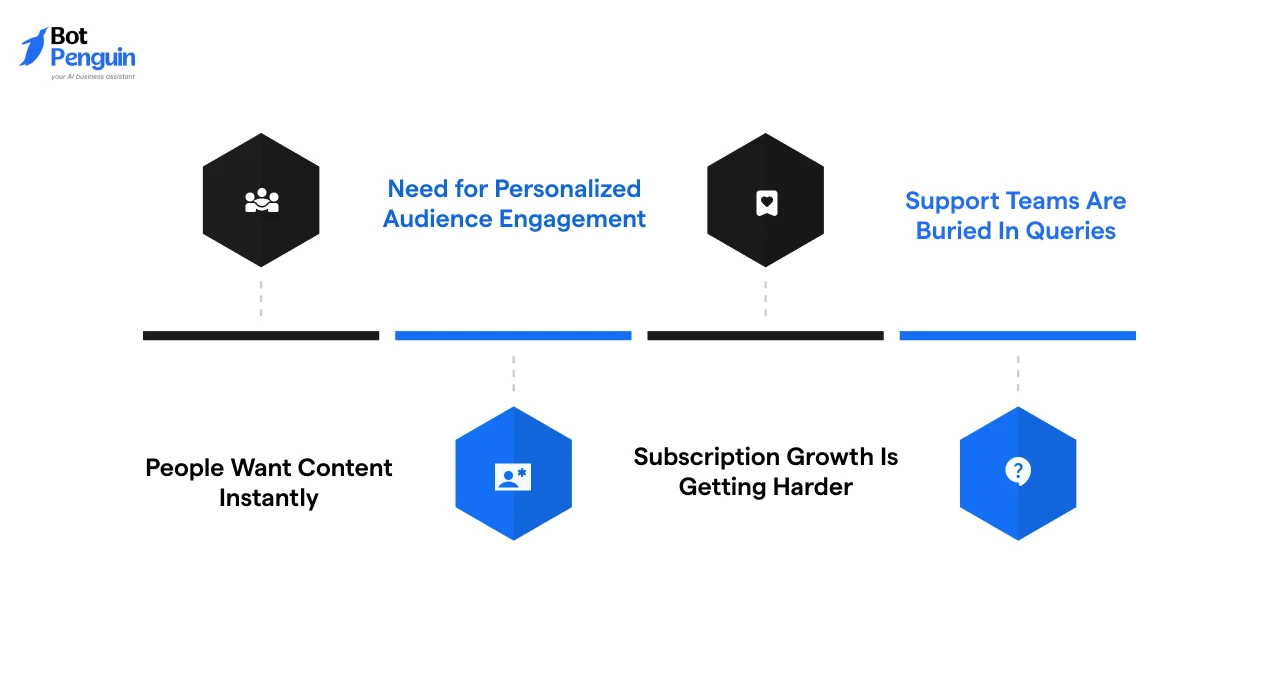
From delivering faster and more personalized experiences across platforms to reducing operational costs, AI chatbots are reshaping how media brands connect with their audiences.
Here’s why media companies swear by them:
In short, AI chatbots give media companies a scalable way to meet rising audience expectations without proportionally growing their teams.
Want to deploy an AI chatbot for your media platform? BotPenguin helps media companies launch intelligent chatbots for content discovery, subscriber support, and audience engagement fast.
At this stage, it’s worth seeing how the chatbots for media companies actually work. The next section explores that.
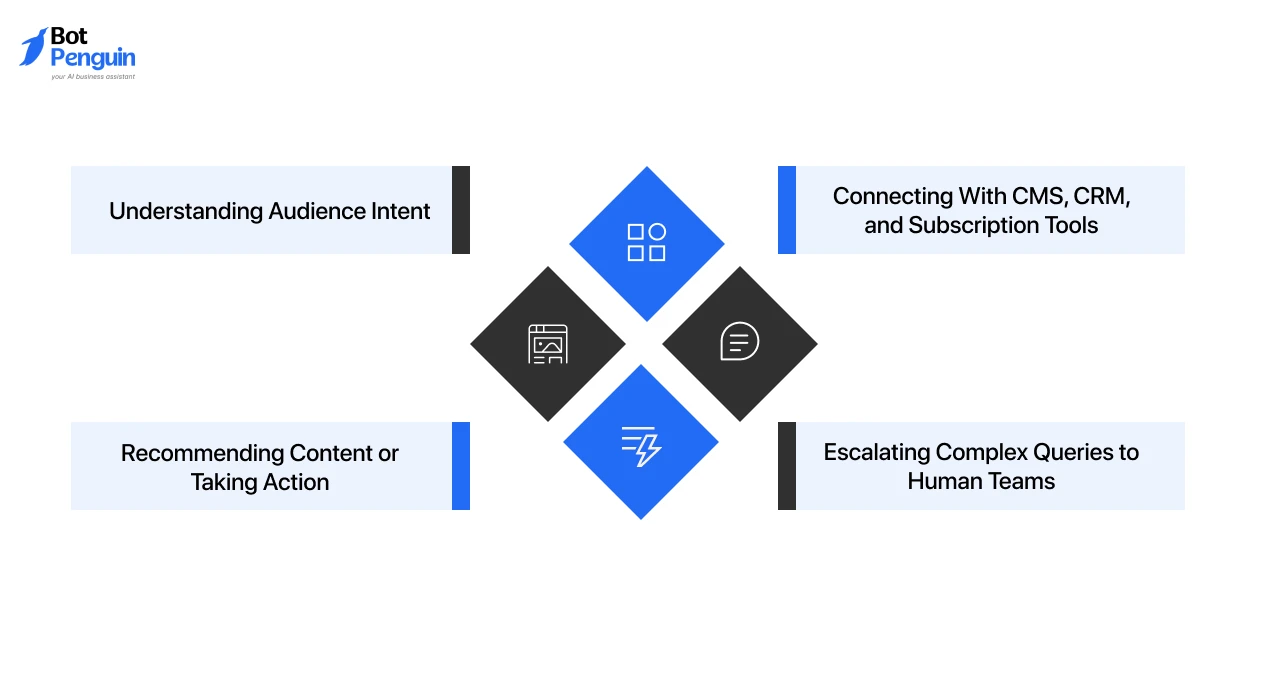
Modern media chatbots do more than answer questions.
They act like intelligent audience assistants that understand behavior, connect systems, and guide users toward content or action in real time. The process looks something like this:
The process is simple: Understand the user → connect the right systems → deliver the right content or action → know when to hand off to a human.
The result is an audience experience that feels less like searching a website and more like talking to someone who already knows what you need.
Media audiences expect quick and quality interactions, not static platforms anymore.
AI chatbots provide this by acting as always-on assistants that surface the right content, resolve queries, and support teams at scale.
The table below shows the top AI chatbot use cases for media companies:
The increasing adoption of AI chatbots is well-reflected by numbers. In fact, studies suggest that AI-referred visitors spend 15 minutes per session on average, compared to 8 minutes from Google, and convert at a 7% rate versus 5% from traditional search.
Let’s look at each of these use cases below:
Chatbots suggest relevant content based on user interests, reading history, and behavior.
If you ever searched for a political story, it's more likely to show you related opinion pieces or relevant newsletters next time you visit.
Media brands use chatbots to send instant updates, scores, headlines, and event notifications.
News channels like The Washington Post leverage these tools to deliver top stories of the day, letting users swipe through headlines, access related content, and even receive location-specific election results. (Source: Haptik)
Chatbots help users manage plans, payments, passwords, and subscription issues quickly.
This is particularly helpful for people who want quick answers without waiting on hold or navigating a support portal.
Conversational prompts encourage newsletter signups and paid memberships.
Entertainment and sports brands use chatbots for live polls, updates, and fan interaction.
Not only does it keep audiences engaged during the event, but it also extends the conversation well after it’s over!
Chatbots collect audience opinions, reactions, and content preferences in real time. What used to take a weekly survey now happens inside a natural conversation.
Editorial teams use AI chatbots for internal knowledge access and publishing assistance.
Think about the time it saves when a journalist can instantly pull up style guidelines or source contacts without leaving their workflow.
Chatbots automate repetitive audience queries across websites, apps, and messaging platforms, resulting in fewer tickets and support teams freed up for conversations that actually need a human.
Together, these use cases make one thing clear: an AI chatbot for media companies isn't a single-purpose tool. It's an always-on layer that touches every part of the audience's experience.
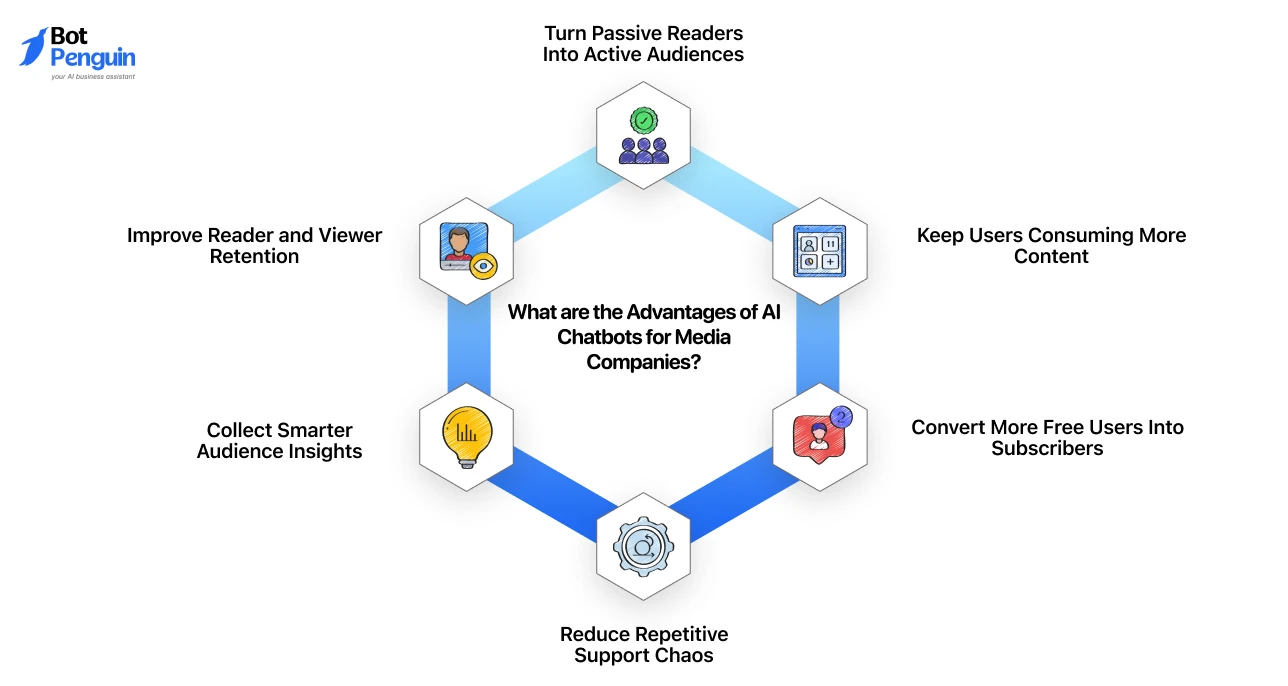
Media companies no longer win by publishing more content. They win by making content easier to discover, faster to access, and harder to leave behind.
Here’s a look at their benefits in practice:
In short, conversational AI, particularly chatbots, helps media companies move from one-way publishing to continuous audience engagement.
These benefits become even clearer when we look at how AI chatbots help audiences through their journey.
Audiences jump between platforms, devices, and content formats constantly. AI chatbots help media brands stay connected at every stage.
Points Worth Remembering:
Thus, AI chatbots help media companies create a continuous and customized experience across the entire audience lifecycle.
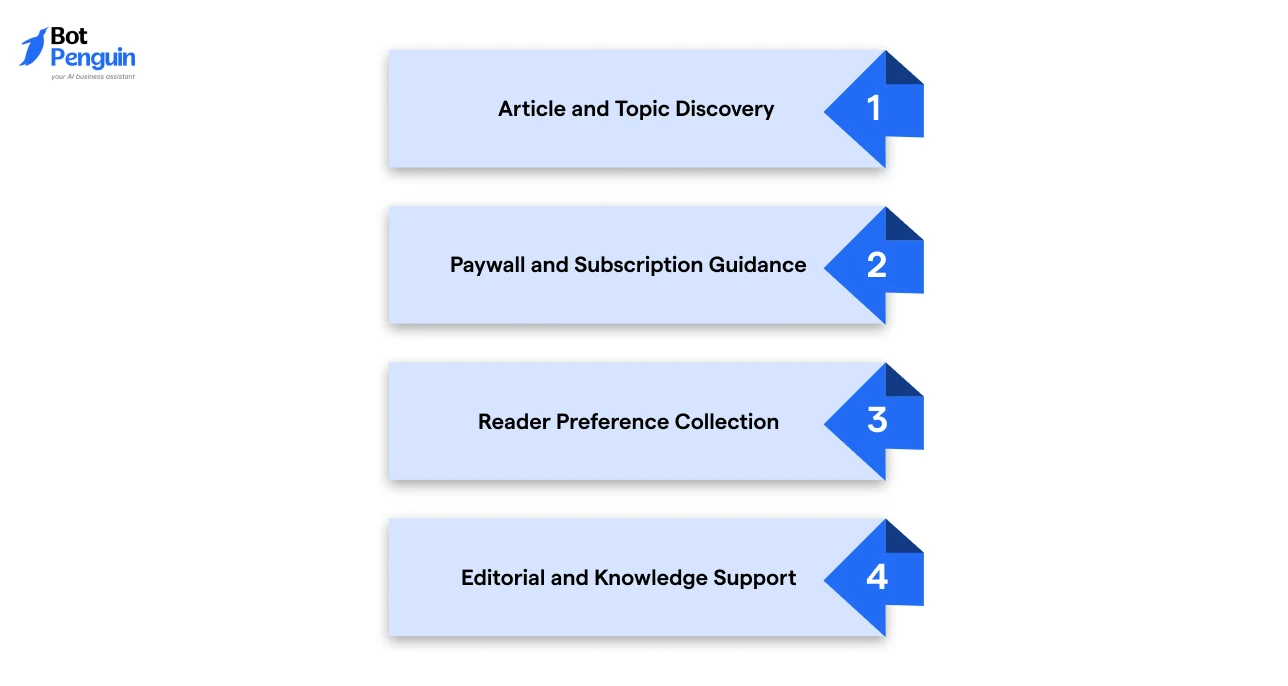
Publishing teams are under constant pressure to produce faster, retain readers longer, and make massive content libraries easier to navigate.
AI chatbots for publishers help reduce that friction across both editorial and audience-facing workflows.
Chatbots help readers find stories, archives, podcasts, or niche topics without endless searching. This keeps valuable content from getting buried.
Instead of losing users at the paywall, chatbots answer pricing questions, explain plans, and guide visitors toward the right subscription option.
Publishers can gather audience interests, reading habits, and feedback directly through conversational interactions instead of static forms.
Internal teams can use AI chatbots to access publishing guidelines, content databases, workflow information, or editorial resources quickly.
For publishers, AI chatbots are becoming less about automation alone and more about creating smoother publishing and reading experiences.
Next, we’ll explore how a media and entertainment AI chatbot drives greater viewer engagement.
Entertainment audiences now consume content across multiple screens, platforms, and formats daily.
AI chatbots help media brands keep engagement active between every click, stream, and live interaction.
Streaming services use AI chatbots to recommend shows, reduce search time, and improve viewer retention. Tailored recommendations already drive a major share of watch time on OTT platforms.
Netflix's AI recommendation system influences over 80% of what subscribers watch, and the platform has since launched a conversational AI chatbot that surfaces matching titles from a simple mood description.
Music and podcast apps use conversational AI like chatbots to suggest playlists, surface niche creators, and guide listeners toward relevant content based on mood, genre, or listening habits.
Sports audiences expect real-time updates. Chatbots help deliver live scores, match reminders, fantasy updates, polls, and instant fan interaction during games.
The NBA's Facebook Messenger chatbot is a prominent example, delivering real-time scores, player stats, and game schedules across multiple languages to fans worldwide. (Source: SportsPro)
Entertainment brands use chatbots to power fan engagement through quizzes, exclusive content drops, ticket support, merchandise discovery, and interactive experiences.
As digital entertainment becomes more crowded, AI chatbots are helping brands stay visible, interactive, and easier to engage with.
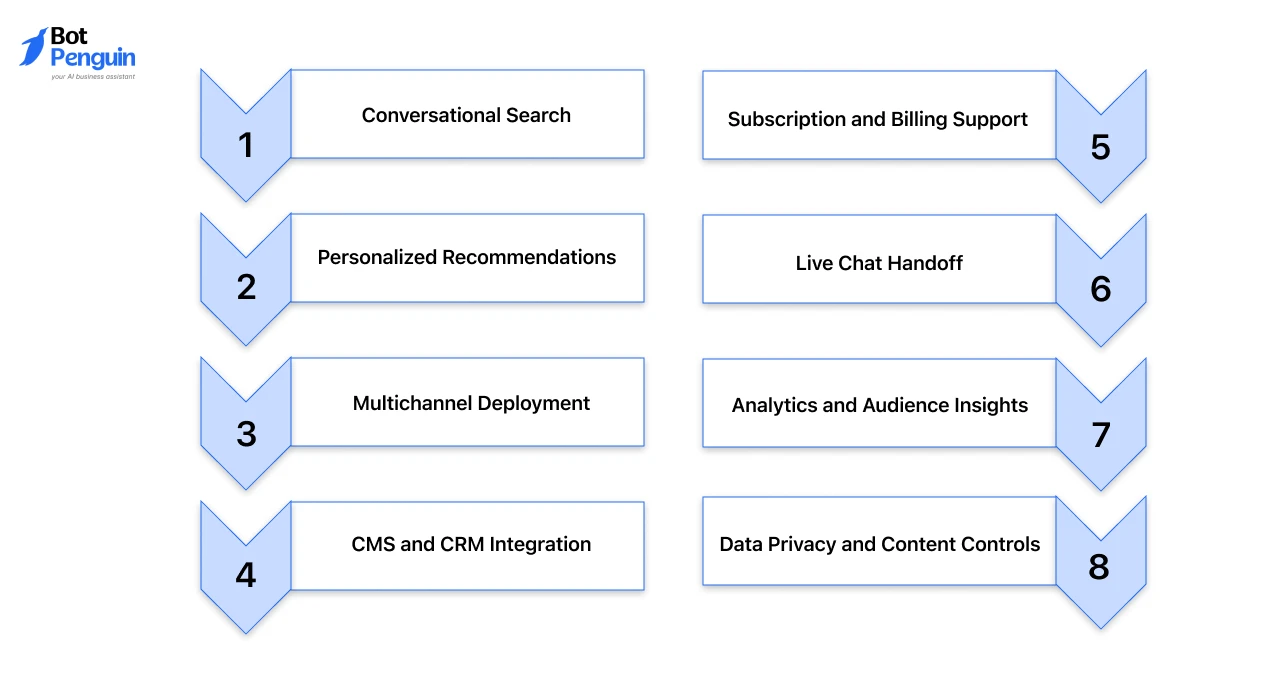
The best media chatbots do more than answer questions. They connect content, audiences, subscriptions, and support into one conversational experience.
A strong chatbot should improve both audience experience and operational efficiency without disrupting existing media workflows.
These technologies are often grouped together, but they solve very different problems across media and entertainment platforms.
In many modern media platforms, these technologies work together rather than independently to create faster, smarter, and more personalized audience experiences.
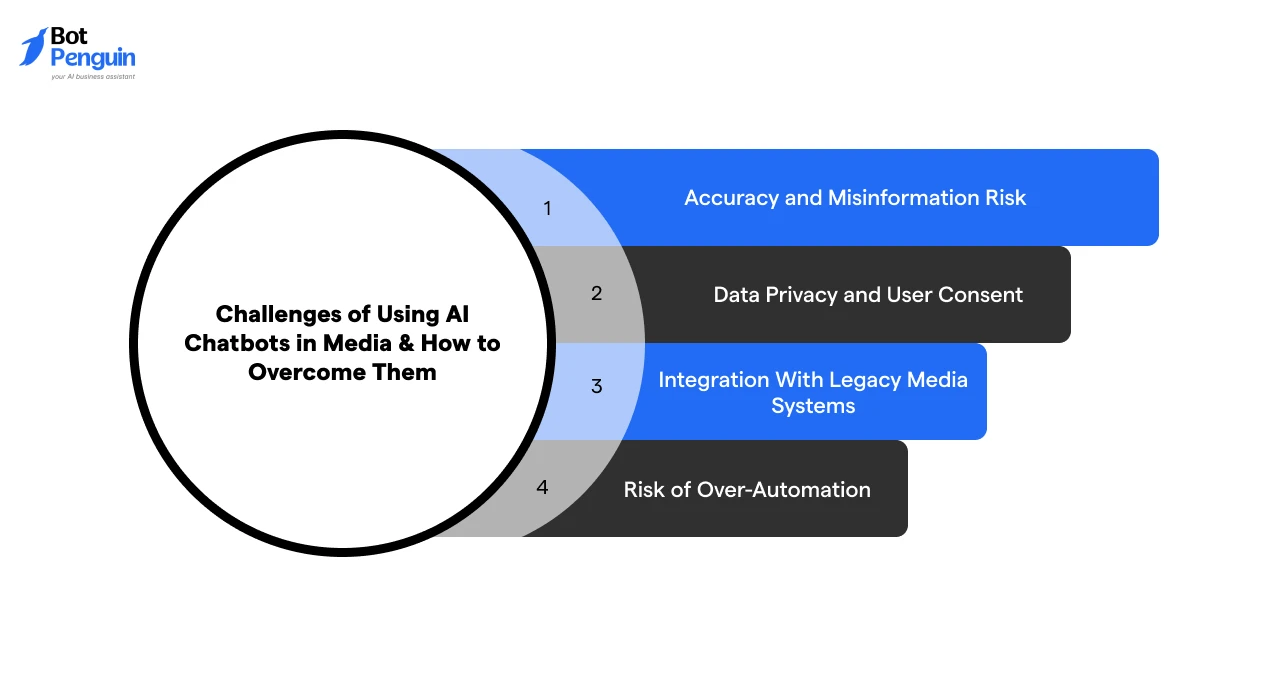
AI chatbots can improve engagement and automation, but media companies also need to manage risks around trust, systems, and audience experience.
Here are the core challenges to address:
AI chatbots can sometimes bring up outdated, misleading, or incorrect information, especially during breaking news or fast-moving events.
Media chatbots often collect behavioral and subscriber data, creating privacy and compliance concerns.
Need a GDPR-compliant chatbot for your media platform? BotPenguin is built with data privacy at its core - transparent consent flows, secure data handling, and full compliance support out of the box.
Many publishers still operate on older CMS, subscription, or analytics systems that are difficult to connect with modern AI tools.
Excessive automation can make interactions feel robotic and reduce audience trust.
A media chatbot should improve retention, content consumption, subscriptions, and audience experience.
Tracking the right metrics helps measure its actual business impact.
The most successful media chatbots, therefore, are not measured only by conversations but by how effectively they improve audience engagement, retention, and subscription growth.
The future of AI chatbots in the media goes far beyond answering audience questions. These chatbots are evolving into intelligent assistants that guide discovery, personalize experiences, and interact with users in real time.
Soon, conversational content search could replace traditional browsing. AI-powered live event companions may deliver instant highlights, polls, reactions, and fan interaction during sports and entertainment events.
We are also moving toward voice-first media assistants and multilingual AI engagement that make content access more natural across platforms and regions.
The biggest shift, though, may come from interactive storytelling, where audiences no longer just consume content. They become part of the experience itself.
An AI chatbot for media companies helps audiences discover content, manage subscriptions, receive updates, and interact with media platforms through conversational experiences.
Media companies use AI chatbots for content recommendations, subscriber support, newsletter growth, live event engagement, and customer service automation.
Yes. AI chatbots guide users through subscription plans, answer pricing questions, and personalize offers to improve conversion and retention rates.
Conversational AI in media refers to AI-powered systems that interact with audiences through chat or voice to improve engagement and content discovery.
Entertainment platforms use chatbots for show recommendations, fan engagement, live event interaction, ticket support, and personalized viewing experiences.
A media chatbot should support conversational search, personalized recommendations, subscription support, analytics, multichannel deployment, and live chat handoff.
Yes, when implemented properly. Publishers should use secure platforms, user consent controls, and editorial oversight to manage privacy and misinformation risks.
Subscribe to Our Newsletter
Get the latest business insights straight into your inbox.
Checkout our related blogs you will love.
Updated at Oct 19, 2026
11 min to read
Updated at Oct 14, 2026
11 min to read
Updated at Oct 14, 2026
10 min to read
Updated at Oct 14, 2026
10 min to read
Updated at Oct 13, 2026
11 min to read
Updated at Oct 9, 2026
10 min to read
Table of Contents

