



Best AI Chatbot Affiliate Programs for High Commissions
Updated at Sep 11, 2026
14 min to read
Key Takeaways
Most SaaS affiliate programs fail not because of bad products, but because of poorly designed commission structures.
If your commission model does not align with how your product is priced or how your affiliates operate, you will struggle to attract the right partners and retain them long enough to see real results.
This guide breaks down the three core affiliate commission models used in SaaS: recurring, one-time, and hybrid.
You will learn how each one works, what it costs, and which one fits your business best. Whether you are building a new SaaS affiliate program or fixing an existing one, this is the foundation you need to get it right.
A SaaS affiliate commission is what a software company pays a partner for each customer they refer, either as a recurring cut or a one-time payout. Most SaaS programs use one of three models: recurring, where you earn a percentage every billing cycle; one-time, a single payout per conversion; or hybrid, an upfront bonus plus a smaller ongoing percentage. Recurring works best for high-retention products, while one-time fits high-ticket or annual billing better.
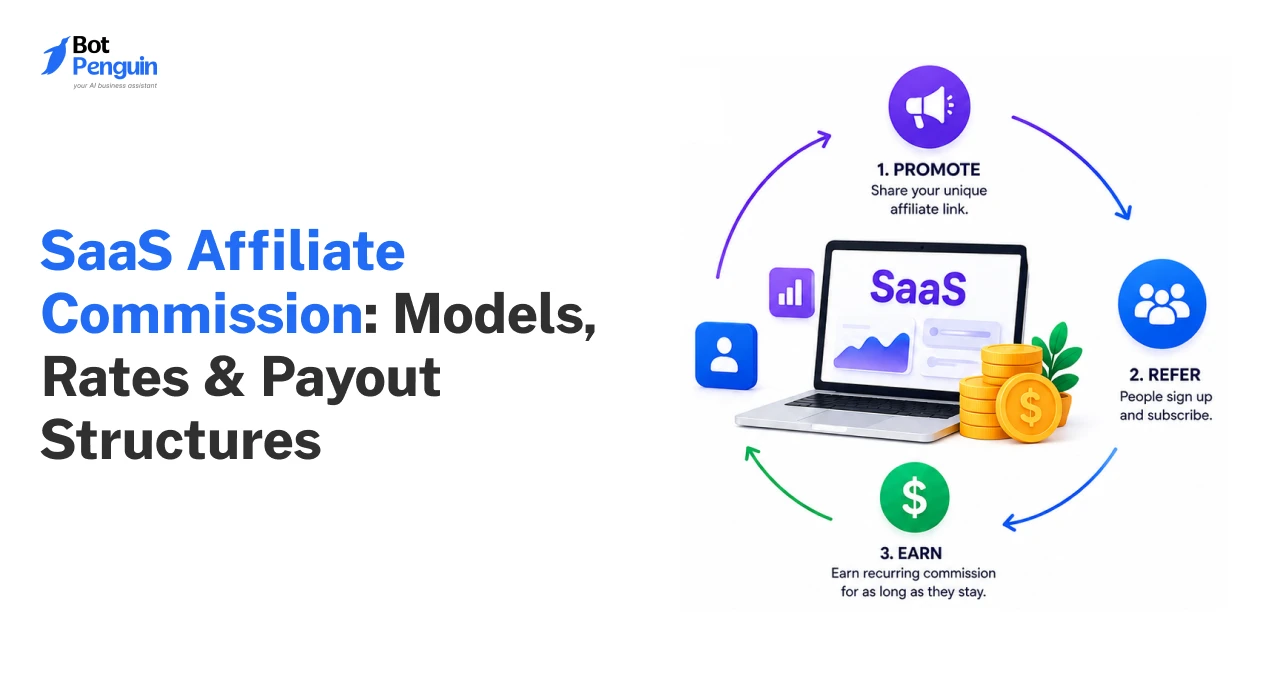
A SaaS affiliate commission is the payment a SaaS company gives to an affiliate partner every time that partner drives a paying customer. The affiliate promotes the product through content, ads, or recommendations. When someone clicks their unique link and subscribes, the affiliate earns a cut.
What makes SaaS affiliate marketing different from traditional affiliate marketing is the subscription model. A customer does not just buy once. They pay monthly or annually. That changes how commissions work entirely.
Want to understand the wider program structure? Read our guide on how SaaS affiliate programs work.
SaaS businesses typically use one of three commission structures: recurring, one-time, or hybrid.
Each model has a different payout logic, a different appeal to affiliates, and a different impact on your unit economics. Understanding how each one works is the foundation of building an affiliate program that actually scales.
Here is a breakdown of all three models before diving deeper into each.
Recurring commission is considered the gold standard in SaaS affiliate programs. Before exploring why, it helps to understand exactly how the payout mechanics work and what affiliates actually receive.
With recurring commission, an affiliate earns a percentage of the customer's subscription fee every time that customer pays their bill.
Example: If a customer pays $100 per month and the commission rate is 20%, the affiliate earns $20 every month that customer stays subscribed.
This continues for the lifetime of the customer’s subscription, or until a predefined cap is reached. Recurring commissions align affiliate earnings with customer retention because payouts continue as the referred customer renews their subscription. PartnerStack explains that recurring commissions can align affiliate incentives with subscriptions, renewals, and expansion revenue.
How the math works in practice:
The compounding effect is what makes recurring commissions powerful. An affiliate who referred 50 customers six months ago is still earning without doing any additional work. That passive income dynamic is a strong motivator for serious content creators and niche marketers.
According to a report by Impact, top-performing affiliates are 3x more likely to prefer programs that offer recurring commissions over flat-fee alternatives.
What makes recurring commission attractive to affiliates:
What SaaS businesses need to watch:
Recurring commissions are directly tied to customer retention. If your churn rate is high, your commission liability shrinks naturally, but so does your affiliate's motivation.
A product with 40% monthly churn will frustrate affiliates quickly because their earnings collapse faster than they can replace lost customers.
This model, therefore, works best for SaaS products with strong retention metrics, typically a monthly churn rate below 5%.
Common recurring commission rates in SaaS:
Note: These ranges represent typical market benchmarks. Actual commission rates vary based on factors such as pricing structure, customer lifetime value (LTV), churn rate, and company growth stage.
Program terms vary widely. For example, Rewardful’s affiliate program offers 25% recurring commission on payments made during a referred customer’s first 12 months.
One-time commission is straightforward. The affiliate gets paid once when a referred user converts, and that is the end of the transaction. It is the most common model outside of SaaS, but it still has a clear place within the SaaS ecosystem.
The payout is either a flat dollar amount or a percentage of the first payment made by the referred customer.
How one-time commission is structured:
A SaaS company offering a $300 annual plan might pay the affiliate $90 as a one-time commission. The affiliate has no further claim to future renewals.
Where one-time commission fits well:
This model makes more sense for SaaS products that involve a high upfront price, one-time setup fees, or annual-only billing. It also works for SaaS tools that function more like software purchases than ongoing subscriptions.
Enterprise software, lifetime deal products, and tools sold through marketplaces like AppSumo often use this model.
Affiliate perspective on one-time payouts:
Affiliates who run paid advertising campaigns often prefer one-time commissions because they can calculate ROI immediately. If a $50 ad spend generates a $150 commission, the math is clean and fast.
However, affiliates building long-term content strategies tend to avoid one-time models because the income does not compound. Once the referral converts, the earning stops.
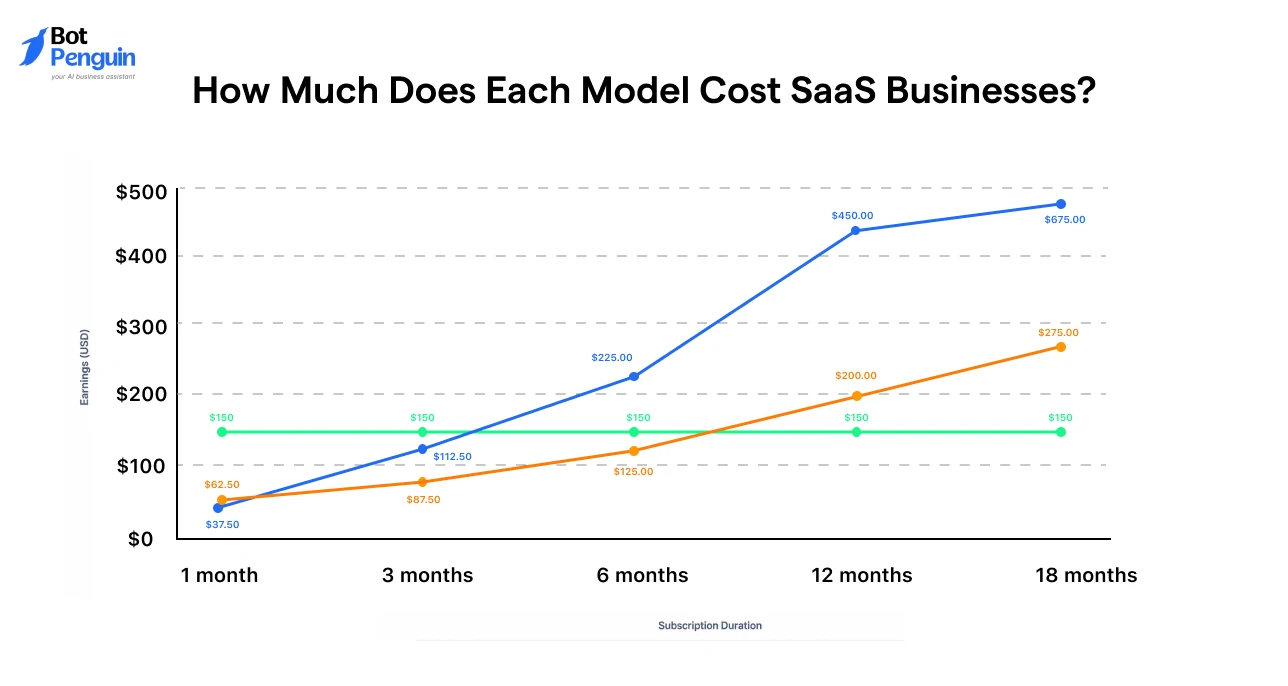
Earning potential comparison between recurring and one-time commission models over time:
The one-time model wins in the short term. The recurring model wins significantly over time, assuming the customer stays.
What SaaS businesses gain with one-time payouts:
The tradeoff is that affiliates have less incentive to keep promoting your product after the initial push. Without recurring income on the line, there is no financial reason for an affiliate to keep sending traffic your way.
Hybrid commission exists because neither recurring nor one-time models are perfect on their own. Some SaaS businesses need to offer immediate value to affiliates while also maintaining a long-term relationship with them.
The hybrid model solves this by combining an upfront one-time payment with a lower ongoing recurring commission.
How hybrid commission is typically structured:
This structure gives affiliates an immediate win while keeping them financially invested in the long-term retention of the customers they refer.
Why the hybrid model exists:
The recurring-only model can feel slow to new affiliates. Waiting 6 months to see meaningful earnings is discouraging. The upfront bonus solves that problem.
At the same time, the ongoing commission keeps affiliates engaged. They still have a reason to keep publishing content, sending newsletters, or running campaigns because their monthly income grows with every retained customer.
Illustrative example:
A mid-market project management SaaS charges $80 per month. They offer affiliates a $40 upfront bonus plus 15% recurring. An affiliate who refers 20 customers earns $800 upfront and $240 per month in recurring income. That combination is compelling enough to attract serious affiliates while remaining financially sustainable for the business.
When hybrid commission makes strategic sense:
What to watch when running a hybrid model:
The upfront bonus adds an acquisition cost on top of the recurring liability. If your customer acquisition cost is already high, layering a hybrid commission on top can compress margins quickly.
Run the numbers carefully. Know your average customer lifetime value before committing to a hybrid rate.
Summary comparison of all three models:
Understanding these three models gives you the foundation to make smarter decisions about structuring your own program. The right model depends on your pricing, your churn rate, your affiliate audience, and your growth stage.
Cost is where affiliate commission models get complicated for SaaS businesses, especially early-stage ones watching margins closely.
One-time commissions feel cheaper upfront because you pay once and move on. But if your customer lifetime value is high, you are leaving money on the table by not incentivizing affiliates to refer loyal users.
Recurring commissions can eat into margins if churn is high. Paying 20-30% monthly on a customer who cancels after two months means you barely broke even on acquisition.
Hybrid gives you more control. You cap the upfront cost while keeping affiliates motivated through ongoing payments tied to retention.
Cost impact by average customer lifespan (for a $100/month plan):
A rough rule: if your average customer stays 18+ months, recurring commissions are affordable. Under 12 months, one-time or hybrid protects your margins better.
Recurring commissions attract content creators, bloggers, and niche review sites. These affiliates think long-term. They invest in tutorials, comparison posts, and SEO-driven content because the payoff grows over time.
One-time commissions attract deal-focused affiliates and paid traffic operators. They move fast, test offers quickly, and chase volume. Quality varies more here.
Hybrid tends to attract experienced SaaS affiliate marketers who understand the value of both immediate and long-term payouts. They are often more selective about what they promote.
If building a stable, high-quality affiliate base matters to you, recurring or hybrid commissions send the right signal. The structure of your affiliate commission offer tells affiliates exactly how much you value the relationship.
Comparing these models side by side makes one thing clear: there is no universally better option. The right choice depends on your churn rate, pricing, and the kind of affiliates you want working with you.
That brings up the next logical question: how do you actually calculate what to pay?
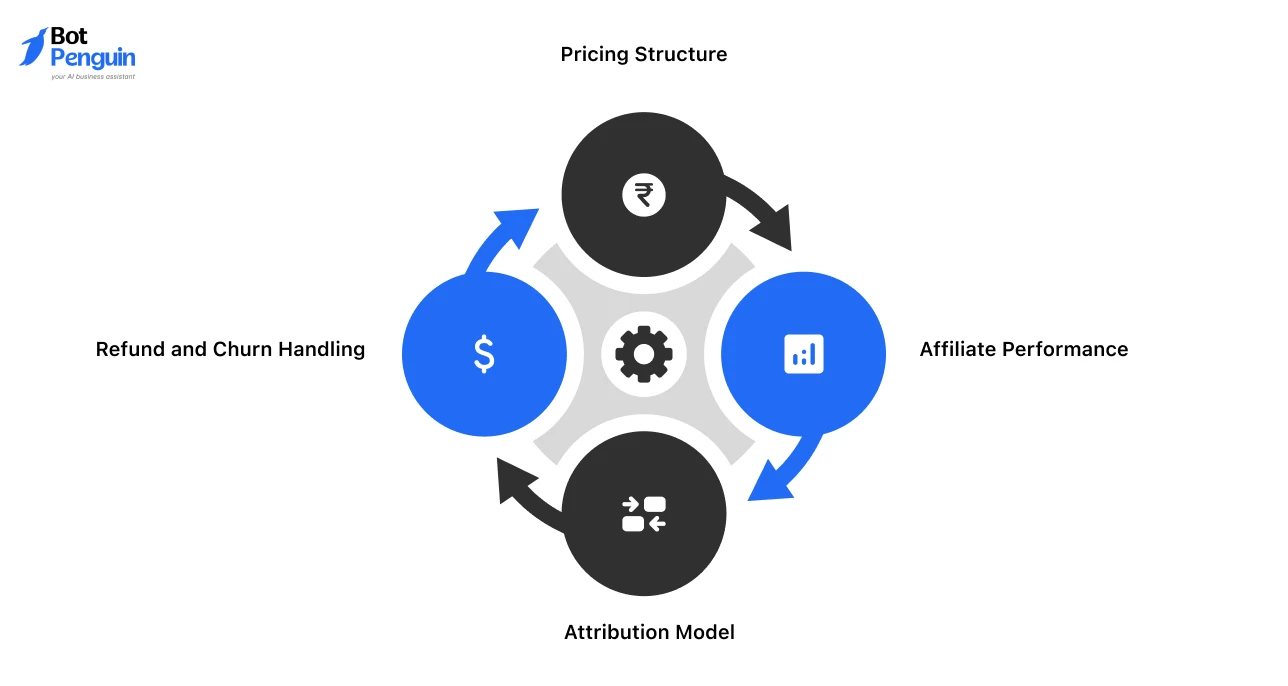
Commission rate calculation depends on several moving parts. Getting this right is critical, as it directly impacts both affiliate motivation and your program’s long-term sustainability.
Key factors that influence commission rates include:
Both approaches work, but they suit different pricing models. Choosing the wrong one can misalign your payouts with actual revenue.
Percentage-based commissions tie the affiliate’s payout directly to the deal size. If your SaaS plan costs $200/month and you offer 20%, the affiliate earns $40 per conversion. This scales naturally with upsells and higher-tier plans.
Flat-rate commissions pay a fixed amount regardless of plan size. A $50 flat payout works well when your pricing tiers are narrow or when you want predictable commission costs.
Tiered structures reward affiliates who consistently deliver, creating a performance-based incentive system.
A typical setup might look like:
This incentivizes volume without immediately inflating your payout costs. New affiliates earn fairly at lower tiers, while top performers unlock significantly higher earnings, improving retention and long-term engagement.
The key is setting tier thresholds that are achievable but not too easy. If most affiliates reach the top tier too quickly, the structure can become financially unsustainable.
Most SaaS affiliate programs lean toward percentage-based for recurring models and flat-rate for one-time bounties.
Refunds and chargebacks can quickly impact affiliate payouts if not handled clearly.
SaaS businesses need defined policies to manage reversals, protect margins, and avoid disputes with affiliates.
Transparent terms reduce confusion and build long-term affiliate trust.
Understanding the differences between commission models is only half the battle. The harder part is figuring out which one actually fits your business.
Your decision needs to account for your pricing, your churn rate, your affiliate mix, and your growth stage.
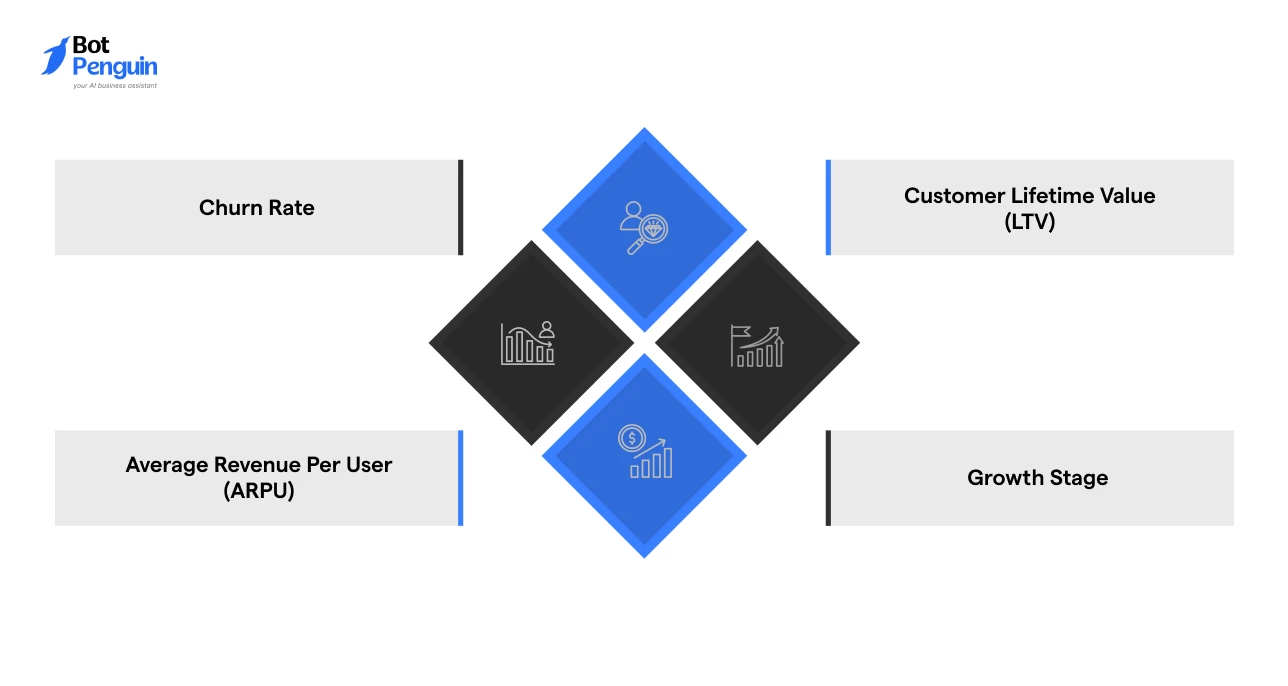
Before picking a model, you need to look inward at your own business metrics. Your churn rate, average contract value, and customer lifetime value all play a role in what you can afford to pay.
Your pricing model and your affiliate commission structure should mirror each other. Misalignment here creates confusion for affiliates and financial risk for you.
Here is a practical scenario. Imagine you have three plans: Starter at $29, Growth at $79, and Pro at $199.
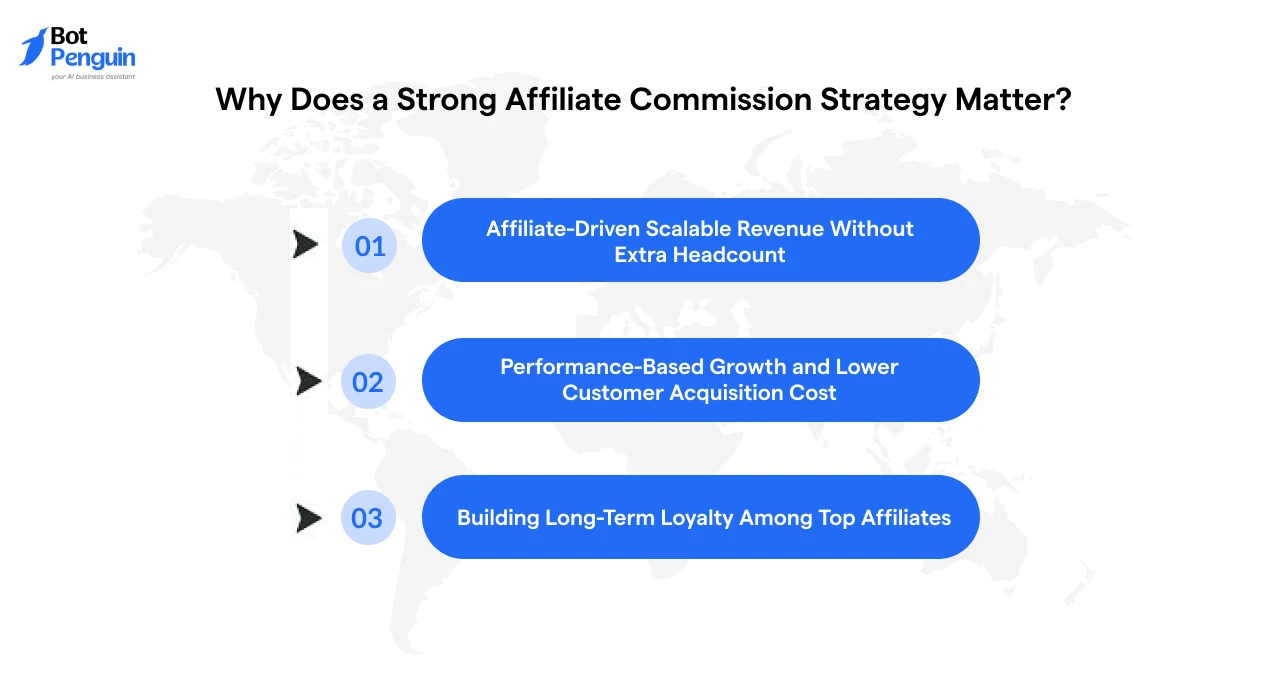
A well-designed SaaS affiliate commission strategy creates alignment between what affiliates earn and what your business actually needs. It reduces friction, builds trust, and keeps your best promoters motivated over time.
When affiliates feel the structure is fair and predictable, they invest more effort into promoting your product consistently. PartnerStack’s 2025 research reported more than $1.9 billion in software sales through its network and over 106,000 commission-earning partners. It shows the scale that a well-managed SaaS partner channel can reach.
A structured approach like this keeps your affiliate program scalable, cost-efficient, and aligned with long-term growth.
Managing affiliate commissions manually does not scale. The right tools handle tracking, attribution, and payouts automatically.
Here are the most commonly used tools for SaaS affiliate programs:
These tools automate tracking and payouts, allowing your affiliate program to scale without operational complexity.
Want to earn from referrals instead of managing them? Join the BotPenguin chatbot affiliate program — 20% recurring commission for up to 36 months. → Join the BotPenguin Affiliate waitlist.
BotPenguin’s affiliate program follows a SaaS-driven commission structure focused on recurring revenue and long-term earnings rather than one-time payouts.
This structure rewards affiliates based on customer retention, not just acquisition. With commissions running for up to 36 months per referral, each successful signup contributes to a growing income stream well beyond the initial conversion
The extended attribution window also supports longer SaaS decision cycles, ensuring affiliates receive credit even when conversions are delayed.
BotPenguin’s commission model is built for predictable, scalable earnings, aligning affiliate success with long-term customer value.
Choosing the right affiliate commission model shapes how your SaaS program grows, who joins it, and how long they stay.
Recurring commissions build loyalty. One-time payouts drive fast action. Hybrid models balance both. None of them work without clear terms, accurate tracking, and a structure that holds up as you scale.
The best programs are not just generous, they are consistent and predictable.
BotPenguin’s affiliate program offers 20% recurring commission for up to 36 months, with a 120-day attribution window. Join the BotPenguin affiliate waitlist to receive updates when applications reopen.
Most SaaS programs offer 20–30% recurring or a flat one-time rate of 50–200% of MRR, depending on product pricing and churn rate.
Recurring suits long-term content affiliates building passive income. One-time works better for high-traffic promoters who prioritize immediate, predictable payouts over ongoing revenue streams.
SaaS affiliate cookies should last 30-90 days minimum. Longer cycles reflect longer buying decisions, giving affiliates fair credit for leads they genuinely influenced.
Yes, if churn is low. Start with a capped recurring model, like 12 months maximum, to control costs while still attracting quality affiliates to your program.
Hybrid models combine an upfront flat bonus plus an ongoing recurring percentage. A common structure is a one-time $50 payment plus 15% monthly recurring for 12 months.
Earn Through Recurring Referrals
Join BotPenguin’s affiliate waitlist and earn 20% recurring commission when the program reopens.
Join the WaitlistCheckout our related blogs you will love.
Updated at Sep 11, 2026
14 min to read
Updated at Sep 11, 2026
10 min to read

Updated at Sep 3, 2026
15 min to read

Updated at Aug 4, 2026
11 min to read
Updated at Jul 28, 2026
8 min to read

Updated at Jul 27, 2026
12 min to read
Table of Contents
