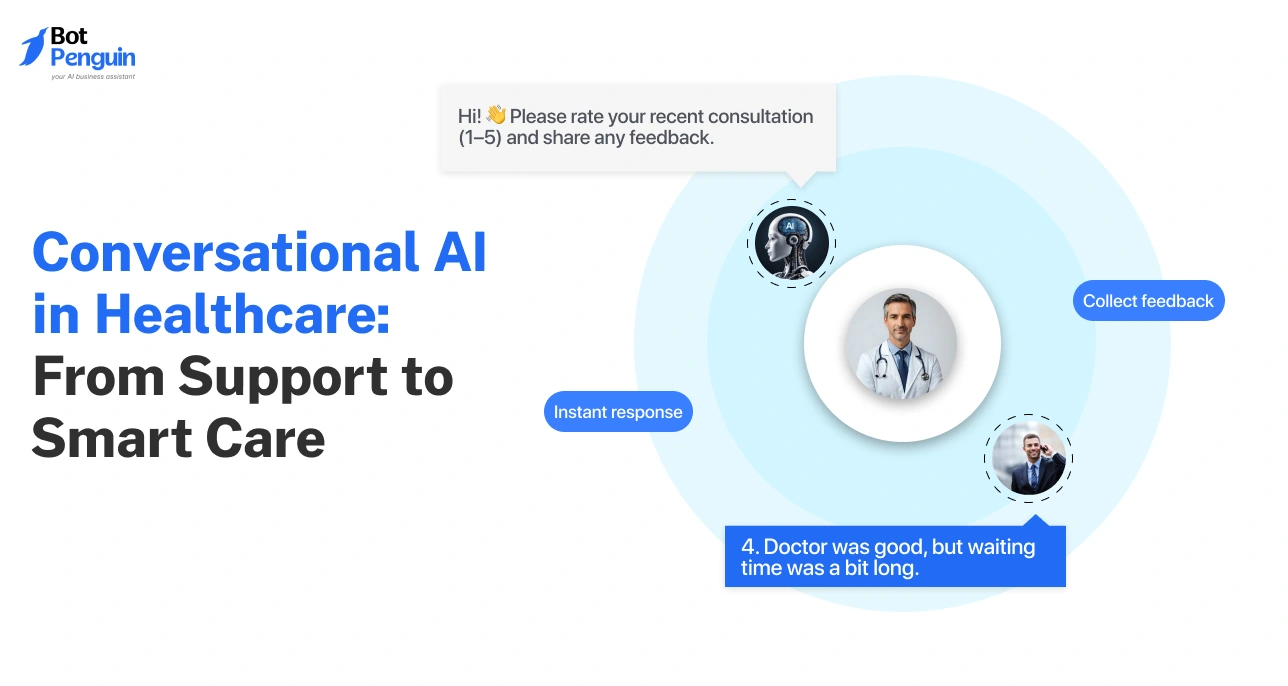


Healthcare has a communication problem that no new hire can fix.
Every missed call, delayed response, or unclear instruction adds friction to care. Staff stay overloaded. Patients feel lost. And the gap between expectation and reality keeps growing.
This is where conversational AI in healthcare is starting to shift things. From booking to follow-ups, it turns scattered conversations into connected, real-time support that actually moves care forward.
In this guide, you’ll learn what conversational AI for healthcare is, how it works across the care journey, its key use cases and benefits, and how to implement it effectively.
What Is Conversational AI in Healthcare? Beyond Basic Automation
Conversational AI in healthcare enables systems to understand, process, and respond to patient conversations in real time. Unlike static tools that follow fixed scripts, it adapts to patient intent and handles context, follow-ups, and actions, so interactions feel natural and useful.
Example: Instead of navigating a phone menu, a patient says, “I need to move my Thursday visit.” The system understands, checks availability, and confirms a new time.
What It Covers: Voice assistants, intelligent messaging, virtual assistants, and automated care conversations across web, mobile, and phone
How Conversational AI Works in Healthcare Settings
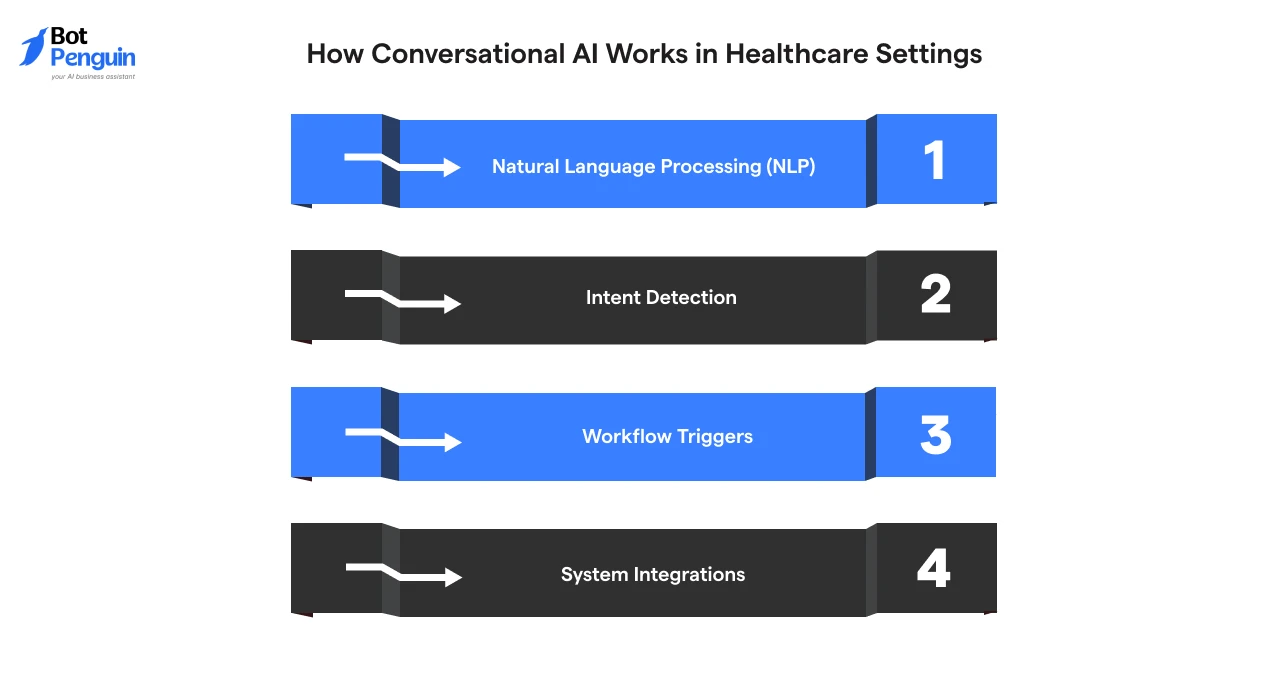
At a high level, it connects patient conversations to real actions. The process typically includes:
- Natural Language Processing (NLP): Conversational AI tools like virtual assistants and chatbots understand what patients say in plain language.
- Intent Detection: The system identifies what the patient needs (book, reschedule, ask, report).
- Workflow Triggers: Initiates actions like scheduling or sending instructions
- System Integrations: Connects with EHRs, CRMs, telephony, and scheduling tools
- Human Escalation: Transfers complex or sensitive cases to staff, like symptom escalation, billing disputes, or emotionally sensitive conversations
Why Healthcare Needs Conversational AI Now
Many factors are driving the rapid adoption of conversational AI in healthcare. Some of the most common ones include:
- Rising patient communication volume
- Ongoing staffing shortages
- Demand for faster, 24/7 support
- Need for consistent experiences across channels
With more demands and fewer resources, the pressure is real. Conversational AI gives healthcare teams a way to meet it without burning out the people behind it.
For organizations moving from intent to execution, the challenge is building solutions that fit real workflows and patient needs. This is where platforms like BotPenguin come in, helping teams design and deploy tailored conversational experiences that go beyond basic automation and support care delivery.
How Conversational AI Delivers Across the Patient Care Journey
Conversational AI in healthcare delivers value across the entire patient journey, not just at a single touchpoint.
Instead of isolated interactions, it connects conversations from discovery to follow-ups, improving continuity and patient engagement at every stage.
Key Takeaways:
- Conversational AI supports the entire patient journey, not just entry points.
- It reduces gaps between stages, improving continuity of care.
- It plays a key role in strengthening conversational AI patient engagement.
- Most impact comes when systems are integrated, not used in isolation.
Conversational AI Healthcare Use Cases That Matter Most (Functional Capabilities)
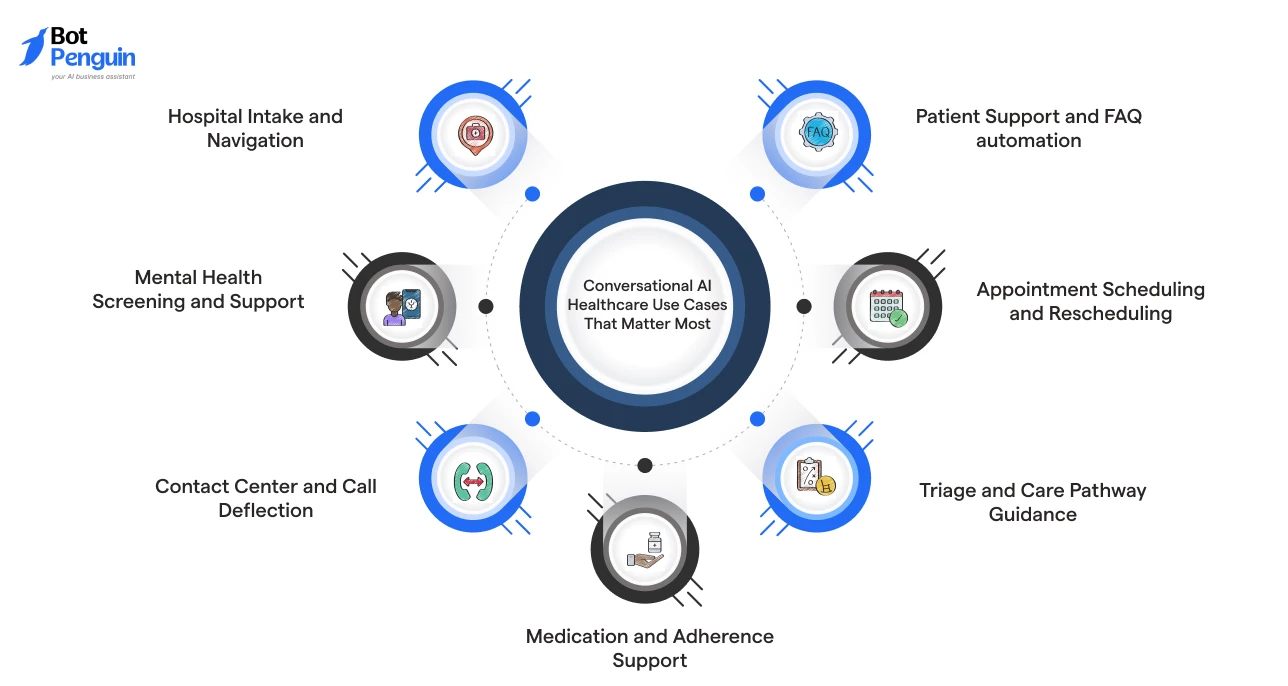
Beyond where it fits in the journey, conversational AI proves its value through specific, high-impact use cases. These are the functional capabilities that reduce workload, improve access, and streamline care delivery.
Patient Support and FAQ automation
AI-powered healthcare virtual assistants and chatbots handle routine queries, like services, timings, test prep, and billing questions, without staff involvement.
This ensures instant responses and reduces front desk load.
Think: A patient asking “Do I need to fast before my blood test?” and getting an instant, accurate answer at 11 PM; no hold music, no callback required.
Appointment Scheduling and Rescheduling
Voice assistants and messaging bots enable patients to book, cancel, or reschedule appointments in real time.
Example: A patient texts, “Reschedule my cardiology visit,” and the system checks availability and confirms a new slot instantly.
Triage and Care Pathway Guidance
These systems use symptom checkers and decision-support tools to assess urgency and guide patients to the right level of care, whether primary, specialist, or emergency.
Tools like Babylon Health’s symptom checker and Microsoft’s Azure Health Bot analyze patient-reported symptoms, assign urgency levels, and direct patients to appropriate care pathways automatically.
Medication and Adherence Support
Automated messaging systems send reminders, track adherence, and answer medication-related queries, helping patients stay consistent with treatment plans.
For instance, a diabetic patient receives a daily morning message checking whether they've taken their insulin, with a simple reply option. Any missed dose is automatically flagged to their care team.
Contact Center and Call Deflection
AI voice bots handle high call volumes, resolve common issues, and route complex cases to staff, reducing wait times and operational strain.
Mental Health Screening and Support
Conversational tools conduct initial screenings, mood check-ins, and provide guided support, with escalation to professionals when needed.
A prominent example is Woebot, an AI-powered mental health tool used by health systems to conduct mood check-ins, deliver CBT-based support, and escalate users showing signs of crisis to licensed professionals.
Hospital Intake and Navigation
Digital assistants guide patients through registration, forms, and in-hospital navigation.
Example: A patient receives step-by-step directions, department info, and check-in assistance via a mobile assistant, helping him avoid confusion, reduce anxiety, and reach the right department faster
These use cases across functional capabilities show one consistent pattern: conversational AI doesn't replace care; it removes the friction that slows it down.
Conversational AI in Hospitals: How the Technology Is Used
Hospitals operate in high-pressure, fast-moving environments where communication gaps quickly turn into delays.
Conversational AI helps streamline these interactions across departments, improving both patient experience and operational efficiency.
Front Desk and Intake Workflows
For the busiest touchpoint in any hospital, conversational tools do the heavy lifting.
- Handle patient registration, basic queries, and form collection, reducing the burden on front desk staff.
- They guide patients through check-in, documentation, and insurance steps in a structured, easy-to-follow way.
This leads to faster intake and shorter waiting times, freeing staff to focus on patients who need hands-on attention.
Bedside Communication and Patient Updates
Conversational interfaces bring consistent, on-demand support where patients need it the most.
- Virtual assistants provide patients with real-time updates on schedules, medications, and care instructions.
- They allow patients to ask simple questions without waiting for staff availability.
This improves patient satisfaction and reduces repetitive interruptions for care teams.
Discharge Coordination and Follow-up
When a patient is ready to go home, it's important to ensure they leave with clarity, not confusion. Here's where conversational systems make a real difference:
- AI systems automate discharge instructions, reminders, and follow-up communication after a patient leaves.
- They ensure patients understand the next steps and can ask questions post-discharge.
This helps reduce confusion and lowers readmission risks.
Interdepartmental Routing and Administrative Efficiency
- Conversational AI routes requests, queries, and updates between departments without manual coordination.
- It reduces delays caused by miscommunication or fragmented systems.
By eliminating manual handoffs and keeping information flowing in real time, these systems improve overall hospital workflow efficiency.
Support for Elderly, Multilingual, and High-need Populations
Inclusivity is one of the most underrated strengths of well-designed conversational AI.
- AI tools offer multilingual support and simplified interactions for diverse patient groups.
- They assist elderly patients with guided, easy-to-understand communication.
This makes care more accessible and inclusive across different patient needs.
How to Implement Conversational AI in Healthcare (Step-by-Step)
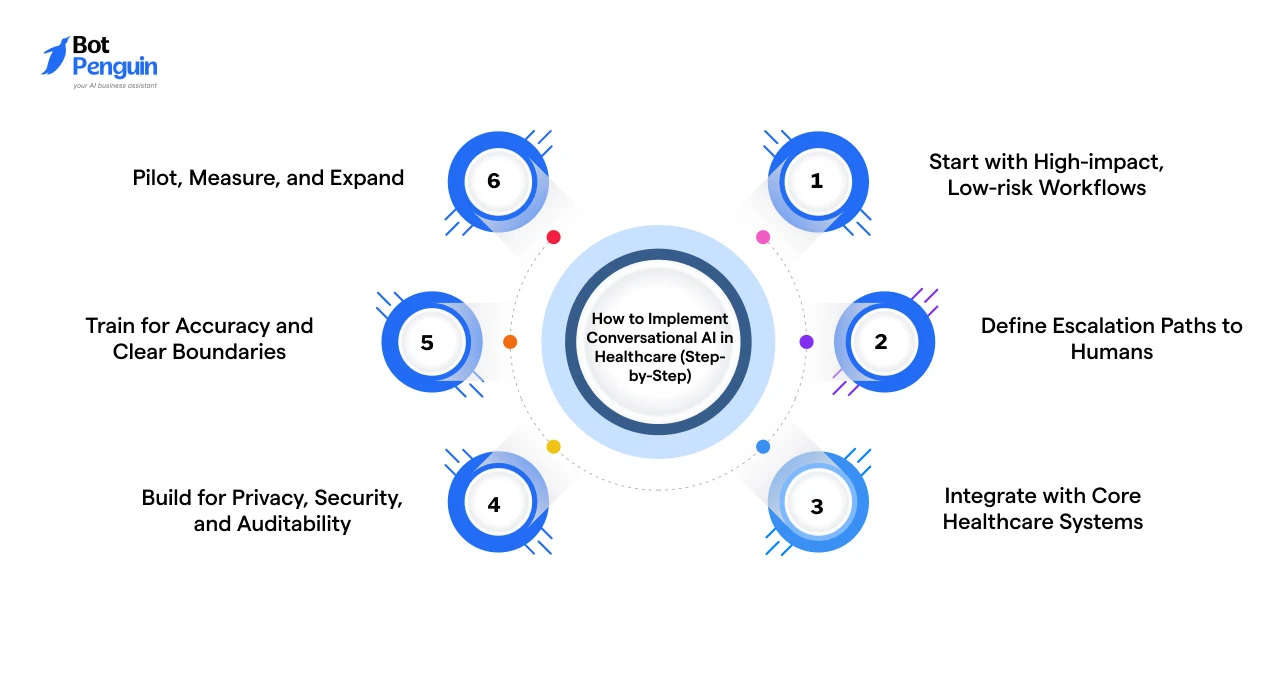
A strong rollout starts small, stays controlled, and scales with results. Focus on practical steps that balance impact, safety, and integration.
The table below showcases a practical, step-by-step approach:
Pro Tip: The organizations that see the fastest ROI start with one high-volume, low-risk workflow: nail it, measure it, then expand. A successful appointment booking bot builds more internal confidence than a half-finished clinical assistant ever will.
Benefits of Conversational AI Across Providers, Patients, and Systems
The conversational AI healthcare benefits go far beyond cutting costs or automating calls.
When implemented well, this technology creates a ripple effect, improving how providers work, how patients experience care, and how health systems scale. Here's what that looks like across each stakeholder:
Benefits for Providers
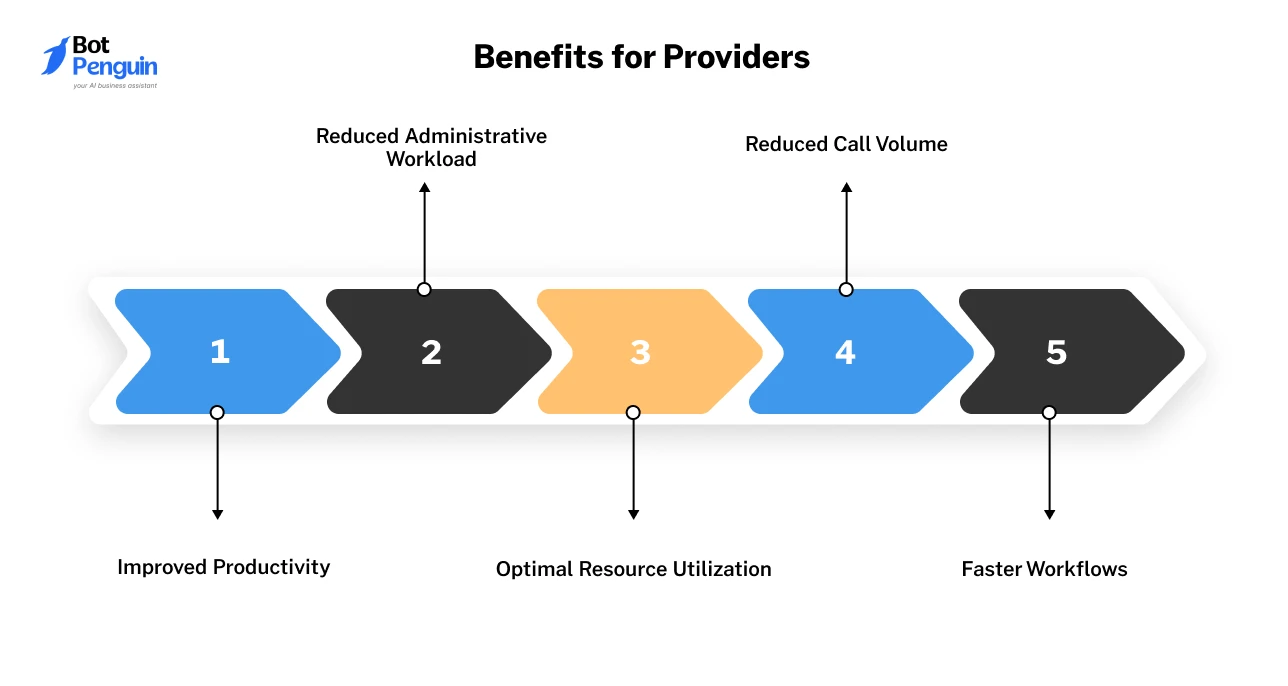
Care teams are stretched thin. Conversational tools give them back the time and bandwidth to focus on what actually requires human judgment.
- Improved Productivity: Handles multiple interactions simultaneously, speeding up response times
- Reduced Administrative Workload: Automates routine queries, scheduling, and follow-ups, freeing staff for higher-value tasks
- Optimal Resource Utilization: Allows teams to focus on critical care instead of repetitive communication
- Reduced Call Volume: Deflects common inquiries from phone lines to automated channels
- Faster Workflows: Streamlines processes like intake, documentation, and coordination
The result is a leaner, more focused workforce, one that spends less time on hold and more time on care.
Benefits for Patients
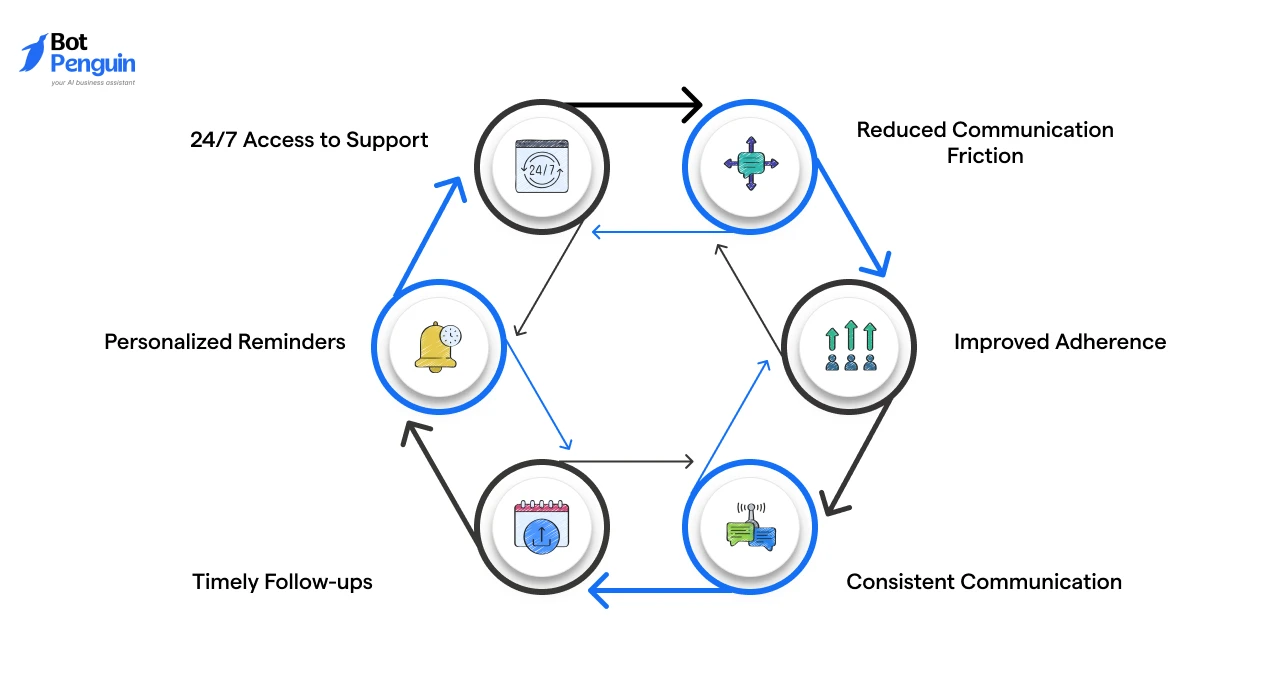
Patients don't want to jump through hoops to access care. They want answers, clarity, and follow-through. Here’s how conversational AI patient engagement works:
- 24/7 Access to Support: Patients can get help anytime without waiting for office hours.
- Reduced Communication Friction: Simple, natural interactions replace long calls and complex navigation.
- Personalized Reminders: Tailored alerts for appointments, medications, and care plans
- Improved Adherence: Ongoing nudges and check-ins help patients stay on track with treatment.
- Timely Follow-ups: Automated outreach ensures patients don’t miss critical next steps.
- Consistent Communication: Delivers reliable, clear responses across channels, improving patient engagement
When communication feels effortless, patients stay more engaged, and better-engaged patients tend to have better outcomes.
Benefits for Health Systems
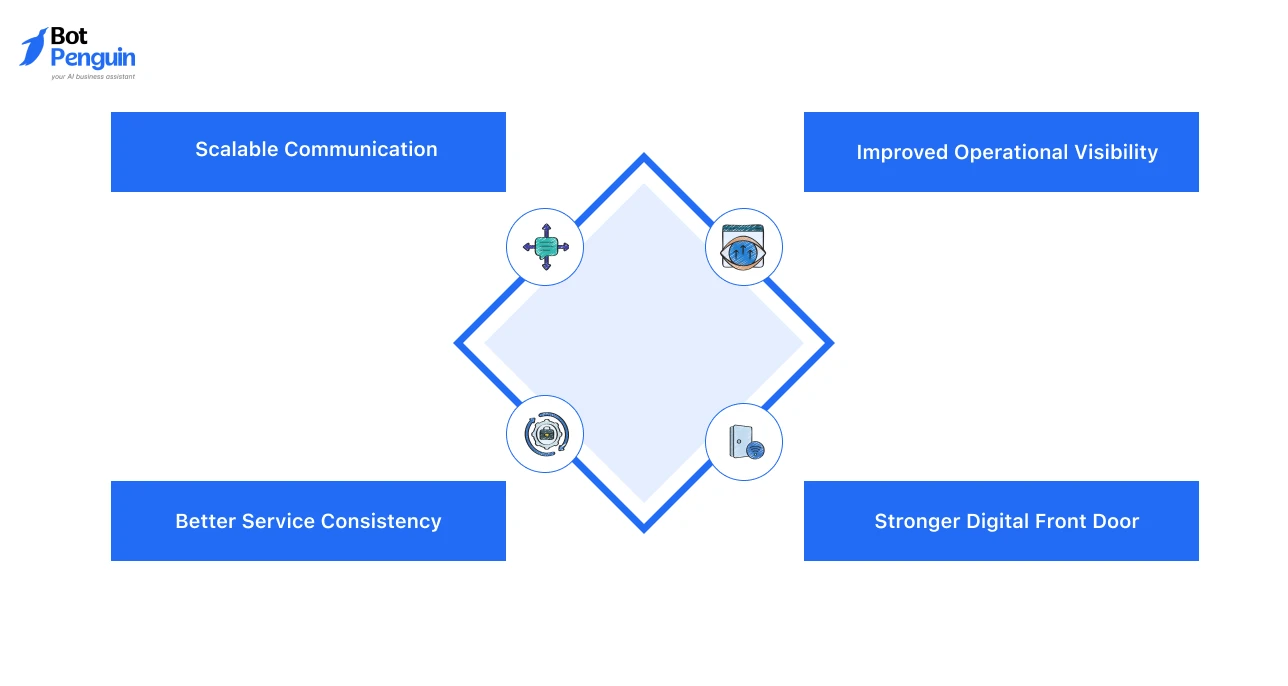
Growth shouldn't mean proportional increases in overhead. Such interfaces help health systems scale smartly, not just bigger.
- Scalable Communication: Manages growing patient volumes without proportional staff increases
- Better Service Consistency: Standardizes responses and reduces variability in patient interactions
- Improved Operational Visibility: Tracks conversations and performance for better decision-making
- Stronger Digital Front Door: Creates seamless, accessible entry points for patient interaction and care access
For systems under pressure to do more with less, this is the kind of infrastructure that compounds in value over time.
Choosing a Conversational AI Platform in Healthcare: Key Considerations
Picking a conversational artificial intelligence platform isn’t a technology decision. It’s an operational one.
The right platform fits your existing systems, meets your compliance requirements, and scales without creating new problems. These are the criteria that separate a good fit from an expensive mistake:
A good platform should fit your systems, scale with demand, and stay secure, without adding complexity.
Building Trust in Conversational AI for Healthcare: Equity, Safety, and Responsibility
As artificial intelligence adoption grows, healthcare organizations must ensure these systems are not just efficient, but fair, safe, and inclusive.
Without this, automation can widen existing gaps instead of closing them.
Prioritizing Health Equity in Conversational AI
This means designing with underserved populations in mind first.
Healthcare access is already uneven. Poorly designed systems can exclude vulnerable populations instead of supporting them.
Bias, Exclusion, and Digital Access Gaps
AI can reflect biases in data and design. Limited language support or digital access can leave entire groups underserved.
For example, elderly patients with no smartphones get excluded entirely.
Overcoming this challenge requires intentional, equity-focused design choices.
Designing for Multilingual, Low Literacy, and Underserved Users
AI healthcare support systems should support multiple languages, simple language, and accessible formats to serve diverse patient needs.
If patient A speaks only Swahili, the system must still help.
Co-production, Testing, and Real-world Validation
Involving patients and care teams in design and testing helps ensure solutions work in real settings, not just in theory.
That is, real users test it before full deployment happens.
Safety Guardrails and Transparency
Clear boundaries, human oversight, and transparent responses are critical to maintain trust and prevent clinical risk.
Systems must be designed to meet strict compliance standards like HIPAA and GDPR, ensuring secure data handling, auditability, and patient privacy at every step.
How to Measure Conversational AI Performance in Healthcare
Tracking the right metrics helps leaders understand real impact, across efficiency, patient experience, and operational outcomes.
Focus on indicators that tie directly to care delivery and system performance.
*Benchmarks vary by organization size, workflows, and implementation maturity, but the ranges below reflect typical outcomes seen across healthcare systems.
These metrics help CEOs and healthcare CTOs move beyond adoption and focus on measurable outcomes, scalability, and long-term value.
For teams aiming to hit these benchmarks, the key is using platforms that offer built-in analytics, workflow control, and seamless integrations. Solutions like BotPenguin help track performance in real time while enabling teams to continuously optimize interactions and improve patient outcomes without added complexity.
The Future of Conversational AI in Healthcare: What Comes Next
Conversational AI in healthcare is moving from basic support to smarter, connected care delivery. It’s no longer just about handling queries; it’s about improving how care is accessed, coordinated, and experienced.
What comes next is clear: multimodal interactions, more proactive care coordination, and stronger personalization. Systems will also move toward better interoperability and more responsible, compliant deployment.
The organizations that win will focus on usability, safety, integration, and equity from day one. The technology is ready. The question is who acts first.
Frequently Asked Questions (FAQs)
What is conversational AI in healthcare?
Conversational AI in healthcare enables systems to understand and respond to patient queries in real time, improving communication, automating tasks, and supporting care delivery across channels.
How is conversational AI used in hospitals?
Hospitals use conversational AI for appointment booking, patient intake, triage support, discharge follow-ups, and internal routing, helping reduce workload and improve patient experience.
What are the benefits of conversational AI for healthcare providers?
It reduces administrative workload, lowers call volumes, speeds up workflows, and improves efficiency, allowing providers to focus more on patient care and less on repetitive tasks.
Can conversational AI improve patient engagement?
Yes, it improves conversational AI patient engagement through 24/7 support, personalized reminders, timely follow-ups, and consistent communication, helping patients stay informed and adhere to care plans.
Is conversational AI in healthcare HIPAA compliant?
Conversational AI can be HIPAA compliant if built with proper encryption, access controls, and audit trails to ensure secure handling of patient data and regulatory compliance.
How do you implement conversational AI in healthcare?
Start with low-risk use cases, define escalation paths, integrate with core systems, ensure compliance, and scale gradually based on performance metrics and real-world outcomes.
What is the difference between chatbots and conversational AI in healthcare?
Chatbots follow predefined scripts, while conversational AI understands context, intent, and complex queries, enabling more natural, flexible, and intelligent patient interactions.